Showing posts with label conservation fund. Show all posts

Saturday, July 16, 2011

Lionfish Invasive Species Solutions? You Bet!

As the Caribbean reels from an onslaught of invasive Lionfish, we took a great idea from Scotty Grey owner of the M/V Kate and Blue Iguana Charters based in Florida and had some fun with it.

Welcome to LionErects TM.

The basic concept behind any successful invasive species culling effort is to create a marketplace for the species. It's not a new idea, and it's one that's been floating around for a while now.

Watching the reaction to our post on Facebook and within the dive industry was telling. Overwhelmingly folks got it, unfortunately LionErects TM is just an idea.

Which gets us to an earlier post about shark conservations need for funding, and the idea of generating funds not seeking funds.

We can do this.

Tapping into established markets is an easy proposition and one that allows entities to enjoy long running revenue bases to work from.

In a perfect world the profits from one conservation effort fuels another.

LionErects TM is the perfect idea and business model to tackle a fish species that is devastating entire reef systems throughout the Caribbean. The other option is for some NGO to seek funds so they can pay fishermen to harvest lionfish with no real or lasting market incentive to do so.

Which model do you think will ultimately be successful in culling the lionfish invasion?

It's not magic folks. It's just business. Conservation needs to become engaged in the business world soon, or forever be on the back burner. We can only get so far with the programs in play today.

Tomorrow's answer to conservation will look a lot different.

Sunday, February 14, 2010

SSACN announce Sharkatag 2010

Volunteer anglers from all over the UK will be descending upon south west Scotland once again in an attempt to tag as many inshore sharks as possible from boats, kayaks and the shore over the three-day period 18th to 20th June.

Sharkatag is just one of the Scottish Sea Angling Conservation Network’s on going projects, aimed at highlighting the urgent need for shark, ray and skate conservation in Scottish waters and raising the public awareness of sea angling and its contribution to the economies of many coastal communities.

One of the main organizers Stuart Cresswell said. “Last years Sharkatag event was a huge success with over 200 volunteer sport fishermen catching, tagging and releasing over 200 sharks. The event received widespread publicity on prime time TV news bulletins and also benefited local businesses to a value in excess of £40,000.

"Our aim for the 2010 event is to increase participation and publicity of the event further and to clearly highlight the fact to Scotland's politicians that a live shark in the sea is actually worth over 20 times more than a dead shark on the fishmongers slab."

According to Ian Burrett, SSACN’s Projects Director the focus for this year’s Sharkatag event will be the tope shark which grows up to 100 lb. SSACN believes Luce Bay and the Solway are a breeding ground for tope, yet unlike in England and Wales, tope are not protected in Scottish waters and their numbers are dropping year by year. "We would like to be to be protected in all EU waters, but need our own Government to support that aim."

Other shark species such as rays, bull huss and smoothound will also be tagged. Scottish Shark Tagging Programme (SSTP ) tags, which carry a unique number, are carefully attached to the sharks. Details like weight, sex and length are recorded and entered on a database. When the shark is recaptured, the data can be analysed to provide evidence of species migrations, growth rates, stock populations, make-up and fluctuations.

Wednesday, February 3, 2010

The Shark Legacy Project

The Shark Legacy Project exists to protect sharks as part of the marine inheritance of all people. Founded by PADI Course Director Peter Wilcox, together with Shark Biologist Giacomo Palavicini, our research aims to assist governments in the establishment of shark sanctuaries.

Our pilot research project launched January 2010 in Roatan, in conjunction with the Roatan Marine Park and DIGIPESCA (Honduras Fisheries Department). The project combines shark diving operators in Honduras with our biologists to determine a dollar value of the sharks to tourism, and so protect them as a valuable marine resource. Recently DIGIPESCA enacted a bill establishing a complete moratorium on fishing of all shark species in Honduras until the research has completed, the government has a better idea of sharks as a resource to its people and a management plan can be established.

Victory number one was recently signed into law, now the research begins!

Want to help?

Visit www.sharklegacyproject.com and sign the petition, spread the word with the links on the site or better yet, come visit Roatan in the Bay Islands of Honduras and dive with us and the sharks!

Tuesday, January 12, 2010

Shark Nets: Thomas Peschak Reports

The newly redesigned RTSea Blog has great coverage of premier underwater photog Thomas Peschak and South African anti shark nets.

As a team member with the Save Our Seas Foundation Thomas has been featured in several informative PSA's demonstrating marine conservation leadership with this ongoing and deadly issue.

About SOS

The Save Our Seas Foundation sponsors marine conservation projects around the world from White Sharks in South Africa to Giant Manta Rays in Mexico. We are committed to educating people about the importance of conserving our beautiful oceans.

Find out more at saveourseas.com.

Saturday, January 9, 2010

Vote for Imaging Foundation in Chase Competition

There are a few dedicated groups out there who could use funding to do amazing PSA's and conservation work for the oceans.

This is why we support Imaging Foundations drive to win the Chase Bank competition for conservation funding.

Join them this month and create your own Wave Rave to celebrate the oceans and VOTE for their funding by Chase.

Your vote will make a world of difference to the oceans.

Friday, January 8, 2010

Senior Associate, Global Shark Conservation - Job Opening

Senior Associate, Global Shark Conservation

The Organization


The Pew Charitable Trusts is driven by the power of knowledge to solve today’s most challenging problems. Pew applies a rigorous, analytical approach to improving public policy, informing the public and stimulating civic life. Based in Philadelphia, with offices in Washington, D.C., and Brussels, Pew produces fact-based research and develops practical solutions to challenging issues.

We are an independent nonprofit organization--the sole beneficiary of seven individual charitable funds, with assets of $5.2 billion at the end of June 2008, established between 1948 and 1979 by two sons and two daughters of Sun Oil Company founder Joseph N. Pew and his wife, Mary Anderson Pew.

Pew provides an exciting learning environment and the opportunity to work with highly talented individuals. It is a dynamic organization that values creativity and innovative thinking and fosters strong teamwork with mutual respect.


The Pew Environment Group


The mission of the Pew Environment Group is to promote policies and practices that protect the global atmosphere, preserve large intact wilderness ecosystems and conserve living marine resources.


For the past two decades, the Environment group has been a major force in driving conservation policy in the United States, and increasingly internationally. The group’s work is focused on reducing the scope and severity of three major global environmental problems:

  • Dramatic changes to the Earth’s climate brought about by the increasing concentration of greenhouse gases in the planet’s atmosphere;
  • The erosion of large wilderness ecosystems that contain a great part of the world’s remaining biodiversity; and,
  • The destruction of the world’s ocean environment, with a particular emphasis on marine fisheries.

Global Shark Conservation


Sharks roamed the seas for nearly 200 million years before dinosaurs were on the planet. However, due to the onset of industrialized fisheries in the last fifty years, many populations of large sharks have declined globally by approximately 90 percent. The world's increasing demand for shark fins, used for the Asian delicacy shark fin soup as well as other products, is killing up to 73 million sharks a year—a rate that is highly unsustainable. Sharks are highly vulnerable to overfishing, as they are generally slow-growing and reproduce late in life with few offspring. As a result, entire shark populations may disappear within our lifetime.

The Global Shark Conservation is designed to reverse this decline of shark populations through public education, advocacy and research. With overlapping jurisdictions over shark fisheries, the campaign will work within both international governance bodies (such as regional fisheries management organizations and the United Nations) and treaty organizations such as the Convention on International Trade in Endangered Species to secure precautionary, science-based protections for sharks. Domestically, the campaign will work to secure stronger shark management within the U.S. as well as in other coastal nations that still have large populations of sharks left in their territorial waters.


Position Overview


The campaign senior associate will work with the director of the Global Shark Conservation to provide the information and assistance necessary to design and carry out the campaign strategy. The Global Shark Conservation is designed as a two-year effort which begins April 1, 2009 and will run through March 31, 2011. The position may be renewed, pending its progress and the availability of continued financial support. This position will report to the project director and is based in Washington, D.C.


Responsibilities:
  • Assist the project director and other campaign staff in developing and implementing campaign strategy.
  • Work with the Manager of the shark campaign to develop and execute outreach events with coalition members internationally and domestically to educate and influence policy makers.
  • Manage special outreach projects for the campaign that raise public, media and policymaker awareness of the need for shark conservation. These projects could include managing video projects, working with film and television producers to secure “calls to action” in nature programming, or arranging speaking engagements for the campaign with target audiences.
  • Work with PCT and PEG communications to develop and implement a strategy for new media outreach.
  • Assist in developing public, policymaker, and media outreach strategies for the campaign in target regions of the world, such as in Asia, Latin America, or the Pacific.
  • Create compelling materials for the campaign, including website content, fact sheets, coalition letters, etc.
  • Research and write campaign materials, such as reports, booklets, fact sheets and web content.
  • Represent the campaign at meetings and on conference calls within Pew, with partner groups, federal agencies, and Congress.
  • Maintain knowledge of shark management activities worldwide.

Requirements:
  • Four to 8 years of experience in environmental and public policy required. An advanced degree or equivalent experience is required. Expertise in marine issues are strongly preferred.
  • Able to set short- and long-term planning goals in line with program strategy. A task-oriented style, with focus on achieving clear and ambitious goals. Demonstrated ability to meet multiple deadlines by maintaining a high level of organization. Able to develop and move projects forward with a high degree of independence and autonomy.
  • Excellent written and oral communications skills, including an ease in communicating complex concepts in a clear effective manner for a general audience.
  • A detail and results-oriented style with a focus on process and achievement. Recognized ability to meet multiple deadlines by maintaining a high level of organization.
  • Demonstrated strong analytical skills, including an ability to synthesize large amounts of information and to focus quickly on the essence of an issue. A strong commitment to producing measurable results.
  • Strong interpersonal skills, including the ability to develop and manage productive relationships with consultants, partners, grantees and others who contribute to the effectiveness of the project.
  • Able to establish credibility quickly and to develop and maintain effective working relationships with internal and external parties, including grantees.
  • Experience with media and other communications strategies to deliver policy recommendations and/or scientific findings to policy makers and the public desired.
  • Fluency in other languages a plus.
  • Knowledge of shark conservation issues a plus.

Some travel for this position may be required, including attending international meetings impacting shark conservation, as needed, and/or visiting campaign consultants working around the world on domestic shark conservation measures.


Application for job here.


Monday, November 30, 2009

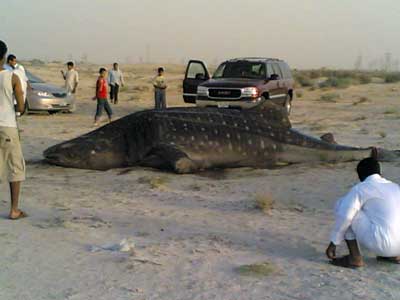
Indian Whale Shark Tourism?

Kudos to Tata Chemicals and Wildlife Trust of India for their tourism initiative.

Sustainable shark tourism is a viable bridge solution to lasting shark conservation:

If everything falls in place, Gujarat coast may emerge as tourist spot for watching whale sharks. Foreign experts have taken up a research project to study feasibility of developing whale shark eco-tourism in the state. The research programme is being undertaken under "Whale Shark Conservation Campaign" jointly carried out by Tata Chemicals Ltd, Wildlife Trust of India (WTI) and the forrest department of Gujarat.

Complete Story

Thursday, November 19, 2009

Guadalupe Island PSA - RTSea Productions

The commercial shark diving industry knows that exposing the public to sharks leads to conservation. It is a fact, and to those that would dispute this fact, to those few who only see sharks through the myopic lens of fear, we present to following PSA by RTSea Productions.

Now seen on Google Oceans:


Friday, August 29, 2008

Isla Guadalupe Conservation Fund

We got a call this week from one of our divers wondering if he could donate to the Bio-Sphere at Isla Guadalupe.

Of course, we said, go the the Isla Guadalupe Conservation Fund a site Shark Diver created just for this purpose. The trick was the site has been down for the past three days while we moved servers.

The good news is the website is back up, educating divers and thrill seekers alike to I.G and the desperate need for funds to keep this newly formed Park, open, alive and well.

As we have been reporting things at I.G have taken "turn for the worse" as of late and how this plays out will have an effect on us all in the coming months.