Showing posts with label Farallon Islands.science journalists. Show all posts

Sunday, March 20, 2011

Gulf of the Farallones White Shark Policy - Stunningly Poor Management Decisions?

In 2009 NOAA's Office of National Marine Sanctuaries enacted a series of white shark viewing and interaction protocols at the Farallone islands that, by any account, were the most restrictive on the planet.

New regulations prohibited "all activities that would attract white sharks anywhere in the Farallones sanctuary. “Attracting” the sharks means any activity that lures or may lure a shark by using food, bait, chum, dyes, decoys (e.g., surfboards or body boards used as decoys), acoustics or any other means."


Additionally it became illegal to "approach a white shark within 50 meters or 164 feet within two miles of the sanctuary (15 CFR Part 922)."


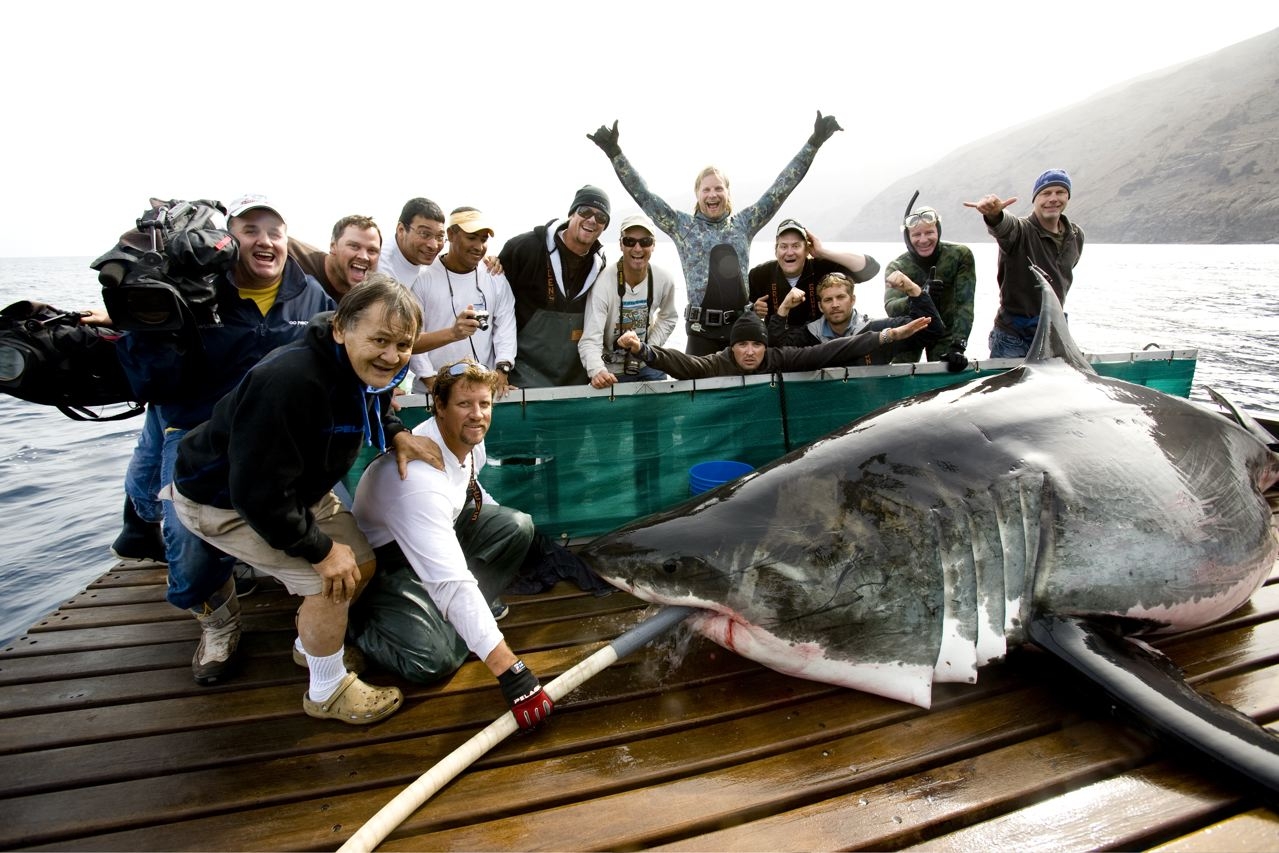
While sanctuary managers were congratulating themselves on these new rules, they were also green lighting a unbelievable hybrid film and television/shark research project that would allow film crew members (not researchers) to actually bait, hook, and land white sharks within sanctuary waters where a team would then drill into the sharks dorsal fin attaching tracking devices.


One of the team members for this project was in fact a Hollywood actor.


White sharks have enjoyed protected species status in California waters since Jan. 1, 1994. Title 14, California Code of Regulations, Fish and Game Code Section 28.06 on page 25 of the California Sportfishing Regulations states that "white sharks may not be taken under a sport fishing license. Commercial fishing operations may not target white sharks, either."


The management team at the Farallones made the decision to allow invasive research within the sanctuary in 2008/09. At the same time they were shepherding in additional rules and protocols for viewing and interacting with white sharks that would keep the general public 164 feet away from these same animals.


Sanctuary Superintendent Maria Brown's staff were also on the film vessel as observers when the first shark was badly hooked in the throat. To release the animal film crew members (not researchers) had to push a pair of industrial bolt cutters through the sharks gills cutting only 10% of the massive hook, the rest was left inside the animal.


When word of this disaster leaked out Maria Brown made the management decision to continue with the project. The next few days saw another shark hooked and tagged within the sanctuary boundaries.


Maria Brown then went on record in an ABC News interview to describe the process "as a minor dental procedure," see video.


As images surface this week of a shark named Junior with what looks like one of the tags that were placed in 2009 and a simply massive infection/tumor on the side of it's face we are calling for a complete investigation of Maria Brown and all documents, emails, contracts, letters and digital media involved in this project.


The public deserve a complete and transparent accounting of how this project came into being and what sanctuary managers were thinking at the time. A recently released and almost amusing "independent review" by Maria Browns office is a case study in political CYA and does nothing to enlighten the public trust in NOAA or the sanctuary system.


Researchers estimate that there are as few as 300 white sharks at the Farallone islands and surrounding region. This underweight animal, if in fact is confirmed as the shark that was badly hooked in 2009 with Maria Brown watching, will not survive much longer in this state. It is no longer a robust breeding animal and as such can be considered a loss to the entire population base.


Will NOAA rise to the challenge for a protected species?


Thursday, November 5, 2009

Tagging Disaster at Farallons - Foul Hooked Media

For the past few days we have been receiving an ongoing series of emails and phone calls from a variety of sources concerning an invasive SPOT tagging effort at the Farallon islands.

There was an apparent "tagging accident" this week covered in graphic detail by Bohemian Magazine.

SPOT tagging is a white hot issue within both the commercial shark diving community and shark research community. The SPOT tagging technique employs crews to catch white sharks with large hooks and to drill tracking tags into their dorsal fins.

A person identified as "Chris Fischer, owner Mothership Ocean, Expedition Leader," has been refuting and then negating the seriousness of the alleged tagging accident by responding to question asked of him by posters at this blog:

"On the anchor at the Islands now. Happy to report in that the first shark has pinged in 4 times and seems to be doing well. The second shark has also pinged in. Both are still in the area."

"We hooked two sharks this week. We were concerned about the first shark because the hook was a little deep. It was in the back of it's mouth, not gut hooked. We were able to cut the hook in half so it could roll out backwards, and left a part of it in the shark."

The Making Of Media Disasters

This is a classic example of a media disaster in the making for the tagging team at the Farallons and one that could be addressed by getting ahead of the negative and extremely graphic media that is surfacing around this incident.

Two issues need to be addressed immediately.

1. The full extent of the tagging mishap. Images, video, and a full accounting of this event as it transpired with nothing held back.

2. The role film and television productions had in this event if any.

The event was witnessed, photographed, and video taped by multiple sources so it cannot be hidden or downplayed. At stake is the reputation of a well known shark researcher and National Geographic television show about this teams tagging work set to air Nov 16, 9pm Est/Pacific.

The tagged shark is said to be "doing well" by this team. With the abject lack of transparency about the mishap to date we're now asking for "proof of life" to be added to the media list with the inclusion of a recent tracking map of all animals tagged including the first one.

This data should be independently verified by resident shark researchers from TOPP.

In a moment of media foresight this week we pointed to the unprofessional image of this group "high fiving and smiling" around a grounded shark at Isla Guadalupe and suggested "in the end these images will dog your continuing efforts for years to come."

Shark researchers have as much responsibility for media handling as any group that interacts with charismatic mega fauna and in the case of the team at the Farallons doubly so. We're not the only ones to point this out see also Mark Harding has a point.

Media transparency surrounding this event is critical for the sake of continued research with white sharks and for the public perception of invasive techniques for animal science.

Monday, August 31, 2009

White Shark Cafe - New Film

Synopsis

Great white sharks have captured people's attention for thousands of years. They are mythologized by native groups all over the world - feared and revered in equal measure. But the scientific study of these giant predators is less than 50 years old. The film profiles 2 pioneers in the field - both doing research in California at the Farallon Islands.

It also looks at today's research - greatly improved by advanced technologies that allow scientists to track the sharks migration patterns. Once thought to be coastal animals, biologists have found out they in fact travel thousands of miles. One area they go that is a complete mystery has been dubbed the 'white shark cafe'. Scientists presume they are feeding or mating there.

At the same time, science journalists are trying to affect the negative images great whites have acquired. They are showing images of sharks doing more than eating or attacking - like swimming and migrating. One of these sharks, Omoo, has even acquired his own FaceBook page. Also, the Monterey Bay Aquarium has been able to keep a juvenile white shark for more than 100 days, giving the public rare, up close experiences with the great white.