Showing posts with label eco fail. Show all posts

Friday, April 30, 2010

Rep Jon Riki Karamatsu - Chief Waffler

What a difference a few days can make.

As it turns out Hawaii's historic vote on a complete ban on shark fins was unanimous and the critical vote of Rep.Jon Riki Karamatsu went for the bill instead of against it...

...and then in a stunning display of "flip-flopping wafflery" Riki Karamatsu turned against the bill he just voted for and tried to kill it.

For one brief moment we had thought that Riki Karamatsu had
demonstrated real conservation leadership in Hawaii.

We of the conservation world dared dream that Riki might be the kind of leader who would listen to all sides of an issue but when it comes to issues about the environment, animal cruelty, and unsustainable practices Mr.Karamatsu would understand and act.

Sadly he's just a hack politico who will waver and waffle when important bills are in play pandering to whoever and wherever he can to get a vote or two.

DO NOT VOTE for this man in is race for the Lieutenant Governors seat in Hawaii.When the chips are down, Karamatsu is a poor choice for the oceans, the environment and Hawaii.

Complete story here.

Wednesday, January 27, 2010

Shark Research Isla Guadalupe - Complex Emotional Data

Science is not always pretty. Field science even less so. The headlong rush to extract data from big charismatic mega fauna like the white shark has lead us to a real debate within the shark community over invasive tagging methods.

SPOT tagging is a questionable method of tagging whites that involves catching them with baited hooks and attaching a "drilled on" dorsal tech package. The argument is these packages last longer and deliver more data to researchers which is then used to protect the species.

We have been supporters of this method until recently.

Unfortunately when reviewing videos of SPOT tagging, one comes to the conclusion that these efforts are in dire need of set protocols that do less invasive harm to magnificent breeding aged animals. The loss of just one of these animals through invasive research would be a major blow to the entire western pacific population.

At no point should anyone on this team be lacking for any contingency, seconds count, and the lack of basics, like support tires for this animal, multiple and conflicting directive voices, and a fresh sea water tube that is 10% effective is appalling to watch:


More from the Dorsal Fin Blog.

Thursday, November 5, 2009

Tagging Disaster at Farallons - Foul Hooked Media

For the past few days we have been receiving an ongoing series of emails and phone calls from a variety of sources concerning an invasive SPOT tagging effort at the Farallon islands.

There was an apparent "tagging accident" this week covered in graphic detail by Bohemian Magazine.

SPOT tagging is a white hot issue within both the commercial shark diving community and shark research community. The SPOT tagging technique employs crews to catch white sharks with large hooks and to drill tracking tags into their dorsal fins.

A person identified as "Chris Fischer, owner Mothership Ocean, Expedition Leader," has been refuting and then negating the seriousness of the alleged tagging accident by responding to question asked of him by posters at this blog:

"On the anchor at the Islands now. Happy to report in that the first shark has pinged in 4 times and seems to be doing well. The second shark has also pinged in. Both are still in the area."

"We hooked two sharks this week. We were concerned about the first shark because the hook was a little deep. It was in the back of it's mouth, not gut hooked. We were able to cut the hook in half so it could roll out backwards, and left a part of it in the shark."

The Making Of Media Disasters

This is a classic example of a media disaster in the making for the tagging team at the Farallons and one that could be addressed by getting ahead of the negative and extremely graphic media that is surfacing around this incident.

Two issues need to be addressed immediately.

1. The full extent of the tagging mishap. Images, video, and a full accounting of this event as it transpired with nothing held back.

2. The role film and television productions had in this event if any.

The event was witnessed, photographed, and video taped by multiple sources so it cannot be hidden or downplayed. At stake is the reputation of a well known shark researcher and National Geographic television show about this teams tagging work set to air Nov 16, 9pm Est/Pacific.

The tagged shark is said to be "doing well" by this team. With the abject lack of transparency about the mishap to date we're now asking for "proof of life" to be added to the media list with the inclusion of a recent tracking map of all animals tagged including the first one.

This data should be independently verified by resident shark researchers from TOPP.

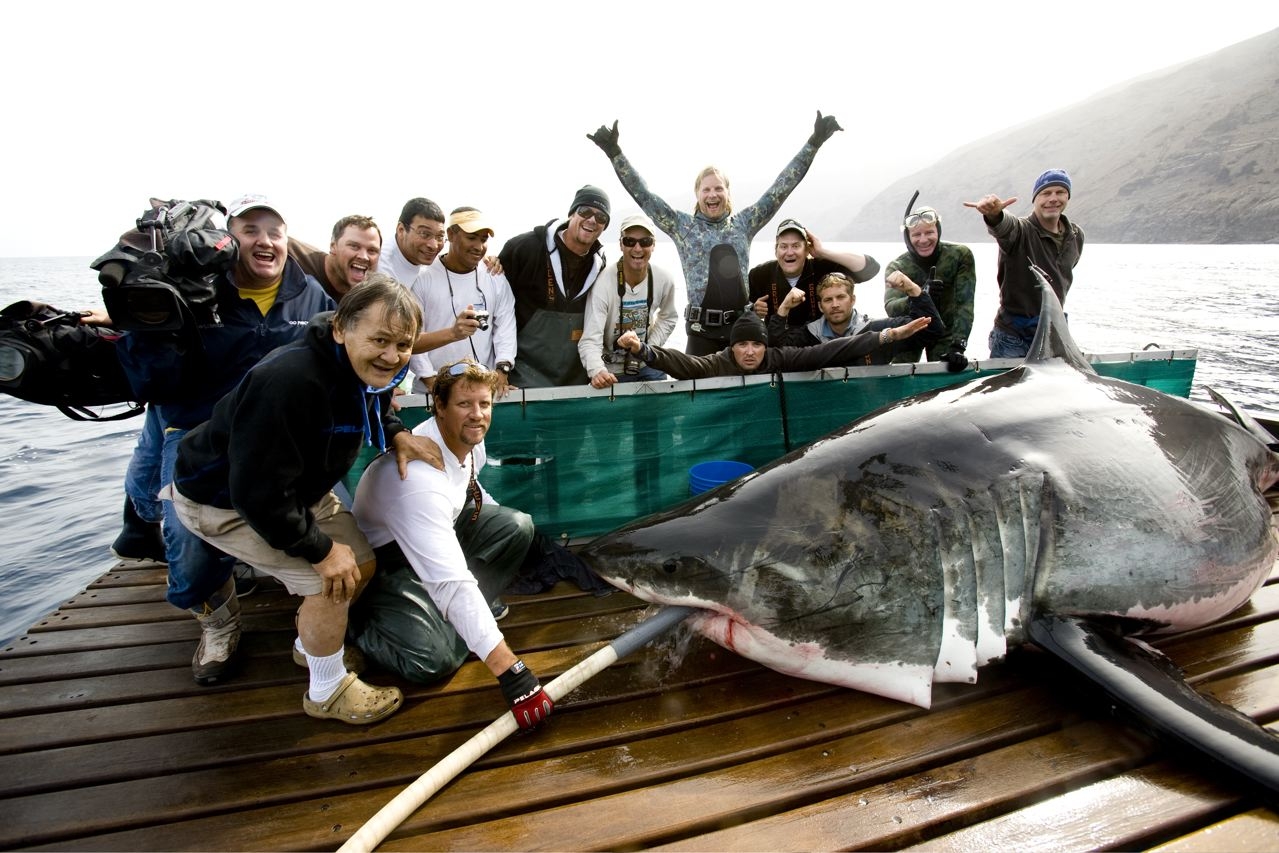
In a moment of media foresight this week we pointed to the unprofessional image of this group "high fiving and smiling" around a grounded shark at Isla Guadalupe and suggested "in the end these images will dog your continuing efforts for years to come."

Shark researchers have as much responsibility for media handling as any group that interacts with charismatic mega fauna and in the case of the team at the Farallons doubly so. We're not the only ones to point this out see also Mark Harding has a point.

Media transparency surrounding this event is critical for the sake of continued research with white sharks and for the public perception of invasive techniques for animal science.

Thursday, April 23, 2009

Sea Shepherd - Japans Coastal Whale Slaughter

When direct eco action fails - it usually fails spectacularly. Case in point the ongoing "Whale War" with Sea Shepherd and Japans whaling fleet in Antarctica.

For the past two seasons SSCS has been "wagging the conservation dog" with a series of staged media events, massaged and frankly erroneous news reports, and continued vessel rammings that have caused Japan to, for the first time in decades, kill whales within its territorial waters.

Unintended consequence to a failed direct action eco policy that has handed down a death sentence to the whales off the coasts of Japan.

To the architect of this disaster, Mr.Paul Watson and his television show Whale Wars, the 2008-9 anti whaling effort remains an expensive and media costly Pyrrhic Victory. On blogs and news sites across the world SSCS is claiming to have actually saved whales this season while at the same time failing to discuss this new and unfolding whale killing disaster in front of them. Perhaps it is best to focus on what eco wins you can get. For us at this blog and the many posts we have devoted to SSCS direct action policy failures - it is not so simple.

Paul Watson media quote, 4.16.2009 Telegraph U.K:

'People say I manipulate the media,' says Watson, who speaks calmly with an undertone of anger and lofty scorn for anyone who doubts or opposes him. 'Well, duh. We live in a media culture so why on earth wouldn't I?

Will SSCS join Japans fleet and renewed killing effort off it's territorial waters this season to save whales yet again?

With one vessel at "reluctant auction" in Canada at a loss of $800,000 to SSCS and donors and with the Steve Irwin banned from Japans waters - the chances of SSCS being there to save whales being needlessly slaughtered off Japans coastlines is as likely as Paul Watsons assassination claims of 2008.

It is high time to rethink direct action. The world has changed, conservation policies need to change with it or fade into the sunset.