Showing posts with label Marine conservation science institute. Show all posts

Tuesday, December 8, 2015

Support shark conservation at Guadalupe Island

With the holidays fast approaching, what are you going to give the person who has everything? Here is an idea. Sponsor, or name a shark at Guadalupe Island and support the research and conservation efforts there.

The Marine Conservation Science Institute is not only maintaining a photo ID database at Guadalupe, but also does extensive research into the migration behavior of "our" Great White Sharks. By naming, or sponsoring a shark, you are helping to keep the research going.

Let me introduce #153 from our database. He's an awesome shark and I hope that you agree that #153 is not a good name for this guy. I'm sure you can come up with something better.


To name or sponsor this awesome individual, visit http://www.marinecsi.org/donations/. All the proceeds go to the research and your donation is fully tax deductible.
 

If you are the one that ends up naming this shark,  Shark Diver will give you a print of either one of these pictures, so you can show your friends the shark you named.

Cheers,
Martin Graf
CEO Shark Diver

About Shark Diver. As a global leader in commercial shark diving and conservation initiatives Shark Diver has spent the past decade engaged for sharks around the world. Our blog highlights all aspects of both of these dynamic and shifting worlds. You can reach us directly at staff@sharkdiver.com.

Tuesday, September 29, 2015

New sharks at Guadalupe Island

It's been a fantastic great white shark season at Guadalupe Island so far. As reported earlier, a lot of our regular visitors have come back again, with "Bite Face" making his 15th straight appearance.  Along with our old "friends", we have also seen a bunch of new sharks. Three of them have officially been added to the MCSI photo ID database during our last science expedition.

Introducing "Luca" a sub adult male, # 171 in our database.


Joining him at #172 is "Freya", a small female.


"Hunter", a curious and active male is going to be #173


Along with those 3 above, we have seen at least another 7 sharks that are not in the database yet. I'll let you know, when they get officially added.

If you want to meet our sharks up close and personal, call us at 619.987.4275 or email staff@sharkdiver.com. The rest of this season is sold out and our 2016 season is already more than 50% booked. Maybe you will be the next person to find a new shark at Guadalupe Island.

Let's go shark diving!

Cheers,
Martin Graf
CEO Shark Diver

About Shark Diver. As a global leader in commercial shark diving and conservation initiatives Shark Diver has spent the past decade engaged for sharks around the world. Our blog highlights all aspects of both of these dynamic and shifting worlds. You can reach us directly at staff@sharkdiver.com.

Wednesday, May 21, 2014

Interesting opportunity for shark researchers.

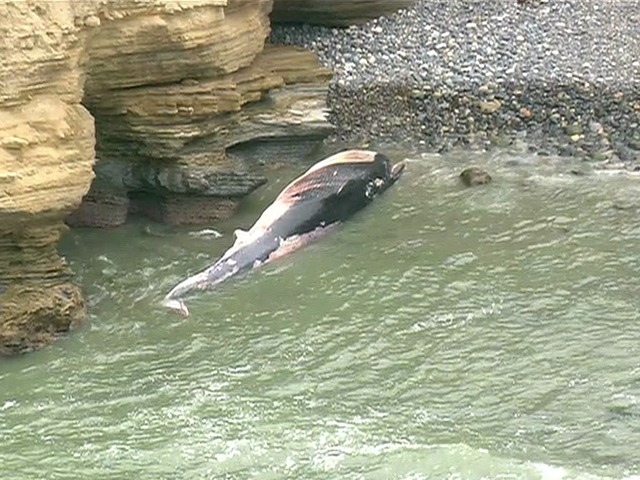
A dead 50' fin whale that washed up on shore at Point Loma in San Diego yesterday, will be towed out to sea by the Marine Conservation Science Institute today. Shark diving, cage diving, swimming with sharks at Isla Guadalupe, with www.sharkdiver.com
source
According to a post on their Facebook page, they will use it to try to attract great white sharks and attempt to tag them. Cage diving,shark diving
This is what they posted. cage diving, swimming with sharks,
"BREAKING NEWS!
If all goes as planned, we will be taking possession of this whale carcass at high tide today. We will tow it offshore and then babysit it while we wait for white sharks to find us. When that happens we hope to tag adult females that are in the area for pupping. This will be the first attempt to tag pupping females in southern California. Popup tags, as opposed to SPOT tags, will be used. We will have a short deployment of 140 days to determine where these pupping females have come from."


This is a unique opportunity to tag some sharks and get valuable information on their pupping grounds. It is also a chance to show that great white sharks are not just fierce predators, but also opportunistic feeders, playing their part in keeping the oceans healthy, by eating these rotting carcases.

We hope that they are successful.and maybe they'll see one of "our" Guadalupe sharks, though we think that they are going farther south to pup.

Cheers,
Martin Graf
CEO
Shark Diver
 
About Shark Diver. As a global leader in commercial shark diving and conservation initiatives Shark Diver has spent the past decade engaged for sharks around the world. Our blog highlights all aspects of both of these dynamic and shifting worlds. You can reach us directly at staff@sharkdiver.com.

Sunday, April 27, 2014

Where do "our" great white sharks give birth to their young?

Back in 2000, when we started diving with great white sharks at Isla Guadalupe, we knew very little about where the sharks were going, when they are not at the Island. I remember the days, when the scientists thought that they went to Shark cafe/Sofa to mate. Thanks to satellite tagging by Dr. Domeier and his team at MCSI, we now know that males and females are not in the same place, same time in that area. Based on tracking data and the white sharks gestation period of 14-18 months, we now think that they are actually mating at Guadalupe Island.
Domeier M. L. and N. Nasby-Lucas. 2012. Sex specific migration patterns and sexual segregation for adult white sharks in the northeastern Pacific - See more at: http://www.marinecsi.org/publications/#sthash.pCmg6BvH.dpuf
Domeier M. L. and N. Nasby-Lucas. 2012. Sex specific migration patterns and sexual segregation for adult white sharks in the northeastern Pacific. - See more at: http://www.marinecsi.org/publications/#sthash.pCmg6BvH.dpuf


The next question of was, where do they give birth? Again, thanks to the long term SPOT tags, (we just talked about the improvements to those tags here) we now have a better idea of where that is taking place. For the females that aggregate at Guadalupe Island, it seems to be off the coast of Baja California MX as well as the Sea of Cortez. (Two-year migration of adult female white sharks (Carcharodon carcharias) reveals widely separated nursery areas and conservation concerns)
Two-year migration of adult female white sharks (Carcharodon carcharias) reveals widely separated nursery areas and conservation concerns - See more at: http://www.marinecsi.org/publications/#sthash.pCmg6BvH.dpuf

Gill Raker's latest location.
For all of us that don't want to read scientific papers, but still want to know what our sharks are up to, MCSI has this nifty little app. here.

This is the latest post on the MCSI facebook page today, showing what Gill Rakers is up to!

"We have been waiting nearly 17 months to see where Gill Rakers will give birth. Now that we think she is heading for the Sea of Cortez, we must prepare for a stressful 4-6 weeks. The Sea of Cortez is a narrow body of water with intense commercial shark fishing. She will be running the gauntlet, through longlines and gill nets...gear that kills. Our biggest question: Will She Survive?? Watch with us on the Expedition White Shark App...and stay tuned to our FB page."

We all share their concern for Gill Rakers safety. The Sea of Cortez is not a safe place to be, for a great white shark. We hope that we'll see and get to dive with her once again this fall, at Isla Guadalupe.

Cheers,
Martin Graf
CEO Shark Diver 

About Shark Diver. As a global leader in commercial shark diving and conservation initiatives Shark Diver has spent the past decade engaged for sharks around the world. Our blog highlights all aspects of both of these dynamic and shifting worlds. You can reach us directly at staff@sharkdiver.com

Saturday, April 26, 2014

Better spot tags for great white sharks?

The Marine Conservation Science Institute has revealed a new kind of spot tag.

"Can you identify three MCSI innovations/modifications? They ask on their FB page. "Two are done at the manufacturer and one is done in our lab (painting does not count!). Two of the mods greatly improve shark tracking performance and one is for the benefit of the shark."

source
One visitor on their page correctly identified all 3, and she's not even a researcher!

Marine Conservation Science Institute 
Melissa Michaelson pointed out the three modifications. Yes, we have a thicker/stiffer antenna and copper wet/dry sensors. Both of these things are designed to combat biofouling (sea life growing on the tag). We believe biofouling is the biggest cause of tag failure. The stiffer antenna will not easily bend when algae grows on it, and nothing will grow on the copper wet/dry sensors.

A big thank you to MCSI for tirelessly working on better research methods and tools, designed to both improve the collection of data and be less intrusive on the sharks. We constantly have to balance the need for gathering data, with the impact the methods used to obtain that data have on the sharks. Too many researchers simply justify the negative impact their research has on the sharks, by pointing out the valuable information they gather. Kudos to MCSI for being aware of that fact and spending time and money on lessening that impact.

Shark Diver is proud to partner with MCSI for our science expeditions and also be a part of their photo ID data base at Guadalupe Island. 

Cheers,
Martin Graf
CEO Shark Diver

About Shark Diver. As a global leader in commercial shark diving and conservation initiatives Shark Diver has spent the past decade engaged for sharks around the world. Our blog highlights all aspects of both of these dynamic and shifting worlds. You can reach us directly at staff@sharkdiver.com.

Wednesday, March 12, 2014

Last day to bid on a scientific Guadalupe expedition!

Today is your last chance to bid on a scientific expedition with Nicole Lucas Nasby.

Here are the links for the bidding.

http://cgi.ebay.com/ws/eBayISAPI.dll?ViewItem&item=261413040920

http://cgi.ebay.com/ws/eBayISAPI.dll?ViewItem&item=261413042322

You can find more info on the trip here. All proceeds go to the Marine Conservation Science Institute, the organization that puts together and maintains the Guadalupe photo ID project.

Good luck bidding!

Cheers,
Martin Graf
CEO
Shark Diver

About Shark Diver. As a global leader in commercial shark diving and conservation initiatives Shark Diver has spent the past decade engaged for sharks around the world. Our blog highlights all aspects of both of these dynamic and shifting worlds. You can reach us directly at sharkcrew@gmail.com.

Thursday, December 5, 2013

Great White Shark Expedition with scientist Nicole Nasby-Lucas

If you have been following us on Facebook, you probably already heard the news. Shark Diver is proud to announce that we are offering a special "Science Expedition" to Isla Guadalupe from September 19-24, 2014.

Nicole Nasby-Lucas from the Marine Conservation Science Institute will be on board, sharing her research with our divers and showing them how to identify the sharks.
So fare the database has over 150 individual sharks identified and some of those individuals have visited Guadalupe Island every year since first being identified in 2001. It is amazing to see how those sharks change in size and behavior.  

This expedition is a unique opportunity to be part of the growing database. Should we find a new shark, which is fairly likely during that time of the year, the group will get the opportunity to name the shark. Imagine seeing a shark on a future television documentary, knowing you were there when we first encountered that shark. All the participants will also get a copy of the photo ID book, containing all the identified sharks at Isla Guadalupe.

The price for this special expedition is $3300. We recommend that you book early, since we are already 60% booked and this is a very unique opportunity to be a part of the ongoing study of our sharks.


To book or for more information, call us toll free at 855.987.4275 or 619.887.4275. You can also reach us via email at staff@sharkdiver.com

I hope you can be part of this exciting expedition!

Cheers,
Martin Graf
CEO
Shark Diver


About Shark Diver. As a global leader in commercial shark diving and conservation initiatives Shark Diver has spent the past decade engaged for sharks around the world. Our blog highlights all aspects of both of these dynamic and shifting worlds. You can reach us directly at staff@sharkdiver.com

Tuesday, December 3, 2013

Paul Walker at Guadalupe

The Marine Conservation Science Institute has named a new great white shark at Isla Guadalupe Paul Walker, in honor of the late actor/director who was a big advocate for shark conservation.

As most of you know, Paul Walker died tragically in a car accident on November 30. MCSI's statement on their Facebook page states. "It is our pleasure to introduce to you a newly named Guadalupe Island White Shark: Paul Walker! Named in honor of our late friend and ocean advocate"

Meet Paul Walker, our newest addition to our Isla Guadalupe photo id database. (photo by Phil Colla)

I've been diving with the great white sharks at Isla Guadalupe for 13 years and definitely developed a special relationship with some of the sharks. I'm happy to see that by naming this young shark in honor of Paul Walker, his name and legacy will live on. Hopefully we'll see him for years to come, watch him grow and remember a great ocean advocate, every time we see him.

Rest in peace Paul Walker!

Cheers,
Martin Graf
CEO
Shark Diver


About Shark Diver. As a global leader in commercial shark diving and conservation initiatives Shark Diver has spent the past decade engaged for sharks around the world. Our blog highlights all aspects of both of these dynamic and shifting worlds. You can reach us directly at sharkcrew@gmail.com.