Showing posts with label shark blogs. Show all posts

Wednesday, June 8, 2011

The Adventures of Shark Girl and Shark-Free Marinas Fiji

The Adventures of Shark Girl Blog has in depth coverage of the Shark-Free Marinas Initiative in Fiji this week.

Also known as industry gal Jillian Morris and often seen on the company of Duncan Brake, her blog coverage this week is a must read:

For a small island nation, Fiji has set a standard for their involvement in the Shark Free Marina Initiative. With 25 marinas signed on, they are still going strong. The Fijian culture respects sharks and the people realize the tourism and environmental value of a live shark. Island nations are limited in their economic ventures, so they protect that which is valuable. At the forefront of the Fijian campaign are Stuart Gow of Matava Eco Resort and Mike Neumann and his team at Beqa Adventure Divers. We interviewed Stuart for a PSA video and he said his involvement was a “ no brainer.” The resort is home to a popular sport fishing charter that also encourage catch and release if catching at all. He said is what a natural progression of the message the resort is already operating by. Stuart was also able to get PADI Project Aware involved in order to cover the cost of purchasing signs for all the marinas.

Mike Neumann and his team at BAD offer the ULTIMATE shark dive and care deeply about the animals they work with everyday. His feeders and dive team have a special connection with the sharks, like nothing I have seen before. Mike did not speak to us on camera, but the actions of his whole crew spoke volumes. Every one of them is truly an ambassador for sharks and for the ocean.

Complete post here. As a side note we have added Jillian's blog to our hallowed blog roll;)

Saturday, April 2, 2011

Too busy to blog? Fear and Pestilence next?

For many, not having a daily dose of Underwater Thrills is one of the sure signs of the oncoming Apocalypse and to you we say thanks.

You, loyal fan, are one of 27,000+ who join us each week to celebrate all things sharky. And it is because of you we have blogged from remote places, airplanes, bus depots, and even the back of camper vans in New Zealand in an effort to keep the flow of pithy shark news coming.

It's been a lot of fun knowing that because of technology we could keep doing what we do and keep you informed.

A source of pride really.

Sadly, this is one of those rare times where technology, time, and distance will prohibit us from bringing you the world of sharks, news, science and re-posts from our merry band of Blue Bloggers.

Which is where we will send you over the next many days as we get "too busy to blog". But fear not readers, we will recap all of what was missed in a stunning orgy of blogging "recapping-ness" when we get back from some of our long awaited special projects with sharks.

For your consideration while we're gone:

UnderwaterTimes.com - The Grandaddy of underwater news

Southern Fried Science - Upstart ocean science cornucopia daily, and now 30% better!

OceanicDreams - Wolf's private site for grumps, bumps, and great shark images

Deep Sea News - You like cephalopods? Well, do ya?

Outdoors, action and adventure - One mans voyage from mainstream into cool stream media

The Dorsal Fin - Shark News without the sensationalism - Sez it all right there don't it?

The Best Shark Dive in the World! - Warning, extreme, well thought views and news only

RTSea Blog: keeping an eye on Nature - What the hell? He's out too?

See you all when we get back, and stay informed.

Saturday, January 16, 2010

The Million Dollar Vote - Shark Conservation Win

Georgienne Bradley from The Imaging Foundation is the smartest woman in the shark conservation room right now.

With her small team she has managed to create a tsunami of interest in the Chase Charitable Giving Event and with your help her team can capture the ultimate prize of One Million Dollars for shark conservation efforts.

Why are we supporting this effort?

Bandwidth. Bradley's team have managed to capture a lot of it all over the Internet and beyond and that is the cornerstone of today's conservation world.

Bandwidth.

Please support this effort today with your valuable vote. Yes we know Haiti is also an important issue right now so do two things in the next 24hrs.

1. Donate 5-50 for Haiti relief efforts.

2. Vote for The Imaging Foundation.

Haiti thanks you and the sharks thank you. A double win in 2010.

Thursday, December 24, 2009

Happy Holidays from SharkDiver.com!

It's kind of a tradition here at Shark Diver posting this image.

It features a shark we named in 2004, "Shredder," with the image shot by Christy Fisher.

This image serves as a reminder of all the shark diving folks, research folks, and media folks we have come to call friends over the years.

Good people who have made the business of shark diving and shark conservation a very exciting place for us.

We are honored to know these unique and special people and look forward to the new decade of shark diving adventures, discovery, and conservation with you all.

Farewell 2009 and very Happy Holidays!

Tuesday, December 22, 2009

GSI - A New Tool For Shark Conservation?

As we say farewell to 2009 and hello to 2010, new tools are becoming available for shark conservation. Soon the issue of shark fins will be changed from a "cultural issue" to an "endangered species trafficking issue."

It's all in the DNA:

Millions of shark fins are sold at market each year to satisfy the demand for shark fin soup, a Chinese delicacy, but it has been impossible to pinpoint which sharks from which regions are most threatened by this trade.

Now, groundbreaking new DNA research has, for the first time, traced scalloped hammerhead shark fins from the burgeoning Hong Kong market all the way back to the sharks geographic origin. In some cases the fins were found to come from endangered populations thousands of miles away. These breakthrough findings provide strong evidence for enacting international trade protection for hammerhead sharks at the March 2010 CITES meeting in Qatar.

Saturday, November 21, 2009

Whale Sharks - The Holbox Papers

In depth industry papers on shark tourism are a must read. Isla Holbox in Mexico has rapidly become a test bed for sustainable tourism with sharks. A new paper is now out.

Tourism Abstract

The whale shark, Rhincodon typus, is the world's largest fish and forms predictable seasonal aggregations at several locations worldwide, which has led to an explosion in whale shark tourism since the early 1990’s. Since 2002, Holbox has established itself as a gateway to the largest known predictable aggregations of whale sharks in the world. It has also experienced the largest growth in terms of visitation and number of licensed tour operators creating an industry worth approximately US$2.72 million in 2008. This rapid growth, along with the whale shark’s listing on the IUCN’s Red List of Endangered Species has led to concerns of the industry’s sustainability in the long-term.

This study was initiated to understand the sustainability of Holbox’s whale shark tourism industry from a social and economic perspective. Tour participants were surveyed regarding their overall satisfaction with their experience, as well as their knowledge of, and compliance with, the interaction regulations. Eighty-five percent of participants were day tourists from mass tourism destinations like Cancun and Playa del Carmen. Approximately thirty percent of the economic gain from the activity is derived off the Island, while on-Island income goes dominantly to two large vertically-integrated operators who are able to bring in visitors directly from the mainland.

Overall, participants experienced high levels of satisfaction but found crowding to be a problem with thirty-three percent dissatisfied with the number of boats. Furthermore, the language barrier between the guides and the tourists resulted in a misunderstanding of the interaction regulations in place to protect the whale sharks and tourists and resulted in a high level of contact with the sharks. The outputs of this study will help inform the future sustainability of the industry, as this relies not only on a returning, healthy population of whale sharks, but also on a satisfied customer base.

Link to report.

Monday, November 16, 2009

Pacific Islands Regional Plan of Action (PI-RPOA)

The announcement of the Pacific Islands Regional Plan of Action on Sharks sounds like a good idea, but as they say "the devil is in the details."

While this plan of action "tips a hat" towards shark fining as a regional issue along management of shark stocks, it fails to look at sustainable shark tourism options that generate per shark, thousands of dollars to local and regional economies.

Shark tourism is a viable bridge solution to successful shark conservation and management.

Where local inhabitants adopt "safe and sane" shark tourism, sharks, reefs and surrounding areas flourish:

The Pacific Islands Forum Fisheries Agency (FFA), the Secretariat of the Pacific Community (SPC) and the Secretariat of the Pacific Regional Environment Programme (SPREP) today launched the Pacific Islands Regional Plan of Action (PI-RPOA) on Sharks.

At least 80 species of sharks and rays occur within the Pacific Islands region. Around half of these species are considered to be highly migratory, therefore fishing impacts upon them must be internationally managed. Due to their low productivity and long life span, these species are particularly vulnerable to overexploitation. Sharks and rays are also of cultural significance to many Pacific Island communities.

Monday, October 19, 2009

Dr. Sylvia Earle's Deep Search Foundation - Whale Sharks

Isla Holbox is perhaps the best known commercial whale shark encounter sites on the planet. A surprising success story of commercial shark diving and growing site research and conservation.

With little known about these "gentle giants" a scientific expedition lead by Dr. Sylvia Earle's Deep Search Foundation chronicled it's time here from July 11th - 15th, 2009 in an in depth series of blog posts.

Great reading for those desk bound shark adventure seekers.

About Deep Search Foundation

Founded in 2008, Deep Search is dedicated to exploring and protecting Earth's ocean, the cornerstone of our planet’s life support system. More than 70% of Earth is covered by ocean, and 94% of our habitable space is in the seas. Yet, we have explored less than 5% of the ocean and protected only a fraction of 1%. These figures pale even further when one considers the deep sea.

Brazil - Blue Shark Nursery?

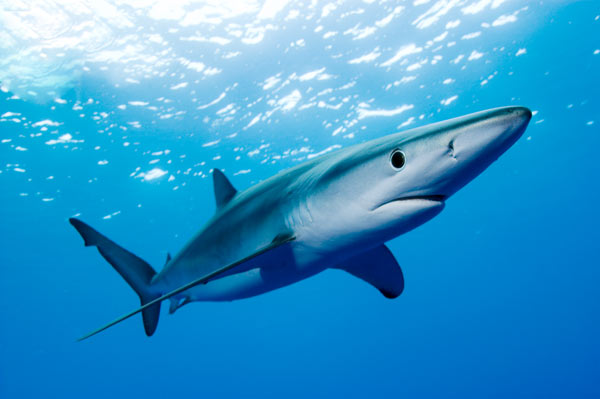
With Blue shark (Prionace glauca) stocks plummeting worldwide, new discoveries like this one off the coast of Brazil might help turn the tide.

If protections can be put in place in time:

New evidence suggests a blue shark nursery exists in the Southwest Atlantic
near Southern Brazil, according to a paper accepted for publication in the
journal Fisheries Research.

Scientists Santiago Montealegre-Quijano and Carolus Vooren of the
Universidade Federal do Rio Grande monitored the composition and magnitude
of blue shark accidental catches by longline fishery operations off the
coast of Brazil. (At least something positive can come from such data.
Bycatch has really put a dent in shark populations worldwide.)

The researchers determined that large adult blue sharks were not present in
the suspected nursery region, only juveniles. Size appears to be very
important to life stage shifts in these sharks, as the small juveniles were
found to remain at the site until they reached lengths of around 4 feet or
more.

"After that stage," the scientists conclude, "the large juvenile males
disperse northwards, whereas the large juvenile females move to the south,"
and wind up going all the way to the southeast Atlantic off Africa.

The scientists added, "The subadult females move northwards in late summer
(March) to areas beyond latitude 25°S."

Complete Story