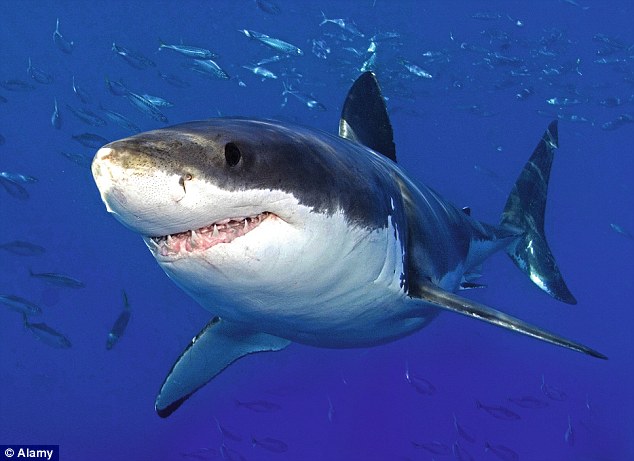
I can't wait to go back to Guadalupe Island this fall. For all of you joining us this year, here are some pictures to wet your appetite. If you haven't booked your expedition yet, we still have a few spaces open. Call us at 619.887.4275, toll free at 855.987.4275 or email staff@sharkdiver.com for more information on how you can join us. It is truly a trip of a lifetime.
Let's go shark diving!
Cheers,
Martin Graf
CEO Shark Diver
About Shark Diver.
As a global leader in commercial shark diving and conservation initiatives Shark Diver has spent the past decade engaged for sharks around the world. Our blog highlights all aspects of both of these dynamic and shifting worlds. You can reach us directly at staff@sharkdiver.com.
Friday, June 5, 2015
Tuesday, June 2, 2015
Win a week of diving with bull sharks!
Beqa Adventure Divers are currently field testing an new solar powered PAT tag on their bull sharks.
So far they have tagged 4 sharks and are running a contest, open to the public, to identify those 4 individuals. First on to correctly identify those sharks will win a week of shark diving at the Shark Reef Marine Reserve.
I just got back from diving with those bull sharks and can say that this is without a doubt an awesome experience.
Check here for details and links to pages that will help you with the identification. Good luck!
Cheers,
Martin Graf
CEO
Shark Diver
About Shark Diver. As a global leader in commercial shark diving and conservation initiatives Shark Diver has spent the past decade engaged for sharks around the world. Our blog highlights all aspects of both of these dynamic and shifting worlds. You can reach us directly at staff@sharkdiver.com.
Monday, May 4, 2015
Chris Fischer and OCEARCH's feelings are hurt!
Chris Fischer responded to my blog "Celebrities at Guadalupe Island" on our facebook page. Apparently his feelings are hurt, that a blog about celebrities at Guadalupe Island was not about him.
He writes: Chris Fischer Thrilled you are a fan of OCEARCH work. My wife and I personally funded the expedition that tagged Bruce. Amusing how you fail to mention the crew and capacity that created the data you feel is so important. Domeier simply stepped down tagged the shark then got out of the way. The crew did everything else to safely tag and release Bruce! Additionally, you know the sharks are returning now after shedding the tags with their fins healed up doing well yet you continue to let the others bash... We have spoken to the researchers using the 1 bolt method.. they are uncertain how well it's going to work long term as well the increase in bio-fouling from all the different cracks and crevices created by the mount. We have requested Wildlife Computers to try to design a modified mounting system... But as you already know, this is not required as they shed the tags after 5yrs or so and heal up nicely. You should watch Mary Lee on the Global Shark Tracker. She is getting ready to repeat the success we had at Guadalupe Island by documenting the 1st full female mature white shark migration in the N Atlantic. Soon we will know where they are mating/birthing etc... just like out where you profit from cage diving at GI. I figure our work is the best chance you got at being able to own a multi-generational business. Acting like we don't exist is amateurish and rude. We are currently on Expedition off West Australia where we have tagged 20 Tiger Sharks to solve the same puzzle as we did in GI to create a future for sharks here.
Please forgive me Chris, I had no idea that I would hurt your feelings by writing about a celebrity without mentioning you. How rude of me. So since your feelings are hurt by me not mentioning you, let me respond to what you are saying.
1. I don't quite get why you think I'm a fan of OCEARCH
2. Your wife and you financed the expedition that tagged Bruce. I never wrote anything about who financed that expedition, or why that is even relevant, but since you claim you did, let me also state what Dr. Domeier said about that.
From http://fijisharkdiving.blogspot.com/2013/04/fischer-reality-check-comments-by-dr.html
3. Domeier simply stepped down, tagged the shark and then got away?
OK, and the research paper appeared out of thin air? My advise to you would be this. Make it about the sharks instead of about you. You and I are not important, saving the sharks is. Your need to be seen as a shark expert is not important. You provide a platform for the researchers, they are the experts. Why do you feel the need to belittle what they do? Catching and tagging the sharks is a means to an end. The end is the research and that is what the researchers do. For example, I collect photos at Guadalupe Island for Nicole Nasby-Lucas. She is doing the research for the photo ID's. I have nothing to do with that. If someone mentions her research, there is no need for them to say anything about me, or anyone else who gave her the pictures.
4. You write that I know that Bruce has been returning safely to Guadalupe every year. Ah, why do you think I don't know that? I have always stated that the second generation tags, that Bruce and Bite Face were fitted with, have fallen off and there is little damage to their fins. I even put a picture of Bruce into the blog, that shows him after he lost the transmitter.
5. I let others bash you? Well, for one, how can I control what others do? Actually, I'm trying to tell others to keep an open mind. I wrote the following in my blog
"All the tagging done in a year, may cause harm to a few hundred sharks. Again, that's a few hundred, vs. 30-100 MILLION sharks killed annually.
If the protests succeed and there is no more tagging, at best we could save a few sharks every year and make life easier (no tags, no deformed dorsal fin etc.) for a few more. On the other hand, we could also loose valuable data, that may help save sharks. You decide, if it is worthwhile to focus on this. Personally I think we need to weigh the importance of the data collected against the potential harm to the sharks."
My beef with you has always been about lifting the sharks out of the water and not improving your methods. It's no longer necessary to lift them out, as Dr. Domeier has shown. I have defended your early work by saying that the Wright brothers didn't invent an A380 either. Pictures like this should only come from the past by now.
Do you have any idea how many people bash me, for not outright condemning anything you do? I hurt your feelings by not defending everything you do and mentioning your name every time I write about something that was connected to you. The blog you are referring to in your comment was about the real celebrities at Guadalupe Island, the sharks, not you.
5. I am acting like you don't exist? How can you say I act like you don't exist and on the other hand criticize what I say about you?
If you start to improve your methods of catching sharks and attaching the transmitters, I will give you credit for that. If you start giving some credit to the researchers who are doing the actual studies, instead of promoting yourself as the shark expert, I promise to write an entire blog, promoting the new and improved Chris Fischer.
Cheers,
Martin Graf
CEO Shark Diver
About Shark Diver. As a global leader in commercial shark diving and conservation initiatives Shark Diver has spent the past decade engaged for sharks around the world. Our blog highlights all aspects of both of these dynamic and shifting worlds. You can reach us directly at staff@sharkdiver.com.
He writes: Chris Fischer Thrilled you are a fan of OCEARCH work. My wife and I personally funded the expedition that tagged Bruce. Amusing how you fail to mention the crew and capacity that created the data you feel is so important. Domeier simply stepped down tagged the shark then got out of the way. The crew did everything else to safely tag and release Bruce! Additionally, you know the sharks are returning now after shedding the tags with their fins healed up doing well yet you continue to let the others bash... We have spoken to the researchers using the 1 bolt method.. they are uncertain how well it's going to work long term as well the increase in bio-fouling from all the different cracks and crevices created by the mount. We have requested Wildlife Computers to try to design a modified mounting system... But as you already know, this is not required as they shed the tags after 5yrs or so and heal up nicely. You should watch Mary Lee on the Global Shark Tracker. She is getting ready to repeat the success we had at Guadalupe Island by documenting the 1st full female mature white shark migration in the N Atlantic. Soon we will know where they are mating/birthing etc... just like out where you profit from cage diving at GI. I figure our work is the best chance you got at being able to own a multi-generational business. Acting like we don't exist is amateurish and rude. We are currently on Expedition off West Australia where we have tagged 20 Tiger Sharks to solve the same puzzle as we did in GI to create a future for sharks here.
Please forgive me Chris, I had no idea that I would hurt your feelings by writing about a celebrity without mentioning you. How rude of me. So since your feelings are hurt by me not mentioning you, let me respond to what you are saying.
1. I don't quite get why you think I'm a fan of OCEARCH
2. Your wife and you financed the expedition that tagged Bruce. I never wrote anything about who financed that expedition, or why that is even relevant, but since you claim you did, let me also state what Dr. Domeier said about that.
From http://fijisharkdiving.blogspot.com/2013/04/fischer-reality-check-comments-by-dr.html
Yes, he paid for 2 trips to Guadalupe, but
then struck a TV deal that allowed him to recoup those costs as he was
getting $400K/episode.
We were able to make multiple episodes from a
single trip. Furthermore, I tapped two other private foundations to
help pay for the tags and research; financial support that he never
acknowledges. Fischer was fairly paid for all of the work we did
together… this was not a huge philanthropic venture. On the contrary, he
made it clear: “no cameras no trips.” The huge $$ figure he throws
around must be for the entire operating cost of his ship and production
company for each year he was making these television shows. But that’s
not a fair way to account for the actual cost of the research (a
fraction of the yearly operating budgets were due to the handful of
research trips)… and he never discusses the INCOME. Any real accountant
would tally just the costs of the specific trips… or think like this:
what would it cost to charter a vessel for each research trip, and then
subtract the income! Perhaps he took a loss, I don’t know; my
organization took a financial loss… but no way did either of us wrack up
losses in the millions.
Read more of Dr. Domeier's comments here3. Domeier simply stepped down, tagged the shark and then got away?
OK, and the research paper appeared out of thin air? My advise to you would be this. Make it about the sharks instead of about you. You and I are not important, saving the sharks is. Your need to be seen as a shark expert is not important. You provide a platform for the researchers, they are the experts. Why do you feel the need to belittle what they do? Catching and tagging the sharks is a means to an end. The end is the research and that is what the researchers do. For example, I collect photos at Guadalupe Island for Nicole Nasby-Lucas. She is doing the research for the photo ID's. I have nothing to do with that. If someone mentions her research, there is no need for them to say anything about me, or anyone else who gave her the pictures.
4. You write that I know that Bruce has been returning safely to Guadalupe every year. Ah, why do you think I don't know that? I have always stated that the second generation tags, that Bruce and Bite Face were fitted with, have fallen off and there is little damage to their fins. I even put a picture of Bruce into the blog, that shows him after he lost the transmitter.
5. I let others bash you? Well, for one, how can I control what others do? Actually, I'm trying to tell others to keep an open mind. I wrote the following in my blog
"All the tagging done in a year, may cause harm to a few hundred sharks. Again, that's a few hundred, vs. 30-100 MILLION sharks killed annually.
If the protests succeed and there is no more tagging, at best we could save a few sharks every year and make life easier (no tags, no deformed dorsal fin etc.) for a few more. On the other hand, we could also loose valuable data, that may help save sharks. You decide, if it is worthwhile to focus on this. Personally I think we need to weigh the importance of the data collected against the potential harm to the sharks."
My beef with you has always been about lifting the sharks out of the water and not improving your methods. It's no longer necessary to lift them out, as Dr. Domeier has shown. I have defended your early work by saying that the Wright brothers didn't invent an A380 either. Pictures like this should only come from the past by now.
Do you have any idea how many people bash me, for not outright condemning anything you do? I hurt your feelings by not defending everything you do and mentioning your name every time I write about something that was connected to you. The blog you are referring to in your comment was about the real celebrities at Guadalupe Island, the sharks, not you.
5. I am acting like you don't exist? How can you say I act like you don't exist and on the other hand criticize what I say about you?
If you start to improve your methods of catching sharks and attaching the transmitters, I will give you credit for that. If you start giving some credit to the researchers who are doing the actual studies, instead of promoting yourself as the shark expert, I promise to write an entire blog, promoting the new and improved Chris Fischer.
Cheers,
Martin Graf
CEO Shark Diver
About Shark Diver. As a global leader in commercial shark diving and conservation initiatives Shark Diver has spent the past decade engaged for sharks around the world. Our blog highlights all aspects of both of these dynamic and shifting worlds. You can reach us directly at staff@sharkdiver.com.
Labels:
chris fischer,
Ocearch,
Shark diving,
shark research,
shark tagging
Sunday, May 3, 2015
Forget Jaws! Sharks can SAVE lives!
We are used to the media using sensationalistic headlines when covering anything to do with sharks. "Jaws" "Monster" "Beast" "Mankiller" etc. are no unusual terms in those headlines.
This is the second time this year that we have to give kudos to a news outlet. The Daily Mail has a headline that says: Forget Jaws! Sharks can SAVE lives! You read that right, no scare tactic, no monsters, .... actually OK, they did mention monsters, but not the way we are used to either. The second part of their headline reads: We think of them as monsters, but a new documentary reveals they could help us fight cancer and Alzheimer's
Hey, they even use a cool picture of one of "our" great white sharks. This is "Johnny"!
They are acknowledging how sharks are normally portrayed. Der-dum... der-dum... der, der, der, der, der, der... Mention sharks and, thanks to Steven Spielberg’s 1975 blockbuster Jaws, those suspenseful notes of impending attack are, for most, what springs immediately to mind.
Of course we also want to give kudos to the BBC, which seems to be one of the few television outlets that are still producing quality shark documentaries, a far cry from the crap that ABC4 and Jeff Kurr, are producing for the discovery channel. Check out BBC's "Shark" website here: http://www.bbc.co.uk/programmes/p02n7s0d
Let's go shark diving!
Cheers,
Martin Graf
CEO Shark Diver
About Shark Diver. As a global leader in commercial shark diving and conservation initiatives Shark Diver has spent the past decade engaged for sharks around the world. Our blog highlights all aspects of both of these dynamic and shifting worlds. You can reach us directly at staff@sharkdiver.com.
This is the second time this year that we have to give kudos to a news outlet. The Daily Mail has a headline that says: Forget Jaws! Sharks can SAVE lives! You read that right, no scare tactic, no monsters, .... actually OK, they did mention monsters, but not the way we are used to either. The second part of their headline reads: We think of them as monsters, but a new documentary reveals they could help us fight cancer and Alzheimer's
Hey, they even use a cool picture of one of "our" great white sharks. This is "Johnny"!
| source |
They are acknowledging how sharks are normally portrayed. Der-dum... der-dum... der, der, der, der, der, der... Mention sharks and, thanks to Steven Spielberg’s 1975 blockbuster Jaws, those suspenseful notes of impending attack are, for most, what springs immediately to mind.
The
movie masterpiece, which is 40 years old this summer, led to many a
phobia, but according to a new three-part BBC1 documentary Shark, its
toothy star isn’t that terrifying in real-life.
The article is talking about a documentary series "Sharks", the BBC has produced and it covers a lot of different sides of sharks. They write about the scientific discoveries we made that could mean sharks can help with various human diseases, like Alzheimer's. It is also covering a bunch of different shark species and is giving some very good information on sharks.
Of course we also want to give kudos to the BBC, which seems to be one of the few television outlets that are still producing quality shark documentaries, a far cry from the crap that ABC4 and Jeff Kurr, are producing for the discovery channel. Check out BBC's "Shark" website here: http://www.bbc.co.uk/programmes/p02n7s0d
Let's go shark diving!
Cheers,
Martin Graf
CEO Shark Diver
About Shark Diver. As a global leader in commercial shark diving and conservation initiatives Shark Diver has spent the past decade engaged for sharks around the world. Our blog highlights all aspects of both of these dynamic and shifting worlds. You can reach us directly at staff@sharkdiver.com.
Labels:
bbc,
daily mail,
good Shark media,
Shark diving,
shark documentary
Saturday, May 2, 2015
Celebrities at Guadalupe Island
The world is full of celebrities, but how often do you actually get to meet them and spend some quality time with them? Over the past 14 years, I've been privileged to do just that. I've met many stars of film and TV at Guadalupe Island. Stars like the incomparable "Shredder" "Bruce" "Jaques" "Lucy" "Scarboard" etc. All of those sharks have been featured in countless shark week episodes and their pictures are all over the internet. They truly are the rock-stars of Guadalupe Island.
I have talked about "Shredder" here and "Chugey's" amazing recovery from a huge bite here and here.
Today I want to introduce you to "Bruce", another regular at Guadalupe Island. Bruce has been around since we started shark diving at Guadalupe. When we first encountered him, he was just a "little" teenager, probably not much longer than 11-12'. Of course we had no idea that we would see him year after year and that he would grow into one of the larger males at the Island. He is now on the north side of 16' and one of the dominant shark at the site.
Bruce is also the shark who got me interested in shark research. I have to admit, that reading scientific papers held about as much excitement to me as watching grass grow. It simply wasn't my thing. When Dr. Domeier tagged Bruce with a satellite transmitter and used some of the data it produced for his paper on white shark migration, Nicole Nasby-Lucas, who works with Dr. Domeier and is responsible for the Guadalupe photo ID database, gave me a copy of the research paper. I started reading it, and realized that this paper was not just a research paper, but more like Bruce's travel journal. It was exciting to find out where he was going, when not at Guadalupe and what he was doing. Who knew that he was vacationing near Hawaii?! I mean, who wouldn't want to vacation there?
Even though he is one of the more mellow sharks around, being a great white shark and male, Bruce was not averse to a little fighting here and there. I remember one particular morning. I was just getting into the cages to sort out all the regulators, when I noticed some movement behind me. I turned and saw Bruce who looked me straight into the eyes. He sported a huge bite injury, just in front of his gills, with a hole that let me look straight through it and out his mouth. The amazing thing was, it didn't seem to bother him. He just kept swimming around and stayed active, like nothing had happened.
Just like Chugey, when he came back the following year, his wound was closed and there was barely a scar to indicate that he was ever injured.
So that is Bruce.
Since we started shark diving at Guadalupe Island, we have met over 160 different individual sharks. Who is going to be back this year? Who is going to make their first appearance? Come join us and find out! This is your chance to meet these celebrities up close and personal. They do pose for pictures with you! Next time you watch shark week, you can say, "Hey, I know that guy!"
We run our trips from August through November and have a few spaces left for this coming season. We even have a couple of spaces open on our research trip on November 11. On that trip you'll get to meet the researcher who knows all about those sharks, Nicole Nasby-Lucas, along with all the rock-star white sharks of Guadalupe Island. Call us at 619.887.4275 or email staff@sharkdiver.com for more information.
Let's go shark diving!
Cheers,
Martin Graf
CEO Shark Diver
About Shark Diver. As a global leader in commercial shark diving and conservation initiatives Shark Diver has spent the past decade engaged for sharks around the world. Our blog highlights all aspects of both of these dynamic and shifting worlds. You can reach us directly at staff@sharkdiver.com.
I have talked about "Shredder" here and "Chugey's" amazing recovery from a huge bite here and here.
Today I want to introduce you to "Bruce", another regular at Guadalupe Island. Bruce has been around since we started shark diving at Guadalupe. When we first encountered him, he was just a "little" teenager, probably not much longer than 11-12'. Of course we had no idea that we would see him year after year and that he would grow into one of the larger males at the Island. He is now on the north side of 16' and one of the dominant shark at the site.
![]() |
| Bruce saying hello to Whitney, one of our divers! |
Bruce is also the shark who got me interested in shark research. I have to admit, that reading scientific papers held about as much excitement to me as watching grass grow. It simply wasn't my thing. When Dr. Domeier tagged Bruce with a satellite transmitter and used some of the data it produced for his paper on white shark migration, Nicole Nasby-Lucas, who works with Dr. Domeier and is responsible for the Guadalupe photo ID database, gave me a copy of the research paper. I started reading it, and realized that this paper was not just a research paper, but more like Bruce's travel journal. It was exciting to find out where he was going, when not at Guadalupe and what he was doing. Who knew that he was vacationing near Hawaii?! I mean, who wouldn't want to vacation there?
Even though he is one of the more mellow sharks around, being a great white shark and male, Bruce was not averse to a little fighting here and there. I remember one particular morning. I was just getting into the cages to sort out all the regulators, when I noticed some movement behind me. I turned and saw Bruce who looked me straight into the eyes. He sported a huge bite injury, just in front of his gills, with a hole that let me look straight through it and out his mouth. The amazing thing was, it didn't seem to bother him. He just kept swimming around and stayed active, like nothing had happened.
![]() |
| Bruce about a week after the bite. |
Just like Chugey, when he came back the following year, his wound was closed and there was barely a scar to indicate that he was ever injured.
![]() |
| Bruce with his closed bite injury. |
So that is Bruce.
Since we started shark diving at Guadalupe Island, we have met over 160 different individual sharks. Who is going to be back this year? Who is going to make their first appearance? Come join us and find out! This is your chance to meet these celebrities up close and personal. They do pose for pictures with you! Next time you watch shark week, you can say, "Hey, I know that guy!"
We run our trips from August through November and have a few spaces left for this coming season. We even have a couple of spaces open on our research trip on November 11. On that trip you'll get to meet the researcher who knows all about those sharks, Nicole Nasby-Lucas, along with all the rock-star white sharks of Guadalupe Island. Call us at 619.887.4275 or email staff@sharkdiver.com for more information.
Let's go shark diving!
Cheers,
Martin Graf
CEO Shark Diver
About Shark Diver. As a global leader in commercial shark diving and conservation initiatives Shark Diver has spent the past decade engaged for sharks around the world. Our blog highlights all aspects of both of these dynamic and shifting worlds. You can reach us directly at staff@sharkdiver.com.
Friday, May 1, 2015
Sharks need your help in Florida!
DaShark, through his blog, just made me aware of something that is happening in Florida right now. Apparently shore fishermen are (legally) fishing for pregnant bull sharks. A lot of those sharks, even if released will die, along with their pups. This is nothing new, it's been going on for years.
I know a lot of you who are reading this, are living in Florida. If you want to do something to help those sharks, this is your chance. Talk to your legislators, educate those fishermen, find out what groups are already working there and how you can help.
According to the Keys Info Net, Everglades National Park managers have the ability to declare an emergency rule to restrict access when protected species are found breeding in an area,"
So call or write the Everglades National Park manager. Read Key Info Net's entire article http://www.keysnet.com/2015/04/29/502450_dying-sharks-off-lower-matecumbe.html?rh=1
Pupping season is right now! The sharks need your help, do what you can! If you can, go to that beach at night and talk to the fishermen, let them know, why it is not a good idea to target those sharks. Remember, you will have a better chance of convincing them, if you are polite.
Cheers,
Martin Graf
CEO Shark Diver
About Shark Diver. As a global leader in commercial shark diving and conservation initiatives Shark Diver has spent the past decade engaged for sharks around the world. Our blog highlights all aspects of both of these dynamic and shifting worlds. You can reach us directly at staff@sharkdiver.com.
| source |
According to the Keys Info Net, Everglades National Park managers have the ability to declare an emergency rule to restrict access when protected species are found breeding in an area,"
So call or write the Everglades National Park manager. Read Key Info Net's entire article http://www.keysnet.com/2015/04/29/502450_dying-sharks-off-lower-matecumbe.html?rh=1
Pupping season is right now! The sharks need your help, do what you can! If you can, go to that beach at night and talk to the fishermen, let them know, why it is not a good idea to target those sharks. Remember, you will have a better chance of convincing them, if you are polite.
Cheers,
Martin Graf
CEO Shark Diver
About Shark Diver. As a global leader in commercial shark diving and conservation initiatives Shark Diver has spent the past decade engaged for sharks around the world. Our blog highlights all aspects of both of these dynamic and shifting worlds. You can reach us directly at staff@sharkdiver.com.
Monday, April 27, 2015
Amazing!
I've been diving with the great white sharks at Isla Guadalupe for 13 years now. Over time, I've come to marvel at the healing ability
of the sharks, the mysteries of their migration, their distinctly
different personalities and most of all, and this is what blows my mind,
the fact that I can go to Guadalupe and know that I will see, not just
any great white shark, but a particular individual great white shark.
Great
white sharks are not resident to any given location, like say a clown
fish, where you know that if you go to that particular spot, you're
going to see that individual fish. The great white sharks that we see at
Guadalupe are a highly migratory species that travel thousands of miles and typically return to the island each year. (every other year for adult females)
So here's the way I look at it. Say you live in a town or city, but I don't have your address. If I just come into your town at random and hang out, I may never run into you at all. With these sharks, I look at the great wide ocean and know that I can find "Bite Face," "Jaques" or "Bruce" and have been able to do so, consistently, for 13 years. Others, like our friend on the left, "Quetzalcoatl,"(OK I didn't name him) take a prolonged vacation of 8 years and return. "Where have you been, buddy?"
The fact that these world travelers (I mean, who doesn't want to vacation in Hawaii) return to Guadalupe Island, each season makes this Island a very important place, not just for us shark divers, but for the species itself. I'm happy to say that Mexico has declared the Island a biosphere; roughly the equivalent of a national park in the U.S. I want to applaud Mexico for taking that step in protecting the Island and the great white sharks that visit there annually.
The Island itself is a marvel of its own. There are many native species of plants that only exist on Guadalupe Island and it is a nesting ground for many migratory birds like the Albatross.
Guadalupe is over 4000 feet high at it's highest spot and creates its own weather pattern. The island blocks the clouds and we usually have bright sunny skies above us, even if it's cloudy all around us.
The clouds cascading over the mountains create an amazing backdrop for our shark divers and make for some memorable pictures.
You can join us on one of our expeditions and meet these shark yourself. We have a few openings left for this year and are already booking for 2016. For more information visit http://www.sharkdiver.com/dive-packages/great-white-shark-diving/ or call us at 619.887.4275. Email staff@sharkdiver.com
Let's go shark diving!
Cheers,
Martin Graf
CEO
Shark Diver
About Shark Diver. As a global leader in commercial shark diving and conservation initiatives Shark Diver has spent the past decade engaged for sharks around the world. Our blog highlights all aspects of both of these dynamic and shifting worlds. You can reach us directly at sharkoperations@gmail.com
So here's the way I look at it. Say you live in a town or city, but I don't have your address. If I just come into your town at random and hang out, I may never run into you at all. With these sharks, I look at the great wide ocean and know that I can find "Bite Face," "Jaques" or "Bruce" and have been able to do so, consistently, for 13 years. Others, like our friend on the left, "Quetzalcoatl,"(OK I didn't name him) take a prolonged vacation of 8 years and return. "Where have you been, buddy?"
The fact that these world travelers (I mean, who doesn't want to vacation in Hawaii) return to Guadalupe Island, each season makes this Island a very important place, not just for us shark divers, but for the species itself. I'm happy to say that Mexico has declared the Island a biosphere; roughly the equivalent of a national park in the U.S. I want to applaud Mexico for taking that step in protecting the Island and the great white sharks that visit there annually.
Guadalupe is over 4000 feet high at it's highest spot and creates its own weather pattern. The island blocks the clouds and we usually have bright sunny skies above us, even if it's cloudy all around us.
The clouds cascading over the mountains create an amazing backdrop for our shark divers and make for some memorable pictures.
You can join us on one of our expeditions and meet these shark yourself. We have a few openings left for this year and are already booking for 2016. For more information visit http://www.sharkdiver.com/dive-packages/great-white-shark-diving/ or call us at 619.887.4275. Email staff@sharkdiver.com
Let's go shark diving!
Cheers,
Martin Graf
CEO
Shark Diver
About Shark Diver. As a global leader in commercial shark diving and conservation initiatives Shark Diver has spent the past decade engaged for sharks around the world. Our blog highlights all aspects of both of these dynamic and shifting worlds. You can reach us directly at sharkoperations@gmail.com
Sunday, April 26, 2015
Shark "Documentary" causing problems in New Zealand
Shark diving in New Zealand has been in trouble for a while. The local Paua divers at Stewart Island are claiming that the shark diving activity is causing white sharks to change their behavior and are trying to get it banned.
The Inquisitor writes. "Aggressive Great White Shark! Behavioral Changes’ Spur Proposed Diving Ban In New Zealand "
The behavior of great white sharks around New Zealand’s Stewart Island has notably changed, according to local Paua divers, prompting authorities to call for a ban on local shark diving in light of the increasingly aggressive predators."
According to them "NZ First MP Clayton Mitchell noted the frequency with which great whites were being observed by local fishermen, asserting that the sharks are seen every day. He alleged that this amounted to a change in the sharks’ behavior, raising fears among the local Paua divers who make their living in the shark-infested waters.
In this video that was put online, you can see the filmmakers put a hang-bait right by the boat to attract the shark. When the shark goes after it, they make it seem like it was going after the boat itself. Stuff like that doesn't help to spread the message that great white sharks are not mindless killers.
This "documentary" is of course by none other than renowned "shark porn" producers ABC4 and Jeff Kurr.
Jeff Kurr is making statements like this: I’ve been wondering about why the sharks in New Zealand are so much more aggressive. and I can’t think of many things more eerie than descending into this inky blackness and being surrounded by three, four, six, eight massive great white sharks. That’s pretty scary stuff. source
So he's making a statement of fact, white sharks in New Zealand are more aggressive than in other places. What an "expert"! (sharkasm intended) Him saying that it's pretty scary stuff to be surrounded by sharks isn't exactly easing the fears of those Paua divers. Of course the titles of their "documentaries" "Lair of the megashark" and "Fins of Fury" doesn't help either.
There are many studies that dispute that shark diving will cause the sharks to attack boats, but like anything having to do with sharks, hysteria and opinions seem to trump facts. When these "experts" and self proclaimed "shark whisperers" fuel that hysteria just to get ratings for their shows, or further their superhero image, they hurt the cause severely.
The bottom line is this, if we as an industry don't speak out against these kinds of shows and actively participate by allowing them to film this stuff off our vessels, we hurt not only conservation, but our own businesses. The operators in New Zealand have been finding that out the hard way.
I have stated this before. You may have mixed feelings about shark diving, but one thing is clear. At Guadalupe Island we have been chasing off poachers in the past. If for some reason the cage diving there gets shut down, there will be nobody looking out for the sharks and the poachers will have free reign.
So let's go shark diving! But let's do it legally, responsibly, safely and in a way that portrays the sharks as what they really are, awesome predators, to be respected but not to be feared!
Cheers,
Martin Graf
CEO Shark Diver
About Shark Diver. As a global leader in commercial shark diving and conservation initiatives Shark Diver has spent the past decade engaged for sharks around the world. Our blog highlights all aspects of both of these dynamic and shifting worlds. You can reach us directly at staff@sharkdiver.com.
The Inquisitor writes. "Aggressive Great White Shark! Behavioral Changes’ Spur Proposed Diving Ban In New Zealand "
The behavior of great white sharks around New Zealand’s Stewart Island has notably changed, according to local Paua divers, prompting authorities to call for a ban on local shark diving in light of the increasingly aggressive predators."
According to them "NZ First MP Clayton Mitchell noted the frequency with which great whites were being observed by local fishermen, asserting that the sharks are seen every day. He alleged that this amounted to a change in the sharks’ behavior, raising fears among the local Paua divers who make their living in the shark-infested waters.
“They are very, very concerned about their safety. It’s not a matter
of if there’s an incident, but when and how often,” he noted. “Those
close encounters are happening more frequently, to the point where on a
daily basis when people are going out there and dropping a fishing line
into the ocean, sharks are coming up. That’s behavioral change.”
Entire article here:
I'm always amazed that fishermen blame shark diving, which uses some attractant (chum) and small hang-baits (tuna heads) are for "feeding" the sharks and thus making them associate boats with food. They themselves are feeding the sharks (unintentionally) with entire fish. A struggling fish, hooked on a line attracts predators and since they are on a line and not able to swim away, an easy meal for the sharks. Wouldn't it make sense that the fishermen themselves are at least as much to blame for that association?
We know that when it comes to sharks, reason usually goes out the window and people argue mostly emotionally. As shark conservationists, we have to take that into consideration and need to be careful not to fuel their fear. And therein lies the problem. The need for some individuals, who claim to be conservationist, to make themselves look like superheros by doing all kinds of stupid stuff with those sharks and making it public, plays right into the hands of those who blame us for their behavior changes.
Today, the New Zealand Herald is reporting that a local group of Paua divers is using footage from a shark week "documentary" to claim that shark diving is to blame for sharks associating boats and humans with food. They write: "Footage has emerged of the terrifying moment a 6m great white shark
lunged at a dinghy carrying an international film crew off Stewart
Island.
Two people were on the inflatable craft filming for documentary Lair of the Megashark, which screened on Discovery Channel last year, when they had the frightening encounter." sourceIn this video that was put online, you can see the filmmakers put a hang-bait right by the boat to attract the shark. When the shark goes after it, they make it seem like it was going after the boat itself. Stuff like that doesn't help to spread the message that great white sharks are not mindless killers.
This "documentary" is of course by none other than renowned "shark porn" producers ABC4 and Jeff Kurr.
Jeff Kurr is making statements like this: I’ve been wondering about why the sharks in New Zealand are so much more aggressive. and I can’t think of many things more eerie than descending into this inky blackness and being surrounded by three, four, six, eight massive great white sharks. That’s pretty scary stuff. source
So he's making a statement of fact, white sharks in New Zealand are more aggressive than in other places. What an "expert"! (sharkasm intended) Him saying that it's pretty scary stuff to be surrounded by sharks isn't exactly easing the fears of those Paua divers. Of course the titles of their "documentaries" "Lair of the megashark" and "Fins of Fury" doesn't help either.
There are many studies that dispute that shark diving will cause the sharks to attack boats, but like anything having to do with sharks, hysteria and opinions seem to trump facts. When these "experts" and self proclaimed "shark whisperers" fuel that hysteria just to get ratings for their shows, or further their superhero image, they hurt the cause severely.
The bottom line is this, if we as an industry don't speak out against these kinds of shows and actively participate by allowing them to film this stuff off our vessels, we hurt not only conservation, but our own businesses. The operators in New Zealand have been finding that out the hard way.
I have stated this before. You may have mixed feelings about shark diving, but one thing is clear. At Guadalupe Island we have been chasing off poachers in the past. If for some reason the cage diving there gets shut down, there will be nobody looking out for the sharks and the poachers will have free reign.
So let's go shark diving! But let's do it legally, responsibly, safely and in a way that portrays the sharks as what they really are, awesome predators, to be respected but not to be feared!
Cheers,
Martin Graf
CEO Shark Diver
About Shark Diver. As a global leader in commercial shark diving and conservation initiatives Shark Diver has spent the past decade engaged for sharks around the world. Our blog highlights all aspects of both of these dynamic and shifting worlds. You can reach us directly at staff@sharkdiver.com.
Saturday, April 25, 2015
Surfer critically injured by shark off southern Australia; witness reports large great white
FOX news has this headline today "Surfer critically injured by shark off southern Australia; witness reports large great white"
The following is what they report:
I have to say, that I'm usually not a big fan of how the media reports any shark related incident. Take the "Jaws Attack" headline in the UK we talked about yesterday and you can see how sensationalistic the media tends to cover anything shark related.
Big kudos to FOX news for reporting an actual incident, where a surfer got seriously hurt by a shark and cover it without any sensationalism. Maybe the 20 foot size is a bit exaggerated, but people tend to perceive sharks a larger than they actually are. They even pointed out the fact that sharks are common off Australia's beaches and attacks are rare.
Cheers,
Martin Graf
CEO Shark Diver
About Shark Diver. As a global leader in commercial shark diving and conservation initiatives Shark Diver has spent the past decade engaged for sharks around the world. Our blog highlights all aspects of both of these dynamic and shifting worlds. You can reach us directly at staff@sharkdiver.com.
The following is what they report:
"ADELAIDE, Australia – A surfer is in critical condition after a shark attacked him in southern Australia.
Police said in a statement that the 26-year-old man suffered "serious leg injuries" when he was attacked Saturday about 40 kilometers (25 miles) south of Port Lincoln in South Australia state.
He was flown by helicopter in critical condition from a Port Lincoln hospital to the main hospital in the state capital, Adelaide.
Adelaide's The Advertiser newspaper reported a witness's description of a 6-meter (20-foot) great white shark biting off the surfer's leg, which had an ankle strap attached to his surfboard.
Sharks are common off Australia's beaches, but fatal attacks are rare. The country has averaged fewer than two deadly attacks per year in recent decades."
I have to say, that I'm usually not a big fan of how the media reports any shark related incident. Take the "Jaws Attack" headline in the UK we talked about yesterday and you can see how sensationalistic the media tends to cover anything shark related.
![]() |
| I like not being described as a mindless killer! |
Big kudos to FOX news for reporting an actual incident, where a surfer got seriously hurt by a shark and cover it without any sensationalism. Maybe the 20 foot size is a bit exaggerated, but people tend to perceive sharks a larger than they actually are. They even pointed out the fact that sharks are common off Australia's beaches and attacks are rare.
Cheers,
Martin Graf
CEO Shark Diver
About Shark Diver. As a global leader in commercial shark diving and conservation initiatives Shark Diver has spent the past decade engaged for sharks around the world. Our blog highlights all aspects of both of these dynamic and shifting worlds. You can reach us directly at staff@sharkdiver.com.
Labels:
fox news,
good media,
shark attack,
shark conservation,
Shark diving,
shark media
Thursday, April 23, 2015
Giant Shark scare in the UK
In another stellar piece of journalism (sharkasm) intended, the Daily Star writes "Jaws attack: Terror after GIANT SHARKS spotted circling the coast of England"
Wow, someone got attacked by a giant shark! Did they survive? What kind of a shark was it?
The article states: "HOLIDAYMAKERS have been placed on alert as huge sharks hit British shores thanks to the recent hot weather.
Still, no mention of what happened. So what the heck is going on?
OK, we are getting somewhere. Here is what happened: "The basking sharks, which can grow up to 26ft long, have been spotted off beaches in many of the country's holiday hotspots.
As if that wasn't terrifying enough – thousands of jellyfish have also been spotted in the waves."
The caption for the picture below read: "HORROR: The terrifying sharks – which can grow up to 26ft – have started circling shallow water around the UK [AK Wildlife Cruises]"
Wait, did I miss something? Where is the attack? What is terrifying about a basking shark?
The article goes on to say: "Ross Wheeler of AK Wildlife Cruises in Falmouth, Cornwall, captured incredible footage of the first sighting of a shark in UK waters."We had two basking sharks – our first for the season – thousands of barrel jellyfish, 11 common dolphin and five harbour porpoise" he said."
Ah, I see. They are describing some people going on a wildlife cruise and encountering a completely harmless basking shark. The "reporter" mistakenly wrote the wrong headline. He really meant to say: "Tourists are excited about encountering gentle giant" or "Lucky tourists encounter gentle giant and friendly dolphins off the UK coast". Easy mistake to make (sharkasm) intended.
Later on the article correctly mentions: "But the sighting isn't likely to mean a repeat of horrific scenes from 1975 thriller Jaws - the basking sharks are harmless but have been lured to the Cornish coastline earlier than normal.
They swim around with their gaping jaws open to swallow tiny plankton, their main food source."
So the reporter actually knew that there was no attack and the sharks are harmless plankton eaters, which of course didn't stop him from making up a completely fictitious and sensationalistic headline. It's not like the sharks don't have it hard enough already, with overfishing and being killed for their fins. I really wish the media would stop making it worse by portraying even the most harmless sharks as terrifying monsters.
Cheers,
Martin Graf
CEO Shark Diver
About Shark Diver. As a global leader in commercial shark diving and conservation initiatives Shark Diver has spent the past decade engaged for sharks around the world. Our blog highlights all aspects of both of these dynamic and shifting worlds. You can reach us directly at staff@sharkdiver.com.
Wow, someone got attacked by a giant shark! Did they survive? What kind of a shark was it?
The article states: "HOLIDAYMAKERS have been placed on alert as huge sharks hit British shores thanks to the recent hot weather.
Still, no mention of what happened. So what the heck is going on?
OK, we are getting somewhere. Here is what happened: "The basking sharks, which can grow up to 26ft long, have been spotted off beaches in many of the country's holiday hotspots.
As if that wasn't terrifying enough – thousands of jellyfish have also been spotted in the waves."
The caption for the picture below read: "HORROR: The terrifying sharks – which can grow up to 26ft – have started circling shallow water around the UK [AK Wildlife Cruises]"
| source |
Wait, did I miss something? Where is the attack? What is terrifying about a basking shark?
The article goes on to say: "Ross Wheeler of AK Wildlife Cruises in Falmouth, Cornwall, captured incredible footage of the first sighting of a shark in UK waters."We had two basking sharks – our first for the season – thousands of barrel jellyfish, 11 common dolphin and five harbour porpoise" he said."
Ah, I see. They are describing some people going on a wildlife cruise and encountering a completely harmless basking shark. The "reporter" mistakenly wrote the wrong headline. He really meant to say: "Tourists are excited about encountering gentle giant" or "Lucky tourists encounter gentle giant and friendly dolphins off the UK coast". Easy mistake to make (sharkasm) intended.
Later on the article correctly mentions: "But the sighting isn't likely to mean a repeat of horrific scenes from 1975 thriller Jaws - the basking sharks are harmless but have been lured to the Cornish coastline earlier than normal.
They swim around with their gaping jaws open to swallow tiny plankton, their main food source."
So the reporter actually knew that there was no attack and the sharks are harmless plankton eaters, which of course didn't stop him from making up a completely fictitious and sensationalistic headline. It's not like the sharks don't have it hard enough already, with overfishing and being killed for their fins. I really wish the media would stop making it worse by portraying even the most harmless sharks as terrifying monsters.
Cheers,
Martin Graf
CEO Shark Diver
About Shark Diver. As a global leader in commercial shark diving and conservation initiatives Shark Diver has spent the past decade engaged for sharks around the world. Our blog highlights all aspects of both of these dynamic and shifting worlds. You can reach us directly at staff@sharkdiver.com.
Labels:
basking shark,
daily star,
fake news,
shark attack,
Shark diving,
stupid media
Wednesday, April 22, 2015
Revolution, a film by Rob Stewart
Rob Stewart's film Revolution is premiering on the web today. Check out the trailer below.
Revolution
Revolution is a feature documentary about opening your eyes, changing the world and fighting for something. A true life adventure following director Rob Stewart in the follow up to his hit Sharkwater, Revolution is an epic adventure into the evolution of life on earth and the revolution to save us.
Discovering that there’s more in jeopardy than sharks, Stewart uncovers a grave secret threatening our own survival as a species, and embarks on a life-threatening adventure through 4 years and 15 countries into the greatest battle ever waged.
Bringing you some of the most incredible wildlife spectacles ever recorded, audiences are brought face to face with sharks and cuddly lemurs, into the microscopic world of the pygmy seahorse, and on the hunt with the deadly flamboyant cuttlefish. From the coral reefs in Papua New Guinea to the rain forests in Madagascar, Stewart reveals that our fate is tied to even the smallest of creatures.
Through it all, Stewart’s journey reveals a massive opportunity, as activists and individuals all over the world are winning the battle to save the ecosystems we depend on for survival. Presenting the most important information on human survival and inspiring people all over the world to fight for life, Revolution is essential viewing for everyone. Startling, beautiful, and provocative, Revolution inspires audiences across the globe to join the biggest movement in history that’s rising to the challenge of saving our world.
Revolution premiered at the Toronto International Film Festival and has already gone on to win ten awards, including the Audience Award for Best Documentary at the Atlantic Film Festival, Most Popular Environmental Film Award at the Vancouver International Film Festival, the Audience Award at the Victoria Film Festival and the Social Justice Award at the Santa Barbara International Film Festival.
Cheers,
Martin Graf
CEO Shark Diver
About Shark Diver. As a global leader in commercial shark diving and conservation initiatives Shark Diver has spent the past decade engaged for sharks around the world. Our blog highlights all aspects of both of these dynamic and shifting worlds. You can reach us directly at staff@sharkdiver.com.
Labels:
Revolution movie,
Rob Stewart,
shark conservation,
shark diver
Conservation done right. BAD is good!
Today, on Earth Day, as we are getting ready for our Fiji trip, to dive with bull sharks at the Beqa Shark Reef Marine Reserve, we get some news about why we love that place so much. It's not just because they have some of the best shark diving in the world.
5 years ago, DaShark started "Mangroves for Fiji" in order for Beqa Adventure Divers "BAD"
(It really means "Bad Ass Divers") and other Fiji businesses to become carbon neutral. Whether it is their dive operation or their commitment to conservation, everything they do is a cut above. No wonder they describe themselves as a conservation project masquerading as a dive shop. You may remember, that it was also they who were instrumental in creating the first marine national park in Fiji.
Mangroves for Fiji just released their website, "Mangroves for Fiji" where businesses can sign up to become carbon neutral. You can check out and like their Facebook page.
Projects Abroad, who is planting those mangroves on "BAD's" behalf has some exciting volunteer opportunities for you to help with their shark conservation program. Check here for details. I can tell you from personal experience, volunteering with them is a blast. You couldn't possibly have more fun, doing something for the environment, than working with Projects Abroad in Fiji. I had a blast, trying to tag some bull shark with them last year.
Shark Diver is proud to partner with "BAD" for our bull shark expedition in May. You can also book your shark dive with "BAD" for anytime of the year through us. Call us at 855.987.4275 or email staff@sharkdiver.com for more info.
Have a great Earth Day!
Cheers,
Martin Graf
CEO Shark Diver
Friday, April 17, 2015
How every diver can help with shark conservation.
I have to share DaSharks latest blog. It is actually a guest blog by Ian Campbell that talks about protecting sharks and how you can help.
Shark research, management & conservation intelligentsia meeting in Townsville, see below
Here goes.
This is an important initiative.
Thanks indeed! I hope all of you will join in this effort to conserve our shark populations. And here you were, thinking you're just having fun, when you're diving with sharks.
Let's go shark diving!
Martin Graf
CEO Shark Diver
About Shark Diver. As a global leader in commercial shark diving and conservation initiatives Shark Diver has spent the past decade engaged for sharks around the world. Our blog highlights all aspects of both of these dynamic and shifting worlds. You can reach us directly at staff@sharkdiver.com.
![]() |
Introduction by DaSharks:
Are you intrigued? :)
Here goes.
Ian Campbell is currently working for WWF’s Global Shark and Ray
Initiative running the sustainable management component. He is also a
Shark diver and a member of the SRMR management team.
From NGOs to the public and private sector, Ian has over 20 years’
experience in fisheries policy, ecology and fishery management working
extensively within both the UK and internationally. Previous employment
has included overseeing the reform of the EU’s Common Fisheries Policy
for the Pew Charitable Trusts, fisheries observer on blue-fin tuna
vessels, inshore fisheries management and as a commercial diver in the
offshore sector.
Ian holds a Bachelor’s degree in Applied Marine Biology from
Heriot-Watt University and a Master degree in Environmental Science from
the University of Strathclyde.
This is an important initiative.
Having just returned from a meeting with major stakeholders, see at
top, I've asked him whether he wouldn't mind submitting a guest post
presenting it to the wider public.
Here is Ian's post.
Shark divers – An underused resource?
Everyone who is even remotely interested in sharks (and rays, don’t forget these charismatic shark pancakes of wonder) is abundantly aware of the pressures they are facing.
Fishing pressure, habitat loss, unsustainable consumption, or even fanciful claims of being “evolved for extinction” everywhere you look they are under the cosh. The pressure that sharks are under have probably best been summed up by the 2014 paper (and here - notice the part about research and data collection?)
led by the IUCN Shark Specialist Group which concludes that almost a
quarter of all sharks and rays (over 1,000 species assessed) are faced
with the very real threat of extinction. Remember, this is not the
claims of an environmental NGO, but an independent assessment of the
current state of shark and ray populations by 128 experts from 35
different countries. Here’s a simple chart highlighting the different
levels of threat.
As you can see, despite what you may hear from some campaigns, not all
sharks are threatened, and some are in worse shape than others, but, for
WWF, one of the biggest areas of concern is the shaded grey area on the
left side of that chart. From all the 1,042 species assessed, 487 are
“data deficient”.
Basically, virtually nothing is known about almost half of all sharks and rays.
Effective management and designing plans to reduce mortality is
virtually impossible when faced with this lack of basic understanding.
Imagine trying to balance your budget without knowing how much money you
have in your account to start with, or the amount of interest you are
receiving or paying out.
There are a number of conservation initiatives out there which lay
claims to conserving sharks, from finning bans to fin trade bans
(there’s a difference), from sanctuaries to species protections and from
policies to plans. Some of these are more useful than others, but if
any of them are to be truly effectual then one thing is key to them all:
DATA!
Without a basic understanding of shark and ray populations both around
the coast and in offshore waters, then making decisions for the
long-term survival of these species is little more than a best guess.
Yet there are a multitude of areas rich in information, but not
necessarily being channeled in the right direction.
Divers, fishermen, market traders, even shark and ray researchers
produce data every day, yet it is surprising how little of it actually
makes its way to ministerial departments or independent bodies to assist
with informed decisions for conservation. WWF are seeking to bridge
this gap. We are developing a project in collaboration with some of the
world’s leading shark researchers to create standard methodologies to
maximize the benefits from untapped resources.
In 1999, the Food and Agriculture Organisation produced guidelines for
countries to undertake a step-by-step process to developing long-term,
sustainable shark management plans (known as National Plans of Action,
NPOA).
This process seems relatively simple. Firstly, collect data on sharks
and rays in the form of a Shark Assessment Report. Then use this data to
develop your NPOA. While this does sound simple, and has been done in
places like Australia, the EU and NZ (to varying degrees of vigour), the
Pacific Islands have had to get by using the limited resources at their
disposal. There are some NPOAs currently in existence in the region,
such as the Cook Islands and Samoa. Other countries have draft versions
waiting government endorsement, such Fiji and Tonga, while some
countries such as Palau want to declare shark sanctuaries. These efforts
for conservation & long-term planning are great, although all of
these measures have one oversight in common. They are built on a lack of
data. None of the countries have produced Shark Assessment Reports, so
cannot fully know the issues within their territorial waters. This is
not the fault of the Pacific Islands, gathering data can be time
consuming for departments with limited resources, and the analysis
requires specific technical expertise. Organizations such as the FFA and SPC are providing a great service, although their remit extends way beyond just looking at sharks.
So here is where WWF are stepping in.
As mentioned, we are collaborating with shark expertise far and wide to
develop our shark ‘Rapid Assessment Tool-kit’ (or shark RAT). The main
function of this is to design ways to collect and analyze data on
coastal and pelagic sharks that can then be used to produce a Shark
Assessment Report. The very basic baseline data in this report can in
turn used by governments to develop conservation strategies that are
then based on some sort of understanding.
Where is this data going to come from?
Well, there are a lot of sources we will be exploring from genetic and
socioeconomic surveys at landing sites to extensive underwater video
surveys, but one untapped goldmine is the information collected by
divers. In Fiji, there is the Great Fiji Shark Count
which is starting to produce comparable info. At present, this isn’t
incorporated into management plans, so it’s high time it is.
There are also other things dedicated shark divers can be doing.
Ever been on a surface interval that seems to go on for ages? Sat at the
bar for the post-dive drinks to talk about what you saw? How about
these hours are spent helping screen underwater video footage that shows
what happens at your dive site when no-one is in the water? Pretty much
every diver would be able to recognise whether a shark or ray was in
shot, and a huge number would even be able to say what species it was.
Collecting and screening this type of data would take a massive burden
off an already overstretched ministry or fisheries/shark specialist.
Obviously, we are well aware of the multitude of challenges that lay
ahead for the project to be fully successful, and some methodologies
that may look good on the page may fail spectacularly when introduced to
the real world. But we have to try. Improved management for sharks and
rays is the only thing that is going to directly reduce mortality. Not
shark fin soup campaigns, or putting all your eggs into “ending finning”
and certainly not cavorting in swimwear near sharks.
Last week WWF held a 3 day workshop where 12 of the best minds in their
respective fields (I’m not including myself, I just took notes and
provided the tea and coffee) provided input and direction.
As well as academic researchers from the fields of genetics, citizen science and eco-tourism, we had input from FFA, SPC and SPREP.
Everyone we have spoken to has been enthusiastic and willing to support
us. The people in attendance will now provide advice and
recommendations to the project. Professor Colin Simpfendorfer,
the co-chair of the IUCN Shark Specialist Group also gave us a name,
although how serious he was is up for debate. WWF now convenes the
Pacific Rapid Assessment Tool-kit Scientific Advisory Committee, or
PRAT-SAC. Maybe the first thing we need to work on is the name?
The project is embryonic and there is a lot of hard work ahead, but with
a little direction, continued enthusiasm and, more importantly,
collaboration, then slowly we’ll restore the balance for sharks and rays
DaShark: Here's to that - thanks buddy, appreciate!
Thanks indeed! I hope all of you will join in this effort to conserve our shark populations. And here you were, thinking you're just having fun, when you're diving with sharks.
Let's go shark diving!
Martin Graf
CEO Shark Diver
About Shark Diver. As a global leader in commercial shark diving and conservation initiatives Shark Diver has spent the past decade engaged for sharks around the world. Our blog highlights all aspects of both of these dynamic and shifting worlds. You can reach us directly at staff@sharkdiver.com.
Thursday, April 16, 2015
Bull sharks in Fiji
We are going to Fiji in May, to dive with the bull sharks in the Shark Reef Marine Reserve. DaShark has posted this video by Howard Hall, who has just been diving there last week.
The Bulls of BAD from Howard Hall on Vimeo.
Come join us and experience these sharks up close and personal. Call us at 855.987.4275 or 619.887.4275 email staff@sharkdiver.com
Let's go shark diving.
Martin Graf
CEO Shark Diver
About Shark Diver. As a global leader in commercial shark diving and conservation initiatives Shark Diver has spent the past decade engaged for sharks around the world. Our blog highlights all aspects of both of these dynamic and shifting worlds. You can reach us directly at staff@sharkdiver.com.
Working with Fishermen to Save Sharks
The shark conservation and fishing communities are often at odds over protecting our sharks. Guy Harvey is making an effort to bring these two groups together. During the current Cayman Islands International Fishing Tournament, he is teaming up with the participants to help tag oceanic white tip sharks.
Cayman 27 writes: "Dozens of fishermen are getting in on the conservation act by helping to tag sharks. Conservationist Dr. Guy Harvey is teaming up with participants of the Cayman Islands International Fishing Tournament, embarking on one of the largest shark tagging and research projects ever undertaken in the Caribbean.
Dr. Harvey’s team will learn more about the oceanic white tip shark. “They are very valuable to the eco-system and to science,” he says.
By aligning with local fishing tournaments in 2013, as well as this year he believes fishermen are becoming more aware of the shark’s worth. “We used the fishing fleet to catch sharks for us and we pay them to hold the sharks until the chase boat [gets] there there to take the sharks from them because they’re giving up time for us,” explained Mr. Harvey."
I know, a lot of conservationists don't like fishing tournaments and even oppose actions like these by Guy Harvey. They think this is glorifying the killing of sharks and argue that there is post release mortality. I have to admit, I'm not a big fan of catch and release shark fishing myself, but think about it this way. What is better? Going to a shark fishing tournament and protesting, maybe even hurling some insults at the fishermen, questioning their morals and character, like many people like to do, or do what Guy Harvey is doing?
Just like the Shark Free Marina initiative that was created by Shark Diver, Harvey is working together with the fishermen in these tournaments. He raises their awareness of the conservation concerns and gets them interested and involved in protecting the sharks.
"Cayman 27's" article states: “For every shark that you get and call in; that we successfully tag and release [fishermen] will receive CI$500 in cash,” said CIB Marketing Manager, Matthew Leslie.
And the partnership is working says Dr. Harvey, by the fishermen getting to see the animals in their offshore habitat, he says anglers are practicing preservation.
We always have to ask ourselves this question. Do we care more about the principle that we should not catch or kill any sharks, or do we want to save sharks. By protesting and vilifying the fishermen, we will not save one shark! By working with them, promoting catch and release, (even with all the problems associated with that), getting them to help with tagging and making em aware, we actually save sharks.
Every journey starts with a first step. We are never going to accomplish our goal of saving the sharks, the oceans, if we are not willing to work together.
Cheers,
Martin Graf
CEO Shark Diver
About Shark Diver. As a global leader in commercial shark diving and conservation initiatives Shark Diver has spent the past decade engaged for sharks around the world. Our blog highlights all aspects of both of these dynamic and shifting worlds. You can reach us directly at staff@sharkdiver.com.
| source |
Cayman 27 writes: "Dozens of fishermen are getting in on the conservation act by helping to tag sharks. Conservationist Dr. Guy Harvey is teaming up with participants of the Cayman Islands International Fishing Tournament, embarking on one of the largest shark tagging and research projects ever undertaken in the Caribbean.
Dr. Harvey’s team will learn more about the oceanic white tip shark. “They are very valuable to the eco-system and to science,” he says.
By aligning with local fishing tournaments in 2013, as well as this year he believes fishermen are becoming more aware of the shark’s worth. “We used the fishing fleet to catch sharks for us and we pay them to hold the sharks until the chase boat [gets] there there to take the sharks from them because they’re giving up time for us,” explained Mr. Harvey."
I know, a lot of conservationists don't like fishing tournaments and even oppose actions like these by Guy Harvey. They think this is glorifying the killing of sharks and argue that there is post release mortality. I have to admit, I'm not a big fan of catch and release shark fishing myself, but think about it this way. What is better? Going to a shark fishing tournament and protesting, maybe even hurling some insults at the fishermen, questioning their morals and character, like many people like to do, or do what Guy Harvey is doing?
Just like the Shark Free Marina initiative that was created by Shark Diver, Harvey is working together with the fishermen in these tournaments. He raises their awareness of the conservation concerns and gets them interested and involved in protecting the sharks.
"Cayman 27's" article states: “For every shark that you get and call in; that we successfully tag and release [fishermen] will receive CI$500 in cash,” said CIB Marketing Manager, Matthew Leslie.
And the partnership is working says Dr. Harvey, by the fishermen getting to see the animals in their offshore habitat, he says anglers are practicing preservation.
We always have to ask ourselves this question. Do we care more about the principle that we should not catch or kill any sharks, or do we want to save sharks. By protesting and vilifying the fishermen, we will not save one shark! By working with them, promoting catch and release, (even with all the problems associated with that), getting them to help with tagging and making em aware, we actually save sharks.
Every journey starts with a first step. We are never going to accomplish our goal of saving the sharks, the oceans, if we are not willing to work together.
Cheers,
Martin Graf
CEO Shark Diver
About Shark Diver. As a global leader in commercial shark diving and conservation initiatives Shark Diver has spent the past decade engaged for sharks around the world. Our blog highlights all aspects of both of these dynamic and shifting worlds. You can reach us directly at staff@sharkdiver.com.
Wednesday, April 15, 2015
Shark sighting in Portugal
Congratulations to the algarvedailynews! You managed to cover a shark sighting near shore without sensationalism, with a simple "Mystery shark spotted near Tavira" headline.
In the article you go on to explaine exactly what happened.
As the build up to the swimming season starts with beaches being prepared and concession soon to open, a reminder that 'we are not alone' when bathing was evident in the waters near Tavira.
About Shark Diver. As a global leader in commercial shark diving and conservation initiatives Shark Diver has spent the past decade engaged for sharks around the world. Our blog highlights all aspects of both of these dynamic and shifting worlds. You can reach us directly at staff@sharkdiver.com.
In the article you go on to explaine exactly what happened.
As the build up to the swimming season starts with beaches being prepared and concession soon to open, a reminder that 'we are not alone' when bathing was evident in the waters near Tavira.
A shark at least two metres long was spotted by fishermen on the jetty close to the beaches at the entrance of the river Gilão.
| Photo Michael Correia - Correio da Manhã |
The shark clearly was in distress and was disorientated, swimming around in the shallow waters.
After an hour the shark headed back out
to sea with its identity a mystery as, despite being observed by many
fishermen, nobody could identify the species.
The Tavira shark was not a Hammerhead, a
species which can come close to the shore but normally feeds at least a
mile out mainly on sardines, tuna and mackerel and only when the water
is warmer at 20 degrees or more.
In 2013 a three metre shark was spotted
close in to the shore near the fortress at Sagres, again the species
could not be acertained.
Along Portugal’s coast there are dozens
of shark species, the majority of which stay offshore and deep down,
venturing closer to the surface only when hunting for fish or looking
for a mate.
There is an abundance of sharks in
Portuguese waters, a sign of a healthy marine environment, but no
recorded incident of anyone being attacked as sharks prefer eating fish
of which there are plentiful supplies.
Kudos for reporting a shark sighting without sensationalism and resorting to the use of monster, beast or killer. You informed your readers, without scaring them. Your action shows that covering a shark sighting can be done in an informative manner and no scary headlines. I hope that other media outlets will take note.
Cheers,
Martin Graf
CEO Shark Diver
About Shark Diver. As a global leader in commercial shark diving and conservation initiatives Shark Diver has spent the past decade engaged for sharks around the world. Our blog highlights all aspects of both of these dynamic and shifting worlds. You can reach us directly at staff@sharkdiver.com.
Monday, April 13, 2015
Jaws, lemon shark
About Shark Diver. As a global leader in commercial shark diving and conservation initiatives Shark Diver has spent the past decade engaged for sharks around the world. Our blog highlights all aspects of both of these dynamic and shifting worlds. You can reach us directly at staff@sharkdiver.com.
Subscribe to:
Posts (Atom)