Showing posts with label rtsea productions. Show all posts

Thursday, October 11, 2012

About White Sharks & Conservation: Richard Theiss at The Explorers Club in San Diego

There are some very smart people involved with sharks. They have the innate ability to see the many facets of oceans conservation in ways that bring new insights and fresh views towards the process.

One of these wise sages is Richard Theiss.

You probably don't know much about him because he's one of the quiet ones. He's not out in the community rattling media cages, seeking the limelight, or even trying to get his own Reality TV show.

Lord knows we have enough of these to last a lifetime and for the 100,000 metric tons of sharks that will be processed today absolutely nothing being done by these media conservation circus performers will impact that gruesome statistic.

About the only time you'll hear from Richard is when he has something to say and then the smart money is on those who pay close attention.

We have been paying attention to Richard for quite a few years now for reasons that include his talents underwater, to storytelling, to conservation.
 
If you want to get into the rarefied air of one of Richards few public engagements, be in San Diego Tuesday October 16th, 2012 at the Explorers Club.

Conservation is a long game, it's got many facets and like a hand knitted sweater if you pull on one thread it impacts the rest. Richard is going to show you one of the greatest conservation webs of all time and what can be done about it today, tomorrow, and in 30 years from now.

About Shark Diver. As a global leader in commercial shark diving and conservation initiatives Shark Diver has spent the past decade engaged for sharks around the world. Our blog highlights all aspects of both of these dynamic and shifting worlds. You can reach us directly at sharkcrew@gmail.com.

Wednesday, April 4, 2012

RTSea Status on U.S. Shark Conservation

Channel RTSea Shark conservation media
If you're in the mood for first rate analysis on the complex issue of shark conservation, management, media, the place to go is the RTSea Blog.

We feature unique blogs like RTSea for a reason - great thought.

This week Richard wrapped up Washington Posts environmental writer Juliet Eilperin's take on the current status of shark conservation.

It was a good piece, and Richards thoughts on the article go deeper into the issue from a writer, filmmaker, and conservationist who has always seen all sides of complex issues and is able to distill these down to terrific blog posts.

"Commercial fishermen are pressuring politicians to interject loopholes into proposed legislation. And one common proposal is allowing the landing of whole sharks. Once thought of as a way to dissuade fishermen from taking sharks because of the value difference per pound between a whole shark and just its fins, I am now concerned that, with several species, even the taking of whole sharks may prove to be one shark too many. The populations of some sharks is that perilous."

RTSea complete post here.

Thursday, September 1, 2011

RTSea Productions Using Shark Footage for Great Shark Media

Meeting at the intersection of responsible shark media and great visuals is this news piece from ABC. Kudos to Richard Theiss from RTSea Productions who has been a tireless pro-shark media campaigner with many years of shark footage for use by the media that portrays these animals in this most natural light.

This white shark footage is from Isla Guadalupe shot with the crew of Shark Diver. Richard will be back at the island again this season (2011) for more shark encounters:


Wednesday, June 1, 2011

RTSea Productions on OC Magazine

OC Magazine (Orange County California) is the gold standard for regional happenings and local interviews with highlights of OC luminaries.

One of these was our very own Richard Theiss from RTSea Productions who, for the past 30 years has been one of California's premier underwater and above water cameramen, directors, and production developers.

You can read the interview here, like his blog (which recently garnered the attention of Nat Geo Magazine) it's a great read.

Richard Theiss on OC Magazine.

Wednesday, January 26, 2011

The Theiss Factor - Genius is Genetic!

Last week the shark world lit up with the recent results from a study that said sharks are color blind.

Take that Yum Yum Yellow believers, we know it has been a hard week for you, but heck science ain't here so you can come up with crazy shark myths.

For us the exciting moment in this study was not the study itself but the team behind it and one name that stood out like a beacon - Dr. Susan Theiss of the University of Queensland.

Could it be that this Theiss was related in anyway to another well known Theiss at RTSea Blog and RTSea Productions?

A quick phone call to Richard Theiss at his home in California confirmed all our suspicions, "Yup, that's my niece", said a very proud uncle on the other end of the line.

What is it with Theiss clan and sharks?

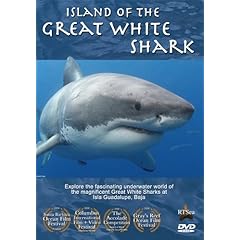
You'll note that RTSea Productions was behind Island of the Great White Shark an award winning look at both shark tourism and research working in tandem at Isla Guadalupe, Mexico...and now this.

For those of you who read Richards blog you'll also note the uncanny scientific manner in which he distills complex issues down to a readable and digestible format, a trademark blog style that has rocketed Richards readership to one of the top Blue Blogs out there right now.

They say "Genius is Genetic". In the case of the Theiss clan the world is better for smarts like this and the shark world is benefiting as well, one groundbreaking study, and one groundbreaking documentary at a time.

Kudos!

Tuesday, January 4, 2011

Shark-Safe Beaches: testing aerial spotters and dismissing electro-magnetics

Starting 2011 out right with this report from RTSea Productions.

If you want concise industry thought and analysis this is your go to daily blog.

From RTSea:

When people enter the ocean - to swim, surf, dive, or just frolic about at the water's edge - they are entering a different wilderness. In doing so, they expose themselves to a measure of risk from interaction with other animals, from a sea jelly sting or an urchin spine all the way up to an interaction with a larger animal like a shark.

To protect people from unwanted shark interactions, several methods of prevention have been tried over the decades. In Australia, there is an extensive network of netted beaches. The steel mesh nets are designed with openings small enough to ward off large sharks but large enough to allow smaller fish to pass through. The nets have been used for many years and, in combination with lifeguards acting as shark spotters, the process has been fairly successful. But not infallible.

Sharks can get through the nets on occasion due to the nets being moved about from currents or storm action, so to maintain a big picture overview, spotter planes are being deployed in New South Wales (south eastern Australia) as part of a test program during peak months of swimming activity. And the NSW government in Australia has deployed a novel method to keep their spotter pilots' skill sharp. Decoy or replica sharks will be placed in the water to check the effectiveness of the surveillance program. Lifeguards will be made aware of the days and times for the placement of the replica sharks, but not the pilots. Results of the tests will be included in the final evaluation as to the aerial surveillance program future.

Far to the west, following a recent series of shark attacks in Sharm El-Sheikh, Egypt, a variety of safety measures are being considered. Nothing has been confirmed as yet because the government is weighing an appropriate response that also recognizes the probable causes for the attacks - reportedly everything from unregulated chumming to overfishing of the shark's usual preying to the dumping of dead sheep from a passing freighter.

One approach that apparently will not be used is something akin to electrified fencing. An organization, the Shark Academy, has proposed installing an electro-magnetic shield along the Egyptian coastline of Sharm El-Sheikh in the Red Sea, but the idea has been totally dismissed by the Governor of South Sinai, General Abdel Fadeel Sousha.

"He (the company's owner) showed us a video in a meeting in Sharm El-Sheikh on devices used to protect beaches from sharks and made verbal and purely theoretical proposals that didn't persuade me on a personal level," said General Sousha. "I asked him for a practical demonstration in front of a committee of experts so we could be sure the devices work effectively. This still hasn't happened."

A pretty far-fetched notion when you think about it. I have worked with divers who have used a protective device called a Shark Shield which emits a strong electro-magnetic pulse when needed and seems to be quite effective with medium-size sharks like lemon or blacktip sharks. But I've been told it also "rattles the teeth" of the diver when its discharged. So the idea of having something that strong running constantly across a beach seems rather unlikely.

Apparently, previous attempts at using electro-magnetic fields along beaches in Natal, South Africa and in Australia have been a dismal failure, not preventing the sharks from entering enclosed swimming areas but giving bathers a nice little shock instead.

Rather than rely on Rube Goldberg devices, common sense should prevail. Non-life threatening measures - such as nets and shark spotters - along with a better understanding and acceptance of the wild world we are venturing into is what's called for. While many of us hear the call to return to the sea, we must remember that we enter it as interlopers and strangers on someone else's turf.

Saturday, December 11, 2010

Filmmaker's Journal: Mystery, a white shark never to be forgotten

From RTSea Productions:

In 2005, I began filming what was to become Island of the Great White Shark, a documentary on the white sharks of Isla Guadalupe, Baja and the important working relationship that exists between the shark diving operators and Mexican researchers.

It took several seasons of filming at Isla Guadalupe, returning year after year, looking to grab one more shot that was needed for editing - at least that was always the excuse. Actually, any chance I got to see these amazing predators first hand and up close, eye to eye - well, I took it.

During one particular trip to the island, during the second season of filming, I had one of those special encounters, the memory of which has stuck in my mind and I hope I never give it up. We had been seeing sharks all day and, as is the case at Isla Guadalupe in the latter part of the season, they were mostly large females. Due to the rough and tumble nature of shark mating, mature females are often badly scared. This comes from amorous males who secure their grip on the female prior to mating by biting her around the head and gills.

On this trip, I was filming within the cage - although I use that term rather loosely. Professionally, I tend to not use a cage but in my earlier years working with white sharks I would at least use the cage as a secure platform from which I would lean out into open water to get striking close-ups of the sharks as they pass by. Familiar and, for the most part, totally disinterested in the cages or the divers inside, the sharks, however, would become curious about this large protrusion (me!) extending from the cage into their domain.

Following a lull in shark activity, I was about to surface when out of the depths below a large female rose up to see what was going on. Attracted by the scent of fish (this was before restrictions were imposed on chumming), this 16-foot leviathan came into view and she was truly magnificent. At around 3,000 pounds, she was fully mature and perfect in shape and proportions, with hardly a scratch on her - absolutely stunning. I started to roll tape, hoping I would get a shot or two before she moved on.

Her name was "Mystery", given to her by researchers who have studied and cataloged the great white sharks of Isla Guadalupe. Sharks can be easily identified by various body markings and scars. Even the pattern of gray above and white below that runs along the side of the shark's body acts like a lasting fingerprint.

Mystery was quite curious with me and provided me with a wonderful close pass right in front of my lens before sniffing the bait floating in the water and then gliding off into the gloom, out of sight. "That was a really great shot," I thought.

And then she returned. Another close pass, another swing by the bait, and then you could see her cruise just along the edge of visibility. I was beginning to get a feel for her whereabouts, her preferred movement patterns, so I could anticipate her approach and ready myself for when she either approached the bait and then swung by to take another look at me, or vice versa.

Each encounter I expected to be the last and she would then move on to more interesting opportunities. But she stayed. And for the next hour and a half, I had an ongoing love affair with a gorgeous animal, the likes of which I have never seen since. When I returned home, I had marvelous new footage to add to my documentary. Mystery became the leading lady of Island of the Great White Shark and much of the natural beauty of these animals that I was able to convey to the viewer I owe all to her.

Mystery appeared the following season at Isla Guadalupe but, sadly, I have not seen her since nor have I heard of any reports of her being seen by other divers. The great white sharks of Isla Guadalupe are pretty regular in their migrations - from the island to the mid-Pacific and back again, over and over. It's been several years since I have last seen her and I worry that she may have met her end, perhaps at the hands of poachers or illegal shark fishing operations. White sharks are protected at Isla Guadalupe and within U.S. territorial waters, but their annual migrations take them well into unprotected waters.

Mystery. She may truly be a mystery now, but the memory of our brief time together - not as predator and prey, but as two intensively curious fellow creatures - will always remain as one of the highlights of my underwater filming career.

Island of the Great White Shark is available on DVD at Amazon.com and in gift shops at several major aquariums across the country. Learn more about the film and the white sharks of Isla Guadalupe at www.islandofthegreatwhiteshark.com.


Monday, November 8, 2010

RTSea Blog Three Part Series - The Emancipation of Data

As media producer, filmmaker, and marcomm consultant, Richard Theiss has provided high definition images for broadcast networks and non-profits in addition to developing and implementing marketing strategies for multi-billion dollar corporations.

From sweeping Arctic vistas to pensive human interaction to the power of the great white shark, Richard Theiss/RTSea adheres to the principle of "Making the Message Matter."

This week Richard posted an in depth three part series on Science and Media Communications. Creating a the bridge between science and the public.

Science and Media Communications: turning data into enlightenment - Part 1 of 3


Science and Media Communications: turning data into enlightment - Part 2 of 3


Science and Media Communications: turning data into enlightenment, Part 3 of 3

Monday, September 6, 2010

RTSea Productions - The Slippery Case of Jellies

Trying to get the attention of filmmaker Richard Theiss these days is like trying to nail jelly to a wall. When he's not moderating Blue Ocean Panel discussions on shark conservation at Monetery Bay he's off filming...jellies.

Sea nettles to be exact and a recent storm of them in Monetery Bay that has been garnering all sorts of attention. Which answers the question many had at the recent BLUE Oceans event as to why Richard was the only one in attendance with salty wet hair.

The man is always on the move either underwater or above it:

Wednesday, July 28, 2010

Sharks Bite Back Without Biting: study finds deadly bacteria

RTSea has an interesting take on sharks this week. Drug resistant bacteria?

Could be another reason not to eat these critters.

"Drugs given to humans could simply be excreted and eventually find their way into the ocean. Or bacteria in humans could acquire the resistance, be excreted, and then colonize fish that sharks eat, or the sharks, themselves. Some antibiotics are routinely dumped into aquaculture to help prevent infections -- that could be a source for some of the resistance."

Complete post.

Saturday, July 24, 2010

RTSea Interview - Responsibility in Filmmaking

Richard Theiss took time out this week to share his thoughts on filmmaking, sharks and the industry.


"In speaking engagements, I have often said that shark conservation is a tough sell. To be sure, there are dedicated shark advocates who understand both the important role that sharks play in a healthy marine ecosystem and the many threats these animals now face – but that represents a small number compared to the general viewing audience. Sharks are not afforded the “warm and fuzzy” factor that many terrestrial animals enjoy – the cuddly bear, the cute fur seal, or the seemingly wise and sociable whale. Sharks can seem cold and, as predators, lie just below the surface – waiting for us. That’s a tough image to work around."

Tuesday, July 6, 2010

White Shark Underwater Video Boot Camp

What: Underwater video workshop with noted cinematographer Richard Theiss

Where: Isla Guadalupe, Baja

When: October 10th – 14th

You’ve spent thousands of dollars on underwater video equipment and now you’re wondering, “What do all these buttons and switches do?” And how will you make a video that your family and friends will be truly interested in or perhaps even moved by where you’ve been and what you’ve done?

If you or any of your friends have been tinkering with underwater video - either as a hobby or with hopes of becoming a serious filmmaker, here's an opportunity to learn some skills while at the same time getting a chance to behold one of the most magnificent of ocean predators.

Shark Diver, in association with RTSea Productions, will be holding an Underwater Video Boot Camp aboard the MV Horizon as we make our way to Isla Guadalupe, Baja to cage dive with great white sharks. These amazing sharks migrate to Isla Guadalupe during the fall months and we will be there during the height of the season (Oct. 10th thru 14th); so you can expect plenty of frisky male and large female sharks.

The Underwater Video Boot Camp is a comprehensive look at underwater documentary filmmaking, designed to not only help make your videos technically better but to also deliver powerful and dramatic messages to best suit your medium of interest: television, online, and more. In fact, much of what you'll learn is just as applicable above the waterline as below.

1. Tips on focus, iris, gain, white balance, manual and auto functions.

2. Effective underwater filming techniques – working with light

3. How to develop a dramatic storyline or powerful message

4. Effective editing – cinematic or MTV style?

5. Video formats – making the right choice for distribution (YouTube, online, TV).

In addition, Boot Camp members will be eligible for a "mini-film festival" by submitting a 5-minute video of their trip. The videos will be judged by a panel of independent UW videographers and the winner will receive a FREE trip to Isla Guadalupe in 2011.

Your Instructor: Richard Theiss is a cinematographer whose work has been utilized by Discovery, National Geographic, A&E, Google Ocean, and others. He is one of the leading videographers of Isla Guadalupe’s great white sharks and has produced an award-winning documentary,Island of the Great White Shark.

All of this is included in the regular trip price of $3100!

Sign up today by calling Shark Diver at 415-235-9410.

Who knows? You could be the next Jacque Cousteau, Steven Spielberg, or James Cameron waiting to be discovered!

Thursday, July 1, 2010

T-Minus Six Weeks to the Start of White Shark Season

In six weeks from now the crew of Sharks Diver will be at Isla Guadalupe beginning another spectacular commercial white shark season. This is the main even we have waited for all year long, another season with many of our favourite animals at the best site on the planet to interact with one of the oceans tops predators.

We have been fortunate enough to spend nine years here, and I have considered myself one of the most fortunate to own a company that allows me access to these magnificent animals year after year.

The 2010 season will feature an Underwater Boot Camp with Richard Theiss and RTSea Productions, offering novice to beginner underwater filmmakers the chance to film sharks and learn how to make documentary style films.

Here's a small sample of his work:

Thursday, April 15, 2010

Sea of Cortez - Predator Nursery

As word slowly leaks out of the Sea of Cortez, what started as a hypothesis, has now become a full blown four alarm eco disaster.

The oceans have a new super predator that has migrated into the top of the food chain. Where once tuna and sharks selectively culled, these animals indiscriminately destroy everything in their path. This is a prime example of predator loss upsetting the natural balance of our oceans and it is happening right now.

From RTSea Productions and the RTSea Blog:

Sunday, January 10, 2010

Sharks - Elegance in Back and White

RTSea Productions takes the planet on a journey this month. The end result is visually stunning emotionally guiding the viewer into the magnificent world of sharks.

Shot in the Bahamas at Tiger Beach, this is pro shark pro industry film making.

Kudos.


Wednesday, August 19, 2009

Richard Theiss - Talking Shark Policy With Politicians

Richard Theiss, filmmaker, producer, and blue blogger, has been a tireless champion for the global shark diving industry. Using his latest pro-shark, pro-industry film, Island of the Great White Shark as an educational tool Richards work continues to benefit the industry:

CALIFORNIA ASSEMBLY MEMBERS SPONSOR SCREENING


Sacramento, California, August 18, 2009 – California Assembly members Nathan Fletcher (R, 75th Assembly District) and Jared Huffman (D, 6th Assembly District) will be sponsoring a special screening/discussion of RTSea Productions’ Island of the Great White Shark for invited members of the State Assembly and Senate on Wednesday August 19, 2009 at the State Capitol.


The award-winning documentary film is a comprehensive look at the great white sharks of Isla Guadalupe, Baja, exploring the true nature of these critically important animals and the ongoing scientific research intended to secure their survival. Following the screening, RTSea filmmaker Richard Theiss, world-renown shark expert Dr. Peter Klimley from UC Davis, and eco-tourism operator Greg Grivetto from Horizon Charters, will discuss and field questions about the film, the important conservation and eco-tourism issues facing these ocean predators, and what the future of these animals means to California.


“These are absolutely magnificent creatures living on a razor’s edge of possible extinction. And there are some very dedicated people working tirelessly to prevent that. This is a story that needed to be told because their fate can have an impact on California, ranging from tourism and fishery economies to fragile marine ecosystems,” says Richard Theiss, RTSea Productions, executive producer and cinematographer.


Theiss has filmed the great white sharks that migrate in the fall to Isla Guadalupe for over five years. During that time, he not only completed the documentary, Island of the Great White Shark, but also became aware of the plight of these ocean predators and how their future is tied to environmental, conservation, and tourism issues between both California and Mexico. Relying on assistance from Dominique Cano-Stoco, Associate Director of Government Relations, UC San Diego, initial contact with several California legislators proved there was positive interest regarding the issues, which has led to Assemblymembers Fletcher and Huffman taking an active role in arranging this screening/discussion in addition to proposing other measures.


“Of all the animals in our planet, sharks are among the most recognizable, yet they remain remarkably misunderstood. Island of the Great White Sharks packages a message of science education and ocean conservation inside quality entertainment and cinematography. As an outdoorsman and as a surfer in particular, I appreciate that this film shows the truth—that sharks are critical players in maintaining balance in our marine ecosystems. The cause of conservation is important, and I am happy to use this event to encourage continued learning about these iconic creatures and smart steps to protect their place in our world,” said Assemblymember Nathan Fletcher.


"This film illustrates the importance of international cooperation in wildlife conservation, including the need for better understanding and appreciation of the vital role this unique species plays in the ocean ecosystem. Wildlife conservation and eco-tourism are also major contributors to California's economy, and for that and many other reasons deserve our support and encouragement, said Assemblymember Jared Huffman."


Following on the hype and hysteria of Discovery Channel’s annual Shark Week television programming, this event plans to present the facts regarding a critically important and highly misunderstood shark. The film highlights the value of shark eco-tourism and the importance of conservation, while the discussion will bring out the need for cooperation between California and Mexico’s regulatory agencies involved with eco-tourism, research, wildlife conservation and protection of threatened species.


The screening and follow up discussion will take place in Room 126 of the State Capitol from 5:30 p.m. to 7:30 p.m. Those wishing to attend or to arrange interviews with the participants should contact Heather Koszka in Assemblyman Fletcher’s office at 916-319-2075.


About RTSea Productions


RTSea Productions, based in Irvine, California, (www.rtsea.com) is dedicated to capturing nature and underwater images that will impress and move viewers to preserve and protect our precious natural resources – above and below the waves. RTSea has provided footage for National Geographic, Discovery, Animal Planet, Google Earth, Aquarium of the Pacific, and others.

# # #

Monday, August 3, 2009

Guadalupe Island - Shark Conservation Video

Stunning images of great white sharks at Isla Guadalupe, Baja from RTSea Productions.

This video was compiled for Google Earth's new ocean layer. "Glimpses of Beauty" presents the most majestic and misunderstood ocean predator as it truly is: graceful and powerful - and critical to maintaining a healthy marine ecosystem.

To learn more, visit Google Earth's new ocean layer and visit www.rtsea.com.


Wednesday, July 15, 2009

Great White Sharks in Tennessee: aquarium to hold screenings of white shark documentary


From the RTSea Blog this week:

From time to time, I have the pleasure of speaking about shark and ocean conservation issues at various venues, particularly aquariums. Sometimes it is a formal affair - a screening of my white shark documentary, Island of the Great White Shark - and sometimes it is a more casual event, often including groups of younger children - the all-important next generation of ocean conservationists.

At the end of the month I will get to do both at the Tennessee Aquarium in Chattanooga, TN. I will arrive at the end of the month to do local media interviews and then on Friday, July 31st, I will be speaking with a group of Aquarium "day-campers" ages 7-10 and will conduct a private screening/Q&A with staff, volunteers, and patrons that evening.

On Saturday, August 1st, I will be conducting two public screenings and Q&A's with the
Aquarium's visitors as part of their regular admission.

The Tennessee Aquarium is a marvelous venue in that it is essentially two separate aquariums - one building devoted to a worldwide examination of freshwater (and not just guppies and trout; how about 10-foot long beluga sturgeons!) and another for saltwater. I visited the Aquarium for the first time in June and was very impressed with its scope and the dedication of its staff in getting people to appreciate aquatic life not only in their backyard but globally.

So, if you are in the area, come visit the Tennessee Aquarium on Saturday, August 1st. As many aquariums do this time of year, the Tennessee Aquarium piggybacks on the popularity of Discovery Channel's Shark Week and I am happy to be part of their campaign to educate the public to the reality of sharks, their importance, and the threats and challenges they face.

Maybe I'll see you there!

To learn more about the Tennessee Aquarium, visit their web site. Click here.

Thursday, May 14, 2009

Richard Theiss - Balancing Industry Thoughts

I have blogged about this man in the past and am compelled to do it yet again. When I first met Richard Theiss many years ago he came to me with a proposal, a shark documentary of Isla Guadalupe with the resident Great Whites.

That proposal seemed like a decade ago now and in many ways for our industry - it was.

Over the years I have come to respect Richard for his innate ability to synthesize many facets of an "issue" and distill them down to a comprehensive solution. He's unique and he has a gift. Whereas I have found myself recently "skating the line" in my response to recent industry media shenanigans, Richard has once again, distilled this months talking points into a comprehensive look at our industry.

It's compelling reading so I have posted it in it's entirety. To call Richard friend has been my great honor over the past years. It's a friendship based on respect for ideas and a deep understanding that we're all connected to one another - in one manner or another:

Let's face it - shark conservation is a tough sell. They don't have the mammalian intelligence connection like whales and dolphins. They don't have the warm and fuzzy factor that makes us feel for polar bear cubs and penguins. No, unfortunately to most people, sharks are lurking just beneath the waves waiting for us to venture out just far enough . . .

And that's such a shame. Because - despite the critical role these animals play as scavengers and hunters that help to maintain balance in the marine ecosystem - as long as people fear them, they will listen politely to the arguments about the shark's importance, they will be put off by the gruesome images of shark finning, they will rationalize the very remote possibility of shark-human interactions . . . and they will do nothing.

And today there is much going on to reinforce that fear. And some of it is coming from the very people who wish to protect these animals. I have said before, I am a big supporter of safe and responsible shark ecotourism - shark diving, if you will. But my concept of "safe and responsible" that promotes conservation, works with scientific research, and provides a safe environment for both divers and sharks, is not the same concept as some others in the industry. Over the past several months, there have been a series of media publicity and community public relations gaffes the net result of which has been to show shark diving to be a haven for wreckless thrill-seekers and it is fueling government and community forces to clamp down or place an ouright ban on shark ecotourism at some key sites.

No doubt about it, at one time shark diving was a major thrill-seeking adventure sport, something only for the bravest of hearts. But it has evolved as an educational experience in the hands of responsible operators, in tandem with their understanding and concern regarding the future of sharks. Still there are some who cling to the images of the past and that short-sighted approach simply puts the media into its own feeding frenzy.

Now I must admit, as a filmmaker, I can appreciate their dilemma to some extent. Nature filmmakers have to wear three hats: the advocate, the storyteller, and the businessperson. In an ideal world, or an ideal film project, all three of these roles would work in harmony. But often one or two of them are in conflict.

The advocate wants to promote conservation; so the facts are important so that viewers will accurately understand and appreciate the subject animal. The storyteller wants to tell a good yarn; a dash of excitement, a little drama or pathos, and maybe a happy ending. And the businessperson understands the realities of what the broadcasters are buying, what the advertisers or the viewer ratings are demanding in terms of programming. Getting all three of these to work together for the benefit of the shark is a challenge.

Case in point: here's a short clip taken from my YouTube channel, RTSeaTV, that was done as a lark while I was filming a piece on Isla Guadalupe shark diving for a major online magazine. A colleague of mine, marine biologist Luke Tipple, and I were testing a two-man cage and at the last minute thought about making something out of whatever I shot on this one dive. It involved being in open water with great white sharks - something that is a highly calculated and thought-out risk taken only by professionals - and the cage proved to be an excellent platform to work from with plenty of easy exit/entry points (and by the way, totally unsuitable for regular shark diving customers!).


So, a little excitement and awe mixed with some important facts and a call for conservation. But does it help or hurt the cause? In a short clip, one can get a measure of balance; however filmmakers seeking to do long-form projects are always challenged by the pressure to pander to the gentleman in Kansas kicking back with a Bud and ready to change the channel to NASCAR or flip to YouTube if he doesn't see a shark attack in the next five minutes. Sigh . . .

So what does this all say? That we just keep on trying, whether it's sharks, global warming, or whatever your cause du jour. We try to do what's right, we suffer and carry on from the mistakes of others, and we never lose faith that, perhaps little by little, people will see that truth is the best antidote to fear and the key to understanding and respect.

Friday, April 3, 2009

Palau's Shark Shame - Tourism Blowback

RTSea's Blog summed up the recent shark conservation policy shift in Palau. As always they distilled this issue down to what matters and why:

Palau has been a favorite dive tourist destination for many years because of its wonderful reefs and bountiful fishlife. And the island has, in the past, taken active steps to protect its shark populations with aggressive action against illegal shark finning operations. All of these efforts have contributed to the island's tourist economy and sound conservation policy.

But that all could potentially be undone with recent legislation that was introduced to both allow for commercial shark fishing and allow for the use of purse seining - a method that brings in a large amount of by-catch. Palau commercial fishing interests have been working with Philippine fishing groups and the combined influence on Palau legislators has produced SB8-44 (which drops the ban on shark fishing) and SB8-50 (which drops an export tax on fish caught by purse seining).

According to FinsMagazine, the collective result of the laws would be:
  • To permit and encourage the killing of sharks in Palau’s waters
  • To promote shark finning
  • To promote fishing methods that according to Monterey Bay Aquarium “result in large amounts of unintended catch” including sharks, dolphins, turtles, rays and juveniles:
    http://www.montereybayaquarium.org/cr/cr_seafoodwatch/sfw_gear.aspx
  • To exempt fishing companies from any export taxes on fish taken from Palau’s waters
  • To make it practically impossible for Palau’s law enforcement personnel to successfully prosecute alleged violators in the courts
  • To risk destroying Palau’s sustainable tourism industry
  • To risk destroying Palau’s marine resources through unsustainable practices
  • To gamble on all of the above for no apparent gain to Palau or Palauans.
This issue has made the rounds of several shark blogs recently, but opinions from everyone - from divers to land-bound ocean advocates - are needed to remind the Palau government that the negative impact on tourism and the island's marine ecology will ultimately outweigh the short-term gains in a working relationship with Philippine commercial fisheries.

Email to make your voice heard:

Palau Chamber of Commerce (
pcoc@palaunet.com)
Belau Tourism Association (
bta@palaunet.com)
Palau Visitors Authority (
pva@visit-palau.com) .