Showing posts with label shark fin soup. Show all posts

Tuesday, March 3, 2015

Dead Sharks, Selfies, and Shark Fin Soup?

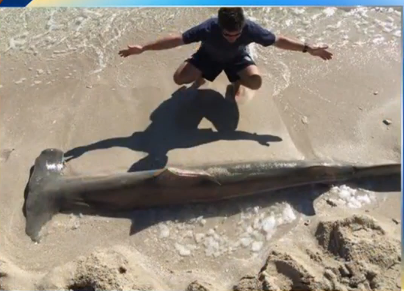
What is our obsession with taking pictures of ourselves with subjects that seem just a bit inappropriate? Now that smart phones have turned us all into photog wannabes, the rush to get pictures published on social media sites has also lead us to be wannabe reporters, as well.  Recently two sharks, a bull and a hammerhead, washed up dead on the shore of Miami Beach. One was bloated, the other with its fin cut off.  Once beach-combers saw the poor creatures, the camera phones came out and the snap-shot taking crowds were enough to make any paparazzi, surrounding a Hollywood celebrity, pale in comparison.  There was even a grown adult who pulled up on the head of one shark to get its mouth to open. What a photo op! "Hey kids, come gather around!"


Where is the respect? It’s just an animal. Who cares, right? WRONG! Are we another 'Me Generation' or have we never left it?  This is 2015 folks.  We've scratched our way out to escape the errors of our ways. After fighting for equality in several different arenas, freedom of religion, the push to reuse, reduce and recycle, ‘save our planet,’ ‘plant a tree’…have we not arrived? What has happened to the rights and respect for those with which we share this slowly, dying planet?

http://cdn.inquisitr.com/wp-content/uploads/2015/02/Bull-Shark-670.jpg
Source: Inquisitr.com

Back to these dead sharks: No one knows what caused their deaths, and apparently no one is investigating.  A fin was cut off! I was told by an authority at the Florida Fish and Wildlife Conservation Commission that maybe if there was a bunch of these guys washing up on the shore with their fins hacked, there might then be an investigation. How many have to lose their lives in order for that to happen? Maybe this is just a prelude of what is to come. Since shark fin soup is served in restaurants throughout Florida, and yes, Miami, maybe this was the result of someone trying to cash in on the evil craze. Does that mean finless carcasses are on their way to shore like a message in a bottle? Are we going to read it and do something about it or are we going to throw it back in for the next generation to deal with? Did you know that 24 states according to the Animal Welfare Institute, serve up the controversial delicacy, shark fin soup?  You can find it on the menu at South Garden Chinese Restaurant in Miami for $12 a bowl.

Source 

It’s a shame; it’s a crying shame that an 8 foot animal is tortured for its 8 inch body part and left to die, rotting in its ocean home, only to float to the shore to be mocked as part of social media fodder. To the person(s) who did this: "At least, eat the rest!" I discourage anyone from killing these animals and it pains me to see their fins cut off and then the shark dropped back in the water to try and survive. Would the same thoughtless individual do that to their pet? They’d be put in jail.

These sharks are intelligent, beautiful, and are an integral part of our oceans and were here way before you and I. Respect them. Wouldn't a picture of you with a live shark be cooler to take?


Join us for live shark selfie-taking starting this August at Guadalupe; Bahamas starting in April and Fiji year-round.

Let's go shark diving!
'Ocean'
Shark Diver

About Shark Diver. As a global leader in commercial shark diving and conservation initiatives Shark Diver has spent the past decade engaged for sharks around the world. Our blog highlights all aspects of both of these dynamic and shifting worlds. You can reach us directly at staff@sharkdiver.com.

Friday, February 28, 2014

How can you save sharks?

Picture BBC
The recent actions by the SW Australian government, deciding to use drum lines to cull sharks, have generated huge protests, with literally thousands of  people rallying against that policy.

Over the last couple of years, there have also been a myriad of shark conservation related groups and posts that have popped up on facebook and the internet, protesting various things, relating to shark conservation.

I looked at a lot of these groups and posts and have noticed, that there are a few main targets, that these groups are focusing on.

1. With the recent media attention, it comes as no surprise that the most attention is paid to the Australian shark cull program.

2. Then there are the posts, generally opposing shark finning, shark fin soup etc.

3. There are some that target specific organizations like OCEARCH, shark fishing tournaments and scientists that catch and tag sharks, because of the harmful effect it has on the individual sharks. 

4. Who can forget the bikini clad women that are hanging on to the dorsal fins and riding great white- and tiger- sharks, or the "shark experts" flipping sharks upside down, claiming that the sharks treat them as one of their own?

Are these protests effective? Do they stop the killing of sharks?

Before we get to that, let's establish a few things first.

Fact: In the first 3 weeks, the SW Australian shark cull program has resulted in 17 sharks, longer than 3 meters (12.9 ft) killed. The sharks caught and killed were Tiger Sharks, which have only been responsible for one death since 1980, according to "sharksmart" a website of the Australian government. They have caught zero Great White Sharks, believed to be responsible for the recent attacks. 

Fact: Although estimated numbers of sharks killed every year vary widely from as few as 30 million to as many as 100 million, even at the 30 million rate, it means that every week, 600'000 sharks are killed worldwide.

OK, lets look at the things that are protested and the effect it has on the sharks.

1. The shark cull. I'm completely opposed to that policy and have written about it here and here and here. I think the program is useless, targets the wrong sharks and does absolutely nothing to prevent attacks on humans. The fact that they killed mainly Tiger sharks that have only been responsible of 1 death in the last 34 years and not one Great White, which has been responsible for the recent deaths, clearly shows that the program is worthless. But let's put the whole thing into perspective. In the first three weeks, the shark cull killed 17 sharks vs. at least 1'800'000 and maybe as many as 6'000'000 that are killed by the fishing industry, during the same period.

If the protests succeed in stopping the program, it would directly save around 300 sharks a year. Even if unsuccessful, the protests still raise awareness for the cause, which is definitely a good thing. It is difficult to assess the actual effect that publicity has on helping sharks, but like I said, it's definitely a good thing.

2. General opposition to shark finning, fishing, shark fin soup etc.

These protests are mainly raising public awareness and may have resulted in a reduction of shark fin soup consumption in China. As with any publicity campaign, the actual effects on saving sharks are hard to determine, but they definitely have an impact.

3. Shark tagging. All the tagging done in a year, may cause harm to a few hundred sharks. Again, that's a few hundred, vs. 30-100 MILLION sharks killed annually.

If the protests succeed and there is no more tagging, at best we could save a few sharks every year and make life easier (no tags, no deformed dorsal fin etc.) for a few more. On the other hand, we could also loose valuable data, that may help save sharks. You decide, if it is worthwhile to focus on this. Personally I think we need to weigh the importance of the data collected against the potential harm to the sharks.

4. The sharks are harmless and our friends approach.

I have to admit, my blood pressure tends to go up, when I see some idiot riding a shark or flipping it upside down, trying to convince me that sharks are harmless with some actually claiming that the sharks accept them as one of their own. Why do I think these actions are such a bad idea? Well, I've been diving with Great White Sharks for the last 13 years and around Tiger- and Bull- Sharks for a long time. The one thing I can say with certainty, sharks are NOT harmless and NOT our pets. We don't need to fear them, but they are apex predators and need to be respected! For those that claim that the sharks treat them as one of their own, I can only say, I hope not! I have seen how large sharks treat smaller sharks, biting them, if they don't get out of the way. Any human would be a very small shark, compared to a Great White, or Tiger Shark. Great White Sharks are not touchy feely with each other. There is no casual touching. When they get to close to each other, or actually touch, there is usually a violent reaction. Even when the are mating, the bite on to each other, definitely not something you would want a shark to do to you.

These stunts do nothing to help the sharks and are purely a means of self promotion for the individuals doing them. "Look at me! I'm so cool!"

You notice, all the efforts that seem to get the most publicity are focused on something other than the fishing industry. Have you seen anyone protesting Triatun Inc., or Sea Venture Inc.? Those are just 2 of many companies, trading in shark fins. It seems to me, that most efforts are directed at things that are relatively minor in the big picture.

With all the efforts mentioned above, even if they are all successful, they are saving a few thousand sharks a year at best! So what can we do to really make a difference? First of all, we have to decide what our goal really is. Do we care more about saving sharks, or do we care more about what other "conservationists" think about us.

If your answer is, saving sharks, here are some things you can do. I have to warn you though. Nobody on the internet will know what you did. There are not going to be a lot of people slapping you on the back and tell you what a good job you did. Aside from very few people acknowledging your efforts, your only reward is going to be the knowledge that your efforts helped save some sharks. Instead of thousands of people saving a few sharks, you as an individual can save many.

You can contact, or visit a local marina and sign them up as a shark free marina. You can volunteer with a local group that maintains or creates estuaries, MPA's, breeding programs etc. If you live far from an ocean, you can still volunteer for or support groups like shark savers, shark foundation or projects abroad.

Maybe you don't have a lot of time. There are still a few things you can do. Write a letter to your local legislator, asking to support or enact laws, banning the trace of shark fins. Is there a restaurant in your area that serves shark fin soup? You can visit and make them aware of the problems associated with shark finning. Just because we are aware of all the problems, doesn't mean that they are. They are not necessarily the bad guys, they may just be unaware. Last year at DEMA, there was a restaurant serving shark fin soup, not too far from the convention. A few of us that went there, asked to speak to the manager and the next day, they had removed the soup from the menu. Here is another idea. This is the contact info for Triatun Inc. Maybe their president, Francisco Valdez, would like to hear from you. Would you like to get in touch with Sea Venture Inc. and let their CEO William Haley know what you think?

The bottom line is this. You CAN make a difference! Even if you are the only one that know what you do, the sharks will benefit. Isn't that the only thing that counts?

Cheers,

Martin Graf
CEO
Shark Diver


About Shark Diver. As a global leader in commercial shark diving and conservation initiatives Shark Diver has spent the past decade engaged for sharks around the world. Our blog highlights all aspects of both of these dynamic and shifting worlds. You can reach us directly at staff@sharkdiver.com

Friday, December 20, 2013

John Travolta saving sharks?

John Travolta has joined the fight against finning sharks for shark fin soup. He has posted this on his website. It's awesome to see, that celebrities are lending a hand in raising awareness to this great cause. 

Thanks John!

I would also like to thank Li Na,  and Yao Ming for their help in turning the public perception of shark fin soup in China. They are huge celebrities in their country and their compatriots seem to be paying attention, consumption of shark fin soup is down by 70%

Cheers,

Martin Graf

CEO
Shark Diver

About Shark Diver. As a global leader in commercial shark diving and conservation initiatives Shark Diver has spent the past decade engaged for sharks around the world. Our blog highlights all aspects of both of these dynamic and shifting worlds. You can reach us directly at staff@sharkdiver.com.

Monday, October 21, 2013

No more shark fin soup in China?

Have the Chinese seen the light and stopped eating shark fin soup?

According to an article in the Washington Post that is exactly what is happening in China. The report states that  "consumption of shark fin soup in China is down by 50 to 70 percent in the last two years,” 

It goes on to state  "Thanks to a former NBA star, a coalition of Chinese business leaders, celebrities and students, and some unlikely investigative journalism, eating shark fin soup is no longer fashionable here. But what really tipped the balance was a government campaign against extravagance that has seen the soup banned from official banquets"

We talked about this a few months back, when China first announced that they would stop serving shark fin soup at state dinners and we are happy to see that the changes are happening faster than anyone anticipated.

We are always happy to report when things are changing for the better and want to thank the Chinese people for caring about our Oceans and the sharks that are such an important part of it.

Cheers,

Martin Graf
CEO Shark Diver


About Shark Diver. As a global leader in commercial shark diving and conservation initiatives Shark Diver has spent the past decade engaged for sharks around the world. Our blog highlights all aspects of both of these dynamic and shifting worlds. You can reach us directly at staff@sharkdiver.com

Wednesday, July 4, 2012

No more Shark Fin Soup in China?

Yesterday the New York Times reported that China said Tuesday that it would prohibit official banquets from serving shark fin soup, an expensive and popular delicacy blamed for a sharp decline in global shark populations.

Will pictures like this soon be a thing of the past?
Alex Hofford/European Pressphoto Agency
 It looks like years of efforts to raise awareness about Shark Finning is starting to pay off. This news comes just a couple of months after the media in Hong Kong struck out against the global anti shark fin campaigns, characterizing them as "anti Chinese" and "discriminating against their eating culture". While official state dinners use just a tiny fraction of all Shark Fins consumed, this announcement still sends a signal, that China is starting to change it's attitude towards Shark Conservation 

Cheers,

Martin Graf
Dive Operations Manager
Shark Diver/Horizon
Isla Guadalupe, Mexico

About Shark Diver. As a global leader in commercial shark diving and conservation initiatives Shark Diver has spent the past decade engaged for sharks around the world. Our blog highlights all aspects of both of these dynamic and shifting worlds. You can reach us directly at sharkcrew@gmail.com.

Monday, September 26, 2011

Fiji Shark Fin Hub in the Crosshairs

Thanks to Mike aka Da Shark in Fiji for the heads up and this weeks great news about shark fin hubs.

As it turns out shark fins are harvested all over the Pacific region and transshipped to Fiji for sorting, packing, and shipment to China.

It's big business, to the tune of 100 metric tons a year. As Mike points out "that's a whole lotta sharks".

Naturally PEW and the Coral Alliance are behind this latest effort to curb the shark fin trade.

Kudos.

Wednesday, December 22, 2010

Shark Conservation Act Wins Final Congressional Approval

In July 2008, the National Oceanic and Atmospheric Administration instituted regulations requiring that sharks be landed with their fins attached, but these regulations applied only to U.S. fisheries in the Atlantic, Caribbean, and Gulf of Mexico, not the Pacific.

The Shark Conservation Act will bring the Pacific fisheries into line with the rest of the country’s fins-attached policy, and strengthen the U.S. position in international shark conservation efforts.


Shark Conservation Act

  • H.R. 81, introduced by Rep. Madeleine Bordallo, D-Guam, had the bipartisan support of 30 cosponsors and passed the House by voice vote with an amendment offered by Rep. Eni Faleomavaega, D-American Samoa, on March 2, 2009.
  • S. 850, introduced by Sen. John Kerry, D-Mass., had the bipartisan support of 33 cosponsors.
  • H.R. 81, with Senate amendments, passed the Senate by unanimous consent on December 20, 2010.
  • Up to 73 million sharks are killed each year in targeted fisheries and as bycatch. Shark finning is a major cause of massive declines in shark populations around the world, since retaining only the fins allows fishing operations to kill many more sharks at a time (filling their onboard freezers with just the fins while dumping the bodies overboard).
  • When sharks’ fins are cut off and their live bodies are thrown back into the water.
  • As top predators, sharks play an important role in maintaining ecosystem balance. The killing of large numbers of sharks already appears to be affecting other marine species and commercial fisheries. When shark stocks are depleted, their natural prey proliferate and can have a devastating impact on the species they feed on – for example, fewer sharks mean more skates and rays, who in turn have taken a large bite out of scallop and other shellfish populations.
  • A national fins-attached policy will provide for improved conservation and management of steeply declining shark populations. It is often impossible to identify a shark species solely by looking at its fins, so landing sharks with fins attached is crucial for tracking which species are caught.
  • The Senate-passed bill includes an exemption for smooth dogfish sharks, which are typically caught along the East Coast primarily for their meat. The exemption will put the onus on that fishery to ensure that no fins from any other species are included in smooth dogfish landings.

Thursday, December 9, 2010

Hong Kong Shark Fin Sidewalk - Alex Hofford

This video is, unfortunately, not part of a savvy NGO protest campaign against shark fin in Hong Kong. It is estimated that Hong Kong accounts for 80% of the global trade in shark fin, the worlds clearing house.

Instead this video is a snapshot of daily life in the region, taken by photojournalist Alex Hofford.

Welcome to the sidewalk of tears:

Monday, October 25, 2010

The 4 Lies of Shark Fin Soup - Chuck Thompson

If Chuck Thompson was prize fighter - he would be in the bare knuckles class. As we have been quietly pointing out the shark conservation movement is in trouble when it comes to the plethora of non NGO's who are tackling this global problem.

Not for a lack of deeply held convictions, desire for eco-stardom, media hits, or even petitions.

The movement has plenty of those.

In a recent expose in Guy Harvey Magazine Chuck looks into the shark world, interviewing "the usual volunteer bleeding hearts," to garner non-scientific quotes on the "state of the union" of shark conservation.

In the process the article reveals deep insights into the efforts to date and the Four Lies of Shark Fin Soup.

To that we would like to add a 5th.

The myth that the shark fin trade is run exclusively by Asian mafia. It is not. That misconception has lead many to believe this lawful trade is something sinister, instead of something that can be taken apart by attacking the trade itself.

What's needed is new thinking and a change in tactics because this is eco issue ultimately about trade, not sound bytes, Asians, a soup, or even failed reality television show bids on Animal Planet.

Kudos to Chuck Thompson for the article and the expose. If the movement is serious about saving sharks - it will have to get serious about what it is up against first.

For a deeper look Da Shark in Fiji has posted his four cents.

Making sense - as usual.

Sunday, September 12, 2010

HSI Supports Shark Finning Workshop

PUNTARENAS, Costa Rica (September 10, 2010) – A two-day international workshop on shark conservation, hosted by Costa Rica’s Fisheries Authority INCOPESCA and supported by the NGOs Pew and Humane Society International, took place in the Costa Rican port of Puntarenas. The workshop, which focused on the technical aspects of landing sharks with their fins naturally attached to their bodies, was attended by delegates from 13 North, Central and South American countries.

The “fins-attached” method has gradually been gaining international recognition because it is the best response to end the practice of shark finning and ensures fewer shark catches. The United Nations General Assembly, the International Union for the Conservation of Nature and the review process of the UN Fish Stocks agreement have all recommended “fins-attached” policies.

Facts:
Sharks are apex predators whose survival affects all other marine species and entire ocean ecosystems.

"Finning" refers to the act of cutting off a shark's fins and throwing the rest of the shark back into the sea. It is estimated that tens of millions of sharks are killed to supply the wasteful demand for shark fin soup every year.

For hundreds of years, shark fin soup has been served as a symbol of social status and a traditional way for the elite to display their wealth in Eastern Asian. Countries such as China (including Taiwan and Hong Kong), Singapore, Malaysia, Japan and Thailand import thousands of
metric tonnes of shark fins each year.

The practice of shark finning is global and has led to severe declines in shark populations. Unlike other fish species, sharks produce very few young and mature slowly and consequently, overexploited populations can take years or even decades to recover.

Most fishing nations do not have finning bans in place, while others require that carcasses be retained, but allow the fins to be removed from the carcasses at sea provided that, when landed and weighed, the fins weigh no more than 5 percent of the weight of the shark. This has resulted in lengthy disagreements over the 'correct' weight ratio of the fins. Furthermore, doubts have been raised about the availability of sufficient resources to monitor compliance, which would require the weighing of every shark catch that arrives at dock.

Fins-attached policies require no weighing, therefore facilitating compliance. Shark conservation is greatly enhanced by fins-attached policies, as fishers have to store every shark that they catch, reducing the total catches and ensuring full usage of the carcasses and decreased wastage.