Wednesday, September 2, 2009

Isla Guadalupe - August 2009 - Trip Report

August 17-21, 2009 was one of our best expeditions this season. Great divers, great weather and of course lots of white sharks on site:

Since I have worked at a dive shop since the ripe age of sixteen, I have been lucky enough to travel to many exotic places all over the globe.But nothing could prepare me for what I would see at Isla Guadalupe.

The trip exceeded every expectation that I had, (and I was VERY excited to go) because I wasn’t sure what to expect.

Would I actually get to see the white shark?

Would the service be any good?

Was SharkDiver.com the right operation to use?

All of my questions would be answered in three short days. The most important thing to me was actually getting to see as many sharks as I could; and the crew of Shark Diver delivered.The first time in the water we were lucky enough to see a “small” eleven foot shark swimming though the water with grace and ease.I was amazed to realize that I wasn’t actually scared.

The shark was swimming around as if the cages weren’t even in the water.In fact, he couldn’t have cared less about our presence.I got out of the water shaking with excitement; little did I know that it was all uphill from there.We saw as many as five different sharks in the water at the same time and I got more pictures than I knew what to do with.By the end of the trip, I found myself disappointed if I only saw one or two sharks per dive.

That part of the trip could not have been more of a success.The sharks were amazing, but the crew at Shark Diver made my trip for me. EVERY staff member on the boat was nice, knowledgeable, and would drop what they were doing to help me in any way. They knew about the sharks and they knew how to attract sharks to the boat without disrupting any of the shark’s normal routines.

The food was fantastic and would be prepared any way I desired. But I also noticed that they were making dishes that were suitable for all the customers. We had people onboard with food allergies, vegetarians, and just plain picky eaters. Not a problem for the cook; he pleased everyone. Once dinner was served, all conversations ended because people couldn’t stop complementing the cook. I actually felt bad because I didn’t feel my 20% tip was enough, but unfortunately it was all the money I brought…

As I said in the beginning, I work at a dive shop in Austin, TX called Tom’s Dive and Swim. We do international travel through the shop and because of the rave reviews we came back with, the owner and I have already started planning a trip for 2010 to take our customers on. I have nominated myself as the trip leader because I cannot wait to return to Isla Guadalupe!

If anyone is even thinking about this trip, you have to strongly consider Shark Diver as the charter to use because they will make your trip. And if anyone had doubts about the trip, please call me the dive shop at 512-451-3425 and I will answer any questions you have about the trip.

You only love once and this is certainly something that you must do at some point in your life. So what are you waiting for?

Sam Holan

W: 512-451-3425


Editors Note: Thanks Sam, you and your crew are welcome aboard anytime mate.

SharkDiver.com - International Lifestyle Magazine

This month the uber cool International Lifestyle Magazine covered Isla Guadalupe and SharkDiver.com.

The article, by author, writer and adventure persona Jim Cornfield features the world of big animal shark diving with stunning images by Juanmi Alamany who shot with our crews back in 2008.

Shark Diver was the first commercial shark diving company to initiate and support full scale shark research efforts in tandem with Mexico's CICIMAR, and U.C Davis, California at Isla Guadalupe.

As a proof of concept this ongoing shark research effort has now been adopted and is supported by 90% of the operators that use this pristine site. Divers can now donate to research efforts via the Isla Guadalupe Conservation Fund and media sources like Televisa, Mexico are now producing programs that feature this collaborative effort.

See magazine online here.

Go Kids Go! - Commercial Shark Diving

When it comes to marketing for the commercial shark diving industry what you often get is a patchwork of efforts around the world with regional flavors.

New media sites like You Tube and Facebook have helped the industry grow, feeding positive images and video to a growing adventure tourism base.

But the granddaddy of all marketing efforts is toy marketing. Today we would like to congratulate Toys R Us for marketing the Playmobile Nautical Expedition Playset: Shark Diver to the next generation of shark expedition seekers.

Kudos on the effort it's hard not to like this toy.

Product Description

It takes an adventurous person to go underwater diving with the sharks! Includes a figure dressed in diving gear, underwater cage, camera, and shark. Both the shark and underwater cage can float in water.

Alaska Shark Mystery 2009

Jim Reynolds sent us the following image this morning (thanks Jim). Shot in Alaska this fuzzy picture is a 15 foot shark.

The question is: what species of shark is this?

The original site this images came from is Alaska Outdoors Forum and "Big Jake". You have to be a member to post and read the ongoing threads here:

This shark was caught by a seiner near Ketchikan. Reported to be almost 15 ft. long. seems too long for a salmon shark. Any able to tell from this poor photo?

We'll go out on a limb, because the tail of this critter would tell the tale, and as you can see this shot has no tail. This is a Great White shark.

MBARI 2009 Pacific Northwest Expedition

Without a doubt one of the most exciting deep sea expeditions in a long while is happening now, in real time, and you get to follow the action day by day.

Join the crew and research teams from the 2009 Pacific Northwest Expedition as they discover the the oceans deep secrets.

Daily in depth reports and detailed analysis of discoveries are just part of this fantastic website and public outreach campaign in tandem with MBARI.

iPhone Geek Tip: Do a search for this site on your iPhone then click the "+" icon and "add to home screen" as a button. Now you have this site as a "on the go resource" for airport lounges, coffee shops, or long drives.

RTSea Productions - Guadalupe Island 2009

Just returned from a successful assignment filming white sharks at Isla Guadalupe, Baja, Mexico. Isla Guadalupe has become a critical site for white shark research because of its ideal visibility and calm waters (most of the time) and because of the number of white sharks (70 to 100 est.) that migrate to the island in the fall months.

Ecotourism operators and marine researchers work hand-in-hand so that we can learn more about these magnificent predators. I was working with Wild Coast, an ocean conservation group serving the Hispanic market, and Televisa S.A., and Telemundo. All of these organizations are working to make the Spanish-speaking populace more aware of the natural resources that Mexico has within its waters and its borders. To promote shark conservation, they are advocating ecotourism to government agencies and decision-makers, so that village economies can benefit from business models based on living sharks rather than dead ones.

On this particular trip, half of the boat, the Horizon from San Diego, were paying ecotourists from SharkDiver, and the rest were various representatives of Wild Coast and the two Hispanic broadcasting companies. The sharks, primarily males at this earlier point in the season, were numerous and "frisky." We saw some interesting behaviors like "parallel swimming," where two sharks uncharacteristically swim side-by-side. White sharks are not known for extensive social behavior, so it was a treat to see these two male sharks checking each other out to see who is the "top dog."
I came away with a lot of footage that hopefully Wild Coast and the broadcasters will put to good use in making Mexico and, indeed, all of Latin America more aware as to the important ocean treasures it has within its borders - whether it's white sharks, hammerheads, whales sharks, or humpbacks - and what it needs to do to insure their continued survival.

-Richard Theiss RTSea Productions

Tuesday, September 1, 2009

Smalltooth sawfish gets federal protection in Southwest Florida waters

NAPLES — They are not cute and cuddly, but the smalltooth sawfish is getting
more federal protection in Southwest Florida waters.

The National Oceanic and Atmospheric Administration announced Monday that it
is designating more than 840,000 acres of critical habitat between Charlotte
Harbor and Florida Bay for the endangered marine fish.

The designation, which takes effect Oct. 2, doesn’t restrict fishing or boating access, but projects such as marinas or dredging must clear another federal permitting hurdle if they are proposed within the critical habitat boundary.

“Species such as the smalltooth sawfish have a much greater chance at
recovery once critical habitat is designated,” said Miyoko Sakashita, an
attorney representing the Center for Biological Diversity in San Francisco.

The group sued the federal government for missing a deadline to establish
critical habitat for the smalltooth sawfish. A 2007 settlement resulted in
the critical habitat designation.

Scientists do not know how many smalltooth sawfish are left, but historic
catch records show they once ranged from Texas to New York. South Florida is
their last stronghold.

In 2003, the animal named for its saw-like snout, or rostrum, became the
first marine to be listed as an endangered species.

A relative of sharks and rays, the smalltooth sawfish was overharvested as a
curiosity. Its rostrum also makes it vulnerable to entanglement in fishing nets.

The critical habitat designation seeks to protect the shallow estuaries that
are important nursery grounds for juvenile sawfish and key to their
survival, biologists say.

The designation covers 221,000 acres in the Caloosahatchee River, San Carlos
and Estero bays, Charlotte Harbor and Pine Island Sound and covers 619,000
acres in the Ten Thousand Islands south of Marco Island to Florida Bay.

Shark researcher Patrick O’Donnell has caught 20 or so of the sharp-nosed
creatures in the past 10 years.

“It doesn’t surprise me, but it gets the whole crew excited that’s for
sure,” said O’Donnell, an environmental specialist with the Rookery Bay
National Estuary Research Reserve between Naples and Marco Island.

Regulators drew the critical habitat boundaries to include red mangrove
shorelines and waters less than 3 feet deep and marked by wide variations in
salinity.

“We’re going to try to protect these features and minimize the impacts to
them,” NOAA Fisheries smalltooth sawfish biologist Shelley Norton said.

Without the designation, projects that need federal permits or get federal
funding have needed only to prove that they would not jeopardize the
continued existence of the smalltooth sawfish.

For example, federal reviewers required a Sanibel Island dredging project to
use a cut with side slopes to mimic natural conditions, Fort Myers marine
engineer Hans Wilson said.

Wilson, vice president of the Southwest Florida Marine Industry Association,
said attorneys afraid of being sued by environmental groups have too large a
role in permitting decisions.

“I’m not sure it’s about biology,” he said.

It’s too early to say how big a hurdle the critical habitat designation
might pose, Florida Marine Contractors Association past president Mike Jones
said.

“We don’t really need another layer of regulation at this time and with the
way that the economy is and all,” Jones, a Fort Myers marine contractor, said.

Complete Story

SFMI catches the eye of “Sportfishing Magazine”

September 1, 2009
By Doug Olander (More articles by this author)

That news item caught my attention when I saw it online. It’s no secret that many species of large sharks are in varying degrees of trouble worldwide. The primary culprit is the by-now infamous practice of finning — hacking off the fins of sharks (often while they’re still alive) and tossing the body back to sink and decompose on the ocean floor.

The practice has been widely banned but
(a) not before many shark stocks were severely impacted;
(b) it’s still legal in many areas; and
(c) it’s still widely practiced (in largely unpatrolled waters) where it’s not legal.

The motivation for the barbaric and wasteful practice is an old one: greed.

Shark fins bring relatively big bucks on the Asian market: think shark-fin soup. A few pounds of fins are worth more than a few hundred pounds of shark meat — and even a small boat can bring in a lot of fins, representing tons of dead sharks.

Recent estimates have put that tonnage of sharks killed each year for their fins as high as 100 million; however, a recent study suggests a figure of about 38 million tons. Either way, it bodes ill for these ecologically vital apex predators.

In this context, it’s interesting to see the formation of the nonprofit group Shark-Free Marinas (www.sharkfreemarinas.com), intent on “reducing worldwide shark mortality” by persuading marinas to sign on with a pledge to prohibit the landing of any shark.

Of course, the recreational fishery — even at the half-million sharks killed per year by one estimate — represents but a fraction of the worldwide shark-finning massacre. Some might argue that for this very reason, it’s pointless to bother even trying to dissuade anglers from bringing back large sharks to hang up on the scales for a weight and photo or to score points in a shark tournament.

Miami’s famous and (more often) infamous skipper, Mark the Shark, might be one who’d make that argument. Well known for encouraging his clients to kill just about any large shark they hook, the ironically self-named skipper claims on his website that thanks to his unequalled expertise on capturing sharks, his dead sharks have “been a great benifit [sic] to science.”

Those trying to convince marinas worldwide to forbid off-loading large dead sharks would say otherwise. Their efforts have a long way to go, but several marinas — in the United States, Bahamas and Fiji — had signed on as of this writing.

Recently, other actions suggest an increasing awareness among the mainstream recreational-fishing community that populations of large, slow-growing sharks are in a tenuous position (with the National Marine Fisheries Service officially considering most species overfished in the Atlantic) and need help. And, of course, in addition to doing what they feel is the right thing, many believe it’s the smart thing.

While slaughtering and hanging up dead sharks so a client can get a photo and tourists can gawk may work for Mark the Shark, a broader view is that hanging up big, dead sharks fosters a public perception of recreational fishing as a sport of greed and carnage and plays right into the hands of concerned, hard-core green groups trying to close off the ocean to angling.

For this reason, it was gratifying to learn recently that the International Game Fish Association is considering a proposal — submitted by IGFA board member Guy Harvey — to stop keeping world records for tiger sharks and great hammerheads.

Also, Gray’s Taxidermy, one of the largest providers of fish mounts, has finally announced that it would no longer accept sharks or any parts of them for fish mounts, finally joining some other progressive taxidermists who years ago began making only fiberglass-replica mounts. Charter skippers who work with Gray’s have lost one excuse to kill sharks.

It seems that the pendulum among sport fishermen continues to swing gradually toward not killing large sharks. But it has a long way to go. Among charter skippers and some private boaters, there remains the sentiment that killing an occasional large shark is insignificant in the scheme of things and that as long as the only fish killed are taken legally, doing so bears no shame. In fact, there are most assuredly those (both among recreational fishermen and the general public) who feel the only good shark is a dead shark.

I admit I’m not one of those sharing that mentality. I applaud shark-free marinas for their efforts. Ditto anglers who carry cameras and, should they wrestle in a huge shark, take home photos of the great fish boat-side — before its successful release. Those who find it profitable to hang up dead sharks may help their income in the short term but, in the long term, can only hurt everyone else who loves the sport of fishing.

Original article here

Whale Shark Tagging Expedition - Only the Adventurous Need Apply

Los Angeles, CA (PRWEB) August 31, 2009 -- Have you ever wondered what it would be like to swim with sharks? Join Iemanya Oceanica for its first public shark-tagging trip and find out. Iemanya Oceanica is a nonprofit organization headquartered in Los Angeles and dedicated to shark and marine conservation. On October 15, 2009, you can join the research team as they travel to the beautiful and remote village of Bahia de Los Angeles on the Sea of Cortez in Baja California, Mexico. "We hope to tag two whale sharks on this trip, which should take about three days," says Laleh Mohajerani, Iemanya's Executive Director. "Tagging is one of the first and most important steps towards conservation. Through tagging, we can learn about these majestic creatures and influence sustainable management policies."

Whale sharks are the largest living fish species on the planet. They are slow moving filter feeders and can grow to up to 40 feet long (12.2 M) and weigh up to 15 tons. Whale sharks are believed to have originated around 60 million years ago, and are found in tropical and warm oceans. They can live for up to 70 years, and although they have very large mouths, they are harmless, feeding solely on plankton, which are microscopic marine plants and animals. "The purpose of the whale shark expedition is to create more awareness about the ocean and to encourage support for research and education about the ocean," says Ms. Mohajerani.

The Whale Shark Expedition is October 15-19, 2009. The all-inclusive trip and will feature luxury motor coach transportation to and from Los Angeles to Bahia de Los Angeles; a welcome beachfront cocktail reception; all local transportation; hotel accommodations; all you can eat gourmet meals prepared fresh; drinks; access to the area research station; presentations by the researchers and local museum director; tour of the history museum; a visit to the turtle hatchery; optional fishing trip; excursions to off-shore islands for bird watching and ancient cave paintings; and free time for snorkeling and the beach.

Iemanya Oceanica is an international nonprofit organization committed to protecting marine life, especially sharks and rays, and improving the quality of life for those who depend on sustainable marine resources.

The all-inclusive Whale Shark Tagging Expedition is $1,599.00 per person. Space is extremely limited, so apply now by contacting Laleh Mohajerani at 818-224-4250.

For more information about shark and ocean conservation or Iemanya Oceanica¹s Whale Shark Tagging Expedition, please visit www.iemanya.org. Shark images, footage and tips for protecting yourself against a shark attack are also available.

Monday, August 31, 2009

“No Caught Shark Allowed”: Matava leading the Shark Free Marina Initiative in Fiji

Matava and Bite Me Gamefishing Charters in Fiji are taking a leading role in the international shark conservation efforts, organizing Fiji to become the first country to fully participate in the Shark-Free Marina Initiative (SFMI).

The SFMI works with marinas, boaters and fishermen to develop policy designed to protect sharks as a vital component of the oceans health. The SFMI has a singular purpose, to reduce worldwide shark mortality. Working with marinas, fishermen and like minded non-profit groups, the Initiative forms community conscious policy and increase awareness of the need to encourage shark conservation.

Shark Free Marinas work with, not against, the recreational and commercial fishing community, in order to raise awareness of the importance of a healthy shark population for our oceans, and to contribute to their ongoing survival.

Matava, together with partners in Fiji, has helped many marinas and charter fishing boats become SFMI certified, and Fiji now has more certified Shark-Free Marinas than any other country in the world. Stuart Gow, Director of Matava, said that his team has been actively promoting the SFMI, and distributing information about the Initiative, with the long-term goal of making Fiji “the first country to be proud to announce itself as a ‘Shark-Free Marinas’ Country”.

See the map of current Shark-Free Marinas


The majority of shark species caught by recreational and sport anglers are currently listed by the IUCN as “Threatened” (or worse) and each year, half a million of these sharks are killed in the US alone. It is estimated that 70-100 million sharks are killed yearly worldwide.

See IUCN Red List of Threatened Shark Species

About Matava

Matava is an eco adventure getaway in Fiji, offering a unique blend of cultural experiences and adventure activities in the pristine and remote island of Kadavu, Fiji. Matava is a PADI Dive Resort as well as a Project AWARE GoEco Operator, a title awarded to demonstrate a commitment to conservation and provide customers with experiences that enhance visitor awareness, appreciation and understanding of the environment. Matava is also one of the supporters of the Fiji Shark Conservation and Awareness Project, which aims to raise global awareness of their imminent extinction of sharks and the crises facing our oceans.

With more than 12 years experience in the Fiji Islands, Matava is recognized as a leading educational dive center. Matava is participating in TIES ecoDestinations project (currently featuring “beaches, marine and coastal ecotourism experience”) as one of the Summer Special 2009 sponsors.

Mako shark haul could be record catch

To prevent scenes like these industry leadership will have to happen.

Starting with the IGFA who should cease record keeping for the following species of sharks by 2010:

1. Tiger
2. Mako
3. Hammerhead
4. Bull
5. Blue
6. Thresher

These are the primary species caught in shark tournaments across the USA.

As long as records continue to be kept the industry will have no reason to modify tournaments that kill sharks for sport.

While the rest of the sport fishing industry are beginning to talk shark conservation, leadership begins at the top.

Let's start by asking the IGFA to lead that change:

Captain Tom King, Captain Taylor Sears, and the Mayo family from Dartmouth – Bob, Pamela, Ian and Elizabeth – returned to the Mill Wharf Marina in Scituate with a 624-pound male mako shark, believed to be the largest of its kind ever caught and brought to shore.

“We hooked up a nice tuna, probably 160 or 170 pounds,” Sears said. “It started coming up to the surface a little weird. The tuna popped up, and there was a mako shark right behind it eating its tail off. You could see it come up, maybe 100 feet off the back of the boat.

Complete Story

White Shark Cafe - New Film

Synopsis

Great white sharks have captured people's attention for thousands of years. They are mythologized by native groups all over the world - feared and revered in equal measure. But the scientific study of these giant predators is less than 50 years old. The film profiles 2 pioneers in the field - both doing research in California at the Farallon Islands.

It also looks at today's research - greatly improved by advanced technologies that allow scientists to track the sharks migration patterns. Once thought to be coastal animals, biologists have found out they in fact travel thousands of miles. One area they go that is a complete mystery has been dubbed the 'white shark cafe'. Scientists presume they are feeding or mating there.

At the same time, science journalists are trying to affect the negative images great whites have acquired. They are showing images of sharks doing more than eating or attacking - like swimming and migrating. One of these sharks, Omoo, has even acquired his own FaceBook page. Also, the Monterey Bay Aquarium has been able to keep a juvenile white shark for more than 100 days, giving the public rare, up close experiences with the great white.


Guadalupe Island - Rochelle's Adventure 2009

Rochelle F, just got back from an expedition to Isla Guadalupe with her father. Here's her trip report:

My father just turned 75. What better way to celebrate than to go diving with great whites?!

The crew was fabulous (can’t say enough good things!), the weather sunny, and the sharks plentiful. My dad and I had a great time in the cages making the acquaintances of Bruce, Mau, Flipkin, Bullseye, Geoff Nuttall, and five other sharks who were newer and not yet in the i.d. books.

At one point we had four sharks with us and everywhere we looked we saw a sleek sharks.

Amazing!!

Being in the water with great whites was a lot calmer than I would have thought. This may have been due to the lack of a soundtrack. These sharks are true masters of their environment and it was fantastic watching them appear and disappear at will. In general they were very cautious and triple checked everything. One shark however, gave us several reminders of why white sharks are called ambush predators.

He would circle/hide under the boat and the cages before making a vertical rush at his prey in front of the cages, breaching half of his body out of the water in the process.

It was a fantastic trip that I would highly recommend to anyone considering it. Thanks Patric, for making it possible and for advocating for sharks around the globe!

Rochelle

Sunday, August 30, 2009

Re purposing shark fisheries - Mexico

We have long been advocates of re purposed shark fisheries. As is the case in Holbox, Mexico where many of the local shark fishermen now take paying tourists to see whale sharks.

In the past 5 years this unique site has gone from a regional coastal shark fishing hub to a multi million dollar shark tourism mecca.

Worldwide coastal shark fisheries can be re purposed to service a growing $300 million dollar commercial shark diving industry, but time is running out.

The dollars and sense of re purposed shark fisheries make sense for local and regional economies. Fishermen typically make a few dollars per pound of sharks fin and meat.

Commercial shark diving delivers from $40-80 per diver, sustainably.

This week a feature story about the human cost of shark fisheries was highlighted in a great article by Kevin Sieff in The Texas Observer.

We can re purpose shark fisheries, easily, and quickly with some political will and a little bit of vision. Sustainable tourism is as simple as making a cell phone ring and it will be up to our industry to lead the way:

“They’re fishing in a prime habitat for juvenile sandbar and blacktip sharks,” says Karyl Brewster-Geisz, a biologist with the National Oceanic and Atmospheric Administration who produced a 15-page report on illegal shark fishing along the U.S.-Mexico border in 2005. “And unlike the U.S., where permits are issued for particular species,” she says, fishermen in Playa Bagdad “take whatever they can get.”

Scientists say a growing trade in shark fins is depleting shark populations around the globe and disrupting ecosystems long dependent on the predator’s presence. On the Texas-Mexico border, shark fishing threatens more than the environment. “This is our sovereignty we’re trying to protect,” says Lt. Mickey Lalor, commanding officer of the U.S. Coast Guard’s South Padre Island station. “These are our resources. These are our waters.”


Complete Story

Shark cage diving: an eco-ethical perspective

Found on the web over at the Afika T Blog a pro-shark diving industry response by Helen Turnbull and Alison Tower.

Detailed, reasoned, and passionate reasons to why commercial shark diving, done right, is good for local, regional and global economies and for the conservation of species:

I got some flack for a recent post on white shark cage diving, which is a tourism experience that I still am not entirely comfortable with. In that post, I referred to the two South African shark diving operators who have received Fair Trade in Tourism accreditation. As part of the process of evaluating these operators, FTTSA commissioned a research report into shark cage diving, including a review of scientific literature.

I asked Helen Turnbull, one of the authors of that report (along with Alison Tower), to share her perspective on this segment of the industry. Helen is a marketing and business consultant working on sustainable tourism development in southern Africa. She has been a judge for the Imvelo Awards and is a national trainer for FTTSA, as well as a member of the International Centre for Responsible Tourism-South Africa.

In the interest of full disclosure, she's done work for both of the companies she mentions in her article.

Below is the piece she forwarded.

Fear or fascination, there is simply no middle ground when it comes to the Great White shark. It is undoubtedly the most fearsome fish in the ocean. This animal simply demands respect by its mere presence. But this apex predator is, in actual fact, often a victim of bad press, mixed hysteria and intensive trophy fishing. Eco tourism has become a fast growing industry over the past decades, but still the question remains; what is the real truth about the Great white shark? Furthermore, by observing the sharks in their own environment can the ‘menacing man-eater’ label be pushed aside to reveal them as the cautious and elegant animals they truly are?

Dyer Island is a small nature reserve located 7-9kms off the coast of Gansbaai in the Western Cape of South Africa. Every year Great white sharks frequent the shallow waters around the island to feed primarily on cape fur seals and their pups. Next to Dyer Island is world famous ‘Shark alley, known as one of the worlds leading hotspots for encounters with Great White Sharks.

Cage diving companies run scheduled eco trips to the surrounding waters of Dyer Island everyday in hope of sighting and offering cage diving with the sharks in the area. One company at the forefront of this field is Marine Dynamics. A business built around employing local people, Marine Dynamics promotes sustainable conservation, with numerous active projects constantly being driven forward in order to protect the highly diverse local marine life in the area. Every morning, guests are met by a marine biologist at the Great White House in Kleinbaai and are given an awareness-based presentation on the mysterious fish, including their biology, ecology and conservation. Once complete, clients are escorted to the boat which is launched from the nearby harbour and then anchored out at the island (approximately half an hour from launch). The primary aim of the day is to promote responsible tourism and to allow viewing of the sharks in the least damaging way.

In that respect, all divers are reminded throughout the trip not to touch the sharks whilst in the cage. Fish oils (note: not blood) are occasionally added to the water and after a wait of on average a few hours Great whites sharks start to graciously ascend from the murky depths. The sharks are attracted to the this chum slick and appear inquisitive yet cautious to the potential scavenge of a free meal. They are curious about the form of the boat itself, and will always explore the shape before deciding what to do.

Unfortunately, like most situations where man interacts with nature, controversy surrounds the cage diving industry in Gansbaai. However, a closer look at the facts, and recent scientific investigations quickly dispels myths that this causes a conditioning of South Africa’s Great whites resulting in them associating humans with food. Ongoing research indicates that sharks would need to be properly fed intensively for a prolonged period of time, in order to develop the ability of coupling an alien stimulus with food. Interestingly the Dyer Island population of Great whites is non-residential, and individuals have been identified moving out of the area every two to three weeks. Sharks can exist with long periods without food, and can therefore travel vast distances.

Taking a closer look at the anatomy of this ultimate predator, it can be said with certainty that Great white sharks are a work of ‘evolutionary genius’. They are perfectly designed to hunt and scavenge prey in temperate and sub tropical oceans around the world. Analysing their design closer reveals bundles of intricate gel-filled pores peppered around the animals snout. These sensory pits called ‘ampullae of lorenzini’ allow the sharks to detect even the smallest of electrical currents created by a struggling fish. In fact, so highly acute and developed are the senses of the Great white shark, it is believed that they can detect as little as one drop of blood in a billion drops of sea water. Not only can they expertly smell prey, but they can also see much better than previously believed. Their eyesight is actually similar to that of humans, they can see in colour. An extra layer of cells behind the retina enhances the shark’s vision in low light conditions producing a similar reflecting effect to cat’s eyes. In terms of hearing, great whites do not require the use of external ears. Instead, they practically ‘feel’ the movements of others around them. This incredible adaptation is actually common amongst most fish and is achieved by a length of sensory receivers stretching down the flanks of their bodies. The ‘lateral line’, as the organ is known enables the sharks to detect temperature and pressure changes in the water, along with vibrations.

On board Shark Fever, Marine Dynamics 10.7m-catamaran vessel, divers are given the option to view the circling shark from beneath the surface, in a five man, rounded steel cage. The cage is attached to the side of the boat by thick nylon ropes, and it is in this way the apex predators of the sea can be observed in their own element. On descending into the cage, divers may watch (some more at ease than others) as the sharks pass by at close proximity and approach the hanging bait with awe-inspiring elegance and grace. Great white sharks are streamlined to perfection, their slender torpedo shape perfectly equipped for effortlessly slicing through the water, enabling short powerful bursts of up to 50km an hour. In the animal world, it has one of the most efficient and incredibly powerful tails for a fish. The highly adapted shape of Great White Sharks is said to be the very basis of aeroplane and submarine design of today. In recent testing, it has been shown that sharks are incredibly curious and organised, they will frequently approach any item in the water, be it organic or inorganic to try and identify what it is.

Evolution has allowed the species to adapt into a highly effective apex predator with very few rivals in the marine environment. Estimates from fossilised teeth indicate early ancestors of the species arrived on earth even before the dinosaurs some 330 million years ago. Watching the Sharks circle the boat near Dyer Island one can see their behaviour is much in contrast to the image created by Peter Benchley and Spielberg a few decades ago. In their nature, they are naturally very cautious. Unfortunately, on developing the interest to investigate an object, sharks will bite and taste to determine what the object is, leading to some horrific wounds if the unintended victim is a soft fleshy human. However, watching underwater it becomes apparent to some divers that the reputation Great Whites have accumulated over the years is largely unfair, and down to ignorance and misunderstanding of the animal.

Surfers and spear fisherman receiving bites in the past have been positioning themselves much in a situation as a human walking around a lion pen with a zebra suit on. If the lion bites and then realises it is nothing but false prey, does it then spit it out? Often in a dark wet suit with fins, the silhouette of a spear fisherman or surfer represents a close resemblance to a seal; great whites only have teeth and a mouth to find out as they approach the prey.

After climbing out of the cage, most divers expressions say more than words. Often marine dynamics guest books are filled with comments such as ‘fantastic incredible creatures’, ‘ Awesome, an experience of a life time’.

It is these tourists and their money can just contribute to the status of Great Whites in the eyes of the South African Government, they will then be reinforcing a crucial message for the species survival and future protection. ‘Great White Sharks are worth more alive than dead ’.

In terms of conservation, South Africans were the pioneers in protecting Great White Sharks in their waters. After the film jaws was released in the 80’s every fisherman wanted a trophy on their boat. So bad was the damage to the existing populations, the species became almost extinct in some areas of the world. In 1991 the Maldives, USA, Australia, Malta and New Zealand followed South Africa to fully protect the species in their waters.

Great whites sharks are not cute and cuddly like dolphins, and so promoting their protection is a battle in itself. However in 1996 another step forward was taken in conservation when they were placed on the IUCN red list as a ‘vulnerable species'. Not only are White Sharks slow growing, late maturing animals (often termed as k-species) their population counts are also difficult to estimate, as they are trans oceanic, and highly migratory. However finally, in 2004, a landmark was reached in global conservation, and Great Whites were placed on the CITES appendix 2 to regulate international trade of their fins, teeth and body parts. Especially in some areas of Asia, shark fin soup sells as a highly expensive delicacy, and the damage to shark populations as a result of this industry has been hugely detrimental. CITES was an extremely valuable step in the right direction for Great White sharks. The last decade has concluded some break through results for Great Whites, however to be fully effective protection in the future, efforts need to be globally integrated, incorporating the negative impact of foreign fishing gears on the entire shark species.

Despite the image of a Great White Shark generating interest and fear in the minds of many people, research and knowledge of the animal is still very much in its early days. Still, many questions remain unanswered. Biologists working with Great whites in South Africa’s waters have recorded, and continue to discover fascinating behaviour. One individual tagged on Dyer Island swam 22,000km to South Australia and back again between 2003 and 2004. Data received from the expensive satellite tag indicated that sharks can swim deep down to depths of almost 1000m where water temperature drops below 4 degrees C and light starts to diminish. The 4m female responsible for this record journey was named ‘Nicole’ easily recognised by her distinctive serrated dorsal fin. After visiting the island annually previous to this journey, the record-breaking shark has not been sighted since, and speculation indicates she may have become entangled in fishing gear during migration.

Research is conducted by the Marine Dynamics crew daily, of which clients can participate in, to identify individual sharks and factors affecting their behaviour around the boats. Dorsal fin identification photos are taken and individual scar markings; sex and length data is recorded. Comparative studies of underwater behaviour, in artificial (or chummed water) and natural conditions are to be conducted in the winter season, when water visibility of eight meters and more makes for excellent viewing of the Sharks.

In the Gansbaai area, a few privileged and experienced divers have dived with the Great Whites without the protection of a steel cage. Approaching the sharks with nothing but a stick in ones hand, these professional individuals have proved time and again that Great Whites will readily give way to a human, once satisfied it is not recognisable as prey. It is all about understanding and interpreting behaviour, which as yet we are only beginning to unravel. Furthermore, when an accident occurs between a shark and a human, media coverage immediately generates the emotion of fear and horror; the headline ‘Shark Attack’ sells newspapers. In reality, a human consists of too much bone and muscle, with not enough fat to sustain a great white shark, therefore even in the unfortunate event of a human being bitten, only very rarely do they disappear. Every year more research indicates that man is not on the menu for Great whites as previously feared and believed.

Marine Dynamics aims to dispel these untruths created by films such as ‘Jaws’, and hopes to show people what these powerful, misunderstood creatures of the sea truly are. Statistics show that only one person per year is killed by sharks, whereas 40,000 unfortunate individuals meet their end after a fatal snake bite.

Considering that globally over 100 million sharks are being slaughtered annually due to fin poaching and destructive commercial fishing, somewhere along the line we have to acknowledge there is a severe injustice. Hopefully, by promoting awareness and education through responsible tourism, effective support can be given to conservation efforts in an effort to redress the balance.

Most shark populations are in decline these days by up to 90% or more. So little is known about the Great White, like the Blue Whale, biologists have no documented evidence of where white sharks go to breed, and up to now have never witnessed two individuals mating in the wild. One thing that becomes evident is that more action needs to be taken to allow our future generations to enjoy and observe these solitary lords of the sea. Simply watching the sweeping tail of a Great White shark, instils an appreciation of the sheer power and grace of the species, and on visiting the Gansbaai area any true diver will agree that this fish is most certainly an animal worth saving.

Sixty percent of the planet’s surface consists of ocean more than 1.6 km deep. Yet our knowledge of the vast seas and life as it happens under the water is minimal. In fact, we know more about the emptiness of space.

This is where the role of marine tourism is vital, especially when the focus is on education and conservation, helping to address the need for balance between social and economic development as well as environmental protection. The sea itself provides food for our communities and promotes our well-being, but will only continue to do so if we make an effort to protect its resources and make a decision to support the operators that are at least trying to get things right.

Discover & Protect.

HELEN TURNBULL/ALISON TOWER

Saturday, August 29, 2009

Shark Free Marinas - Sport Fishing Magazine

Sustainable shark conservation efforts begin with "One". All it takes is one person with one idea to begin an entire conservation movement.

We would like to salute Doug Olander from Sportfishing Magazine this month for being that "One".

The sport fishing industry in the USA has many industry leaders, those few visionaries that are not afraid to take on serious conservation issues and talk about them.

Doug is one of those leaders and this month wrote full page editorial in Sport Fishing Magazine about the Shark Free Marinas Initiative and others who are working to protect and promote sharks as a sustainable resource.

Unfortunately for Destin Florida they are too late to hear the industry news and act on it. But we have next year and hopefully they will eventually come around to realize that sharks are worth more if we manage them sustainably and not as one time takes for jaws, images and fins.

Kudos to all those who have been the "One" this year from Fiji to the Bahamas and Massachusetts.

Thursday, August 27, 2009

Industry "Quote of the Week"


"The world is always in trouble when dilettantes mess with professionals.... "

-Wolfgang Leander August 26, 2009

Wednesday, August 26, 2009

Isla Guadalupe - Wildcoast Conservation Media

Richard Theiss will be on our next expedition to Isla Guadalupe with an interesting group this week:

I will be offline for a few days as I will be returning to Isla Guadalupe with Shark Diver aboard the Horizon to film great white sharks for WildCoast.net, Televisa SA, and Telemundo.

WildCoast.net is a California- and Mexico-based ocean conservation group that tackles a wide variety of ocean conservation issues but with a decidedly Spanish-speaking emphasis. That gets them involved in issues ranging from Baja, Mexico throughout Latin America and anywhere worldwide where a Spanish-speaking perspective can be effective. Televisa SA is one of Mexico's largest broadcasters and Telemundo services Hispanic U.S. and Mexican communities and all through Latin America.

WildCoast.net is working with these broadcasters to promote stories about shark conservation and shark ecotourism. While there is not a major market for shark fins in Latin America, there are commercial operations that engage in shark finning to meet Asian demand. Within their borders, there is primarily a limited demand for shark meat and then there is the greater lost tourism dollars from shark ecotourism when compared to the value of a dead shark. Along the coast of Baja, juvenile white sharks are caught for their meat and teeth; because of the white shark's slow rate of reproduction, this can have a profound impact on overall populations.

Whether or not a country is a major consumer of shark products, it's important that everyone understands the critical and necessary role that sharks play as ocean predators and scavengers.

The oceans can't do without them.

Hawaii - Shark Task Force - Political Embarrassment?

They say the best way to know someone is by the "the company they keep".

We have been covering the ongoing battle in Hawaii to save two shark diving operations from overzealous politicians who are using the fear of sharks to sell a homemade political agenda.

That agenda will turn 40,000 shark tourists away from Oahu at a time where tourism dollars are at an all time low, in the worst economy Hawaii has seen in the past 40 years.

Here's the good news. After face to face meetings with Rep.Gene Ward in Hawaii last week, the anti-shark diving mandate from his office has been clarified from a complete "ban on all shark tours" to a "ban on chumming" which will culminate in proposed legislation that local operators can get behind and work with politicians for win-win tourism solutions.

Rep.Gene Ward should be thanked for taking this stand. It shows he is a politician that understands all points of issues and someone who is pro tourism, even if the touristic endeavor is "out of the box".

40,000 shark diving tourists and the money they pump into Oahu's economy is a hard number to work against politically - some will try, but the old argument of "it's the economy stupid," trumps most agendas.

But back to the "company you keep" discussion.

Rep.Gene Wards office is also the home of the Shark Task Force and it's close affiliation with two virulent anti-shark diving websites Safe Waters Hawaii and Stop Shark Feeding Hawaii. These websites feature an overflowing bacchanalia of misinformation, shark attack hype, and toxic quotes from some of the worst sources on the Internet.

A quick look at Safe Waters Hawaii shows an affiliation with the Pelagic Shark Foundation out of Santa Cruz and here's where "the company you keep" begins to embarrass Rep. Gene Wards offices:

Santa Cruz Shark Research Group Draws Big Fine

June 21, 2003

Release from:
By Clarissa Aljentera
The Monterey Herald

Helping an entertainment company film great white sharks has landed a hefty fine for a Santa Cruz-based research group.

The National Oceanic and Atmospheric Administration announced Friday that it has levied a $21,000 fine against the Pelagic Shark Research Foundation for violating its research permit while helping a film company obtain footage of a shark near Año Nuevo north of Santa Cruz.

The spot is within the Monterey Bay National Marine Sanctuary, which is administered by the National Oceanic and Atmospheric Administration.

Ray Torres of NOAA said the violation was discovered last August after the Discovery Channel aired the shark video, which was filmed in 2001.

"We would never do anything to hurt a shark," Sean Van Sommeran, executive director of the Pelagic Shark Research Foundation, said Friday. "In our permit it says a film crew can visit us. We followed standard operating procedure."

NOAA said Van Sommeran's group violated two terms of its research permit when it allowed Shark Entertainment to accompany foundation researchers into the sanctuary to film sharks for entertainment purposes. The company was producing "Air Jaws II," a film about great white shark behavior in South Africa, Australia and California.

The foundation was also fined for using a "Hollywood mock-up" of a seal to lure sharks. The permit forbids use of lures in connection with a media venture.

"It was a violation of sanctuary rules," said Torres, a special agent for NOAA.

Although the film was shot in October 2001, it wasn't publicly aired until 2002. Torres said phone calls from researchers and shark enthusiasts helped alert the National Oceanic and Atmospheric Administration.

Torres is unsure whether the Pelagic Shark Research Foundation's permit will be revoked but there could be more restrictions placed on the foundation.

The Pelagic Shark Foundation received a permit in 1999, primarily to be used for tagging, behavioral observation and photo identification of white sharks in the area.


Rep.Gene Wards office should reconsider all affiliations with anti-shark diving websites and web pages that feature groups that may cause his office political embarrassment now and in the near future - including staff members from his offices who are working with these websites.

Monday, August 24, 2009

Guadalupe Island - "Mau" takes a a hit

One of Isla Guadalupes seasonal male sharks "Mau" is well know to the operators here.

As a younger male he's at risk of aggression by larger males on site and this week learned a valuable life lesson.

As shark diver Stephanie Seely shared with us in an email today, life for a Great White shark at the island can be harsh sometimes:

Ouch! Poor Mau!

I treated my husband and myself to a fun week of shark diving as a 40th birthday gift for him. We had an amazing time! The crew was fantastic…we could not have had better service!

The shark viewing was just as awesome. We saw about 10 different sharks and at one point, we had up to 5 sharks in the water at the same time! One of the sharks was badly injured and Martin (Horizon Dive Operations) thought it was Mau. From my perspective underwater, it looked like he had been bitten. From Martin’s perspective, above the water, it looked like a boat had gotten him…turns out it might be both. What a bad week for poor Mau!

Here are some photos of him and his injuries.

Although the wounds seemed extensive and relatively fresh, Mau appeared to be strong and I am sure he will survive his ordeal.

Thanks for an amazing trip!

Steph and Chris Seely

Sunday, August 23, 2009

Moments like these...

We could all use a few more of, as free divers basked in this remarkable encounter with Humpbacks in the South Pacific:

This is the unbelievable moment a diver came face to face with a 50ft female humpback whale, as she swam in the South Pacific.

Cameraman Marco Queral, who has dedicated the last 17 years of his life to ocean photography, looked awe inspiringly small, as he dived along side one of great giants of our seas.

More images.

Isla Guadalupe - August 2009 - Shark City

The crew of Shark Diver have had a busy month. Most of our crew are at Guadalupe island with our divers, others are also at the island on "special projects" this year.

After a noticeably slow start to the 2009 shark season - the first in eight years out here - it would seem we're back in business with typical animal numbers and encounters each day.

When we get emails from divers like this one, we know 2009 is once again going to be a stellar year:

Good afternoon Guys,

I'd like to thank you for an incredible experience with Shark Diver. The Horizon staff were phenomenal and went above and beyond their duties to make me (all of of us I hope) feel safe and prepared for what was to come. Jeff "The Deckhand" and Mark "The Greenhorn" made the experience seem as if I grew up them and they were buddies of mine sharing another adventure with me.

Mark's choice of menu and skillful cooking kept my appetite more than satisfied and I can't even imagine what the trip would've been like without his help with my motion sickness. Martin's expertise in both water/scuba equipment and jokes let me know if anything unexpected happened, he was ready... and some. Spencer and Cary kept us company when they could and I'm grateful they were able to get us there and back safely.

I would like to be notified of other adventures Shark Diver provides in the future. Please keep me posted. Thanks again so much!!!

Sincerely,

Isidore Rodriguez
A Very Satisfied Customer

Friday, August 21, 2009

Goblin girl on... a mysterious fin!

Last week I got an e-mail from two sport fishermen who had been fishing on the west coast of Sweden, quite near the Norwegian border. They were fishing for Atlantic mackerel when a fin showed up. They managed to snap a few shots before the dark shadow disappeared. The question now is: what is it? Some say shark other whale... Most people doesn't even dare do hazard a guess! So... what's your opinion? Let me know!


Wednesday, August 19, 2009

Richard Theiss - Talking Shark Policy With Politicians

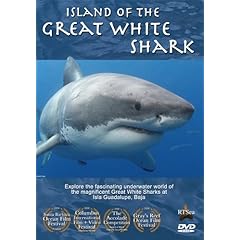
Richard Theiss, filmmaker, producer, and blue blogger, has been a tireless champion for the global shark diving industry. Using his latest pro-shark, pro-industry film, Island of the Great White Shark as an educational tool Richards work continues to benefit the industry:

CALIFORNIA ASSEMBLY MEMBERS SPONSOR SCREENING


Sacramento, California, August 18, 2009 – California Assembly members Nathan Fletcher (R, 75th Assembly District) and Jared Huffman (D, 6th Assembly District) will be sponsoring a special screening/discussion of RTSea Productions’ Island of the Great White Shark for invited members of the State Assembly and Senate on Wednesday August 19, 2009 at the State Capitol.


The award-winning documentary film is a comprehensive look at the great white sharks of Isla Guadalupe, Baja, exploring the true nature of these critically important animals and the ongoing scientific research intended to secure their survival. Following the screening, RTSea filmmaker Richard Theiss, world-renown shark expert Dr. Peter Klimley from UC Davis, and eco-tourism operator Greg Grivetto from Horizon Charters, will discuss and field questions about the film, the important conservation and eco-tourism issues facing these ocean predators, and what the future of these animals means to California.


“These are absolutely magnificent creatures living on a razor’s edge of possible extinction. And there are some very dedicated people working tirelessly to prevent that. This is a story that needed to be told because their fate can have an impact on California, ranging from tourism and fishery economies to fragile marine ecosystems,” says Richard Theiss, RTSea Productions, executive producer and cinematographer.


Theiss has filmed the great white sharks that migrate in the fall to Isla Guadalupe for over five years. During that time, he not only completed the documentary, Island of the Great White Shark, but also became aware of the plight of these ocean predators and how their future is tied to environmental, conservation, and tourism issues between both California and Mexico. Relying on assistance from Dominique Cano-Stoco, Associate Director of Government Relations, UC San Diego, initial contact with several California legislators proved there was positive interest regarding the issues, which has led to Assemblymembers Fletcher and Huffman taking an active role in arranging this screening/discussion in addition to proposing other measures.


“Of all the animals in our planet, sharks are among the most recognizable, yet they remain remarkably misunderstood. Island of the Great White Sharks packages a message of science education and ocean conservation inside quality entertainment and cinematography. As an outdoorsman and as a surfer in particular, I appreciate that this film shows the truth—that sharks are critical players in maintaining balance in our marine ecosystems. The cause of conservation is important, and I am happy to use this event to encourage continued learning about these iconic creatures and smart steps to protect their place in our world,” said Assemblymember Nathan Fletcher.


"This film illustrates the importance of international cooperation in wildlife conservation, including the need for better understanding and appreciation of the vital role this unique species plays in the ocean ecosystem. Wildlife conservation and eco-tourism are also major contributors to California's economy, and for that and many other reasons deserve our support and encouragement, said Assemblymember Jared Huffman."


Following on the hype and hysteria of Discovery Channel’s annual Shark Week television programming, this event plans to present the facts regarding a critically important and highly misunderstood shark. The film highlights the value of shark eco-tourism and the importance of conservation, while the discussion will bring out the need for cooperation between California and Mexico’s regulatory agencies involved with eco-tourism, research, wildlife conservation and protection of threatened species.


The screening and follow up discussion will take place in Room 126 of the State Capitol from 5:30 p.m. to 7:30 p.m. Those wishing to attend or to arrange interviews with the participants should contact Heather Koszka in Assemblyman Fletcher’s office at 916-319-2075.


About RTSea Productions


RTSea Productions, based in Irvine, California, (www.rtsea.com) is dedicated to capturing nature and underwater images that will impress and move viewers to preserve and protect our precious natural resources – above and below the waves. RTSea has provided footage for National Geographic, Discovery, Animal Planet, Google Earth, Aquarium of the Pacific, and others.

# # #

Monday, August 17, 2009

Africa - White shark cage diving permits

The Department of Environmental Affairs in Africa will commence with the application process for boat-based whale watching and shark cage diving operating permits on Thursday 27 August 2009 as stipulated in the Government Gazette published on Friday 14 August 2009.

The policies on Boat-Based Whale and Dolphin Watching and White Shark Cage Diving gazetted last year in 2008 are aimed at providing and improving regulatory and compliance frameworks in both sectors, growing both sectors through the allocation of a greater number of permits and transforming the industries.

Permits will be allocated under section 13 of the Marine Living Resources Act (MLRA) for a maximum period of one year. Successful permit holders will be re-allocated their permits each year for five years from the date of the first allocations, provided that they fully complied with permit conditions.

Complete Story

Sunday, August 16, 2009

Rep Gene Ward - Political Tourism Killer

When Rep Gene Ward started sending one sided, anti-tourism flyers (click image) to the general public in Oahu for "staged town hall meetings" he forgot to add these statistics.

Oahu, Hawaii is currently suffering through it's worst tourism declines since the Great Depression.

Rep Gene Ward wants to hurt the economy further by halting 40,000 annual tourists from seeing sharks from cages.

Is this the face of a politician who is in touch with the realities on the ground?

VISITOR ARRIVAL DECLINES

The number of visitors arriving in Hawaii by air in October with the percentage change from the same month last year:


VISITORS PCT.
Domestic 190,215 -15.9%
International 122,923 -8.9%
Total 493,506 -13.5%
Overall total * 511,518 -13.5%
by island
Oahu 313,138 -13.3%
Kauai 75,119 -25.9%
Lanai 6,404 -29.7%
Maui 147,977 -20.5%
Molokai 4,672 -35.9%
Big Island 96,366 -19.7%

* Includes passengers arriving by ship
Source: Department of Business, Economic Development and Tourism

District 9 - It's got da critters!

As you are aware this blogs love of cephalopods knows few boundaries. When were not talking about sharks these critters are high on the coverage list.

Naturally when a new film arrives featuring "crabby alien cephalopods", we had to take a gander. We were not disappointed at what we saw. For all the right reasons go see District 9:


Saturday, August 15, 2009

Shark Conservation - As easy as "starting something"

A note to all those in the shark diving industry. Sharks are under assault, and we will lose them unless we push back on every front and in every region.

While many industry folks support global efforts to protect and save sharks, funneling money into front line NGO's - we should be looking to our own dive sites. To the animals we know intimately, to the places where we make our living from. There are no better places to begin outreach and education, in fact, this is where we begin.

Here's a great example.

This blog has harped on this message since it's inception. Regional shark conservation is our obligation, not our burden. We start saving sharks by "starting something" in our own backyards.

It can be a website, a research effort, a photo id program. There are many of you who have lead this effort, and to those few Kudos. There are also many more who publicly decry the taking of sharks and yet, do nothing coherent.

It all starts with "One".

Tomorrow, be that "One".

Isla Guadalupe Research and Fund

Friday, August 14, 2009

Fiji - Evolving Shark Tourism

Shark tourism is a $300 million dollar worldwide industry. Done right, shark tourism has long lasting positive effects on local economies, shark conservation, and regional fisheries.

Fiji has been at the forefront of the evolution of commercial shark diving thanks to the tireless efforts of a few industry visionaries who pushed for change.

Worldwide, shark tourism efforts run the complete spectrum from "business only models" where the sharks are the subject of for profit enterprise, to a newer breed of operation that includes shark research, conservation and outreach.

Change to any industry comes slowly and is lead by risk takers and industry movers.

As a template for sites like Tiger Beach, Bahamas the set aside Shark Reef Marine Reserve Fiji model is in need a few regional champions.

Welcome to industry change.

Welcome to Fiji (click image)