Sunday, March 16, 2008

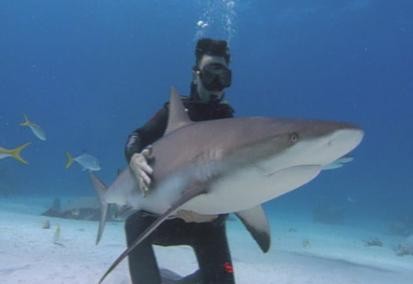
Sean Van Sommeran-"Shark Bloviator" Extreme

You have to love this guy or hate him. When Sean Van Sommeran of the Pelagic Shark Research Foundation has something to say...he can usually find someone who'll listen to him.

Casually factual when talking about commercial shark diving and always controversial when talking about anything else:

From Santa Cruz Live:

With PSRF set to present its annual shark report this Tuesday at the Santa Cruz Surfrider Foundation’s monthly meeting, now seemed like an appropriate time to catch up with Van Sommeran on some the latest news regarding shark research and shark activity in our local waters…

So Sean, when we’re talking about sharks in the Monterey Bay region, are we primarily talking about great white sharks?

That’s where a lot of people’s interests gravitate toward, just because it’s the big, heavy one. But I spend as much time with other, less grandiose species: leopard sharks, guitar fish. They’re not going to overturn the boat or anything, but I spend a lot of time with those animals too.

A few years ago there was a lot of controversy over shark diving tours chumming the waters and using surfboards as lures to attract white sharks. Surfers were concerned that these tour groups were actually teaching sharks to associate the silhouette of a surfboard with food? Were their concerns valid?

They weren’t just floating surfboards in an effort to get the animal up to the surface where it could be seen, but actually putting a wetsuit stuffed with fish on top of it. It wasn’t just about seeing the animal. It was also like, ‘now watch this!’ It wouldn’t be accepted with other species of protected animals, let alone a big potentially dangerous shark. And we could see people surfing from where they did this stuff. A lot of us were members of Surfrider Foundation anyway. So the Surfrider Foundation actually filed the lawsuit that spurred the Marine Sanctuary (Monterey Bay National Marine Sanctuary) to impose the restrictions that are still in place (against shark cage diving).

The Farallones are less protected to a degree, but there still is no feeding the sharks or using bait allowed. They can still dunk cages in the water. They’re not supposed to chum. There’s little enforcement, but I think most of them don’t. It’s not needed. What’s interesting about the Farallones is there are these big elephant seal predations where the sharks eat these seals. Natural behavior can often times be more interesting than anything you can draw up, so I think they’ve come to the realization that they can just sit by and watch what normally happens without provoking the shark to slam into the cage and all that stuff. They can still sell their $1,100 dollar tickets. Our position is simply that we want to try and remove the hazardous aspects of the industry. We think that shark viewing should be just like bear watching or orca watching or whale watching. It should be enough to see the animal in its environment. To have it come up and “almost get you” is just stupid.

But, in your opinion, did surfers have a legitimate concern?

Yeah, I think so. One of the most basic tenets of wildlife care is “don’t feed the animals.” It’s just like feeding a stray dog, or pigeons, they’ll keep coming back. You can even get a plant to lean toward light and/or water. It’s just the most basic thing: Any animal is going to gravitate towards what it needs. It’s been demonstrated with reef sharks and with white sharks as well that if you repetitively feed the animal in a restricted particular location, they’ll learn to look for that. So we’ve always been strong proponents of limited baiting and no feeding whatsoever. And certainly no deliberate provocations. A lot of the cage diving trips involve getting the sharks to hit the cage or getting the shark to take the bait out of a guy’s hand, just this escalating dangerous proximity that we don’t see as a viable recreational pastime.

What will you be focusing on in your presentation Tuesday?

Well Todd Endris (Monterey Bay surfer who survived an attack from a great white shark at Marina State Beach on August 28, 2007) got injured by a shark off Marina, so we’ll be talking about that. There’s a myth out there that dolphins saved him. There’s an old fable that dolphins will protect people from sharks and can beat up sharks. Because the dolphins were there just prior to (Endris) getting hit and then while he was getting hit there were still dolphins nearby jumping out of the water and stuff–and he didn’t die, like 99 percent of the people who get bitten by sharks don’t die–but because there were dolphins there this time (Endris) was presuming they were the reason (he was saved). I’m glad he’s ok. But one of the potentially alarming aspects of that story was that a lot of people I talked to afterwards were saying, “Oh, that’s cool that dolphins will protect you. So if I see dolphins then I’ll just paddle closer to them and I’ll be safe.” And it’s like “No, no, no.”

Yeah, I’ve been told before that if you see dolphins in the lineup it’s a good sign that sharks aren’t in the vicinity and that sharks are afraid of dolphins because they can gang up on them in pods and will actually ram sharks from all sides. Not true?

No. Dolphins can beat up and don’t have any problem with most species of sharks, but there are also several species that dolphins show up in their stomachs all the time, including great whites. In the Mediterranean one of their primary food items is dolphins and tunas. In fact, our contention is that when you see birds diving and lots of porpoises near shore and stuff, that’s when you don’t want to be in the water. The Bay is kind of like this big revolving Serengeti Plain out there and every once in a while it touches the shore, right? So you don’t want to go swimming out in the middle of that. If there’s any time that there is a likelihood of a big predator being out there—it’s not likely to bite you, but if you’re concerned about that kind of thing—it’s when there’s tons of food there. It’s very likely that the shark was shadowing that group of dolphins anyway and that’s what brought it in the lineup.

So if you see dolphins in the lineup is that actually a bad sign that sharks might also be in the vicinity?

The whole shark attack equation is something that needs to be kind of downplayed. You don’t have to hype it up. If you look at it statistically, there have been just over 100 attacks (on people) on the west coast since the 1920s, so it really is less than lightning strikes. It’s a very rare instance. The proximity of humans and sharks in the water is much greater than a lot of people realize. The good news is that they don’t often bite humans. Now people don’t often get hit by lightning either, but you can have conditions like rainstorms and lightning storms where you can increase your chances. You know, you run out with an aluminum golf club onto a golf course during a thunderstorm…The same thing applies to sharks. I wouldn’t say (dolphins) are bad news. But don’t enter the water, and because you see dolphins, think that you’re going to be protected.

I’ve always recommended not surfing or swimming near “bird whirls,” where the birds and the fish are real close to shore and you’ll have seals and sea lions and porpoises and dolphins and thresher sharks and all kinds of stuff feeding in there. These events are also called “bait boils” or “bait balls,” there are various terms for them. Most of the activity is happening offshore, but every once in a while they move near shore, and that’s when the sharks can be near shore.

What else can surfers do to reduce the risk of a shark attack?

It’s pretty basic. Always surf with a buddy. You don’t have to–I don’t always do that–but when people do surf alone they should come to terms with the fact that a lot of things could go wrong. That’s one of your basic precautions whether your surfing, diving, whatever. The ocean can be a hostile environment, wildlife aside. Pay attention to your surroundings and watch the animals around you and see how they react. I’ve heard so many stories about people surfing up the coast surrounded by birds and harbor seals and all of a sudden all three harbor seals dive into the water all at once. The surfer gets a weird vibe and decides to paddle in and then later sees a shark at the surface eating something, probably one of the seals. If you’re concerned with it, there’s ways to minimize your potential of being the one person who gets hit every year.

Should surfers be wary about surfing at rivermouths?

Yes. But, again, a lot of the rivermouths tend to be factors for wildlife. So it’s just the tip of the food chain there. Seasonal occurrences of fish runs bring the marine mammals, which again bring those big sharks.

According to superstition among many Northern California surfers, late summer and fall, especially “Sharktober,” are the most dangerous times of the year for shark attacks? Is there any scientific basis to this notion?

There’s a little bit of statistical evidence. And just in horse sense, that’s when the waves get good, so there are a lot of surfers in the water. I’d say it has most to do with the fact that that’s when the elephants seals are starting to come ashore to mate and to molt. Not all white sharks eat elephant seals, only the bigger, heavier adults eat those seals. So when those elephant seals come in from the open ocean there’s a certain segment of the adult white shark population that comes to shore with them.

It’s conventionally understood that the season is October through January. But we see activity in September and this time of year as well. We saw our last shark on February 16, two of them actually. But there’s evidence of bitten seals year round, so there’s a year-round presence. The best statistical spike I can find was in fall of 1993 when over thirty otters washed up bitten right around Año Nuevo Island. If you look at just that spike, something happened in October, and I think it was the arrival of a fleet of sharks. They’ll aggregate as opposed to congregate. They don’t travel around as a school. But like fishing boats, they’ll all wind up at certain hot spots to get food.


What are researchers learning about the migratory patterns of sharks?

Basically all the conventional wisdom about white sharks off the coast of California was proven wrong in the year 2000/2001. White sharks were thought to be coastal. And it was our theory as early as 1996 that they were in fact open water and deep-ocean and periodically hitting the coast. The year 2000 was when we put the satellite transmitters on white sharks (at Año Nuevo Island). We put on four transmitters in the year 2000 and ours popped off near Hawaii. It was really a revelation. These sharks were in fact open-ocean, deep sea animals.

Late summer to early winter is the peak time for white sharks returning to our coastal waters. Late winter and spring is when many go off into the deep Pacific. And there’s a lot of variability. Some of these animals will show up late season, a lot of them will show up at the beginning of the season. There are animals arriving in October of 07 that we are still seeing around as late as the middle of last month. There’s some that have gone and left and some that have been there the whole time. So they’re spending four months or more at some of these locations. And then the sharks that go out to Hawaii once they leave here will stay there for three to four months and then come back.

How many shark attacks were there on the California coast in 2007?

It depends on how you want to classify a “shark attack.” In terms of injuries, just the one on Todd Endris at Marina Beach. I don’t know of any other injury from a shark attack last year along the whole California coast.

Have there been any documented shark attacks or incidents between human and shark in California so far in 2008?

I haven’t heard of anything from 2008. The ass end of an elephant seal washed up at the reserve (Año Nuevo) recently, but no sighting of the shark. And then a harbor porpoise was supposed to have washed up near Four Mile within the last three weeks in February. But no eye witness accounts of chases out of the water or anything like that.

Are you seeing any trends as far as shark attacks on people?

There’s a perceived increase. It’s kind of an urban myth that I’ve been hearing since the late 80s. Statistics are rising but if you look at it in totality you’ll see that crime, boating accidents, people falling off coastal cliffs, etc. are all rising. And it’s a product of increased human traffic, period. There’s more people surfing, more surf schools, more people buying scuba gear. There are more water sports like kite surfing and tow surfing. There’s just more people in the water and more people from coming all over to use the coastal waters. And with more crowding there’s increased traffic in formerly isolated and remote areas.

But if you ignore all the little anecdotal accounts of, “Bob saw one off Trestles Tuesday,” and just look at the number of people bitten and injured from shark attacks, there are scarcely over 100 attacks documented since the 1920s. Attacks are rare, injuries are even rarer, fatalities are extremely rare, and consumption is almost unheard of. If you consider how many people are coming in and out of the water on a daily basis, it is just one of the rarest things that could happen.

There’s nothing to suggest (sharks) are actually looking to eat people. I believe that a lot of those attacks on humans are exploratory. I don’t think that it’s a case of mistaken identity, like some have posed, because usually when they hit a seal it’s with tremendous force. So even if it was by accident guys would be much more injured than they are if the shark thought they were a seal. That’s my impression. Usually the rate of closure is relatively slow compared to what we see in the violent hits on seals where the sharks are flying out of the water.

If you see the animal that’s actually good news, because if it was going to attack you, you wouldn’t see the shark until it’s on you. When a shark is at the surface, typically it’s tracking something, trying to pick up a scent. If the shark presents itself to you it’s not looking for you, it’s looking for something else.

Revillagigedo Islands-Eco News You May Never Hear

This is probably one eco news story you will not hear due to the sensitive nature of it. We can give you some of the details, the rest you'll have to ask the vessels owner and crew. When it comes to saving wildlife, sometimes you have to take matters into your own hands. In the case of this crew and divers, they all deserve awards:

"On March 2, 2008, an 80-foot fishing vessel was seized within the Bio-Sphere of the Socorro's. It was carrying an estimated 3½ tons of sharks, along with 8 giant Pacific manta rays. A professional video and still photography team documented the entire capture and seizure of the vessel. Close-up images of the fishing vessel’s roof show hundreds of shark fins drying. Under the direction of the commander of the Mexican Navy’s interceptor vessel, an underwater film crew documented the contents of a set gillnet that had been deployed in 140 feet of water. Fourteen sharks and one dolphin were found in the fisherman’s net––all caught in flagrant violation of the law".

This is the part of the story that might not ever see the light of day. The seizure was at the behest of a dive boat in the area. They saw, they acted, and today illegal fishermen are in jail. It's an amazing story.

Here's how you can help. The divers on board are putting together a documentary to help save this pristine site from further decimation...all they need is quick funding here's the email we got please contact Earl Richmond if you want to help:

Dear Friends,

The tactic we are taking is to put the evidence of the illegal fishing practice in the hands of those in Mexico who are in a position to influence and bring about change.

Fortunately, we are well connected with variety of influential Mexican businessmen and government officials, some who share our compassion for preservation. At this point, we have a far better chance of making a positive long-term impact through the conservation management officials then we do by creating a media spectacle. It’s not about pointing fingers; it’s about education and informed decision-making.

I am looking using this seizure of an illegal fishing vessel as a positive step in securing the preservation of Revillagigedo Archipelago. We’ll start here, and if that is not enough then we will pursue additional channels to bring the problem of enforcement to light. The images are very powerful, the evidence is completely documented, it needs only be presented in the appropriate manner.

We are in the process to secure funding through our 501(c)(3) non-profit World of Oceans entity, allowing us to move quickly in producing a documentary that encompasses the uniqueness of the Revillagigedo Islands as a one-of-a-kind region for a variety of large pelagic species, and the immediate need for enforcement of this preserve.

Sincerely,
Earl Richmond

Earl Richmond
Producer/President
Richmond Productions, Inc.
earl@richmondproductions.com
www.richmondproductions.com
Phone: 805-688-2718

Places You Never Want To Be Without A BIC Pen

While this next item has nothing to do with sharks and shark diving we did find it buried in a series of articles about sharks in Antarctica.

While the rest of the planet goes about it's business a small and decidedly crazy group of researchers and hard core die hards make a living on this last outpost of mankind.

How crazy are they? Click this video to find out:

Saturday, March 15, 2008

Record Shark Taken-Eco Debate

Seems as if the good folks in Brisbane, Australia have their heads on right. Last week a record sized Bull shark was taken as part of a Muddy Water sportfishing competition.

Obviously from the comment blowback, even though these animals have been attributed to several deaths in the area, Australians like their underwater predators live, healthy, and living to see another day.

We would have to agree.

A RECORD-SIZED shark taken in a Brisbane River fishing competition has started a war of words over whether such an animal should be killed for sport.

Brisbane River Classic fishing competitor Terry Hessey caught the 2.9m bull shark at the mouth of the river in December and pictures posted on the internet have since fired up debate.Mr Hessey did not want to comment on the issue but fishing competition organiser Angus Gorrie said the angler usually released fish unharmed.

"Inevitably, there are some fatalities but about four in five sharks are released," he said.

Mr Gorrie said he believed the shark was the largest caught in the river. It was weighed but the scales registered to only 200kg.

Courier-Mail fishing columnist Dave Downie said it probably weighed 250kg to 300kg and was the largest he had seen. "I don't agree with something like that being killed for no reason. I'd rather see catch and release," Mr Downie said.

University of Queensland researcher Craig Franklin said it was wrong to take an animal merely for the thrill of a kill. Bull sharks were at the top of the food chain and their removal risked triggering a trickle-down effect which could upset the balance of species.

Mr Gorrie said he understood there was a trophy element to Mr Hessey's kill but most smaller bull sharks were taken for eating just as people ate bream or whiting.

His competition would in future cater for photographic entries so animals did not have to be killed and weighed.

CSIRO researcher Richard Pillans said the shark was female, 25 to 30 years old and appeared ready to give birth.

"It's a shame. An animal of that age is extremely important," he said.

"You've got a far greater chance of being killed in your car than by one of these."

The University of Florida international shark attack file recorded just four deaths from sharks world-wide in 2006.

Last year, 1616 Australians died in car accidents.

Mr Gorrie agreed, saying the shark's reputation was exaggerated as there were relatively few incidents. They were caught in summer but rarely seen in cooler months because they tended not to feed then.

Professor Franklin said the risk of attack was greatly lessened simply by not swimming in estuaries at dawn or dusk especially in summer.

"It's fantastic that Brisbane has a shark like that in its river," he said. "Sharks don't go out to target humans. We've got to learn to live with species like that."

Dr Pillans said the river had a population of 2000 to 5000 juveniles but the number of adults was unclear. In the US 95 per cent of bull sharks had been wiped out.

They gave birth to six to 13 pups at the mouth of the river after which the young swam to the upper reaches around College's Crossing.

Professor Franklin said bull sharks were one of the world's more unusual marine species in that they could live either in fresh or salt water.They were more often seen than other sharks simply because many cities were built on waterways.

Tuesday, March 11, 2008

The Manta Network-Redux

This came in the mail today, thought we would pass it on:

As a leading dive industry member, I am sure you share my concern for the oceans and all their inhabitants. Not only do we depend on the ocean for our survival, but your livelihood is directly linked to its health. Its protection should be a primary concern of all those that enjoy its beauty, especially those in the dive industry.

The Manta Network was founded with a goal to engage the dive industry in the conservation and protection of manta and mobula rays. We invite you to become part of our Dive Industry Advocacy program. Your participation will have a significant impact on the protection of one of the ocean’s most magnificent creatures.

If you would like to become a dive industry manta advocate please respond to this email or register online by selecting “Industry Advocate below.”

We will send you a special package that will include information on how you and your staff can help. In the kit you will also find a counter display with literature to give to your customers. Please make sure you send your mailing address so we can quickly mail your kit.

You can start today by printing and displaying our announcement about our April manta expedition to Panama. See attachment.

We look forward to your support of our efforts to learn more about and to protect the remaining manta and mobula rays before it is too late. It would be a great pity if future generations of divers could not share our excitement about diving with the magnificent manta rays.

Yours truly,

Diane Wells
Dive Industry Liaison

P.S. Please take the time to respond today as this will be the only request we will send.

Register Online: [Industry Advocate]

Also see: [Panama Manta Expedition, April 5-11, 2008]

Monday, March 10, 2008

Giant Squids - Dosidicus Gigas - Killing Off Salmon?

Scott Cassell, one of the foremost authorities on the Giant Squid sent in this article today.

If you follow recent events off the shores of California and Oregon talk is squarely centered around the imploding salmon runs. In almost every major river and tributary salmon runs this season are off by almost 80%. That's a stunning statistic.

At the same time giant squid populations are surging up and down the coast and in areas where squids were once only sighted periodically.

What is happening out there?

"His years in the water with the animal has convinced Cassell that the West Coast squid population is booming. He speculates that the animal's increased numbers coincide with a drop in its predators, tuna and sharks, which are commercially hunted. Cassell isn't alone in his belief. The Pacific Fishery Management Council, which has authority to set restrictions on commercial and sport fishing, identified Humboldt squid as one of 46 possible reasons salmon are disappearing".

"Cassell said he believes the squid are preying on the salmon, although one study showed no evidence of that. Another theory suggests the voracious squid have disrupted the food chain, which is contributing to the salmon's decline."

Clearly something is happening off our coasts with salmon being the "canaries in the coal mine". The giant squid nexus seems plausible from a guy like Scott Cassell.

Saturday, March 8, 2008

Island of The Great White Shark Documentary

ISLAND OF THE GREAT WHITE SHARK – UPCOMING SCREENINGS

“Island of the Great White Shark" - RTSea Production's recently completed documentary chronicling the great white sharks of Isla Guadalupe, Baja and the ongoing shark research taking place there, can be seen in upcoming screenings, with filmmaker Richard Theiss in attendance at the following aquariums:

March 30th - Aquarium of the Pacific "Divers Day", Long Beach, CA

May 5th - New England Aquarium, Boston, MA

June 18th - National Aquarium, Baltimore, MD

Stay tuned, more aquarium screenings are being scheduled and the film will be available on DVD shortly.

"A primal scene of unearthly beauty. Excitement and information pepper this film." - David McGuire, Sea Stewards

“Beautiful videography, good graphics and information.” - Dr. Bob Hueter, Mote Marine Center for Shark Research

"Richard Theiss has a unique ability to communicate science, conservation and entertainment." - Ania Budziak, PADI Project Aware Foundation

“We absolutely loved the film.” - Liz and Kevin Sullivan, Pacific Explorers Dive Club

Friday, March 7, 2008

Paul Watson Shot? Wait a Minute!

Something is not right about the latest action on the Southern Ocean. At hand claims and even a video showing what looks like a shot through a bullet proof vest worn by Sea Shepherd's Captain Paul Watson.

In this video he claims to have taken a direct round to the heart region. For all intents it looks like he has, with the bullet passing deeply into the vest only to be stopped dramatically by a shield he was wearing below the vest.

The media are having a field day with this.

Now let's break this one down.

1. The shooter, presumably firing from the Nisshin Maru, was in a concealed position when he fired that shot. Not one of the Sea Shepherd crew maintain they saw anyone with a rifle on board. So let's assume concealment as being out in the open would have given the shooter away.

2. Both the Nisshin Maru and the Sea Shepherd vessel were underway at the time and on moving seas. The shooter had to adjust not only for random waves and distance, but from a concealed position had to account for wind, also assuming that Watson was moving around as well at the time.

3. To make that one shot, and were not talking about a stationary book depository in Dallas, the odds are almost incalculable that the shooter got Waston directly over the heart with just one single round. It's a simply amazing shot.

Now for the real question, "why?"

Why would the Japanese government risk everything by trying to kill Captain Paul Watson?
Clearly had this shot killed Watson they would have lost everything they have worked for to date with the International Whaling Commission and with world opinion. Watson would have become a Whale Martyr and whaling as we know it would stop due to unprecedented pressure from outraged group worldwide. What was in it for Japan to even attempt to try and kill this extremely high profile whale activist in full sight of multiple cameras and witnesses?

They did use flash bang grenades and it was caught on tape, but the single shot?

Kevlar and Ballistic Vests

To penetrate a Kevlar or ballistic vest from a distance you need at least a 7.62 mm round. Obvious choices would be military rounds with some sort of armor piercing capability. That is assuming the shooter knew that Watson was wearing a bullet proof vest in the first place. Obviously from the penetration the shooter understood this, otherwise this kind of round would have passed through Watson and rattled around the ship.

The Point?

We'll be the first to say that what Japan is doing is wrong. Whaling should end. What Watson and Sea Shepherd have done with this claim is raise the credibility stakes of both sides to an absolute win or lose scenario.

Japan and Waston should call for an independent commission to look at both the vest and the recovered spent round to determine where it came from and what type of round it was. If it is proven that the round was fired by the Japanese they should be forced to end whaling. This was attempted murder, nothing more or less.

If Paul Watson made this story up, the credibility of Sea Shepherd will be forever lost, their status as a non profit should be pulled, and Sea Shepherd should go away.

Time will tell, but probably not the shooter in this case, whoever it was.

Whale Wars-Captain Paul Watson Claims to be Shot

Just when you thought this years Southern Whale hunt could not get any more dramatic, there's word today that Captain Paul Watson of Sea Shepherd has been shot. He's unharmed...and talking to the media.

In fact there's also video.

What prompted the shooting, according to those on site, was a rotten butter attack by the crew of the Sea Shepherd upon the Japanese whale fleet...yes, a rotten butter attack.

One question, why was Paul Watson wearing a Kevlar vest in the first place?

CNN-Japanese whalers and anti-whaling activists clashed in the waters near Antarctica on Friday, with each side offering conflicting accounts of a confrontation with violent overtones.

The official said a whaling crew member threw a device that explodes with a warning bang to discourage the activists. The crew member threw the device after activists threw a foul-smelling acid found in rotten butter toward the whaling ship, the official said.

Watson was shot, the group said, and two others were injured. A 35-year-old from Australia hurt his hip trying to dodge a flash grenade, and a 33-year-old Australian received bruises after a flash grenade exploded near him.

An official the Japanese Fisheries Agency said the Sea Shepherd began throwing smelly chemicals toward the whaling vessel around 12:36 p.m. local time. About an hour later, the official said, a safety officer aboard the whaling vessel threw a ball that explodes to produce a warning bang.

"They might have mistaken that was a shooting sound," the official said. "We are not shooting a gun or anything at them."

Thursday, March 6, 2008

Wildlife Moment-Surprise!

27-year-old Israeli tourist Novon Mashiah almost discovered the hard way how far you can push a saltwater croc in Australia.

"One minute I was leaning over the boat teasing it for a picture. The next minute it burst out of the water with incredible speed ... its jaws fully open. I was shaking,'' he said.

Now, one might say this is Darwinism at play here, or is this something else?

With the rapid explosion of wild animal encounter shows like the Croc Hunter and others is the public being shown a side of wildlife encounters that eventually lead to events like these?

China-Rare Rainmaker Fish

Last week a rare if not almost extinct fish was celebrated by local fishermen...and then promptly sold and eaten.

Turns out the swim bladder (not the whole fish) is worth it's weight in gold and this particular fish species called the Bahaba flavolabiata has not been seen in this region of China for almost 50 years.

The fisherman who caught this rare "Last of the Mohicans" is set to make almost 1 million Yuan or close to $150,000 US.

In April 2007, a fisherman in Zhanjiang City, Guangdong province, netted a 49-kg Chinese bahaba and sold to a restaurant for 580,000 yuan. The restaurant cooked the fish meat but has kept the dried fish maw (mouth), tagging it at 2 million yuan with words "not for sale."

It is into this environment that the worldwide shark fin market is pouring the oceans sharks into. With scarcity-pricing for rare animals used for just their maws, fins and swim bladders runs at all time highs.

Wednesday, March 5, 2008

Whale Vomit Gold Rush U.K

Gotta love the Brits. Last week two gents discovered gold on a local beach in the form of 110 pounds of Sperm Whale vomit, and they decided to keep it.

Turns out this disgusting substance called Ambergris is used in France (where else?) for rare perfumes.

Naturally we thought this was as nasty as it gets, grubbing around on a beach in search of greasy balls of whale vomit...that was until we discovered how much these guys stand to make off the stuff-$500,000 pounds, or in depressed American dollars a whopping $996.973.12!

Sean, from Penrhyndeudraeth (try saying this without loosing a tooth) in North Wales, said the pair were on the beach walking a dog at nearby Criccieth when they made their discovery.

"We just came across this white, like waxy lump. I said to Ian: 'It looks a bit like whale sick. He had never heard of anything like it," he said.

O.K, so maybe they have something there, and with the price of homes here in California hovering around $800,000, do not be surprised if you see one of the Shark Diver crew out on that beach in the near future. Too bad this story didn't hit on April 1st.

Hammerhead Central-The Cape

Turns out this week there's one place in the USA that has more Hammerheads per square inch than anywhere else...and you can blame Osama bin Laden for the fact you cannot go and see them.

One of the stranger rules of unintended consequences we have seen in a while.

9.11 = shark protections = more sharks.

"The discovery of Cape Canaveral's importance as a shark nursery could help shed new light on the global decline of the ocean's top predators. Scientists are desperate to know more about the lifecycles of large sharks such as hammerheads -- one of the most vulnerable species to dying on fishing lines. By identifying crucial nursery grounds, they hope to improve federal management of large coastal sharks."

Young hammerheads and other juvenile sharks got a de facto sanctuary when the Coast Guard closed off the ocean surrounding Kennedy Space Center after the Sept. 11 terrorist attacks.

Tuesday, March 4, 2008

DEMA Bahamas Shark Event

DEMA (The Diving Equipment and Marketing Association) is deeply saddened by the recent events that lead to a diver's death after participating in a shark dive in the Bahamas last weekend. This tragic incident is an unusual occurrence, yet serves as a reminder of the importance of following guidelines put in place for specialty dives such as shark diving.

Shark diving has been practiced safely and successfully for the last 25 years without major incident. Guidelines were formalized in 2001 by the Global Interactive Marine Experiences Council in the "Florida Guidelines and Management Programs for Interactive Marine Experiences" which are available industry-wide. These guidelines include: safe environmental practices; staff training for interactive marine experiences; marine animal feeding practices; participant preparation and education; marine animal conservation efforts; safety considerations for interactive marine experiences; location of interactive marine experience program sites; risk management and awareness; establishing an emergency procedures plan; and appointing an administrative officer and safety officer for interactive marine experience programs.

DEMA strongly encourages dive operators to review their interactive marine experience practices to ensure their adherence to the guidelines that have been established to reduce the likelihood of an accident happening in the future. While any type of diving inherently involves some level of risk, pursuing safe, recreational diving experiences will greatly reduce that risk. This particular incident last weekend appears to have been an extreme form of the sport involving some of the more aggressive shark species.

For more information about interactive marine experiences, or to receive a copy of the safety guidelines, please contact DEMA at 858-616-6408.

DEMA, the Diving Equipment & Marketing Association, is an international organization dedicated to the promotion and growth of the recreational scuba diving and snorkeling industry. For more information on DEMA, call 858-616-6408 or visit www.dema.org

Monday, March 3, 2008

Mythbusters Set To Swim With Sharks

Each episode of the Discovery Channel show MythBusters takes on multiple myths and uses modern-day science to show what's real and what's fiction. One myth the MythBusters will investigate during the Shark Week episode they will shoot in the Bahamas next week will be the idea that magnets can control sharks' movements.

This drawing by MythBusters co-host Jamie Hyneman shows how he intends to examine the concept. Basically, he has designed a system where he will attach two electromagnets to a shark's nose and rig the system so that he can send tiny little electric pulses to the magnets to activate them. The idea is that if the magnet on the shark's left side is activated, it will turn right, and vice-versa. The shark will not be harmed during the experiment, which will be conducted under the supervision of a marine biologist.

Credit: Daniel Terdiman/CNET News.com

Tuesday, February 26, 2008

Death in the Bahamas-Shark Related?

The shark attack story coming from the Bahamas continues to evolve and as expected the industry has broken into two distinct camps. One look at either the Wet Pixel site or Scuba Board will give you a clear look at how high emotions are surrounding this unfortunate death.

As the hard facts coming from this event have all but ceased, speculation on what caused this divers death have ranged from outright shark attack, to embolism brought about from an uncontrolled ascent.

Even the dive sites location story line has changed from Tiger Beach to a new local somewhat prophetically called "The end of the world".

There are some hard facts that we do know:

1. The Bahamas Dive Association did send a Cease and Desist letter in 2006-7 to all operations in the Bahamas referring to non caged encounters with macro predators. They went as far as specifically identifying the species that might put divers at risk. It was clear and concise. There are some who might argue the legal weight of this C and D, but the fact remains we, as an industry who advertise, book and take divers to this pristine dive site were put on notice.

2. Jimmy Abernathy had no cages on site at the time of this shark attack.

Here's the official letter from the BDA in 2006-7:

Dangerous Shark Species Interaction Warning Letter

To: All Dive Operations Conducting Questionable Dangerous Species Shark Interactions in the Waters of The Islands of The Bahamas

From: Bahamas Diving Association, Official Recognized Diving Association for 36 members of The Islands of The Bahamas

To Whom It May Concern;

We have become aware that some dive operators have chosen to disregard standard safe-diving practices as it relates to interactions with Tiger Sharks and other potentially dangerous species of Sharks, in various locations within the waters of The Islands of The Bahamas.

The Bahamas Diving Association endorses and suggests all dive operators in the legal waters of The Islands of The Bahamas follow GMAC guidelines for conducting potentially dangerous marine-life and human interactions.

In such, we recommend all operations immediately cease and desist conducting open-water non-cage Shark Diving experiences with known species of potentially dangerous Sharks, such as Tiger Sharks, Bull Sharks, Hammerhead Sharks, Lemon Sharks & Mako Sharks.

Species that we have determined safe to interact with outside of a cage are Caribbean Reef Sharks, Black Tip Sharks, Black-Nose Sharks, Nurse Sharks and Silky Sharks.

Many operators in the Bahamas conduct shark diving interactions with ‘safe’ species, and have done so for over 25 years without a major incident. However, due to the potential negative behavioral reactions of Tiger Sharks, Bull Sharks, Hammerhead Sharks, Lemon Sharks & Mako Sharks, purposeful feeding or interaction with these species without a proper shark cage is highly discouraged.

The Bahamas Dive Association (BDA) would be glad to help communicate industry-standard safe shark interaction practices, should you need any assistance with your procedures.

This letter will be copied to the Bahamas Government, plus all diving insurance and training agencies serving The Islands of The Bahamas.

Signed,

Mr. Neal Watson
President
Bahamas Diving Association

Monday, February 25, 2008

Attack on Tiger Beach - Diver Dead

Editors Note 9.27.2008: Many emails have come in regarding this post and a few others that incorrectly suggest facts and site locations for the unfortunate shark attack on Mr.Groh this spring.

In defense of these posts we offer the following. This blog is a real time blog. As events happen, and stories unfold we post information as it happens. You will note the early posts regarding this event were dated almost to the hour of the day of the event.

These posts came from Coast Guard reports, first hand reports from vessels in the area listening in to radio traffic and no amount of general confusion from all media sources.

What is not in contention is the fact this attack (as we covered later) did not happen at Tiger Beach and did not involve a Tiger shark. What is also not in contention is the fact that Jimmy Abernathy himself did nothing to clarify the details of the attack, during the event, or after the event.

At no time did he or any representative of his operation come forth to the media or to other operations in the region to explain the attack, how it happened, where it happened, and what animal was involved. This lead to wild speculation by the media, and a general polarization of the shark diving industry in the region.

We maintain that industry leadership would dictate that Jimmy Abernathy would at some time and in some manner explain this event and to take responsibility away from the shark which quite naturally became the villain in this entirely sad affair. Today and after some 1500 media stories and blog posts later all we have are some grainy images and whispers of a story mainly from supporters of Jimmy Abernathy.

Our blog posts will remain as look at the unfolding of a commercial shark diving shark attack, how the media responded to it, how members of our shark diving community responded to it and the unfortunate aftermath.

Additionally a small group of Wetpixel friends have decided to make an issue of this blog and anyone who would speak out about this diver death. Sadly they have failed to realize how this tragic event has impacted the global shark diving industry and instead are clearly focused on reputation saving and smearing campaign.

Original Post:

A diver with Jimmy Abernathy's Dive Adventures in South Florida was bitten on Sunday by an alleged Bull Shark and then flown via Coast Guard helicopter to Florida.

Last year the Bahamas Dive Association sent a cease and desist to all shark diving operations on this site warning them to have shark cages on this dive site. It is unknown if Jimmy Abernathy had shark cages at this site at the time.

Diver Dead After Shark Attack

FT. LAUDERDALE (CBS4) ― A diver bitten by a shark on Sunday has died from his injuries.

The Coast Guard said they dispatched a HH-65 Dolphin helicopter from Miami after receiving a mayday call from a crewmember aboard the Sheerwater, a commercial diving boat out of Riviera Beach, around 10 a.m.

The chopper located the dive boat about 50 miles east of Ft. Lauderdale and hoisted a 50-year old man onboard. It then airlifted him to Jackson Memorial Hospital.

The boat's crew said the man was diving early in the morning when he was bitten by a shark. They were unable to tell what type of shark was involved; they said it swam off before they could make an identification.

Jimmy's last blog post from his website describing a Tiger Expedition last week reads:

"We also witnessed and photographed Don Kehoe loosing his Aquatica housing with two strobes and a Canon 5D to “Angel” (Tiger Grabbing his camera from his hands). Although we looked for the camera for two hours we had no luck. We have now renamed the special section of Tiger Beach “Kehoe’s Canon Reef”. The camera is insured by DAN which is a very reputable equipment insurance company and hopefully they will take care of this for him. He was very upset to say the least, but also very happy that the shark didn’t get his hand. If you haven’t already insured your camera before the trip, please do so now. You never know what may happen."

Sunday, February 24, 2008

White Shark Cafe TOPP's

In the news again-the team from TOPP's with more revealing data about the Great Whites of the Pacific. While the focus of this study is mostly on three populations off the California coast, our very own Isla Guadalupe population is on the same migration track.

Thanks in most part to the tracking efforts of Marine CSI we know that Guadalupe populations also join coastal populations off shore each season.

" The sharks spend months at the cafe, an area of about 600 square miles, but nobody knows what they're doing there. Even stranger, they dive up and down more than 1,300 feet every 10 minutes. They repeat the cycle over and over for days, a behavior they don't exhibit anywhere else."

This new data is perhaps some of the most exciting tracking data to come from these populations in a decade of research.

Tiger Beach Bahamas - Emergency Evac

There's word this morning from the Coast Guard navel station in Miami that a "survivor" has been airlifted from a commercial shark diving operation at Tiger Beach in the Bahamas.

While the details are thin right now the Coast Guard have confirmed that this was indeed a shark attack. They have also characterized the situation as "very serious".

We'll keep you updated.


Shark Cages: Worldwide Distribution

There's an old saying in the shark world "You only get one chance".

With that in mind Shark Diver has just shipped another complete set of shark cages...destined this time for the Caribbean.

Here's three reasons why we build and ship more shark cages than anyone else in the industry:

1. Quality. When it comes to commercial grade shark cages and divers well being we take care of business. "Safety" is not just a commercial tag line on our websites. In fact-our fabrication teams must also dive in the very cages they build for us. It's unique way to ensure quality control

2. Flotation. Floating cages need to be stable. That's why we engineered a flotation system that has been adopted by 99% of the entire Isla Guadalupe white shark fleet. Gone are the days of Home Depot PVC pipes that degrade in a marine environment. If you're going to trust your life to PVC you are working with the wrong crew. Our flotation systems come from a marine environment and are designed to last.

3. Shark Crews. All Shark Diver cages also come with seasoned shark crews to help you get the most out of your shark cage systems. We have traveled from Alaska to Mexico, the Caribbean and beyond with our private shark cages. Our cages are even currently in use in Tahiti.

Safety, Integrity, and Adventure. That's Shark Diver cage systems.

Saturday, February 23, 2008

Isla Guadalupe Shark Science

Mauricio Hoyos, CICIMAR's white shark researcher at Isla Guadalupe, has one of the world's toughest jobs.

As the very first Mexican lead white shark tagging project at the island, his work will be the foundation of other projects to come. Already new, much broader, projects have been suggested with a strong chance of one starting in the fall of 2008.

This will be Maurico's final season at the island before he publishes his paper on the local movement patterns of gws.

From his groundbreaking work we discovered that gws feed almost exclusively on the endemic Guadalupe Fur Seal during the early morning and sunset hours.

It's not easy camping on this ancient volcanic island month after month, but with determination and a whole lot of help from some friends, he has become a local legend out there:

Megaladon-Huge Shark

Once a along time ago, about 16 millions years, our blue planet was infested with 52 foot long-40 ton white sharks. These massive predators, called Megladon, were themselves feeding on critters three to four times that size which had plated armor on the sides.

Man, don't you wish you had a titanium cage and a time machine right about now?

Anyway, we know these beasties existed because, like so called modern white sharks, they shed their teeth faster than you can pump nickels into a Vegas slot machine.

Those teeth fell to the bottom of the ocean where divers are still finding them today. One of our divers who joined at at Isla Guadalupe in 2003 showed us an 8 inch Meg tooth that was still sharp enough to cut steak, we know because we tried. Here's a video of a Meg tooth hunt sucess:

Friday, February 22, 2008

Shark Diving "Blue Wilderness"

One of our blog fans sent us this link and video from a company in South Africa called Blue Wilderness . We told you about these guys last week. Here's the quote from their travel blog:

"Blue Wilderness does something a little different. They let you actually scuba dive with the sharks. That means no cage. No protection. No sh*t. Tiger sharks are what they’re looking for here. They’re big. 8-10 meters and they have stripes like, you guessed it, a tiger. More abundant are Black Tips which are much smaller, and have black tips on their fins. There’s also Whale Sharks, which are as big as a…you get the picture."

O.K so not the most eloquent description of a shark diving company, but heartfelt. The crew here at Shark Diver were impressed with the Washing Machine Drum Chum Machine, now that's cool...and so is this video:

Aliens at the Gate?

The Earth is mostly covered by oceans, we're a blue planet.

For a shark diving company with a cool blog this pretty much gives us an unlimited supply of items to cover, like, for example this latest weird news coming out of NOAA.

NOAA has a series of deepwater microphones listening for any underwater sounds they can hear. These listening stations have recently heard "strange noises" in our oceans.

But don't take our word for it, click this link and have a listen yourself. We're not even going to try a speculate what this sound might be...O.K, maybe aliens?

Thursday, February 21, 2008

Invasive Species-American Style

While we're on the subject of Crazy Invasive Fish Species (CIFS) and what to do about them, we would be amiss if we didn't introduce you to the Asian Carp.

Now you might be asking yourself as we did, what's up with all these Asian Invasion Fish?

We have no idea.

Anyway, this carp, (from Asia) is also known as the Flying Carp and basically it has completely taken over half of America. Really.

Now here's where it gets interesting. Unlike our friends in the U.K who are all but crying over the Giant Snakehead invasion, and don't get us wrong, that's pretty scary. On this side of the pond, good old American know how, fueled no doubt by Coors Light, has come up with a novel way to deal with the problem, and yes, it has something to do with weapons.

Let us introduce you to the American answer to Invasive Species:

Wednesday, February 20, 2008

Giant Snakehead Invasion!

Pulled off the Internet and on to your desktop this morning...and we're not making this up.

What you are looking at is a nasty little invasive species of predatory fish from Asia called the Giant Snakehead.

The problem with this critter is what it eats, pretty much everything in sight. Naturally the good fisherfolks in the U.K do not want this fish in their waters and were dismayed when someone caught about a two feet long specimen last week.

Here's where it gets interesting:

"Giant Snakeheads caused chaos to indigenous fish and the environment when they were found living in rivers and lakes in the U.S. in 2002. Snipers with high-powered rifles even set up watch to shoot the fish as they crawled ashore and entire lakes were poisoned to get rid of them."

God bless America, take heed U.K people, we have plenty of high powered red necks with guns willing to come to your country, drink beer, and shoot fish off your banks...just give us the word!

SharkDiver.Com and the Media

When you have a shark diving company like ours you get hit with media requests almost daily.

Recently we just completed a three part article for a German Magazine due out in April. The trick with working with the media is credibility. Never do anything that makes you, the sharks, or your operation look like an idiot. This is just Media 101.

That's a trick here is most media sources come to you with a basic Discovery Channel understanding of how sharks work. It's our job to introduce them to an expanded view of things.

In all media is fun to work with and we have been blessed to work with some of the greats over the years producing what amounts to a massive amount of positive press for both us and the sites we operate in.

After all, we're on the front lines of not only shark research, as is the case of our Isla Guadalupe site, but if we say so ourselves, we run a pretty cool little operation as well.

Tiger Shark Killer Charged in South Africa

In a quick reaction to unprecedented pressure from groups world wide South African authorities raided the home and then charged a man today for the killings of 8 Tiger sharks.

Aliwal Shoal Marine Protected Area on the KwaZulu-Natal south coast was the site of the recent shark slaughter, witnessed by shark eco tour operations and surfers.

"Conservationists are furious not only because is it illegal to catch tiger sharks in the protected area, but Aliwal Shoal is one of the top dive sites in the world."

As we commented in our blog on this subject a week ago, Marine Protected Areas are the key stone to protecting sharks. As unofficial site guardians, shark diving companies are often the first to report misdeeds at the hands of those who would harm sharks for either sport or profit.

The staff of Shark Diver remain committed to ongoing reporting of these important stories. With sharks being slaughtered by the millions each year and populations falling worldwide it might well be these few protected areas that save entire species in the years to come...if we can protect the sharks in them.

5 Questions with Ethan Gordon

We tracked down famed underwater shooter and Editor at Large Ethan Gordon (hat tip image) to get his take on underwater photography and the future of his industry:

1. UW photography has changed from film to digital and with it an entire industry, your take?

Digital photography has definitely "upped" the game. Now amateurs can accomplish what only the pros could do before. However, this also works to the advantage of the pros - we can now do things we never thought possible before. I think it has also been great for diving in general - there are now lots of divers who are enthralled by their point and shoot digital camera results - this keeps them diving. Remember the days when people used to travel with a bag full of film, only to return home to find out they had their camera set wrong all week?

2. As harder dive sites and rarer animals are recorded at a seemingly record pace, are we running out of new things to shoot?

It's getting harder to find new things to shoot, but we'll probably never run out of those. On the other hand, this might be a good time to take a new look at sites and creatures we've taken for granted.

3. Innovation vs status quo, what's your take on the new generation of UW shooters?

I think there is a new, very talented generation of UW shooters out there. They're tech savvy, creative and hungry to shoot.

4. Latest promising tech for shooters, do you have a favorite?

The new generation of digital TTL systems will revolutionize UW photography once again. Gone will be the days of having to think about your aperture and distance to subject. The electronics are almost there... maybe they've already arrived.

5.Crystal ball time-what's the future of UW photography and magazines that serve these images?

A sad reality hit me recently when I was presenting a slide show to a local Audubon chapter. I was showing slides of sharks and talking about the woes of shark finning. I was shocked when I realized that almost no one in the room had ever heard of this atrocity. The group was largely made up of non-divers, but I falsely assumed that this was a known problem.

The underwater photography out there in magazines today is the best ever. But, if we want to see it continue... the underwater environment continue to be spectacular, then everyone that subscribes to a dive magazine has to convince their friends (non-divers) to start to take an interest too - before it's too late. And, every diver that doesn't support the mission of these magazines by subscribing, well, shame on them.

TOPP's White Sharks

You gotta hand it to the TOPP's people (Tagging of Pacific Predators). They recently announced new findings from over 100 high tech sat tags placed on white sharks all over the Pacific in 2006. This last year was one of the most ambitious tagging projects on record:

"Every winter the sharks leave California's coast for one of two destinations. A minority of sharks head to the Hawaiian Island chain. The majority, however, congregate in a part of the open ocean halfway from California and Hawaii, 1,300 miles from land. Researchers have yet to uncover what attracts the shark to this particular spot. During these journey the sharks will occasionally dive up to a quarter-mile beneath the surface and stay at this depth, where light barely penetrates, for hours. On returning to California, the sharks display remarkable site-fidelity, always heading to the same area of coast they left before. “These animals appear again and again at very specific areas,” Salvador Jorgensen says, a postdoctoral researcher at Stanford University's Hopkins Marine Station and the Monterey Bay Aquarium".

Isla Guadalupe
island located in Mexico plays into this ongoing migration drama every year with animals returning every season after visiting the same sites as their California cousins. Making the Pacific a very small body of water after all.

Monday, February 18, 2008

Tiger Sharks-Aliwal Shoal Thomas Peschak

Thomas Peschak, photographer and shark eco friend sent us an update on the Tiger killings at Aliwal Shoal today. Turns out the dead animal count is rising every day, we're now at 8 dead animals.

"Less than 2 weeks after returning from a trip to photograph my favorite tiger sharks at the Aliwal Shoal Marine Protected Area off South Africa's east coast for a Africa Geographic magazine feature, my friend Mark Addison of Blue Wilderness Dive Expeditions called me with some devastating news.

A few days ago a young fishermen who should know better caught and killed three tiger sharks within the MPA and landed them openly in broad daylight. Tiger sharks are a protected species within the Aliwal MPA as they are the main attraction for thousands of tourists who come from across the world to dive the shoal and see these sharks. One dead tiger shark might fetch a once off payment of no more than $50-100 dollars for the fisherman, but alive that same shark might be worth in excess of $10 000 every year in marine eco-tourism.

Further investigations revealed the sobering news that a further five tiger sharks were killed the week before. Shark diving tourism at Aliwal shoal is one way to sustainably utilize our ocean resources in a non-consumptive manner and in the process create much needed employment for hundreds of people in the tourism and hospitality industry along this section of South Africa's coast. As this recent incident has demonstrated marine law enforcement at the Aliwal Shoal MPA is practically non-existant at present and poachers are able to operate with impunity from arrest or prosecution. If the sharks of Aliwal shoal are to remain a model of non-consumptive utilization of South Africa's marine wildlife heritage then the government, NGO's and tourism operators must combine forces and act quickly to stamp out these reckless, selfish and destructive acts that could destroy one of the world's true last shark paradises in just a matter of months."

Saturday, February 16, 2008

India's Cage Diving Industry DOA

India, the planets fastest growing population and economy has reached a crises point with rampant, unregulated shark finning off it's shores.

As reported by the Daily Star "At least 50 shark processing centres have sprung up along the South Western Coast, employing over 2000 fishermen".

Once again sharks are being harvested for the ballooning fin market and the home cure market which more often than not is driven by hear-say and bogus science. Anyone remember the anti-cancer shark pill craze of the 80's-90's?

We are officially declaring India's cage diving industry DOA. If the global shark slaughter is not halted soon, by 2040 even finding sharks in any ocean will be a rare event. The only way to stop this slaughter is to show local populations another use for these magnificent animals and eco-tourism, so far, seems to be a leading contender.

Friday, February 15, 2008

US to Drop Hydrazine Bomb On Ocean

The Pentagon announced today that it will be trying to shoot down a "highly toxic" dying U.S. spy satellite somewhere into the ocean on March 5th, 2008.

They are worried that this bird will impact an area where humans live-due to the onboard cargo of Hydrazine.

"Hydrazine is highly toxic and dangerously unstable, especially in the anhydrous form. Symptoms of acute exposure to high levels of hydrazine in humans may include irritation of the eyes, nose, and throat, dizziness, headache, nausea, pulmonary edema, seizures, coma, and it can also damage the liver, kidneys, and central nervous system. The liquid is corrosive and may produce dermatitis from skin contact in humans and animals. Effects to the lungs, liver, spleen, and thyroid have been reported in animals chronically exposed to hydrazine via inhalation. Increased incidences of lung, nasal cavity, and liver tumors have been observed in rodents exposed to hydrazine."

And that's just what WIKI says about this stuff. Obviously the folks in the Pentagon will not mention all the other super secret and potentially damaging chemicals on board for fear of mass panic on the land side of things. In fact they are even declining to mention what kind of bird this really is...which leaves us wondering along with about 7000 blogs nationwide, is this a Nuke Bird?