Friday, September 18, 2009

Shark Diver:The Movie - Sold Out

Shark Diver:The Movie 2009

What began as a last minute idea with a few industry film guys, and an opening in the 2009 commercial shark diving calendar has culminated in a sold out expedition.

Thanks to all the shark divers who called us from as far away as Brazil and continue to call - this trip is now full.

To those of you who will be joining us, we'll see you all in San Diego on the morning of the 12th.

Bring your cameras, we have some ground breaking fun in store for you during the "Time of the Titans."

Let's go shark diving!

Thursday, September 17, 2009

Aquarium Shark Diving - A Growing Trend

The world of commercial shark diving is growing. Countries, tourism boards, and dive operators from Fiji to the Maldives are realizing safe and sustainable shark tourism works.

None more so than commercial aquariums worldwide who are offering caged and non caged shark encounters at one of the fastest growth rates in the entire industry.

Case in point the Dubai Aquarium built as an interactive site, offers non caged dive experiences with sharks.

Where the global trend towards safe and sustainable shark encounters in all forms is growing, Hawaii is still debating banning all shark tours in Oahu, using similar language to a recent ban in Maui that failed to provide exemptions for aquarium based shark tours there:

The Shark Dive at Dubai Aquarium is indeed a once-in-a-lifetime experience. Where else do you have the largest collection of Sand Tiger Sharks in the world swimming right next to you while Giant Groupers edge closer and thousands of smaller fish species swim along? After having been an onlooker of the aquatic animals in the aquarium, you now have hundreds of mall visitors who gaze into the tank at you. And the comments from visitors have been varied: “I was surprised at how peaceful it is on the dive,” said one shark diver.

Another added: “You see it on television; sharks circling overhead, but you never appreciate just how spine-tingling that is until they are circling over YOUR head! What an adrenalin rush!”

Mr Arif Amiri, Chief Executive Officer, Emaar Retail, said: “The Shark Dive is one of the several close encounters of our animals that visitors can experience at Dubai Aquarium & Underwater Zoo. Their response to the experience of diving in the aquarium and spending time with the diverse aquatic animals has been overwhelming.

Maui Bans Shark Tourism - Maui Ocean Center in Crosshairs?

Here is the wording of a recent ban on shark tours Maui City Council members and a virulent anti-shark diving lobby have been congratulating the passage of this week.

Unfortunately it seems NO ONE in Maui stopped and asked the pertinent question "are there currently any shark tours in Maui?".

The law as it was written does not provide a loophole for land based shark tours - a growing marketplace for shark tourism worldwide.

The answer of course is yes, Maui does have shark tours, and this week the venerable Maui Ocean Center found themselves in the cross hairs of a new law that makes their business illegal as of this week.

Land based or aquarium based shark tours account for $40-50 million dollars in annual global revenues for the shark tourism industry. Maui City Council members have effectively shut this kind of tourism and subsequent aquarium development out of Maui with the passage of this draconian bill.

The term "ocean waters" is this bills failure. The Maui Ocean Center pumps "ocean waters" into its aquarium. It could be argued that the bill fails to specifically address land based shark tour operations with a targeted proviso.

A cautionary tale for City Council members in Oahu who may or may not understand the many ways tourists seek shark encounters, and the many ways shark tourism providers enable safe, sustainable shark adventures:

Maui Anti-Shark Tour Law

SECTION 1. Findings and purpose. The council finds that the oceans are used by city residents and visitors for numerous aquatic activities, including fishing, boating, swimming, surfing, canoe paddling, and snorkeling. The council further finds that sharks have great cultural, historical, and spiritual significance for many Native Hawaiians. The council believes that shark tours, the practice of charging residents and visitors to venture into ocean waters to view sharks attracted by fish feeding, raises public safety concerns for ocean users, is disrespectful of Hawaiian culture, alters the natural behavior and distribution of sharks, and may be disruptive of ocean ecology and the natural environment. The purpose of this ordinance is to ban shark tour operations.

Shark Tour Operations

Definitions:

"Fish feeding" means to introduce or attempt to introduce into the ocean water any food or other substance for consumption by fish.

"Shark tour operations" means the maintenance of an office, the collection of a fee or other financial consideration, the distribution, marketing, or advertising of tickets for sale, or the conduct of any other business activity conducted by a person for the purpose of enabling customers to venture into ocean waters to view sharks attracted by fish feeding; provided that this term does not include educational or cultural expeditions or endeavors for which a fee is not required.

Prohibition:

It is unlawful for any person to engage in shark tour operations.

Wednesday, September 16, 2009

Coelacanth (Latimeria chalumnae) - 50 Seconds

You often read about Coelacanth (Latimeria chalumnae) the stuff of deep sea legends. Today with ROV technology theses critters are no longer the oceanic legends they once were.

Here's 50 seconds of deep sea bliss with the Coelacanth for your review:

Fiji - Evolving Shark Tourism 2

Object lessons in shark tourism media are what the folks at Beqa Adventure Divers seem to be about these days - as they continue with a brilliant 2009 shark year rolling out conservation initiatives for Fiji's sharks, pro shark PSA's, and now a short series for local television on sharks.

Once again we tip our hats to an operator who, working in third world conditions, has managed to promote sustainable shark diving and conservation locally, regionally and internationally.

Note: This blog, Shark Divers and Shark Divers have no formal affiliation with the operators in Fiji, the owners, or staff. We do not book their shark tours and receive no compensation from them in any form as has been "discussed" by members of the dive community.

When we see something that works within the shark diving industry, we blog about it.

Tuesday, September 15, 2009

Oahu Shark Tour Bill - Banning 40,000 Tourists

Editors note: Here is the official anti-shark diving ordinance that will be voted on in Oahu very soon. It will effectively shut down two operations that, for the past decade, have introduced 40,000 shark cage diving tourists each year to Hawaii's sharks.

Safely, sustainably, and without incident.


12 tons of sharks fin representing over 8200 dead sharks per container are processed in Hawaii each week and have done so for the past 17 years. Sharks that are harvested in the same waters the two North Shore operators work in, 3 miles from Hawaii's coastlines.

Many of these "overseas shark fins" are in fact Hawaiian sharks, caught within sight line of the tropical white sand coasts millions of tourists flock to each year.

A loophole in Hawaii's laws, killing sharks for fins, while council members in Oahu work to ban sustainable shark tourism operators that represent the best of sustainable tourism practices.

This is the true face of Hawaii's shark world, debunking the myth being put forward that, "The council further finds that sharks have great cultural, historical, and spiritual significance for many Native Hawaiians."

Where are you going to spend your next vacation?


RELATING TO SHARK TOUR OPERATIONS.


BE IT ORDAINED by the People of the City and County of Honolulu:

SECTION 1. Findings and purpose. The council finds that the oceans are used by city residents and visitors for numerous aquatic activities, including fishing, boating, swimming, surfing, canoe paddling, and snorkeling. The council further finds that sharks have great cultural, historical, and spiritual significance for many Native Hawaiians. The council believes that shark tours, the practice of charging residents and visitors to venture into ocean waters to view sharks attracted by fish feeding, raises public safety concerns for ocean users, is disrespectful of Hawaiian culture, alters the natural behavior and distribution of sharks, and may be disruptive of ocean ecology and the natural environment. The purpose of this ordinance is to ban shark tour operations.

SECTION 2. Chapter 40, Revised Ordinances of Honolulu 1990, ("Prohibited Activities in the City") is amended by adding a new article to be appropriately designated by the revisor of ordinances and to read as follows:

"Article ___. Shark Tour Operations

Sec. 40-__.1 Definitions.

As used in this article:

"Fish feeding" means to introduce or attempt to introduce into the ocean water any food or other substance for consumption by fish.

"Shark tour operations" means the maintenance of an office, the collection of a fee or other financial consideration, the distribution, marketing, or advertising of tickets for sale, or the conduct of any other business activity conducted by a person for the purpose of enabling customers to venture into ocean waters to view sharks attracted by fish feeding; provided that this term does not include educational or cultural expeditions or endeavors for which a fee is not required.

Sec. 40-__.2 Prohibition.

It is unlawful for any person to engage in shark tour operations.


Sec. 40-__.3 Violation—Penalty.

Any person who violates this article shall be fined not more than $1,000 or imprisoned not more than one year or both.”

SECTION 3. This ordinance shall take effect upon its approval.

INTRODUCED BY:


DATE OF INTRODUCTION:


Honolulu, Hawaii Councilmembers

APPROVED AS TO FORM AND LEGALITY:


Deputy Corporation Counsel

APPROVED this day of , 20 .


MUFI HANNEMANN, Mayor
City and County of Honolulu

Honolulu Council Bill - Shark Tour Ban

The anti-shark diving movement is in full swing in Hawaii with a new ban on shark tours in Maui and now copy cat legislation in Oahu.

Make no bones about it, this is a well planned and executed attack on two operations representing 40,000 shark tourist per year on the North Shore of Hawaii.

We have covered this ongoing political debacle since it first broke, uncovering the political players as they appear, countering the shark fear hype presented by the anti-shark diving folks.

The commercial shark diving issue in Hawaii is not about the following:

1. Sacred Hawaiian sharks
2. Water safety
3. Shark attacks

It is about political grandstanding, short term thinking, and a successful anti-shark fear based media campaign.

Here's where you can help. The following emails need to hear from your voice today. Please make them aware that 40,000 shark tourists each year in Oahu represents a political hot topic, no politician wants to be the "tourism killer" in the worst tourism economy since the great depression in Hawaii.

Honolulu City and County Council Members

Todd K. Apo (808) 768-5001
tapo@honolulu.gov

Donovan M. Dela Cruz (808) 768-5002
dmdelacruz@honolulu.gov

Ikaika Anderson (808) 768-5003
ianderson@honolulu.gov

Charles K. Djou (808) 768-5004
cdjou@honolulu.gov

Ann Kobayashi (808) 768-5005
akobayashi@honolulu.gov

Rod Tam (808) 768-5006
rtam@honolulu.gov

Romy M. Cachola (808) 768-5007
rcachola@honolulu.gov_

Gary H. Okino (808) 768-5008
gokino@honolulu.gov

Nestor R. Garcia (808) 768-5009
ngarcia@honolulu.gov


Dear Council Member,

I am writing on behalf of North Shore Shark Adventures and Hawaii Shark Encounters based on the North Shore of Hawaii.

Both of these operations represent 40,000 shark tourists each and every year to your island. Both have been in business for close to a decade representing the finest example of sustainable and safe eco tourism operations.

I am sure you are aware of a recent shark study done by the University of Hawaii that indicates the animals of the North Shore do not follow these vessels back into shore as has been alleged. There is no man made shark safety issue with current shark tourism operations in Oahu as has been the case for close to a decade.

Your decision to ban shark tours will shut out 40,000 tourists from the North Shore. While Maui has banned shark tourism they have also provided Oahu with an unexpected boost to it's local economy. Tourists do not like to be shut out from tourism opportunities.

An adventure tourism seeker will choose Oahu over Maui knowing they can dive with sharks safely and sustainably when presented with this ban. This is an unexpected "tourism opportunity" handed to you by Maui that you can support or destroy with your vote.

Shark tourism represents a $300 million dollar global industry. When short sighted local governments in Florida banned shark tourism in 2001, Bahamas shark tourism quickly grew to a $70 million dollar a year juggernaut. Adventure tourism seekers represent the fastest growing segment of the global tourism market.These tourism seekers typically vote with their wallets.

Consider your vote in this matter carefully. The world is watching what Oahu does with this proposed shark ban. Will Oahu be known as the island that understood all aspects of tourism or the island that was lead by unsubstantiated fear based shark hysteria into destroying successful and safe shark tourism?

Do you want to be known as the politician who drove 40,000 shark tourists to other global tourism destinations outside of Hawaii?

Thank you for your consideration,
XXX

Guadalupe Island -Trip Report 2009

Editors note: Megan Murray almost became a Shark Diver in 2008. Unfortunately she had to cancel her trip with us at the last moment.

The upside is she joined us this year, and as they say, "the second times is the charm":

Where Things Start

The other day I was sharing the details of my trip to Isla Guadalupe with a friend. I started with the story of meeting everyone on the H&M Landing on the morning of August 17th. I began to see folks with suitcases and no fishing poles and started to figure these may be fellow travelers bound for the Horizon. I think it was Jeff who called out the first time. “Who’s here to shark dive!?” Ice broken.

After two years of telling people about my trip plan and getting “oh my god! Are you nuts!” in response, it was awesome to be surrounded by folks who were up for it. Not just up for it but stoked to get out there and see some White Sharks up close. Maybe it’s my own stereotyping of what sharking is all about, but I didn’t expect to see a lot of other women on the trip. I had this story that I’d be surrounded by tough guys. All certified, all knowing, and that I’d be the odd woman out. Not so friends. I shared the experience with four other women, and half of our group wasn’t certified. We were from everywhere, with all kinds of stories about why we were there. Meeting everyone was a big part of the trip for me that I had barely considered in my excitement to see some sharks. The people were just fantastic and I’m thrilled to say I’m still connected with them.

After the story intro, my friend said “It’s like Fantasy Island!” Hmm… something like that. It’s just that Martin isn’t as snappy a dresser as Mr. Rourke. (Almost buddy! I swear!)

The crew was just fantastic. We were well fed, well cared for and even entertained. And I don’t necessarily mean Jeff’s tendency to break into song or show you his moves. Mark’s cooking was awesome. I began to think he might be fattening us up for something… hmmm. It’s a pretty fantastic thing to have a bunch of great guys heeding your every need while hanging near a remote island in the Pacific. C’mon ladies. How often does this happen for you?

The Crossing

When you get your prep packet and it says to plan for seasickness, plan for seasickness. I was cocky with my patches, Dramamine, and ginger. Yeah whatever, modern and ancient methods of seasickness mitigation, the Pacific will win! Being my very first open water crossing of this magnitude, I was pretty much doomed. In all reality, the drugs did a good job. It’s just important to have a plan for the crossing

(Beyond geeking out that I was indeed on my way, I didn’t). Give yourself things to do.

So what’s to do for 22 hours? How about meet your fellow divers, get your ‘this is what the boat looks like’ pictures, watch one of the many onboard DVDs, or read? There’s a plethora of shark and diving reading material on board for the trip. Including a fantastic photo book of identified IG sharks and the differences in their markings. Let me begin the lobby for publishing of this book please! Maybe an IG Shark of the Month calendar… oh yeesh, that’s a whole different kind of shark porn. Proceeds go to the conservation effort maybe? Let some of your better photographer guests contribute to the cause by offering up a great pic for the sharks? Just cloud busting here guys.

Back to the crossing… Overall, wear lots of sunscreen regardless of the weather, and don’t just stare at the world rocking up and down. Not unless you want to be rocked to sleep like a sick baby, or feel a constant state of almost queasy. Oh the things you’ll learn. The best part of the crossing is waking up to a boat that isn’t rocking with gusto, and realizing, wait. I’m here.

Isla Guadalupe

When I woke up on the first dive day I crawled out of my bunk and climbed the spiral staircase to the main lounge where I could smell breakfast and see the morning sun. At the top of the stairs I could see out of the window to the beautifully striated rocks and glittering deep azure water of the island. It was all of the pictures and video I’d ever seen come to life. It was stunning and surreal. We could see clouds boiling over the tops of the island. The tone of the morning was awe. We all quietly said our good mornings and grabbed something to eat. We could hear the winch that lifted the cages into place while we munched our breakfast. I could see what I felt on everyone’s faces.

Excitement, awe, anticipation… we had it all.Let’s get right to it. The first day was surreal.Rise & shine, get your info, squeeze into a wetsuit and you are in. “OK, who’s next!?” I think Martin’s unquestioning confidence about what was about to happen made it really easy to simply get in a cage without thinking about any negative outcome. We’d covered all of the safety dos and don’ts. We had our breathing and our masks under control. Now it’s just you, some new friends, a cage, your attentive crew, a whole lot’ a water, scad, mackerel, and those fish you came to see. Now wait.Your mind turns to other things… Test some camera settings.Get your breathing in check so you can stay down without working at it. Try not to get spun up in your air line.

It all melts away the second you get your first shadow of big movement. Like smoke in a familiar shape, just distant enough that you question whether you’ve seen anything at all. You know they are here. It was at this stage I noticed my cage buddies and I were all facing different directions and on patrol. We just slid into it. This is where it gets really good.

The mackerel parted and we saw the first Great White gliding in the distance. I stopped breathing and wondered if he’d noticed. It was a primal moment. I felt, just for a second, like a Gazelle at a watering hole. I gripped the cage firmly and remembered all of the systems that were in place to protect me. The fear fell away. There before me was this most beautiful animal, more flying than swimming. I’d been prepping to take this all in for two years and here it was. That moment alone was worth the price of admission. The White Sharks at IG are exactly as advertised; big beautiful, and bountiful.

We didn’t wait long for that first moment. In the first day we’d meet three sharks. I was blown away. We did one hour rotations until the sun got too low in the sky to safely see what was going on. It was hours and it felt like no time at all. We were pumped. The experience of first time proximity to these animals is overwhelming. It’s hard to explain it without getting verbose and gushy (at least for this writer). It is silent except for the sound of your own bubbles and breathing. This vast, and I do mean vast, animal is moving slowly toward you like liquid in liquid, incredibly conservative in its movement. There’s no need to rush. He’s the snake-charmer and you are the snake. Then a slight duck down and he’s gliding right beneath the cage. You get a good slow look at all of the details. The grey topside of their bodies look like they’d be soft as velvet underwater. More of that snake-charmer stuff… we know those denticles can draw blood. One of my favorite moments was the first time I was checked out. I, or someone in the cage, had moved enough to be noticed. A shark gliding past the front of the cage shifted his head and had a visual lock on us in a nanosecond, not unlike a dog. Snap… I’m looking at you. We could see his eye moving up and down the cage sizing each of us up. Probably more ‘why are the stupid bald monkeys in the cage again?’ than ‘you look like dinner’. I realized that their eyes are far from solid black orbs. There’s a greenish, clearish color to them, and you can see a distinct iris (I think) in there. It almost gives them expression. I wasn’t prepared for that. My favorite expression was Bruce’s. Martin commented that Bruce has a kind of grin when you see him head on, and I agree. He’s got almost cute white marshmallow jowls that accentuate the look.

I remember a time when I was so irrationally frightened of sharks. Honestly people, we’re talking frightened in pools. That time is long gone. These animals have personality, and cunning, and beauty, and ferocity and they don’t want you, they are doggedly curious. Curious enough to be really dangerous if you don’t know their territory, and don’t understand their habits. Bruce on the other hand is down-right cute. For a Great White Shark that is. Bruce takes the cute approach to snake charming.

It’s like the Shark Week I wish Discovery would broadcast. One of the coolest parts of the trip was meeting Mauricio Hoyos, a researcher who makes his home on the island for four months of the year. You can see his research complex (read: shack) on Google Earth. Once you’ve seen it you will understand what a commitment this guy has made to the IG ecosystem. Mauricio joined us for dinner one night and offered us a fantastic presentation about the IG sharks. This was a really important part of the trip for me. To see the work being done, the passion around it, and to learn throughout the process was priceless for me. This is what ecotourism should be.

Remember what I said about sunscreen?

Due to a large bit of stupidity, and substantially rockin’ sunburn, I didn’t get to take advantage of every rotation on the final two days, but insisted on getting in and saying hi at least once each day. I was never disappointed. There were sharks every time. It struck me that each day they seemed to get a little more comfortable, a little more curious, and a whole lot closer. It was nonstop. Even when I wasn’t in the water, instead perched at my steak-out in the shade, I got awesome shots of dorsal fins in the water, video of minor breaches, and great color commentary from my boat mates. “Two White Sharks! Ah ah ah!”… The Count still makes me laugh. The water at IG is so amazingly clear you can see tens of feet down just standing topside. Some of our sharks were in the habit of wide, boat-sized circles where they’d approach the cages by running down the port rail. I could walk down the side of the boat watching them slice through the water. Just beautiful. This trip sealed the deal. I’m totally mesmerized by these creatures. Here’s what you gotta do.

I’m praying my planets align so I can go back to IG next year. Not only will I get to see the beauty of IG, and the great folks from Shark Diver, but I’ve now got buddies who’s “OMG” response means they want to come too. If you are a fan of this blog I me implore you to take this trip. Meet these creatures face to face and learn as much as you can. If you can’t make the trip, support the conservation efforts in any way you can. Be an advocate. Support pro shark laws and research efforts. Talk to your friends about the reality of sharks and their plight. Spread the word about protecting these awesome creatures and don’t believe the shark porn disguised as educational media. It’s more dangerous and damaging than any shark I’ve met.

I can’t wait to climb the spiral stairs and see that island again.

Megan Murray

Monday, September 14, 2009

Valdez Disaster on Steroids - Australia

What undoubtedly has become the largest oil spill ever recorded on the planet is continuing at an unprecedented rate off the pristine coasts of Australia at the moment.

Since late August the West Atlas oil rig in the Timor Sea has been gushing 400-3000 barrels a day into the ocean creating a miles long slick that can been seen from space.

A rough calculation of barrels of oil leaked thus far is anywhere from 9,600 to 72,000.

The slick threatens coastlines as far away as Indonesia. The Kimberley coast, most threatened by this slick, is described by Tourism Australia as “one of the world’s last true wilderness areas.” The Australian Greens have called the region a “marine superhighway,” with populations of baby turtles and a migratory route for whales.

The oil company, PTTEP based on Thailand, says its second well to stop the flow of oil should come online six weeks from now and announced today the second drilling rig being rushed to the site had broken a tow rope in bad weather conditions. In the meantime oil continues to flow at an unheard of rate.

The coming oil and wildlife disaster will be on a scale no country will be able to fathom when this oil makes landfall.

Hawaii Sharks Are Sacred - Unless You Kill Them

Quote of the month from a politician on Maui:

"Councilwoman Jo Anne Johnson says the bill is a sign of respect for Native Hawaiians who consider sharks to be sacred."

-Maui council OKs shark-tour ban

Far too many politicians in Hawaii have jumped on a recent fear based anti-shark diving campaign and begun regurgitating spoon fed and completely inane talking points to whoever will listen. Revealing in the process how little they understand what goes on in the waters of Hawaii.

Councilwoman Jo Anne Johnson is a classic example of this.

Meanwhile the commercial shark diving industry on Oahu and around the world is acutely aware of a loop hole that allows hundreds of thousands of sharks fin to be landed in Hawaii, dried and processed in Hawaii, and then shipped out of Hawaii to waiting consumers in Asia.

In most cases these "fresh overseas fins" are in fact taken just outside Hawaiian waters. In some cases within Hawaiian waters.

Hawaii sharks are sacred to Hawaiians according to the councilwoman - unless you want to capture them, cut the fins off live animals and then dump them into the pristine waters surrounding Hawaii.

That's called business.

Let's stop the outright hypocrisy. Sharks tourism is good for Hawaii, it does not cause shark attacks, and banning shark tourism is both shortsighted and harmful to the Hawaii's broader economy.

That is unless you happen to be in the shark fin business. The loopholes in that business are making a few non native residents a killing these days...for as long as the sharks last that is.

Thursday, September 10, 2009

Goblin girl on... dissection of a greenland shark.

I know that many of you hate the sight of a dead shark. Therefore I have chosen to post my dissection of a greenland shark, Somniosus microcephalus, on my own blog. You are welcome to read it at http://blogs.myspace.com/tenguzame but I want to warn you all for some gory photos! I did this dissection to learn a bit more about the greenland shark since it is currently listed as "data deficient" on the Swedish red list, and it might even step up to "vulnerable" next year.

Monday, September 7, 2009

November Expedition - Isla Guadalupe

For the next 5 days we'll be at Isla Guadalupe cage diving with the largest aggregation of white sharks on the planet.

November is your chance to dive with the largest sharks of the season. We call this "The Time of the Titans."

For limited time we'll be offering a few spaces on a new film project shooting at the island.

If you have ever wanted to join a professional film crew and see how shark productions are made, this is your chance.

Join us November 12-16 for Shark Diver - The Movie.

Special pricing, our own private shark boat, and the biggest white sharks of the entire shark season.

Let's go shark diving!

Maui Bans Shark Tourism - Million Dollar Mistake

The number one rule for regional tourism is "never take tourism options off the table." This rule looks into the future of tourism destinations and changing public demand. What is not popular today may well be tomorrows latest fashion.

Case in point Florida's disastrous decision to ban commercial shark diving in 2001. At the time anti-shark opponents hailed the decision as a "win."

The number one rule came into play shortly after that fateful decision.

As short sighted Florida politicians, quasi eco groups and media folks congratulated themselves, a smaller celebration in the Bahamas quickly turned into a $70 million dollar ongoing tourism boon for the islands.

Bahamas commercial shark tourism.

Today the Bahamas has the distinction of being the "Shark capitol of the planet," enjoying thousands of shark tourists who flock to these islands to interact with sharks safely, and sustainably. As a side benefit, since 2001, over 300 shark centric film and television productions have been shot here highlighting the Bahamas to millions of additional tourism seekers.

This week the island of Maui banned shark tours in their waters. No great loss it seems as Maui has never explored shark tours in their region, making this decision little more than political grandstanding of the worst kind.

If there's anything to be learned from the Maui decision this week, savvy regional politicians should take heed. Tourists like destination options, and when presented with bans on any tourism option they will flock to the place where they can find that option. These are basic tourism facts, stripped away from rabid anti-shark diving groups who equate sharks with fear, first and foremost.

Florida is one $70 million dollar lost example of that basic tourism principal and now Oahu, with it's thriving commercial shark operations is poised to enjoy the flood of tourism seekers that Maui is turning away.

Is anyone paying attention to the tourism numbers in Maui? Clearly not. On Oahu hopefully politicians can see the opportunity that one short sighted island has presented to them.

Florida politicians showed us in 2001, by lack of vision and poor planning, how ignoring "the number one rule," can hurt the broader economy at large.

Sunday, September 6, 2009

Where is Waldo? $500 reward Mote

From the Underwater Times News Service your definitive online source for all things "ocean":

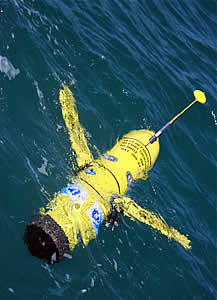
SARASOTA, Florida -- Mote scientists spent Thursday using side-scan sonar in an effort to find a scientific robot that has been missing since Monday, Aug. 31, 2009. Now we're seeking the public's help for the safe return of the robot nicknamed "Waldo." (Yes, after that Waldo!)

The robot - an autonomous underwater vehicle or AUV for short - had been patrolling the waters off Southwest Florida for five days looking for signs of red tide. The robot is equipped with a BreveBusterTM, a device designed and built by Mote scientist Dr. Gary Kirkpatrick that can automatically detect the presence of red tide in the water.

The AUVs are designed to glide up and down and forward through the water, sending signals to satellites each time they surface. Waldo was tooling along offshore from Venice just fine, making reports every two hours between Aug. 26 and 31.

"Then, bam, it just stopped sending a signal," Kirkpatrick said. "There are a few possibilities that we think are likely: It could have had a major leak or malfunction and sank to the bottom and is just sitting there. Or, it could have had a malfunction with its computer or its communication system and is floating on the surface but unable to tell us that it's there."

Complete Story

Bright. . .green. . .toenail polish? Expert?

We have a blanket policy here at UT - post blogs from others who hit "content home runs."

We would like to introduce you to one of those home runs today from The Noble Savage Blog.

When rare shark attacks happen "shark experts" flock to the media scene like first year lawyers to a train wreck:

A story surfaced yesterday on San Diego’s 10News.com about a woman who was bitten by what might have been a small great white shark while she was swimming off Terramar Beach in Carslbad. The woman, named Bethany Edmund, said the shark first went for her foot, and then bit her three more times on her calf and feet. Edmund was swimming in about 10 feet of water, and at first thought she had kicked a reef. She apparently never saw the shark, and blamed her friends for grabbing her feet.

After the last bite, Edmund suspected something was after her, and she quickly made her way to the beach. Now let’s pick up the 10News report:

After looking at the pictures Edmund took, one shark expert told 10News the puncture wounds came from a baby Great White shark. The expert said the shark was about 5- to 6-feet long next to Edmund, who is 5 feet 3 inches tall. . .The expert said Edmund’s bright-green toenail polish might have triggered the attack.”The water was clear enough that the sun could hit my nail polish and reflect it, and so he (the expert) says the first bite was thinking it was a fish and it realized it didn’t want me then I wasn’t leaving the area and then it got aggressive because maybe that’s it’s area to hunt,” said Edmund.


Bright. . .green. . .toenail polish? Expert?

How about the possibility that Edmund’s feet and legs were moving, and made her look alive, i.e. edible? I’ll buy the part about a young shark trying to establish hunting territory and being aggressive about it (younger predators can be overly or clumsily aggressive because their place in the species’ local hierarchy is still very risky).

Of course, this all assumes that the “expert” got the bite-mark ID correct, which might also be doubtful. The shark could possibly have been of a species other than a great white, because the doobie-rolling expert didn’t examine Edmunds directly, and saw photos of her wounds only. Bull sharks, the species responsible for the most human attacks, go as far north as Baja, and easily farther. Or maybe a tiger shark?

Let’s go with the great white, for entertainment purposes, as apparently 10News.com did, too.

Years ago, shark experts talked about something they dubbed “yum-yum yellow” — the yellow-colored parts of many scuba-diving wetsuits that experts theorized might be an attractant to big sharks such as great whites. This theory was later debunked entirely.

How big could this woman’s toes be? Her toenails might be the size of a dime. So you’ve got a large predatory fish that hunts by scent and vibration while visually seeking moving profiles of the proper kind (seal and fish profiles, mainly). Even in very clear water on a bright, sunny day, the idea that a hunting great white was “triggered” to attack because it somehow spied little dots of bright green on fast-moving dainty feet is absurd. This is a big beast looking for a moving profile in the water, and to an inexperienced shark Edmund fit the bill.

I’m always willing to entertain a far-out theory, and this one has some distance. The trouble is, people are reading it in a “news” story. And the shark ID was made from photos of the bites.

Chomp.

Saturday, September 5, 2009

Tagging Great Whites - Research in Action

Chatham, Mass - The Massachusetts Department of Marine Fisheries tagged two great white sharks in the waters off Chatham on Saturday morning.

It marked the first time a great white shark had been successfully tagged in the Atlantic Ocean.The electronic tag uses satellite technology to record the travels of the sharks, allowing scientists to better understand their migratory patterns.

The sharks were spotted Saturday by scientists investigating sightings off Monomoy Island in Chatham. Officials say a harpooner tagged them with help from a state shark expert.

Environmental police will be patrolling the waters off Chatham over the holiday weekend following sightings during the week.

Also, officials closed Nauset Beach in Orleans to swimming after a shark sighting there.

Complete Story


Friday, September 4, 2009

Jupiter Pointe Marina - Shark Free Marina

A new addition to the Shark-Free marina registry today with the Jupiter Pointe Marina signing up on the SFMI website. Their 10 acre property is home to one of the largest indoor boat storage facilities in Florida with recent multi-million dollar renovations ensuring the quality of their facilities service.

Indoor storage is a great option for people who either only occasionally use their boats or want to keep them out of bad weather. It’s likely that some of clients may use their boats infrequently and may not be aware of the current status of the fish species they may target. All facilities like this should follow Jupiter Pointe’s example and register with SFMI, a measure that will ensure their patrons are not responsible for further decline in threatened species of sharks.

About the marina


The marina is located on the border of Palm Beach and Martin County and one mile north of the Jupiter Inlet. The Indoor boat storage is on 10-acre property, nestled on the Intracoastal waterway at marker 54. The marina is directly across from Blowing Rock Preserve on beautiful Jupiter Island, the marina is tucked away in a non-congested area with no wake or current and is protected by our own little island, which serves as a natural barrier in the basin.


Jupiter Pointe Marina is currently undergoing a multi-million dollar facelift from the ground up which include:

  • Over 700 feet of state-of-the-art floating docks
  • Six spacious haul and launch areas
  • Designated fuel dock with innovative fueling system offering high speed pumps with ethanol-free, mid-grade gasoline (REC-90), 93 percent octane gasoline and diesel fuel
  • A new dry-storage building featuring the latest in concrete “tilt-up” design which is capable of withstanding winds up to 156 mph
  • This new building will increase our indoor-boat storage facility, allowing up to an additional 200 boats, giving us a total of 600 indoor storage racks

The new indoor-boat storage building will accept boats from 25 to 45 feet in length and beams up to 15 feet. Our current dry-stack storage building can store up to 400 boats up to 30 feet in length, or up to 9-foot beams.


Are you a marina owner/manager? Follow Jupiter Pointes example and register your facility with Shark-Free Marinas today.


Want to get involved with SFMI? Visit our Regional Associates page for more info.

From Fiji - Pro Industry/Conservation Media

Imagine if the commercial shark diving world replicated this unique effort...globally. The media landscape for sharks would look a lot different one year from now.

Industry leadership begins by leading. The guys over a Beqa Adventure Divers understand this:


Kudos!

Thursday, September 3, 2009

Grove Isle Marina, Miami - Shark Free Marina

Today the Grove Isle Marina in Miami Florida registered as a Shark-Free Marina. In an area so well known for recreational fishing and it’s yachting and boating industry we felt it important to feature their establishment.

The 111 slip marina is in the heart of Miami's Coconut Grove. It features luxury amenities due to it’s adjacent resort and six docks including one frequented by recreational fishing boats. Thanks to the managers’ forward thinking each of the slips will now feature a Shark-Free Marina sign on it’s gated entry.

Tim, an employee at the marina told us why their facility in particular decided to register:

Our marina is special in that it is frequented by Nurse Sharks (ed. a harmless species of shark frequently caught by recreational fisherman). Whenever I dive in the marina I see the nurses and we are aware how vulnerable they are to just a few hooks in the water. Also our surrounding waters have a lot of threatened species of sharks and we want to play our part in protecting them.

We’d like to say our kudos to the Grove Isle Marina and pass on our hopes that local businesses, boaters and fishermen support their facility.

Visit the marina at:
Grove Isle Marina

4 Grove Isle Dr
Miami, FL 33133 (USA)
groveislemarina@bellsouth.net

Safe Waters For Hawaii - Stealing quotes for toxic agendas

We have been following the ongoing battle in Hawaii to preserve two well known and first rate commercial shark diving companies from becoming casualties in what quickly devolved into a political witch hunt.

Both operations represent 40,000 shark tourism seekers each year to Oahu's North Shore and have been operating for close to a decade without incident.

A toxic campaign propagating the "fear of sharks" was developed by Rep Gene Wards offices early on when the issue of shark diving in inappropriate areas of Hawaii came to a head.

The website Safe Waters For Hawaii is the outreach communication vehicle for that campaign. The website was designed by staff members from Rep. Gene Wards office and features a series of affiliations and quotes taken from the Internet and from organizations who are now disavowing any involvement with Safe Waters For Hawaii.

One of these is the well known and respected International Ecotourism Society based in Washington DC. This is the quote Safe Waters For Hawaii lifted from their website without permission and without their knowledge:

"Do not touch living marine life such as coral and marine animals. Never harass aquatic animals. Do not feed marine animals."

International Ecotourism Society


What staff members from Rep Gene Wards offices failed to do was fact check affiliations on the Safe Water For Hawaii website and even ask permission to use quotes from many of the organizations listed.

The International Ecotourism Society website is in fact pro shark diving and pro Hawaii shark diving as seen in this summers news release. This news release was seen by many in the global $300 million dollar shark tourism industry - someone in Rep.Gene Wards offices seemed to have missed it either intentionally or by sloppy oversight.

TIES international membership base include Hawaii Shark Encounters.

The Good News

Rep.Gene Ward is a savvy politician. He is also a politician who understands the value of tourism in Hawaii and is now seeking sustainable solutions for both operations on Oahu. Unfortunately the website Safe Waters For Hawaii is still attached to his offices via staff members and remains a poor example of community outreach and of base fear mongering that serves little purpose beyond dividing communities and fostering deep seated anger between groups.

We have contacted the following organizations this week and they have asked Safe Waters For Hawaii to rescind their names and quotes on the SWFH website:

International Ecotourism Society
United Nations Environment Program (UNEP)

Rep.Gene Ward might consider taking down Safe Waters For Hawaii in a good faith effort to move the conversation forward to safe and sustainable solutions to commercial shark diving in Hawaii. This website does not reflect his values, his offices values, or the values of many quoted here without their knowledge.

Let's begin to rebuild community trust and good will by removing fear, misquotes, and hate from the conversation of sustainable commercial shark diving in Hawaii.

Wednesday, September 2, 2009

Isla Guadalupe - August 2009 - Trip Report

August 17-21, 2009 was one of our best expeditions this season. Great divers, great weather and of course lots of white sharks on site:

Since I have worked at a dive shop since the ripe age of sixteen, I have been lucky enough to travel to many exotic places all over the globe.But nothing could prepare me for what I would see at Isla Guadalupe.

The trip exceeded every expectation that I had, (and I was VERY excited to go) because I wasn’t sure what to expect.

Would I actually get to see the white shark?

Would the service be any good?

Was SharkDiver.com the right operation to use?

All of my questions would be answered in three short days. The most important thing to me was actually getting to see as many sharks as I could; and the crew of Shark Diver delivered.The first time in the water we were lucky enough to see a “small” eleven foot shark swimming though the water with grace and ease.I was amazed to realize that I wasn’t actually scared.

The shark was swimming around as if the cages weren’t even in the water.In fact, he couldn’t have cared less about our presence.I got out of the water shaking with excitement; little did I know that it was all uphill from there.We saw as many as five different sharks in the water at the same time and I got more pictures than I knew what to do with.By the end of the trip, I found myself disappointed if I only saw one or two sharks per dive.

That part of the trip could not have been more of a success.The sharks were amazing, but the crew at Shark Diver made my trip for me. EVERY staff member on the boat was nice, knowledgeable, and would drop what they were doing to help me in any way. They knew about the sharks and they knew how to attract sharks to the boat without disrupting any of the shark’s normal routines.

The food was fantastic and would be prepared any way I desired. But I also noticed that they were making dishes that were suitable for all the customers. We had people onboard with food allergies, vegetarians, and just plain picky eaters. Not a problem for the cook; he pleased everyone. Once dinner was served, all conversations ended because people couldn’t stop complementing the cook. I actually felt bad because I didn’t feel my 20% tip was enough, but unfortunately it was all the money I brought…

As I said in the beginning, I work at a dive shop in Austin, TX called Tom’s Dive and Swim. We do international travel through the shop and because of the rave reviews we came back with, the owner and I have already started planning a trip for 2010 to take our customers on. I have nominated myself as the trip leader because I cannot wait to return to Isla Guadalupe!

If anyone is even thinking about this trip, you have to strongly consider Shark Diver as the charter to use because they will make your trip. And if anyone had doubts about the trip, please call me the dive shop at 512-451-3425 and I will answer any questions you have about the trip.

You only love once and this is certainly something that you must do at some point in your life. So what are you waiting for?

Sam Holan

W: 512-451-3425


Editors Note: Thanks Sam, you and your crew are welcome aboard anytime mate.

SharkDiver.com - International Lifestyle Magazine

This month the uber cool International Lifestyle Magazine covered Isla Guadalupe and SharkDiver.com.

The article, by author, writer and adventure persona Jim Cornfield features the world of big animal shark diving with stunning images by Juanmi Alamany who shot with our crews back in 2008.

Shark Diver was the first commercial shark diving company to initiate and support full scale shark research efforts in tandem with Mexico's CICIMAR, and U.C Davis, California at Isla Guadalupe.

As a proof of concept this ongoing shark research effort has now been adopted and is supported by 90% of the operators that use this pristine site. Divers can now donate to research efforts via the Isla Guadalupe Conservation Fund and media sources like Televisa, Mexico are now producing programs that feature this collaborative effort.

See magazine online here.

Go Kids Go! - Commercial Shark Diving

When it comes to marketing for the commercial shark diving industry what you often get is a patchwork of efforts around the world with regional flavors.

New media sites like You Tube and Facebook have helped the industry grow, feeding positive images and video to a growing adventure tourism base.

But the granddaddy of all marketing efforts is toy marketing. Today we would like to congratulate Toys R Us for marketing the Playmobile Nautical Expedition Playset: Shark Diver to the next generation of shark expedition seekers.

Kudos on the effort it's hard not to like this toy.

Product Description

It takes an adventurous person to go underwater diving with the sharks! Includes a figure dressed in diving gear, underwater cage, camera, and shark. Both the shark and underwater cage can float in water.

Alaska Shark Mystery 2009

Jim Reynolds sent us the following image this morning (thanks Jim). Shot in Alaska this fuzzy picture is a 15 foot shark.

The question is: what species of shark is this?

The original site this images came from is Alaska Outdoors Forum and "Big Jake". You have to be a member to post and read the ongoing threads here:

This shark was caught by a seiner near Ketchikan. Reported to be almost 15 ft. long. seems too long for a salmon shark. Any able to tell from this poor photo?

We'll go out on a limb, because the tail of this critter would tell the tale, and as you can see this shot has no tail. This is a Great White shark.

MBARI 2009 Pacific Northwest Expedition

Without a doubt one of the most exciting deep sea expeditions in a long while is happening now, in real time, and you get to follow the action day by day.

Join the crew and research teams from the 2009 Pacific Northwest Expedition as they discover the the oceans deep secrets.

Daily in depth reports and detailed analysis of discoveries are just part of this fantastic website and public outreach campaign in tandem with MBARI.

iPhone Geek Tip: Do a search for this site on your iPhone then click the "+" icon and "add to home screen" as a button. Now you have this site as a "on the go resource" for airport lounges, coffee shops, or long drives.

RTSea Productions - Guadalupe Island 2009

Just returned from a successful assignment filming white sharks at Isla Guadalupe, Baja, Mexico. Isla Guadalupe has become a critical site for white shark research because of its ideal visibility and calm waters (most of the time) and because of the number of white sharks (70 to 100 est.) that migrate to the island in the fall months.

Ecotourism operators and marine researchers work hand-in-hand so that we can learn more about these magnificent predators. I was working with Wild Coast, an ocean conservation group serving the Hispanic market, and Televisa S.A., and Telemundo. All of these organizations are working to make the Spanish-speaking populace more aware of the natural resources that Mexico has within its waters and its borders. To promote shark conservation, they are advocating ecotourism to government agencies and decision-makers, so that village economies can benefit from business models based on living sharks rather than dead ones.

On this particular trip, half of the boat, the Horizon from San Diego, were paying ecotourists from SharkDiver, and the rest were various representatives of Wild Coast and the two Hispanic broadcasting companies. The sharks, primarily males at this earlier point in the season, were numerous and "frisky." We saw some interesting behaviors like "parallel swimming," where two sharks uncharacteristically swim side-by-side. White sharks are not known for extensive social behavior, so it was a treat to see these two male sharks checking each other out to see who is the "top dog."
I came away with a lot of footage that hopefully Wild Coast and the broadcasters will put to good use in making Mexico and, indeed, all of Latin America more aware as to the important ocean treasures it has within its borders - whether it's white sharks, hammerheads, whales sharks, or humpbacks - and what it needs to do to insure their continued survival.

-Richard Theiss RTSea Productions

Tuesday, September 1, 2009

Smalltooth sawfish gets federal protection in Southwest Florida waters

NAPLES — They are not cute and cuddly, but the smalltooth sawfish is getting
more federal protection in Southwest Florida waters.

The National Oceanic and Atmospheric Administration announced Monday that it
is designating more than 840,000 acres of critical habitat between Charlotte
Harbor and Florida Bay for the endangered marine fish.

The designation, which takes effect Oct. 2, doesn’t restrict fishing or boating access, but projects such as marinas or dredging must clear another federal permitting hurdle if they are proposed within the critical habitat boundary.

“Species such as the smalltooth sawfish have a much greater chance at
recovery once critical habitat is designated,” said Miyoko Sakashita, an
attorney representing the Center for Biological Diversity in San Francisco.

The group sued the federal government for missing a deadline to establish
critical habitat for the smalltooth sawfish. A 2007 settlement resulted in
the critical habitat designation.

Scientists do not know how many smalltooth sawfish are left, but historic
catch records show they once ranged from Texas to New York. South Florida is
their last stronghold.

In 2003, the animal named for its saw-like snout, or rostrum, became the
first marine to be listed as an endangered species.

A relative of sharks and rays, the smalltooth sawfish was overharvested as a
curiosity. Its rostrum also makes it vulnerable to entanglement in fishing nets.

The critical habitat designation seeks to protect the shallow estuaries that
are important nursery grounds for juvenile sawfish and key to their
survival, biologists say.

The designation covers 221,000 acres in the Caloosahatchee River, San Carlos
and Estero bays, Charlotte Harbor and Pine Island Sound and covers 619,000
acres in the Ten Thousand Islands south of Marco Island to Florida Bay.

Shark researcher Patrick O’Donnell has caught 20 or so of the sharp-nosed
creatures in the past 10 years.

“It doesn’t surprise me, but it gets the whole crew excited that’s for
sure,” said O’Donnell, an environmental specialist with the Rookery Bay
National Estuary Research Reserve between Naples and Marco Island.

Regulators drew the critical habitat boundaries to include red mangrove
shorelines and waters less than 3 feet deep and marked by wide variations in
salinity.

“We’re going to try to protect these features and minimize the impacts to
them,” NOAA Fisheries smalltooth sawfish biologist Shelley Norton said.

Without the designation, projects that need federal permits or get federal
funding have needed only to prove that they would not jeopardize the
continued existence of the smalltooth sawfish.

For example, federal reviewers required a Sanibel Island dredging project to
use a cut with side slopes to mimic natural conditions, Fort Myers marine
engineer Hans Wilson said.

Wilson, vice president of the Southwest Florida Marine Industry Association,
said attorneys afraid of being sued by environmental groups have too large a
role in permitting decisions.

“I’m not sure it’s about biology,” he said.

It’s too early to say how big a hurdle the critical habitat designation
might pose, Florida Marine Contractors Association past president Mike Jones
said.

“We don’t really need another layer of regulation at this time and with the
way that the economy is and all,” Jones, a Fort Myers marine contractor, said.

Complete Story

SFMI catches the eye of “Sportfishing Magazine”

September 1, 2009
By Doug Olander (More articles by this author)

That news item caught my attention when I saw it online. It’s no secret that many species of large sharks are in varying degrees of trouble worldwide. The primary culprit is the by-now infamous practice of finning — hacking off the fins of sharks (often while they’re still alive) and tossing the body back to sink and decompose on the ocean floor.

The practice has been widely banned but
(a) not before many shark stocks were severely impacted;
(b) it’s still legal in many areas; and
(c) it’s still widely practiced (in largely unpatrolled waters) where it’s not legal.

The motivation for the barbaric and wasteful practice is an old one: greed.

Shark fins bring relatively big bucks on the Asian market: think shark-fin soup. A few pounds of fins are worth more than a few hundred pounds of shark meat — and even a small boat can bring in a lot of fins, representing tons of dead sharks.

Recent estimates have put that tonnage of sharks killed each year for their fins as high as 100 million; however, a recent study suggests a figure of about 38 million tons. Either way, it bodes ill for these ecologically vital apex predators.

In this context, it’s interesting to see the formation of the nonprofit group Shark-Free Marinas (www.sharkfreemarinas.com), intent on “reducing worldwide shark mortality” by persuading marinas to sign on with a pledge to prohibit the landing of any shark.

Of course, the recreational fishery — even at the half-million sharks killed per year by one estimate — represents but a fraction of the worldwide shark-finning massacre. Some might argue that for this very reason, it’s pointless to bother even trying to dissuade anglers from bringing back large sharks to hang up on the scales for a weight and photo or to score points in a shark tournament.

Miami’s famous and (more often) infamous skipper, Mark the Shark, might be one who’d make that argument. Well known for encouraging his clients to kill just about any large shark they hook, the ironically self-named skipper claims on his website that thanks to his unequalled expertise on capturing sharks, his dead sharks have “been a great benifit [sic] to science.”

Those trying to convince marinas worldwide to forbid off-loading large dead sharks would say otherwise. Their efforts have a long way to go, but several marinas — in the United States, Bahamas and Fiji — had signed on as of this writing.

Recently, other actions suggest an increasing awareness among the mainstream recreational-fishing community that populations of large, slow-growing sharks are in a tenuous position (with the National Marine Fisheries Service officially considering most species overfished in the Atlantic) and need help. And, of course, in addition to doing what they feel is the right thing, many believe it’s the smart thing.

While slaughtering and hanging up dead sharks so a client can get a photo and tourists can gawk may work for Mark the Shark, a broader view is that hanging up big, dead sharks fosters a public perception of recreational fishing as a sport of greed and carnage and plays right into the hands of concerned, hard-core green groups trying to close off the ocean to angling.

For this reason, it was gratifying to learn recently that the International Game Fish Association is considering a proposal — submitted by IGFA board member Guy Harvey — to stop keeping world records for tiger sharks and great hammerheads.

Also, Gray’s Taxidermy, one of the largest providers of fish mounts, has finally announced that it would no longer accept sharks or any parts of them for fish mounts, finally joining some other progressive taxidermists who years ago began making only fiberglass-replica mounts. Charter skippers who work with Gray’s have lost one excuse to kill sharks.

It seems that the pendulum among sport fishermen continues to swing gradually toward not killing large sharks. But it has a long way to go. Among charter skippers and some private boaters, there remains the sentiment that killing an occasional large shark is insignificant in the scheme of things and that as long as the only fish killed are taken legally, doing so bears no shame. In fact, there are most assuredly those (both among recreational fishermen and the general public) who feel the only good shark is a dead shark.

I admit I’m not one of those sharing that mentality. I applaud shark-free marinas for their efforts. Ditto anglers who carry cameras and, should they wrestle in a huge shark, take home photos of the great fish boat-side — before its successful release. Those who find it profitable to hang up dead sharks may help their income in the short term but, in the long term, can only hurt everyone else who loves the sport of fishing.

Original article here

Whale Shark Tagging Expedition - Only the Adventurous Need Apply

Los Angeles, CA (PRWEB) August 31, 2009 -- Have you ever wondered what it would be like to swim with sharks? Join Iemanya Oceanica for its first public shark-tagging trip and find out. Iemanya Oceanica is a nonprofit organization headquartered in Los Angeles and dedicated to shark and marine conservation. On October 15, 2009, you can join the research team as they travel to the beautiful and remote village of Bahia de Los Angeles on the Sea of Cortez in Baja California, Mexico. "We hope to tag two whale sharks on this trip, which should take about three days," says Laleh Mohajerani, Iemanya's Executive Director. "Tagging is one of the first and most important steps towards conservation. Through tagging, we can learn about these majestic creatures and influence sustainable management policies."

Whale sharks are the largest living fish species on the planet. They are slow moving filter feeders and can grow to up to 40 feet long (12.2 M) and weigh up to 15 tons. Whale sharks are believed to have originated around 60 million years ago, and are found in tropical and warm oceans. They can live for up to 70 years, and although they have very large mouths, they are harmless, feeding solely on plankton, which are microscopic marine plants and animals. "The purpose of the whale shark expedition is to create more awareness about the ocean and to encourage support for research and education about the ocean," says Ms. Mohajerani.

The Whale Shark Expedition is October 15-19, 2009. The all-inclusive trip and will feature luxury motor coach transportation to and from Los Angeles to Bahia de Los Angeles; a welcome beachfront cocktail reception; all local transportation; hotel accommodations; all you can eat gourmet meals prepared fresh; drinks; access to the area research station; presentations by the researchers and local museum director; tour of the history museum; a visit to the turtle hatchery; optional fishing trip; excursions to off-shore islands for bird watching and ancient cave paintings; and free time for snorkeling and the beach.

Iemanya Oceanica is an international nonprofit organization committed to protecting marine life, especially sharks and rays, and improving the quality of life for those who depend on sustainable marine resources.

The all-inclusive Whale Shark Tagging Expedition is $1,599.00 per person. Space is extremely limited, so apply now by contacting Laleh Mohajerani at 818-224-4250.

For more information about shark and ocean conservation or Iemanya Oceanica¹s Whale Shark Tagging Expedition, please visit www.iemanya.org. Shark images, footage and tips for protecting yourself against a shark attack are also available.

Monday, August 31, 2009

“No Caught Shark Allowed”: Matava leading the Shark Free Marina Initiative in Fiji

Matava and Bite Me Gamefishing Charters in Fiji are taking a leading role in the international shark conservation efforts, organizing Fiji to become the first country to fully participate in the Shark-Free Marina Initiative (SFMI).

The SFMI works with marinas, boaters and fishermen to develop policy designed to protect sharks as a vital component of the oceans health. The SFMI has a singular purpose, to reduce worldwide shark mortality. Working with marinas, fishermen and like minded non-profit groups, the Initiative forms community conscious policy and increase awareness of the need to encourage shark conservation.

Shark Free Marinas work with, not against, the recreational and commercial fishing community, in order to raise awareness of the importance of a healthy shark population for our oceans, and to contribute to their ongoing survival.

Matava, together with partners in Fiji, has helped many marinas and charter fishing boats become SFMI certified, and Fiji now has more certified Shark-Free Marinas than any other country in the world. Stuart Gow, Director of Matava, said that his team has been actively promoting the SFMI, and distributing information about the Initiative, with the long-term goal of making Fiji “the first country to be proud to announce itself as a ‘Shark-Free Marinas’ Country”.

See the map of current Shark-Free Marinas


The majority of shark species caught by recreational and sport anglers are currently listed by the IUCN as “Threatened” (or worse) and each year, half a million of these sharks are killed in the US alone. It is estimated that 70-100 million sharks are killed yearly worldwide.

See IUCN Red List of Threatened Shark Species

About Matava

Matava is an eco adventure getaway in Fiji, offering a unique blend of cultural experiences and adventure activities in the pristine and remote island of Kadavu, Fiji. Matava is a PADI Dive Resort as well as a Project AWARE GoEco Operator, a title awarded to demonstrate a commitment to conservation and provide customers with experiences that enhance visitor awareness, appreciation and understanding of the environment. Matava is also one of the supporters of the Fiji Shark Conservation and Awareness Project, which aims to raise global awareness of their imminent extinction of sharks and the crises facing our oceans.

With more than 12 years experience in the Fiji Islands, Matava is recognized as a leading educational dive center. Matava is participating in TIES ecoDestinations project (currently featuring “beaches, marine and coastal ecotourism experience”) as one of the Summer Special 2009 sponsors.

Mako shark haul could be record catch

To prevent scenes like these industry leadership will have to happen.

Starting with the IGFA who should cease record keeping for the following species of sharks by 2010:

1. Tiger
2. Mako
3. Hammerhead
4. Bull
5. Blue
6. Thresher

These are the primary species caught in shark tournaments across the USA.

As long as records continue to be kept the industry will have no reason to modify tournaments that kill sharks for sport.

While the rest of the sport fishing industry are beginning to talk shark conservation, leadership begins at the top.

Let's start by asking the IGFA to lead that change:

Captain Tom King, Captain Taylor Sears, and the Mayo family from Dartmouth – Bob, Pamela, Ian and Elizabeth – returned to the Mill Wharf Marina in Scituate with a 624-pound male mako shark, believed to be the largest of its kind ever caught and brought to shore.

“We hooked up a nice tuna, probably 160 or 170 pounds,” Sears said. “It started coming up to the surface a little weird. The tuna popped up, and there was a mako shark right behind it eating its tail off. You could see it come up, maybe 100 feet off the back of the boat.

Complete Story

White Shark Cafe - New Film

Synopsis

Great white sharks have captured people's attention for thousands of years. They are mythologized by native groups all over the world - feared and revered in equal measure. But the scientific study of these giant predators is less than 50 years old. The film profiles 2 pioneers in the field - both doing research in California at the Farallon Islands.

It also looks at today's research - greatly improved by advanced technologies that allow scientists to track the sharks migration patterns. Once thought to be coastal animals, biologists have found out they in fact travel thousands of miles. One area they go that is a complete mystery has been dubbed the 'white shark cafe'. Scientists presume they are feeding or mating there.

At the same time, science journalists are trying to affect the negative images great whites have acquired. They are showing images of sharks doing more than eating or attacking - like swimming and migrating. One of these sharks, Omoo, has even acquired his own FaceBook page. Also, the Monterey Bay Aquarium has been able to keep a juvenile white shark for more than 100 days, giving the public rare, up close experiences with the great white.


Guadalupe Island - Rochelle's Adventure 2009

Rochelle F, just got back from an expedition to Isla Guadalupe with her father. Here's her trip report:

My father just turned 75. What better way to celebrate than to go diving with great whites?!

The crew was fabulous (can’t say enough good things!), the weather sunny, and the sharks plentiful. My dad and I had a great time in the cages making the acquaintances of Bruce, Mau, Flipkin, Bullseye, Geoff Nuttall, and five other sharks who were newer and not yet in the i.d. books.

At one point we had four sharks with us and everywhere we looked we saw a sleek sharks.

Amazing!!

Being in the water with great whites was a lot calmer than I would have thought. This may have been due to the lack of a soundtrack. These sharks are true masters of their environment and it was fantastic watching them appear and disappear at will. In general they were very cautious and triple checked everything. One shark however, gave us several reminders of why white sharks are called ambush predators.

He would circle/hide under the boat and the cages before making a vertical rush at his prey in front of the cages, breaching half of his body out of the water in the process.

It was a fantastic trip that I would highly recommend to anyone considering it. Thanks Patric, for making it possible and for advocating for sharks around the globe!

Rochelle