The shark diving industry blog covering sharks, shark cage diving, shark conservation and things we find "amusing" since 2008 www.sharkdiver.com, www.sharkdivers.com, www.divingwithsharks.com
Our Great White Shark season is starting in a couple of weeks. This is going to be my 14th year, visiting Guadalupe Island and believe it or not, I'm getting more excited to go back each year. I just can't wait to see who's back.
Is "Shredder" going to show up again, after missing the last 2 years?
"Shredder" my favorite shark.
How about "Horizon"? As you can see from the picture below, he's not the most careful shark in the world. I wonder, if he's related to "Shredder", they seem to have some very similar personalities. His dorsal is missing a nice chunk and parts of his tail have been bitten off by other sharks on a couple of different occasions.
"Horizon"
Bruce, Bite Face and Jaques have been faithful visitors, showing up every year, since MCSI started keeping track of them in 2001. When we first encountered them, they measured a "measly" 11-12 ft and are now they are all 16+ ft. Are we going to see them again this year?
"Jacques"
The discover channel is starting their "shark week", just about the same time our first divers are going to experience a "Real Shark Week". Coming face to face with these awesome sharks is nothing like what you see on TV. You will never forget the moment, when they look straight into your eyes, for the first time. It is truly an experience of a lifetime!
To all our divers that are coming out with us this season. I'll see you
soon and I can't wait to introduce you to my toothy friends. In the meantime, we'll keep you updated with pictures and stories from our expeditions, as the season progresses.
If you also want to experience a "Real Shark Week", diving with Great White Sharks at Isla Guadalupe, swimming with Tiger Sharks in the Bahamas, or having 70 Bull Sharks swim around your head in Fiji, give us a call at 855.987.4275, 619.887.4275 or email us at staff@sharkdiver.com We do have a couple of space open in October for this season and are actively booking for next year.
About Shark Diver.
As a global leader in commercial shark diving and conservation initiatives Shark Diver has spent the past decade engaged for sharks around the world. Our blog highlights all aspects of both of these dynamic and shifting worlds. You can reach us directly at staff@sharkdiver.com
The recent shark bite incident at Manhattan Beach Pier, made worldwide headlines. Just google "shark attack Manhattan Beach" and you get literally pages and pages of links with headlines screaming "Shark Attack".
Weather.com used the picture below to catch their readers attention and wrote that A 7-foot-long great white shark attacked a swimmer off the California’s
Manhattan Beach on Saturday, causing panic amongst crowds of people
enjoying one of Southern California's most popular beaches on the 4th of
July holiday weekend.
Now a headline and picture like that would scare any sane reader and make them think twice about swimming in the ocean.
Of course we know, that the shark didn't really attack the swimmer, but was trying to get away from a fisherman, who had him hooked on a line, instead. Was this just a freak accident, or could this have been predicted?
Back in November of 2013, Pete Thomas wrote a piece for Grind TV about swimmers and fishermen harassing juvenile great white sharks at the exact location where this swimmer got bit. The article says:
“White sharks are a candidate species under the California Endangered
Species Act and therefore fully protected,” Traci Larinto and Michelle
Horeczko, part of the state Department of Fish and Wildlife’s White
Shark Status Review Team, explained in a statement. “They cannot be
taken or pursued. The public should take steps to avoid white sharks
while fishing or being out on the water.”
As to the legality of trying to catch great white sharks, it has this statement:
“Right now, every surfer/thrill seeker with a GoPro is going out to
Manhattan Beach and trying to film them, ride them, and catch them on
hook and line,” said Christopher Lowe,
a Cal State Long Beach professor and white shark expert. “Most people
do not understand CESA regulations and that even incidental catch [or]
being caught swimming after a shark with a GoPro camera can be
considered take or harassment and is a citable, even jailable offense.”
So it comes as hardly a surprise that there are juvenile great white sharks in the area and unfortunately, it seems that, despite the law protecting them, some fishermen are still purposely trying to catch them.
“One rumor is that a couple of fishermen have caught and killed some
sharks off El Porto and supposedly found squid in the stomachs. I just
don’t think the public understands the ramifications of the law here.”
We have known for quite a while, that juvenile great white sharks are in the vicinity of Manhattan Beach and that fishermen, along with thrill seekers are harassing and trying to catch them. So it comes hardly as a surprise that something finally happened. Predictably though, the headlines don't say that illegal shark fishing was to blame, but instead scream "Shark attack!"
It looks like the authorities have also realized that the fishing was the cause of this shark bite and reacted by banning all fishing from the pier, for the next 60 days.
This situation reminds me of all the idiots going outside the cages at Isla Guadalupe, where sooner or later, something might happen as well. If you want to legally and safely swim with tiger sharks, dive with great white shark, or come face to face bull sharks, give us a call at 619.987.4275 or send us an email at staff@sharkdiver.com.
We specialize in "Safe and Sane" shark diving, always using cages when diving with great white sharks and only diving with sharks, where it is safe and legal to do so.
When done responsibly, swimming with these awesome creatures is truly an experience of a lifetime. After 14 years of diving with all kinds of sharks, I've come to love and respect them for what they are, highly efficient predators, that are neither mindless killers, nor harmless pets. Cheers, Martin Graf CEO Shark Diver About Shark Diver.
As a global leader in commercial shark diving and conservation initiatives Shark Diver has spent the past decade engaged for sharks around the world. Our blog highlights all aspects of both of these dynamic and shifting worlds. You can reach us directly at staff@sharkdiver.com.
Here is what actually happened. A man, fishing from the pier, caught a juvenile great white shark and was fighting it for 40 minutes. Trying to get away, the shark started biting at the line and in doing so, bit a swimmer. It is illegal to fish for great white sharks in California. Here is an excerpt from the California Fish and Game regulations.
"As defined in state law, “take” means “hunt, pursue,
catch, capture, or kill or attempt to hunt, pursue, catch, capture, or kill.” Anyone who takes a white
shark without a permit may be cited for violations of CESA and subject to criminal prosecution"
As usual, when something happens with a white shark, the shark gets the blame, not the fisherman who was endangering the public, by fighting a great white shark in waters crowded with swimmers on a holiday weekend! The headlines should read something like this "Illegal shark fishing causing serious harm to swimmer!"
Luckily the swimmer has non life-threatening injuries and we hope he'll have a speedy recovery.
Cheers,
Martin Graf
CEO
Shark Diver
About Shark Diver.
As a global leader in commercial shark diving and conservation initiatives Shark Diver has spent the past decade engaged for sharks around the world. Our blog highlights all aspects of both of these dynamic and shifting worlds. You can reach us directly at staff@sharkdiver.com.
Let's get this done!shark diving, swimming with sharks, shark week
Cheers,
Martin Graf
CEO
Shark Diver
About Shark Diver.
As a global leader in commercial shark diving and conservation initiatives Shark Diver has spent the past decade engaged for sharks around the world. Our blog highlights all aspects of both of these dynamic and shifting worlds. You can reach us directly at staff@sharkdiver.com.
Shark DiverJust finished a trip to tiger beach in the Bahamas, where we encountered up to 6 tiger sharks at a time.
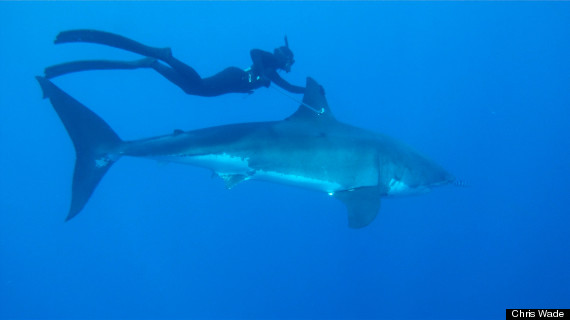
Chris and Euse were freediving during our expedition and have written about their experience here.
They have also taken this amazing picture.
If you want to experience your own "real shark week" and come face to face with the incredible sharks at tiger beach, give us a call at 619.987.4275 or send us and email at staff@sharkdiver.com
Cheers,
Martin Graf
CEO
Shark Diver
About Shark Diver.
As a global leader in commercial shark diving and conservation initiatives Shark Diver has spent the past decade engaged for sharks around the world. Our blog highlights all aspects of both of these dynamic and shifting worlds. You can reach us directly at staff@sharkdiver.com.
The Australian EPA is doing a Public Environmental Review (PER) and is soliciting comments from the public. This is our chance to be heard, but please consider a few things, before you write your response.
As usual, "DaShark" has beat me to it and written an excellent blog on the subject. Here are a couple of things he mentions.
During the first period of public review, here is what happened.
The 14 week trial attracted intense media and community interest. The trial generated:
765 separate articles on sharks in local, state and national newspapers
1,100 radio news bulletins on sharks (Western Australia)
850 radio talk back comments on sharks (Western Australia)
290 television news items on sharks (Western Australia)
286,000 emails and letters to the
Department of the Premier and Cabinet (DPC) - a significant number of
which were pro forma emails
and
a significant number of postings on Twitter and Facebook, some of
which were offensive and contained personal attacks on members of the
Government and staff involved with the program.
And the net result of that onslaught of unsolicited appeals, petitions (=pro forma emails), opinions and abuse?
A big fat zero.
So why did all that media attention, written petitions and postings on social media have no effect on their decision? Well, it did have an effect. Probably not the effect you were hoping for, but an effect nonetheless.
The government is stating:
The 14-week trial generated “offensive and contained personal attacks
on members of the Government and staff involved with the program” on
Twitter and Facebook. Supporters said they had “no choice but to
stay quiet due to the level of abuse and vilification received”,
describing the level of personal attack and social media postings as
“unacceptable”. “The Government is now more acutely aware of the
level of abuse that was directed towards supporters of the program and
the reasons for so many staying silent,”
So basically, they blame us for why, what they claim is the silent majority, has stayed quiet on the subject. They are not kidding, that's what they believe. If we want them to listen to us, we have to mind what we say and how we say it.
Here is DaShark's advice.
Both the postulated silent majority and the anti-cull faction have an
equal opportunity to have their voices heard - and I sure hope that the
latter is not only composed of social media slacktivists and agitators
but that instead, it will make a vigorous attempt at turning things
around by fielding rational arguments.
Not really convinced that the WA government will listen - but along with the federal assessment, it's the best opportunity we got.
About Shark Diver.
As a global leader in commercial shark diving and conservation initiatives Shark Diver has spent the past decade engaged for sharks around the world. Our blog highlights all aspects of both of these dynamic and shifting worlds. You can reach us directly at staff@sharkdiver.com.
Yesterday we talked about the international headlines of "Great white shark being eaten by sea monster".
Here is a response by CISRO, the organization who placed the tag on the shark in question.
When we looked at its data there was a period of approximately three
weeks just before the tag surfaced where the temperature recorded was
higher than the surrounding sea, but where the tag continued to ‘dive’
in a pattern consistent with a white shark. During this time, the tag
failed to record light. Data before and after suggest the tag was
functioning normally. The temperature recorded for these three weeks was
consistent with that of the core body temperature of a white shark but
too low for something like a killer whale.
They go on to explain, what they think had happened.
At one point the shark that had eaten the tag dived to a depth of 570
m – this is not unusual for white sharks – it is normal behaviour. This
dive took place about one week prior to the tag recording the higher
temperatures (not immediately before as some have reported) and the two
events are not related.
All evidence suggests that the tag had been eaten by another white shark. We have seen white sharks biting each other before, sometimes
removing pieces of tissue in the process. We concluded that this was the
most likely explanation – One shark bit off a little more than he could
chew and ended up swallowing the tag.
We never concluded that the 3m shark was consumed by another much larger shark.
Yesterday I questioned the "scientists" conclusion, that a sea monster ate the shark. Now we know that there were not even any scientists that concluded that, it was simply the filmmaker ignoring what the group who placed the tag in the first place had to say. Now that's something you'd expect from a Sci Fi channel production, not a Smithsonian "documentary"!
Cheers, Martin Graf CEO Shark Diver About Shark Diver.
As a global leader in commercial shark diving and conservation initiatives Shark Diver has spent the past decade engaged for sharks around the world. Our blog highlights all aspects of both of these dynamic and shifting worlds. You can reach us directly at staff@sharkdiver.com.
Now what has lead these "scientists" to this conclusion? In the following video they say that the shark suddenly plunged to 580 meters, about 1900 ft., where the temperature of the tag went from 46 degrees farenheit to 78. (BTW. the tagged shark shown at 2:12 in the video, is actually one of our Guadalupe sharks) People magazine states that "They (the researchers) end up coming to the terrifying hypothesis that a "colossal
cannibal great white shark" – estimated at 16 feet long and over 2 tons –
snacked on his lil' buddy. The scientists offer several suggestions as
to how this nightmare become reality: Perhaps this was a territorial
dispute, or maybe the larger shark was so hungry it was driven to attack
another of its own species"
Wow, that is amazing! They not only know that this shark has been killed, they also know what killed it and even estimate the size of the killer. How the heck did they do that? Estimate the size and species of a predator by the temperature of a tag. And here I was, finding it incredible that another guy claims to be able to do that by the shape of a dorsal fin.
So let's look at a few facts. The great white sharks do indeed maintain a body temperature of a few degrees above the water temperature. According to Elasmo-research.org, great white sharks maintain a muscle temperature of 7-9 degrees f, and a stomach temperature of 13-25 degrees f above water temperature. The scientists claim that the tag could not have fallen off, because it would have recorded a lower temperature first, before the jump to the higher temperature, after it was eaten. So if that were true, that would put the maximum temperature inside a great white shark stomach at 64 degrees and not 78.
Since the tags we are talking about here, are external, they record the temperature of the water and not that of the sharks muscle. Therefore, they would not have recorded a lower temperature after falling off. The fact that it plummeted straight down to 1900 feet is a further indication that the tag fell off. If another shark had attacked this 9+ ft great white, there would have been a struggle and they would not just have plummeted down. Also, the typical attack behavior of a great white shark is to strike and let the prey die, not fight with it and take it down deep.
Having watched great white sharks at Isla Guadalupe for 13 years, I've seen them fight, bite each other and noticed that the smaller sharks tend to stay away from the bigger ones. Those actions always seemed to be a way to establish the pecking order and not an attempt to kill and eat the other shark. As a matter of fact, when we encountered a dead shark a number of years ago, all the other sharks stayed away from the area for a while, indicating that they weren't comfortable being in an area with a dead one of their own.
I have no problem saying that I have no idea what happened to this shark, but for the scientists to state that a "colossal cannibalistic shark" ate this individual, simply because of the temperature recording of a tag, is not very scientific at all.
This whole thing happened 9 years ago. So why is this all over the news now? Well, according to People, The Smithsonian Channel repackaged an Australian documentary called The Search for the Ocean's Super Predator into another doc called Hunt for the Super Predator. So all this is done to promote a "documentary" by the Smithsonian channel. Why am I not surprised that after "Nat. Geo" and "The Discovery Channel" they are just going after sensational headlines to boost their ratings as well. Let's just scare the heck out of people by letting them believe that there are monsters lurking in the Ocean. It's not like people don't have an irrational fear of sharks already. It's not like they are killing sharks based on this irrational fear. No, they need to stoke that fear so that they can sell their stupid "documentary". Damn the consequences!
Cheers, Martin Graf CEO Shark Diver
About Shark Diver.
As a global leader in commercial shark diving and conservation initiatives Shark Diver has spent the past decade engaged for sharks around the world. Our blog highlights all aspects of both of these dynamic and shifting worlds. You can reach us directly at staff@sharkdiver.com
They just posted the results of the 2014 Ocean City Shark tournament here
The bad news, they killed 15 sharks, 7 blue-, 6 mako- and 2 thresher-sharks.
The good news, they released 107 sharks. The prize money for the release division was slightly higher than that of the weigh in (kill) division.
releasing a shark
I don't like shark tournaments, I love the sharks and want to protect them and not have them killed by fishermen. Many conservationists feel the same way I do and are working to get these kinds of tournaments eliminated.
Instead of demonizing the fishermen and questioning their character, like a lot of others do, I want to acknowledge that the organizers are making an effort to lessen the impact those tournaments have on the shark populations. It has always been Shark Diver's position to try to work with fishermen, to educate them about the problems associated with shark fishing and get them to at least, practice catch and release, if not stop fishing for sharks altogether. That was how the shark free marina initiative got started.
Cheers,
Martin Graf
CEO Shark Diver
About Shark Diver .
As a global leader in commercial shark diving and conservation initiatives,
Shark Diver has spent the past decade engaged for sharks around the world. Our blog highlights all aspects of both of these dynamic and shifting worlds. You can reach us directly at staff@sharkdiver.com.
"NEWPORT BEACH – The warning was clear: A big, aggressive great white
shark is on the loose along the shores in Newport Beach, and beachgoers
are advised to stay away from the water."
Problem was, local lifeguards and the U.S. Coast Guard never heard of any shark danger.
“I
guess it was one of the local guys; someone who wanted to keep the
crowds down at a break out there,” Coast Guard search and rescue
controller Sandy Needle said about the notice. “There was nothing from
the Coast Guard.”
The warning – which appeared on
official-looking letterhead that said “United States Coast Guard” in the
notification dated Wednesday – was floating around on Facebook,
claiming that three incidents should put beachgoers on high alert.
The article goes on to give the details of the warning which contained the following paragraph:
The third sighting, the notice read, came when two lifeguards got a call
about an adult-sized shark that bumped two kayakers and swam away after
the boaters struck it “with an oar in the gill area of the fish.”
So far so good, it looks like the media is responsible for once and instead of hyping up a shark scare, are trying to calm the public.
The article then states, how they recognized the warning as fake.
"Although the flier looked official, there were a lot of clues that it was a fake. “There’s a lot of misspellings, and it called a shark a fish,” Needle said."
Well there you have it. It called the shark a fish! No self respecting Coast Guard representative would call a shark a fish! Everyone knows it's not a fish, it's a.... hmm, no not that, it's a ...... , I'm stumped! Any of you know?
About Shark Diver.
As a global leader in commercial shark diving and conservation initiatives Shark Diver has spent the past decade engaged for sharks around the world. Our blog highlights all aspects of both of these dynamic and shifting worlds. You can reach us directly at staff@sharkdiver.com.
We just got back from 2 weeks in Fiji, diving with Beqa Adventure Divers. The shark dive is billed as the "Best shark dive in the world". Now that's quite a bold statement. ...... so did they deliver?
For me, to be great, a shark diving operation doesn't just have to deliver awesome shark action, but also provide education about the sharks they're diving with and be involved in conservation.
As for the shark action, did it live up to the billing? Look at these pictures and judge for yourself.
Did they come close? ...... well, there were still a couple of inches between the shark and my camera.
Too bad they didn't come close ;-)
Did we see a lot of sharks? ......well, there were a couple.
Can you spot the bull shark? ... can you?
Of course, after every dive, there is the boring safety stop. ...... well, maybe not so boring! There was some great action, with white- and black-tip reef sharks buzzing around us the entire time.
"World's best safety stop"
OK, so they delivered on the sharks, but what about the educational aspect and their involvement in conservation? During our surface interval, between shark dives, we had Ben, a marine biologist, tell us all we wanted to know about the bull sharks, their behavior and local migration. He counted the sharks on each dive and knows the sharks individually. They have a database with around 150 different sharks identified, very similar to our photo ID database of the great white sharks at Guadalupe Island.
Beqa Adventure Divers "BAD" bill themselves as a conservation company masquerading as a dive shop and they mean it. During our visit, Shark Diverhas seen Projects Abroad go out on "BAD's" boats to conduct various research projects on the reefs on a daily basis. I personally also had the opportunity to tag along (pun intended) on a trip, trying to tag juvenile bull sharks and will write about that experience in a different blog. You can read about all the other conservation projects that "BAD" is involved with here. It's an impressive list!
So is it the best shark dive in the world? I have to admit that I'm partial to "my" great white sharks at Guadalupe Island, but overall I have to say, not only did they meet my expectations, they far exceeded them! We will definitely be back. Stay tuned for details.
Cheers,
Martin Graf
CEO
Shark Diver
About Shark Diver.
As a global leader in commercial shark diving and conservation initiatives Shark Diver has spent the past decade engaged for sharks around the world. Our blog highlights all aspects of both of these dynamic and shifting worlds. You can reach us directly at staff@sharkdiver.com.
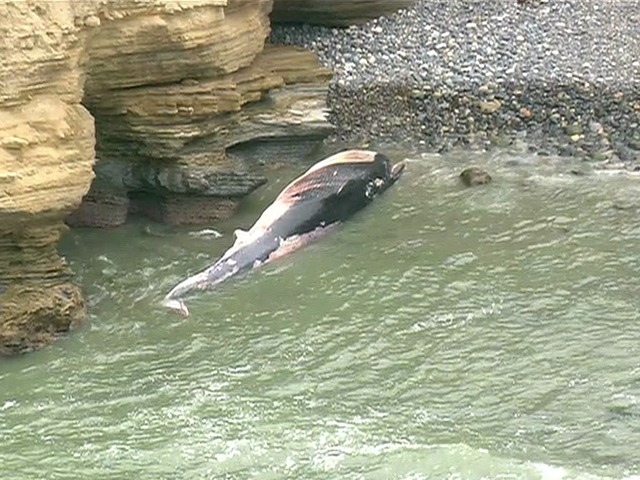
A dead 50' fin whale that washed up on shore at Point Loma in San Diego yesterday, will be towed out to sea by the Marine Conservation Science Institute today. Shark diving, cage diving, swimming with sharks at Isla Guadalupe, with www.sharkdiver.com
According to a post on their Facebook page, they will use it to try to attract great white sharks and attempt to tag them. Cage diving,shark diving
This is what they posted. cage diving, swimming with sharks, "BREAKING NEWS! If all goes as
planned, we will be taking possession of this whale carcass at high tide
today. We will tow it offshore and then babysit it while we wait for
white sharks to find us. When that happens we hope to tag adult females
that are in the area for pupping. This will be the first attempt to tag
pupping females in southern California. Popup tags, as opposed to SPOT
tags, will be used. We will have a short deployment of 140 days to
determine where these pupping females have come from."
This is a unique opportunity to tag some sharks and get valuable information on their pupping grounds. It is also a chance to show that great white sharks are not just fierce predators, but also opportunistic feeders, playing their part in keeping the oceans healthy, by eating these rotting carcases.
We hope that they are successful.and maybe they'll see one of "our" Guadalupe sharks, though we think that they are going farther south to pup.
Cheers, Martin Graf CEO Shark Diver About Shark Diver.
As a global leader in commercial shark diving and conservation initiatives Shark Diver has spent the past decade engaged for sharks around the world. Our blog highlights all aspects of both of these dynamic and shifting worlds. You can reach us directly at staff@sharkdiver.com.
Back in 2000, when we started diving with great white sharks at Isla Guadalupe, we knew very little about where the sharks were going, when they are not at the Island. I remember the days, when the scientists thought that they went to Shark cafe/Sofa to mate. Thanks to satellite tagging by Dr. Domeier and his team at MCSI, we now know that males and females are not in the same place, same time in that area. Based on tracking data and the white sharks gestation period of 14-18
months, we now think that they are actually mating at Guadalupe Island.
Domeier
M. L. and N. Nasby-Lucas. 2012. Sex specific migration patterns and
sexual segregation for adult white sharks in the northeastern Pacific -
See more at: http://www.marinecsi.org/publications/#sthash.pCmg6BvH.dpuf
Domeier
M. L. and N. Nasby-Lucas. 2012. Sex specific migration patterns and
sexual segregation for adult white sharks in the northeastern Pacific -
See more at: http://www.marinecsi.org/publications/#sthash.pCmg6BvH.dpuf
Domeier
M. L. and N. Nasby-Lucas. 2012. Sex specific migration patterns and
sexual segregation for adult white sharks in the northeastern Pacific -
See more at: http://www.marinecsi.org/publications/#sthash.pCmg6BvH.dpuf
Domeier
M. L. and N. Nasby-Lucas. 2012. Sex specific migration patterns and
sexual segregation for adult white sharks in the northeastern Pacific -
See more at: http://www.marinecsi.org/publications/#sthash.pCmg6BvH.dpuf
Domeier
M. L. and N. Nasby-Lucas. 2012. Sex specific migration patterns and
sexual segregation for adult white sharks in the northeastern Pacific -
See more at: http://www.marinecsi.org/publications/#sthash.pCmg6BvH.dpuf
Domeier
M. L. and N. Nasby-Lucas. 2012. Sex specific migration patterns and
sexual segregation for adult white sharks in the northeastern Pacific -
See more at: http://www.marinecsi.org/publications/#sthash.pCmg6BvH.dpuf
Domeier
M. L. and N. Nasby-Lucas. 2012. Sex specific migration patterns and
sexual segregation for adult white sharks in the northeastern Pacific -
See more at: http://www.marinecsi.org/publications/#sthash.pCmg6BvH.dpuf
Domeier
M. L. and N. Nasby-Lucas. 2012. Sex specific migration patterns and
sexual segregation for adult white sharks in the northeastern Pacific. -
See more at:
http://www.marinecsi.org/publications/#sthash.pCmg6BvH.dpuf
Domeier
M. L. and N. Nasby-Lucas. 2012. Sex specific migration patterns and
sexual segregation for adult white sharks in the northeastern Pacific. -
See more at:
http://www.marinecsi.org/publications/#sthash.pCmg6BvH.dpuf
Domeier
M. L. and N. Nasby-Lucas. 2012. Sex specific migration patterns and
sexual segregation for adult white sharks in the northeastern Pacific. -
See more at:
http://www.marinecsi.org/publications/#sthash.pCmg6BvH.dpuf
Two-year migration of adult female white sharks (Carcharodon
carcharias) reveals widely separated nursery areas and conservation
concerns - See more at:
http://www.marinecsi.org/publications/#sthash.pCmg6BvH.dpuf
Two-year migration of adult female white sharks (Carcharodon
carcharias) reveals widely separated nursery areas and conservation
concerns - See more at:
http://www.marinecsi.org/publications/#sthash.pCmg6BvH.dpuf
Gill Raker's latest location.
For all of us that don't want to read scientific papers, but still want to know what our sharks are up to, MCSI has this nifty little app. here.
This is the latest post on the MCSI facebook page today, showing what Gill Rakers is up to!
"We
have been waiting nearly 17 months to see where Gill Rakers will give
birth. Now that we think she is heading for the Sea of Cortez, we must
prepare for a stressful 4-6 weeks. The Sea of Cortez is a narrow body of
water with intense commercial shark fishing. She will be running the
gauntlet, through longlines and gill nets...gear that kills. Our biggest
question: Will She Survive?? Watch with us on the Expedition White
Shark App...and stay tuned to our FB page."
We all share their concern for Gill Rakers safety. The Sea of Cortez is not a safe place to be, for a great white shark. We hope that we'll see and get to dive with her once again this fall, at Isla Guadalupe.
Cheers, Martin Graf CEO Shark Diver
About Shark Diver.
As a global leader in commercial shark diving and conservation initiatives Shark Diver has spent the past decade engaged for sharks around the world. Our blog highlights all aspects of both of these dynamic and shifting worlds. You can reach us directly at staff@sharkdiver.com
"Can you identify three MCSI innovations/modifications?
They ask on their FB page. "Two are done at the manufacturer and one is done in our lab (painting
does not count!). Two of the mods greatly improve shark tracking
performance and one is for the benefit of the shark."
One visitor on their page correctly identified all 3, and she's not even a researcher!
Marine Conservation Science Institute Melissa Michaelsonpointed out the three modifications. Yes, we have a thicker/stiffer
antenna and copper wet/dry sensors. Both of these things are designed to
combat biofouling (sea life growing on the tag). We believe biofouling
is the biggest cause of tag failure. The stiffer antenna will not easily
bend when algae grows on it, and nothing will grow on the copper
wet/dry sensors.
A big thank you to MCSI for tirelessly working on better research methods and tools, designed to both improve the collection of data and be less intrusive on the sharks. We constantly have to balance the need for gathering data, with the impact the methods used to obtain that data have on the sharks. Too
many researchers simply justify the negative impact their research has
on the sharks, by pointing out the valuable information they gather. Kudos to MCSI for being aware of that fact and spending time and money on lessening that impact. Shark Diver is proud to partner with MCSI for our science expeditions and also be a part of their photo ID data base at Guadalupe Island.
Cheers,
Martin Graf
CEO Shark Diver
About Shark Diver.
As a global leader in commercial shark diving and conservation initiatives Shark Diver has spent the past decade engaged for sharks around the world. Our blog highlights all aspects of both of these dynamic and shifting worlds. You can reach us directly at staff@sharkdiver.com.
We have a new friend at Isla Guadalupe. Meet "Myla" our new addition to the photo ID database. She's a beautiful female!Cage diving with great white sharks at Isla Guadalupe. shark diving,
"Mayla"
I can't wait to go back there this fall and see all our old friends again. If we find a new one, we will add it to our growing list of great white sharks at Isla Guadalupe. So far, we have over 150 sharks identified. All of our new sharks have to get a name. We don't want to say "this is #7", we yell it's "Bruce"! And that would not be possible without the database.
If you would like to support this valuable, ongoing research project, you can do so, by sponsoring and naming a shark. Anyone interested can get more info by clicking here.
All our divers will also be able to participate in this study, by donating the use of their pictures to this database. If we identify a new shark on one of our science expeditions, (we have only one space left on Nov.11) our divers will get to name it. How cool is that?!
Other than that one space on Nov. 11, we only have a few spaces left on Aug. 12, 17 and 23. All the other expeditions are sold out.
Welcome to the family "Mayla" I hope we'll see you in the fall.
Cheers,
Martin Graf
CEO
Shark Diver
About Shark Diver.
As a global leader in commercial shark diving and conservation initiatives Shark Diver has spent the past decade engaged for sharks around the world. Our blog highlights all aspects of both of these dynamic and shifting worlds. You can reach us directly at sharkcrew@gmail.com.
OK, I know this is not strictly shark related, but how can we succeed in persuading our politicians to pass laws to protect our environment and endangered species, when they publicly violate the few laws they are passing?
This is a photo that Senator Cruz tweeted today. He's proudly posing with fellow Senator Lee showing himself "doing a little shopping for the office" You can see his tweet here. Just in case you are not aware, that it is illegal to bring any part of an endangered species into this country, here is a quote from the US Fish and Wildlife Service's website.
"Furs: Most of the world’s
wild cats, including tigers and such spotted species as
jaguar, leopard, ocelot, margay, and leopard cat, are
protected. You cannot import skins or items made from, or
trimmed with, the fur of these animals. Furs from seals, polar bears,
and sea otters are also prohibited."
You can read the entire section on their Law Enforcement page here.
It is frustrating to say the least, when all the hard work that goes into passing a law to protect our endangered species finally pays off, and a law is passed, only to see the lawmakers themselves violating those laws.
At least these two were dumb (or maybe arrogant) enough to post their illegal activities on twitter.
Cheers,
Martin Graf
CEO Shark Diver
About Shark Diver.
As a global leader in commercial shark diving and conservation initiatives Shark Diver has spent the past decade engaged for sharks around the world. Our blog highlights all aspects of both of these dynamic and shifting worlds. You can reach us directly at sharkcrew@gmail.com.
Western Australia has decided to open the shark cull policy to a Public Environmental Review. That is great news! There is a four week period for us to send in our submissions. They have not published an address for those comments to be sent to, which gives us time, to think about how to respond. Swimming with sharks, cage diving, shark diving, are things Shark Diver is known for.
Once again, Dashark"s has put together some excellent information for you, in his blog today.
There are a lot of links with information, that help with writing an effective letter to the Environmental Protection Authority. Best company to dive with sharks
You can read his blog here.
Along with all the links, Dashark also gives some excellent advice, and I quote:
"But please, be careful with those submissions!
There will be a formal process and those dudes are not those maligned politicians
but people that generally know what they are talking about and that are
able to distinguish good arguments from sharkitarian BS. So once again,
please spare yourselves the insults, the platitudes and the pathos and
make sure that what you submit is grounded in fact, for which you will
need to inform yourselves.
We at Shark Diver wholeheartedly agree with Dashark on this point. Remember, we are trying to convince someone who doesn't necessarily see things our way. Give them reasons to decide in our favor and not reasons to think we are a bunch of lunatics.
As soon as I hear of an address to send your thought to, I will let you know. In the meantime, take a look at all the information and work on that killer response to the EPA.
Cheers,
Martin Graf
CEO
Shark Diver
About Shark Diver.
As a global leader in commercial shark diving and conservation initiatives Shark Diver has spent the past decade engaged for sharks around the world. Our blog highlights all aspects of both of these dynamic and shifting worlds. You can reach us directly at staff@sharkdiver.com
As most of you know, after the WA government stated that the shark cull was for a limited time, they are now trying to extend it for the next 3 years. The WA EPA is asking for comments from the public, and it is crunch time for getting those comments to the EPA and EPBC. The submission deadline is April 16 and Australia is a day ahead of our calender! So for all of you in Europe and the US, you need to get them in by April 15. Shark diving, swimming with sharks, cage diving, great white shark
"Da Shark" has put together a great list on his blog, with all the relevant links and suggestions.shark diving, swimming with sharks, cage diving
Click here and here for all the information you need to submit your comments.
Very important advice from "Da Shark", "As a reminder. Inform yourself before commenting and refrain from inflammatory language - remember you want them to do something positive, and they will not be amenable to your request if you call them names!"
Cheers,
Martin Graf
CEO
Shark Diver
About Shark Diver.
As a global leader in commercial shark diving and conservation initiatives Shark Diver has spent the past decade engaged for sharks around the world. Our blog highlights all aspects of both of these dynamic and shifting worlds. You can reach us directly at staff@sharkdiver.com.
On our expedition to Fiji last year, I was fortunate enough to be able to take the picture below. We counted 34 bull sharks in this shot. Great white shark diving, cage diving, guadalupe Island
Now Mike "da shark" tells me, that Sam Cahir has thrown down the gauntlet and taken the following picture. I think he's got 36 sharks in this one. Best shark divecage diving Isla Guadalupe
While there is no shame in having a professional photographer like Sam take a better picture, I gladly accept the challenge and will try to one up this picture on Shark Diver's upcoming trip to Fiji.
We still have a couple of spaces open for May 2-11 and May 9-18. If you want to join us in trying to set a new standard for how many bull sharks fit into one picture, please call us at 855.987.4275 or 619.887.4275 email, staff@sharkdiver.com
Cheers,
Martin Graf
CEO
Shark Diver
About Shark Diver.
As a global leader in commercial shark diving and conservation initiatives Shark Diver has spent the past decade engaged for sharks around the world. Our blog highlights all aspects of both of these dynamic and shifting worlds. You can reach us directly at staff@sharkdiver.com.
The Huffington post had this nice article yesterday, telling their readers "What Not To Do Around Sharks, According To The Experts"
I have to admit, I was curious as to what we should not do around sharks. After all, we can always learn something new.
The first think they mention, "Don't freak out!"Fair enough, splashing and thrashing around wildly, is definitely not advisable in the company of sharks.
The second thing is "Don't try to escape by swimming and splashing away furiously". Kind of like the first one, but again, not bad advise. Third "Don't turn your back to the shark!" OK, good idea. Not that I think you have to be an expert to come up with that, but like I said, good idea. Fourth, "Don't completely rely on shark repellents" I don't think the general public relies on shark repellents anyway, but with those snake oil salesmen or women, trying to sell shark repelling wetsuits, (pictured below) it's good to point out, that there is absolutely no proof that they work.
Fifth, "Don't force a moment! touching, riding or forcing any type of unnatural interaction with a
shark should be completely off limits. The growing number of videos
featuring shark and human interactions can give the average swimmer the
false impression that sharks can be easily approached"
Wow, now we are getting somewhere. This is really good advise, specially considering all the people who get bit by nurse sharks, because they pulled their tails. I really thought the experts nailed that advise.
But,......... they didn't leave it at that. They had to go on and qualify that last statement by saying "Unless you're an experienced professional or your name is Kimi Werner (pictured above)"
Wait, you are saying if you are an expert (and Kimi Werner certainly qualifies as an expert, this being her first visit to Guadalupe and all) you can go and touch the sharks?!
The article goes on to say "But even the most experienced divers consider the huge risk factor when
approaching a shark and only do so after making an educated assessment." So even though it's a huge risk, even for the most experienced divers, it's OK for them to do it? Even though it's illegal at Guadalupe to dive outside the cages, it's OK for them?
Of course, I get it. This is no longer about conservation or what not to do around sharks. This is simply another one of these "do as I say, not as I do" kind of crap. What I really want you to do is "look at me, because I'm so cool!"
When they go on to say "More importantly, Werner and her dive partner never intended to 'ride' the fish, saying that the interaction happened naturally" , they really loose all credibility. They must have read my blog here, where I talked about how a photographer explained a picture showing a diver riding a shark by saying that the shark had a "very intrusive personality" Right, the shark wanted Kimi to ride her! I call BS on that!
This whole Huffington post article is exactly why these idiots are doing these stupid stunts. They get into the media. They get their 15 minutes of fame. Unfortunately it's those kinds of "experts" that the media relies on, when it comes to covering anything shark related. How can they quote an "expert", that tells people not to do what they themselves do? Aside from giving hypocritical advice, by giving these guys the publicity they seek, the Huffington post actually promotes the illegal diving outside of cages and riding sharks at Guadalupe. Cheers, Martin Graf CEO Shark Diver About Shark Diver.
As a global leader in commercial shark diving and conservation initiatives Shark Diver has spent the past decade engaged for sharks around the world. Our blog highlights all aspects of both of these dynamic and shifting worlds. You can reach us directly at staff@sharkdiver.com
If you are in the San Diego area on Sunday, April 13, come see us at the H&M landing,located at 2803 Emerson Street San Diego, CA 92106. We are going to be located at the end of the dock. Look for our cages. Cage diving with great white sharks at Isla Guadalupe. Shark diving at it's best with Shark Diver.
You can get more information on "Day at the docks" here. San Diego shark diving
We are looking forward to seeing you there!
Cheers, Martin Graf CEO Shark Diver
About Shark Diver.
As a global leader in commercial shark diving and conservation initiatives Shark Diver has spent the past decade engaged for sharks around the world. Our blog highlights all aspects of both of these dynamic and shifting worlds. You can reach us directly at staff@sharkdiver.com.
Shark Diver is going to Fiji in May! Our first expedition is from May 2 -11 and the second leaves on May 9 and returns on May 19
For more information call 855.987.4275 or 619.887.4275. Email staff@sharkdiver.com
Lets go shark diving!
Cheers,
Martin Graf
CEO
Shark Diver
About Shark Diver. As a global leader in commercial shark diving and conservation initiatives Shark Diver has spent the past decade engaged for sharks around the world. Our blog highlights all aspects of both of these dynamic and shifting worlds. You can reach us directly at sharkcrew@gmail.com.
I know it's not really about sharks, but wow! How could anyone that cares about anything in the Ocean not be excited about this! Japan has agreed to stop killing whales in the Antarctic!
The BBC reports that "The UN's International Court of Justice (ICJ) has ruled that the
Japanese government must halt its whaling programme in the Antarctic" and states that "Japan said it would abide by the decision but added it "regrets and is deeply disappointed by the decision".
I have to say that we as Shark Diver applaud their decision to abide by the ruling of the international court and are "deeply touched by the decision of the court" It's a happy day!
Cheers,
Martin Graf
CEO
Shark Diver
About Shark Diver.
As a global leader in commercial shark diving and conservation initiatives Shark Diver has spent the past decade engaged for sharks around the world. Our blog highlights all aspects of both of these dynamic and shifting worlds. You can reach us directly at staff@sharkdiver.com