Wednesday, June 8, 2011

The Adventures of Shark Girl and Shark-Free Marinas Fiji

The Adventures of Shark Girl Blog has in depth coverage of the Shark-Free Marinas Initiative in Fiji this week.

Also known as industry gal Jillian Morris and often seen on the company of Duncan Brake, her blog coverage this week is a must read:

For a small island nation, Fiji has set a standard for their involvement in the Shark Free Marina Initiative. With 25 marinas signed on, they are still going strong. The Fijian culture respects sharks and the people realize the tourism and environmental value of a live shark. Island nations are limited in their economic ventures, so they protect that which is valuable. At the forefront of the Fijian campaign are Stuart Gow of Matava Eco Resort and Mike Neumann and his team at Beqa Adventure Divers. We interviewed Stuart for a PSA video and he said his involvement was a “ no brainer.” The resort is home to a popular sport fishing charter that also encourage catch and release if catching at all. He said is what a natural progression of the message the resort is already operating by. Stuart was also able to get PADI Project Aware involved in order to cover the cost of purchasing signs for all the marinas.

Mike Neumann and his team at BAD offer the ULTIMATE shark dive and care deeply about the animals they work with everyday. His feeders and dive team have a special connection with the sharks, like nothing I have seen before. Mike did not speak to us on camera, but the actions of his whole crew spoke volumes. Every one of them is truly an ambassador for sharks and for the ocean.

Complete post here. As a side note we have added Jillian's blog to our hallowed blog roll;)

Los Angeles Where the "Mud Marlins" Are

The L.A River is a conservation nightmare, a running cesspool of concrete, plastic bags, the odd corpse, and for one enterprising fly fishing fanatic - The Valhalla of Giant Fish.

Known to the fly fishing community as "Mud Marlin," giant carp (Cyprinus carpio) are said to inhabit the toxic depths of the L.A River and Steve Blair is their nemesis.

With fly fishing skills honed on the Eastern Sierra in the hunt for trophy trout, Steve has discovered where the Mud Marlin are found and over the past year what imitations these leviathans of the toxic stew which runs through downtown L.A will hit on.

It's a remarkable adaptation as this urban fly hunter turns his sights on the least understood and shattered eco system in America, to haul out 20-30 pound fish.

Of course these fish are quickly put back.

Here's to the real trailblazers within the fly fishing world, those who's desire to catch big fish can be found in the most unlikely places, like the L.A River.

When not on the hunt for Mud Marlin in L.A you can find Steve on National Geographic playing with giant squids and at the Long Beach Aquarium.

Shark fishing completely banned in Mexican waters?

The National Commission of Aquaculture and Fisheries (Conapesca) decided to ban the fishing of all shark species in federal waters on both coasts in order to contribute to the conservation of the resource.

The ban will be extended during the period of greatest reproductive intensity of the main species, that is to say, between May and August each year, and in each particular region.


According to Mexican fishery authorities, this is the first such action taken in the countries of Latin America.


Commission officials met on June 2 with concessionaires and licensees of commercial fishing for shark and specialists in this resource to present the results of "research on reproductive periods of representative species and the effects of their protection" by scientists from the National Fisheries Institute (Inapesca), reported Conapesca.


During the meeting held in Mexico City, Inapesca researchers detailed the methodology used in the sampling, presented the results of the studies in the geographical areas where the fleet of the country's coastal work and the information from the observers’ programme on board.


Before publishing the establishment of the closed season in the Official Journal of the Federation (DOF), Conapesca will perform indications regarding the regulatory project with additional technical considerations made by experts of the Institute.


The meeting was also attended by some representatives of the National Chamber of Fisheries and Aquaculture (Canainpesca), of the Union of Coastal Shipowners from Océano Pacífico AC, of the National Federation of Fisheries Cooperatives (Conacoop) and Inapesca specialists.


Juan Campos Cárdenas, a spokesman for the Federation of Shark and Scale Cooperatives assured that fishermen are willing to enforce the ban. However, he sought to establish compensation for the period of inactivity.


While the Government considers that about 30,000 tonnes of sharks are caught annually in Mexican waters, several organizations for the protection of marine fauna warn that overfishing has reduced the volume, AFP reported.

Tuesday, June 7, 2011

Great whites and now Tigers too? Yo-rific!

Thanks to researchers in California, South Africa, and Guadalupe we know that white sharks (Carcharodon carcharias) spend a lot of time yo-yo'ing through the water column. This behavior is often attributed to hunting activity with animals moving up and down in a straight line seeking prey items.

Tigers (Galeocerdo cuvier) on the other hand were thought to be generalized migrants, but all that has changed with an interesting study coming out of the University of Hawaiʻi at Mānoa where a join effort with University of Tokyo, the Japanese National Institute of Polar Research, and the University of Florida, is shedding new light on the hunting behavior of tiger sharks by studying their swimming dynamics off the west coast of Hawai‘i Island.

As it turns out Tigers yo-yo too, as described by lead scientist Dr.Carl Meyer:

"These findings are exciting because they have given us unprecedented new insights into the behavior of these huge and difficult to study marine predators," explains Dr. Carl Meyer, a researcher at HIMB and the lead U.S. scientist of the project. Meyer also emphasizes the importance of these results “although we have long debated the reasons for the yo-yo diving, we have only recently developed tools allowing us to directly measure the behavior in sufficient detail to understand what these animals are actually doing”.

Complete study here.

Sunday, June 5, 2011

Tiger Beach Shark Diver Expeditions 2011

In the spring of 2011 Shark Diver was back in the Bahamas with new and returning divers in tow for one of the best spring shark diving seasons we have yet encountered.

What we got was amazing diving, full blown sharks, and great weather for six weeks.

On the first trip of the season a trio of divers, Brad Bamford, Jonas Toft, and underwater photographer Michael Coughlin joined us for a week of simply amazing encounters.

Caught on camera by Michael Coughlin, who's images are some of the best we have seen in a while, Michael managed to capture both the grace and simple predatory nature of these magnificent animals.

He also caught one of the 14 sharks tagged by Dr. Neal Hammerschlag and his group from FAU in action (more on that to come), in short this first expedition of the season delivered pretty much everything a diver would like, including late night visits from friendly Tigers;)

Thanks to the crew of the M/V Kate our go-to vessel in the region and Capt Rob MacDonald who remains one of the top shark handlers in the industry. You might not know Rob because he's one of those "quiet professionals" who does not seek the limelight but few have spent as much time with these Tigers as he has.

If you're doing sharks in the Bahamas, either commercially or with film and television productions, Rob is your guy, and we have been fortunate to work with him now for the past 5 years.

Join us this fall as we return for bigger sharks and excellent fall conditions in the Bahamas, 2011 has been unprecedented so far and we cannot wait to get back.

And now for something completely different - Video

We rarely break format here at Underwater Thrills and when we do you know it has to be something "amusing".

Truth be told we have been mad fans for the past several months of "My Drunk Kitchen" an offbeat and completely natural series of online videos by Hannah Hart and her small band of back up "enablers" who help Hannah cook for the masses.

That is to say "cook badly for the masses," but heck with as much earnest and bubbly personality as Hannah displays on each episode you can forgive the burps, unwashed hands, bottle swigging, and final food products that often resemble the goop found inside the Crab Head Pods from the movie series Alien, or crispy rocks...depending on the episode and the alcohol consumed.

Not a fan yet, or never heard of "My Drunk Kitchen?"

Start today, right here, it's easy, now where's that wine?

David Doubilet and Hal Silverman - Top of their game

LinkYou have to click on this image to for fully appreciate it and all we can say is wow, just wow.

We're talking about a recent underwater expose featuring images from U-352 resting in the Atlantic at 110 feet and shot by two of the industries consummate watermen and genuinely nice guys, David Doubilet and Hal Silverman.

When it comes to underwater photography there's a reason why these two lead the pack, their work stands alone and remains some of the seminal underwater images of our time.

Kudos to both.

About U-352:

The U-352’s story starts in May 1941 when the German military built the first of the Type VIIC U-boats with more fuel capacity and torpedoes than its predecessor. Commanded by Capt. Kellmut Rathke, the U-352’s 45 man crew prepared in October 1941 to set sail for the waters of the Atlantic.

After several months of drills, testing, and exercises, the U-352 was deemed action ready and set sail. Almost immediately the crew spotted a convoy and prepared to take action when it was realized they had been spotted. The U-352 barely survived the barrage of depth charges and continued on towards American waters. Less than 5 months later, the U-352 would be sitting on the bottom of the Atlantic.


More images here.

Saturday, June 4, 2011

Shark Diving Tourism 20% Increase in Donsol!

DONSOL, Sorsogon -– Tourist arrivals for the whale shark interaction season in Donsol this year reached 49,000, up by nearly 20 percent the records posted during the same period last year, local tourism officials said on Friday.


The season runs between February and May. From January to March alone, the volume of arrivals have already reached about 26,000 which was already 10 percent higher than the 23,000 posted in the same period last year.

Another 23,000 came for the peak season which was between April and May, raising the total number to 49,000 during the first five months of the year. This surpassed the 40,000 recorded for the same period in 2010 by about 20 percent.


Maria Ong-Ravanilla, Department of Tourism (DOT) regional director for Bicol, said the accomplishment exceeded expectations despite the El Niña phenomenon that prevailed over the area during the whole duration of the whale shark interaction season.


“This is a good indication that the tourism industry of this small, far-flung coastal town is continuously growing owing to the popularity it has achieved for being home to the whale sharks, locally called butanding, the Gentle Giants of the Ocean,” Ravanilla said.


The presence of this rare and endangered sea mammal species was first discovered in 1998. With the massive tourism promotion and conservation efforts initiated by the local government and several environmentalist groups, both local and international, public consciousness spread throughout the world and tourists have been coming in, she said.


Impressively, the whale sharks seem to be cooperating very well as during this year’s season, Ravanilla said. Photo identifications and satellite tracking made by the World Wildlife Fund (WWF) confirmed the presence of 165 butandings at the coastal waters here, some of them sighted as close as 20 meters from the shoreline.

The largest school of butandings came to feed on the planktons at the mouth of the Donsol River, to mate and even give birth last April. Local fishermen also accidentally caught in their fishing net a newly born whale shark measuring only about 15 inches, according to Councilor Ronald Malilin, chairman of the town council’s tourism committee.


“These creatures that roam around the globe have actually found a home at the coastal waters of this town that is adjoining the Ticao Pass and protective measures are in place while they are around homing in the area and offering exciting interactions with the throng of people coming in from all over the world,” Malilin said.


Ravanilla said the whale sharks have been major contributors to the tremendous growth of the tourism industry in Bicol which is now occupying the second slot among the most visited regions in the country next to the national capital region or Metro Manila.

Friday, June 3, 2011

Marlin Magazine Takes on Sharks - Leadership

Marlin is the premier big game sportfish magazine, and many kudos to the editors for taking on sharks and shark sportfishing over the past three years.

The Marlin sport fishing story is one of industry leadership spanning 30 years, with the realization that a once vibrant sport fishing industry and resource (Marlin) was in decline. Members of that community banded together to create, foster, and grow a first class catch and release ethic for the entire generation.

To see members of this community reach out and embrace sportfishing for sharks in a sustainable manner is real leadership and deserves notice.

This month Marlin highlighted Guy Harvey's efforts to bring sportfishing tournaments for sharks into the catch and release mindset.

This growing effort, while featuring the Guy Harvey name, also encompasses a small army of dedicated sportfishing industry leaders and enablers who have been the nuts and bolts of this industry shift.

Exposure by the folks from Marlin magazine is not only helpful, but it takes the conversation about sharks and sportfishing into an industry mindset and about good resource management.

For sharks, and the next 40 years, time will tell if the efforts put forth by many today will in fact slow the tide of loss enough to keep stocks from collapsing entirely.

Thursday, June 2, 2011

Cabo san Lucas Shark Munch 2011

Pete Thomas has the scoop on a 300 pound sushi shark buffet in Cabo this week.

Seeing shark "on predation" is perhaps one of the most awe inspiring moments you can witness, for Tyson Seeliger of Houston, Texas, aboard the Great Escape Jr, this event was one of a kind.

"This tuna never dove but stayed up on the surface the whole time," Tracy Ehrenberg, the Pisces general manager, said in a report posted on the company blog. "After another two hours they had the fish 20 feet from the boat, when it was attacked by four pilot [or silky] sharks. They ripped into it, devouring it in large bites, as Tyson frantically reeled as fast as he could to try to save his sushi."

Wednesday, June 1, 2011

Oregon approves ban on sale of shark fin - Loophole?

The Oregon senate approved a bill that would ban shark fin sales in the state with a titanic caveat, otherwise known as a loophole.

The bill makes an exception for spiny dogfish, a small shark that accounts for 300,000 pounds in landings by commercial fishermen each year and sport fishermen with a valid license are not affected. Additionally the bill carries a paltry fine of up to $720 for violators.

So what of these shark fins and the "possessing, selling, offering for sale, trading or distributing?"

Ya like Dags Blog has pre-emptive thoughts on that and we have to agree with their final summation.

While this is great news for sharks in general and a clear win for conservation:

"It’s interesting to see the compromise of the Federal law being mirrored on a state level with a different species. I wouldn’t be surprised if this becomes a bigger controversy down the road."

Major exports for spiny dogfish shark fin harvested in the U.S are Asian markets.

White Sharks and AC/DC? Best Practices Garbage

A recent article has popped up in the mainstream media about some industry folks in Australia who claim that blasting AC/DC underwater attracts white sharks, oh, and the white sharks "love it."

Naturally we have to call bull-shit on this one.

Folks, as long as we have been in the shark game, going on for over a decade now, we have seen every kind of shark attraction device known to man - and a few that defy description.

Blasting AC/DC underwater is not new, it is not innovative, and dare we say it is a complete and utter disservice to the animals that we make a living with.

It's the kind of best practices garbage that you just do not see with terrestrial animal tourism.

Where are the megawatt speakers blasting the sound track from Zanadu in the Gombe National Forest? We're pretty sure that someone without a PhD, and who's vested interest in the wild animals that inhabit this park could come up with some half-assed observation about chimpanzees "rocking out" to techno funk from the 1970's.

The fact is, folks like us make a living "with" wild animals, not "from" wild animals and that's a distinction that many within the shark industry have forgotten, or have conveniently decided to ignore as they chase sharks around the world.

Worse yet some within our community are now throwing up a thin excuse for bad behavior with sharks as calling it "conservation", which is the next iteration of the AC/DC and white shark argument.

Last week we saw a video featuring a woman, dressed as a mermaid, free diving in 500 feet of water with white sharks at Isla Guadalupe, no cages, no dive safety team, all under the mystical caption of "conservation".

What's starts with basic disrespect for wildlife, leads to all manner of lunacy with sharks under many guises.

The final observation?

White sharks have been around for the past 300 million years in perfect balance with nature and none of that nature included mermaids, simians riding on fins, or AC/DC.

Are we fortunate enough to spend time in the presence of white sharks, or do we have to completely and abjectly modify the shark encounter to suit our tastes as top water interlopers, surviving in their environment in what amounts to crudely designed life support gear?

David Diley and Sharks on Film - Good Stuff

We have been waiting for David Diley's first foray into the world of sharks on film, from the looks of things, a lot of bars are about to be reset.

Here's a sneak peek:

Filmed on location in Mallorca, "Behind Blue Glass" tells the story of Mallorca's history and tradition with the Great White Shark and in which, seven unwitting volunteers come face to face with sharks and in doing so, send out a powerful message in favour of the conservation of these awe inspiring animals.

Coming in Summer 2011.


RTSea Productions on OC Magazine

OC Magazine (Orange County California) is the gold standard for regional happenings and local interviews with highlights of OC luminaries.

One of these was our very own Richard Theiss from RTSea Productions who, for the past 30 years has been one of California's premier underwater and above water cameramen, directors, and production developers.

You can read the interview here, like his blog (which recently garnered the attention of Nat Geo Magazine) it's a great read.

Richard Theiss on OC Magazine.

Monday, May 30, 2011

Time Running Out for Shark Fin Dumplings?

Behold the Shark Fin Dumpling.

Unassuming, some say tasty, and sold by the thousands each and every day in San Francisco for 30 cents each.

The Shark Fin Dumplings days might well be numberered as the California Assembly voted this month to ban the sale, possession and distribution of shark fins, handing a victory to environmentalists who have been lobbying to curtail a trade that targets sharks to produce an Asian delicacy.

As many as 73 million sharks a year are killed for their fins, which provide the key ingredient in shark fin soup and these Dim Sum staples. Both Hawaii and Washington state, along with Guam and the Northern Mariana Islands, have enacted laws banning sale, possession and trade of shark fins, while Oregon and California are considering legislation to do so.


The revised bill under consideration includes a one-year grace period so businesses can sell off their stocks of shark fins, as well as an exemption to the possession provision for fishermen who are legally fishing sharks off the California coast.


Opponents of this bill - including San Francisco Assemblywoman Fiona Ma - argue that the measure unfairly targets the Chinese community and say that existing laws are adequately protecting sharks. Assemblyman Mike Eng, Los Angeles County, noted that California issues permits that allow fishermen to legally kill thousands of sharks each year.


For the humble Shark Fin Dumplings time may well be running out as the next step is a full consideration by the senate.

Sunday, May 29, 2011

Russian PM Putin rides Great White Shark in S.A?

MOSCOW: Vlad is back at it again. Bolstering his macho image, Russian PM Vladimir Putin yesterday wowed onlookers with a dangerous stunt in the Kara Sea.


According to his entourage, Putin reportedly jumped overboard from a guided missile frigate on to a great white shark and proceeded to ride atop it for up to fourteen minutes before diving off.


The Russian PM lassoed a rope around the massive shark and held on tightly before it completely submerged to the horror of Putin’s security entourage.


However, Putin surfaced a few minutes later to the cheers of onlookers who had been taking pictures throughout the entire spectacle.


“Putin is an incredible man,” said a young woman who had been holidaying with her boyfriend on a yacht close to the scene.


“There is nothing he cannot do. I once heard that he stared down an owl in a rain forest. That’s amazing!”


The Prime Minister appeared short of breath but otherwise calm as he greeted Journalists on the shore of the Kiril islands. According to a reporter from Russia’s state ITAR-TASS news agency, Putin then chased down a lion and ate it raw.


Officials could not verify the report, however a member of Putin’s Russia First party did confirm that Putin was known to chase lions.


“It’s a hobby of Mr Putin’s,” he told Breaking News.


“Oftentimes, he will catch them and eat them, but I don’t know whether he ate a lion on the Kiril islands. I’ve never heard of lions in the Kiril islands.”


Original link, no we had nothing to do with this one.

Sunshine State Anglers Support Shark-Free Marinas

From the Sunshine State Angler website this week:

As we have reported time and time again, shark populations around the globe have been severely lessened. In an attempt to bring the shark’s plight to all ours attention Guy Harvey put together this PSA last year to kick off his campaign with Human Society of the United States called the Shark Free Marina Initiative. We here at SSA agree that shark populations have declined dramatically and that the oceans will be soon set off balance. We believe that all us can do our part to be part of the solution but to really help shark populations rebound initiatives need to focus more on commercial shark fishing especially illegal shark fishing. Banning the sale or possession of shark fins would go very far to help these ocean stewards.

Watch the video and log in and let us know how you feel on this topic. Here is a link to the Shark Free Marina Initiative website:
http://www.sharkfreemarinas.com/index.php

Long Migrations for Zambezis - South African Shark Conservancy

Researchers have found that a bull shark, also known as a Zambezi shark, has migrated from the South Western Cape in South Africa to near the Mozambican island of Bazaruto over a period of just two months.

Zambezi sharks, which can grow up to four metres in length, are perhaps best known for their ability to survive in rivers.


The researchers knew little about the migration patterns of bull sharks and tagged a shark in the Breede River estuary to gain an insight. The tag is designed to fall off the shark and float to the surface, whereupon it sends data via satellite on the shark's movements.


Researchers from the South African Shark Conservancy (SASC) have been shocked at the migration pattern of the tagged shark which covered a distance of 2,000 kilometres.


SASC representative Meaghen McCord lamented that "despite being listed by the IUCN as near-threatened globally, there are no existing management or conservation measures for bull sharks in South Africa or Mozambique".


McCord called for temporary protection of bull sharks until they can be studied further, pointing out that the sharks are apex predators and play a role in maintaining the ecosystem.


SASC has offered an award of 150 US dollars for the return of the tag, which is believed to be floating somewhere off the coast of Mozambique.

Great White Shark Research Internship S.A

Job Description

Interns will be joining dedicated scientists who are conducting accredited research projects in some of the world's most challenging, beautiful and remote environments. The projects demand significant scientific and practical responsibilities from participants, however, the demands are well within the capabilities of most students, and whilst being challenging, are enjoyable and exciting. As part of this program, interns can expect to be important members of a focused and dedicated research institute and partake in ground breaking research. It is an opportunity to contribute meaningfully to exciting marine research, as well as experience the frustrations, the highs and the lows, and the achievements associated with ambitious and challenging marine research in Africa.


Oceans Research has established a strategic network of two research stations situated within the unique marine biomes of southern Africa, namely, Skeleton Coast Marine Lab and Mossel Bay Marine Lab. At each laboratory, researchers are conducting ambitious ecological, physiological and biological studies on resident marine top predators and their associated ecosystems.
Mossel Bay Marine Lab is the flagship and most established research laboratory within the Oceans Research network. It is also home to the institute's central office and management. The research laboratory is situated along the southern coast of Africa in a warm temperate marine biome that attracts numerous temperate water fish species. At the top of the food chain is the Cape fur seal that resides on Seal Island, the Great white shark that frequents the bay to hunt fur seals, numerous fish species and a semi resident population of bottlenose dolphins. Interested interns can also get involved with our educational program, where we educate mostly underprivileged schools regarding the importance of ocean conservation and the vital role sharks play in both the marine and terrestrial ecosystems.


Skeleton Coast Marine Lab is situated along the desert coast of Namibia at Walvis Bay, a worldwide mecca of dolphin watching and desert tourism. The Benguela current is the driving force behind one of the world's most abundant marine environments and attracts dense populations of marine mammals such as the Heaviside's dolphin, bottlenose dolphin, Cape fur seal and humpback whale. The Namibian coast line is considered one of the most undeveloped, beautiful places in the world. The Namib is the oldest desert in the world and is characterised by the conjunction of large fields of sand dunes meeting one of the world's richest marine environments, the cold currents of the Benguela ecosystem.


  • Job Function(s): Agriculture/Natural Resources/Environment

The internship program is aimed at assisting in the development of students training in the area of biological science. However, we willingly invite applications from all students and enthusiasts who have a passion for the oceans and want to extend their

  • Desired Class Level(s): First Year, Sophomore, Former Student, Other, Junior, Senior, Graduate Student, Alumni
  • Desired Field of Study: Biology, School of Law
  • Minimum GPA: 2.50
Requested Materials and Documents

The employer has requested the following documents or materials be submitted with applications.

  • Required: Resume

Material/Document Notes:
-

Please note: Positions are submitted directly by the employer and are not pre-screened by the Career Development Center. Posting on this site does NOT indicate an endorsement of the employer by the University of St. Thomas or its Career Development Center. Neither the University, nor the Career Development Center, assumes any responsibility whatsoever for inaccurate or misleading information, nor does the presence of a posting on this site indicate the position is appropriate for any student. Employers posting positions are asked to abide by posting guidelines but the University is not responsible for the non-compliance with its guidelines by an employer. As with any job opportunity site, applicants should research potential employers before applying. Please report any concerns with a particular posting or employer to the St. Thomas Career Development Center.

Friday, May 27, 2011

Tag Innovation? Mike has the Scoop

Mike aka Da Shark has been leading the bandwagon for innovation with SPOT Tags and this week it looks like there's been a breakthrough.

You'll note these well known research tags are drilled into the dorsal fins of sharks and researchers do not know what the long term effect will have on the animals - just yet.

Satellite tags are detectable over broad geographic areas and remotely relay information to satellite arrays. These tags utilize radio transmissions, requiring the tag to have contact with air to send data (hence satellite tags must be externally attached). External attachment makes satellite tags prone to damage and premature shedding. For studies of shark movements, Smart Position or Temperature Transmitting Tag (SPOT tags) are commonly attached to the dorsal fin. SPOT tags transmit a signal to the Argos satellite array whenever the dorsal fin breaks the surface of the water. These transmissions resulted in geo-location estimates with location accuracies that range from a few hundred meters to ‘somewhere on planet Earth’.

More on tags.

Congatulations Dr. Frank Schwartz on 1000!

Dr. Frank Schwartz? Never heard of him? There's few within shark shark research community who have as many shark tags out or have spent as much time at sea in the company of our toothy friends.

This week we all say thanks Dr.Schwartz for the effort, the data, and the deep understanding of the east coasts shark populations.

Check out some of his work:

This data report presents information derived from the multi-year longline shark
sampling survey
conducted since 1972 by Frank J. Schwartz of the UNC Institute of
Marine Sciences.


Thursday, May 26, 2011

Cat Island Bahamas Oceanic Tagging Effort

Great news from the Bahamas from one of the best shark research teams in the region the Cape Eleuthera Institute.

The oceanic whitetip shark (Carcharhinus longimanus) was once considered to be one of the most numerous large vertebrates on the planet. Yet ongoing exploitation of this species for it fins, for use in the Asian delicacy shark fin soup, has caused precipitous population declines in many parts of the world.

This species has been especially hard-hit in the northwest and western central Atlantic Ocean, where it is now difficult to find them in significant numbers. Despite the inherent difficulties in finding and studying large, relatively rare oceanic sharks, an international team of researchers successfully satellite-tagged a large number of these animals off Cat Island, The Bahamas, this month in order to track their movements to enable more effective conservation of this top ocean predator.

Edd Brooks, Annabelle Oronti and Sean Williams of the Shark Research and Conservation Program at the Cape Eleuthera Institute , Lucy Howey-Jordan and Dr. Lance Jordan of Microwave Telemetry, Inc. , Stuart Cove and the staff of Stuart Cove’s Dive Bahamas , Dr. Demian Chapman of Stony Brook University and Debra Abercrombie of Abercrombie & Fish, undertook a 10-day expedition to Cat Island to conduct the first instalment of a long-term project to study the movements and habitat use of oceanic whitetips.

The project has been off to a successful start, and the first of the deployed satellite tags have begun transmitting data on the shark’s whereabouts and will continue to relay crucial habitat-use information over coming months. In the meantime the research team has already started planning next year’s trip with members of the local dive community.

Killing White Sharks1992 Way Back Machine

Less than twenty years ago white sharks were caught on a regular basis in Australia, we have come a long way in 20 years:

New Shark Book "Demon Fish"

A group of traders huddles around a pile of dried shark fins on a gleaming white floor in Hong Kong. A Papua New Guinean elder shoves off in his hand-carved canoe, ready to summon a shark with ancient magic. A scientist finds a rare shark in Indonesia and forges a deal with villagers so it and other species can survive.

In this eye-opening adventure that spans the globe, Juliet Eilperin investigates the fascinating ways different individuals and cultures relate to the ocean’s top predator. Along the way, she reminds us why, after millions of years, sharks remain among nature’s most awe-inspiring creatures.

From Belize to South Africa, from Shanghai to Bimini, we see that sharks are still the object of an obsession that may eventually lead to their extinction. This is why movie stars and professional athletes go shark hunting in Miami and why shark’s fin soup remains a coveted status symbol in China. Yet we also see glimpses of how people and sharks can exist alongside one another: surfers tolerating their presence off Cape Town and ecotourists swimming with sharks that locals in the Yucatán no longer have to hunt.

With a reporter’s instinct for a good story and a scientist’s curiosity, Eilperin offers us an up-close understanding of these extraordinary, mysterious creatures in the most entertaining and illuminating shark encounter you’re likely to find outside a steel cage.

Shark Conservation Messaging - WWF

What can we say but we like it.

WWF is among other conservation organisations leading the fight to save the world's sharks. It is seeking a ban on certain kinds of fishing nets and working to regulate the trade in shark fins. It supports trade controls through TRAFFIC.

WWF directly works to address the problem of overfishing throughout the world's oceans through its Smart Fishing initiative.

Specific projects aim to raise awareness of the plight of sharks, improve the management of marine protected areas and develop ecotourism projects which support sharks in their natural environment. A 2011 study by the Australian Institute of Marine Science found that a single reef shark in Palau generates nearly $2 million for the tourist industry over its lifetime.

Examples of WWF projects that specifically or indirectly target shark conservation:

Wednesday, May 25, 2011

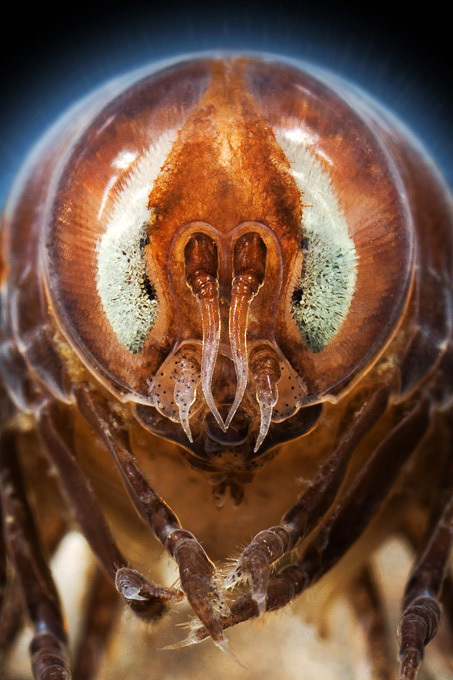
Behold Nereis virens!

Alexander Semenov spends a lot of his time with the creepier things in life, such as this Nereis virens here.

Commonly known as a clam worm (who knew) these critters are found lurking about intertidal zones hoovering up critters great and small.

You can read all about them here.

Alexanders website deserves a special look and keep your eye out for a stunning face to face encounter with Caprella septentrionalis - the Skeleton shrimp.

This site features fantastic photography, hands down A-list stuff.

Kudos.

Atlantic Highly Migratory Species News

The National Marine Fisheries Service (NMFS) encourages the live release of North Atlantic shortfin mako sharks (Isurus oxyrinchus) due to overfishing occurring on the population. In order to promote the live release of shortfin mako sharks, NMFS has developed a web page where commercial and recreational fishermen can contribute information about shortfin mako shark releases and populate an interactive web map. The shortfin mako live release web page contains current information on shortfin mako stock status and regulations, along with details on tagging programs and safe handling and release guidelines. You can find the main shortfin mako live release webpage and web map at the following links.

Main Page: http://www.nmfs.noaa.gov/sfa/hms/shortfinmako/index.htm

Web Map: http://www.nmfs.noaa.gov/sfa/hms/shortfinmako/Map/index.htm

Complete press release here.

For further information on the web page, or to request outreach materials, please contact the Atlantic Highly Migratory Species Management Division by phone at 301-713-2347, or by email at shortfinmako@noaa.gov

Controversy Kick Off - Kudos Dorsal Fin Blog!

The shark bloggers are most often the first to uncover hot button topics and videos that appear on the Internet, delving into issues that effect our industry.

One of these is the Dorsal Fin Blog who, a few months ago, uncovered home video of Floridian shark fishermen armed with guns, shooting sharks with a certain robust glee that defied good taste and comprehension.

That post was picked up by other shark bloggers and re-posted on Facebook, from there a small explosion of outrage and action lead to this weeks media expose on the fine line between shark conservation and commercial shark fishing interests in Florida.

Da Shark has some words on the media hit today, but we would like to congratulate the Dorsal Fin Blog for the initial video discovery and kick off.

Keep up with the fine discoveries.

You never know what shark related story, when opened to the full light of inquiry, delivers solid discussions on the nature of sharks and how we interact with them.

Tuesday, May 24, 2011

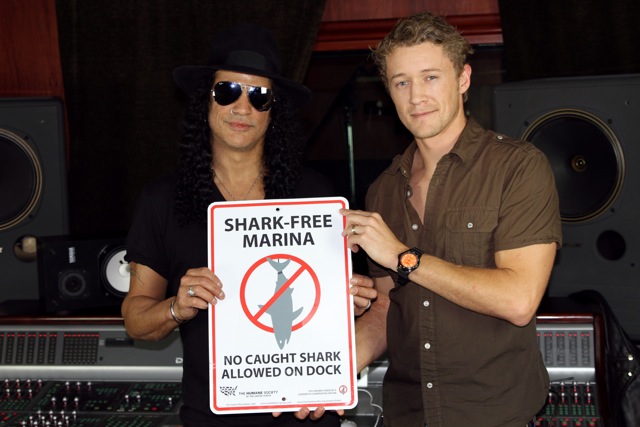
Slash And Nigel Barker Join Celebrity Charity PSA For Shark Protection

Slash with Luke Tipple the Director of the Shark-Free Marinas initiative in 2011.

When celebrities get together behind a worthy cause only good things happen as is the case with the SFMI and a new series of PSA's highlighting the sport take of sharks in the USA and worldwide.

What began as a good conservation idea has, in the capable hands of Luke Tipple and What We Do Media, become so much more.

Kudos to the early adopters who, without their support, this enterprise for sharks might not have gotten off the ground and to the Humane Society USA for their backing and support.

Join the Shark-Free Marinas in your state and help save sharks one marina at a time. Together we can put a dent in the estimated 200,000 sharks needlessly killed each year in the United States alone and help fishermen discover the sustainable option of catch and release shark fishing.

Would You Buy a Nook from This Guy?

One of the joys of having an iPhone 4 is the ability to snap shots like these, or perhaps it's a burden - the jury is still out on that.

This character was selling Nooks at the local Barnes and Noble book store the other day. You might remember that Barnes and Noble is close to bankruptcy for reasons that go well beyond the economy.

Back to the Nook Dude.

Dressed in his finest Harry Potter meets Friday the 13th Freddy Sweater I was summoned to his counter top with a witty, "Hey ya wanna see a Nook?" come on line.

Actually, I didn't want to see his Nook, nor did I care for the sweater. In fact I found the whole set up threateningly anti-Nook.

Look folks if you're going to sell some high tech gizmo, especially to passers-by like me, dress your Nook crew for success.

Also let's try a different sales line, like, I dunno, "What, you're still using paper?" anything but what I was subjected to last week.

Epomis Beetle vs Bufo bufo - Smackdown

Folks over at Tel Aviv University discovered a critter that eats toads, salamanders, frogs and just about any amphibian it comes across, employing stealth and a particularly toxic venom.

They even made a video of a classic predation by an insect called the Epomis beetle.

Warning: If you have a soft spot for Bufo bufo this video is not for you, read about the research study here:

Monday, May 23, 2011

Sharks and the 1970's? Beer too?

Thanks to the ever watchful Dorsal Fin Blog for this video catch of the week.

Yes the 70's were groovy, and none more than this beer commercial featuring a shark, a diver chick, and that perennial aluminum flavored brew - Colt 45.

Proving once and for all that sharks and Billy Dee Williams can be used to sell almost anything:

An Honest, Great Show - River Monsters

We have been huge fans of Jeremy Wade for a while now.

His show on Discovery Channel is a testament to rich story telling and honest discovery.

Yes, it's a fishing show but one that pretends to be nothing more than that.

Along the way Wade and his small crew deliver the goods with some gripping encounters of the toothy kind.

As the series gets picked up for another season we hope that Wade and company consider the deeper waters of the ocean for their next adventures...down there mans worst piscivorous nightmares are waiting to be discovered.

Here's to another season of River Monsters.

Hope for the Bull Sharks of Playa del Carmen?

We have been watching the unfolding tragedy in Playa del Carmen with great interest. Both as a object lesson in shark site development and as an internal discussion within Mexico as to the fate of it's sharks.

As you might recall a new shark site featuring Bull sharks (Carcharhinus leucas) exploded onto the scene a few years ago with great fanfare. Shortly after, a series of regional takes by fishing interests surprised many.

These takes devastated the local shark population.

The good news is that these few animals did not die in vain as a new NGO, Xooc, has taken on this regional tragedy and has produced a mini documentary about it. The first step, and may we say, great step in protecting these animals.

Kudos to everyone involved, this is first rate work:


Sunday, May 22, 2011

Sean Stiegemeier Knows Volcanos - Stunning

Icelander Sean Stiegemeier has been covering volcanic activity for a few years now and his latest effort compresses time, beauty, and raw nature for 2.19 seconds of video bliss.

Enjoy:

Thursday, May 19, 2011

Bigfoot in Alaska? Awww C'mon!

Over at Pete Thomas Outdoors he's got Bigfoot, or at least a recent video from Alaska of a Bigfoot like creature. We used to be big fans of cryptozoology, now, not so much.

Fact is with 6 billion folks on the planet, many of which are sporting video enabled cameras, why do we always have to sit through these terrible videos, and another thing, why has no one come up with bones, skin, or dried remains of these critters?

There was the Montauk Monster.

There was the bogus Bigfoot carcass.

There was the Mother of Montauk.

Let's just say we're seeing these things in a newer light. Enjoy the video:

Wednesday, May 18, 2011

Gulf of the Farallones Junior on Tape - ABC News Report

While many within the research blogging community have completely exonerated Dr.Michael Domeier and Chris Fischer for the current condition of Junior, a shark with 2.6 pounds of rusting hook left in his esophagus, ABC News just completed an investigation of the events that most likely lead to this animals current condition.

While the exoneration has proposed that a shark attack, not a rusting hook, is responsible for the condition of this animal we are not buying it. We are also not buying into the notion that just because this animal is "still tracking" means this effort was a success. The animals current condition is grave, this is not the same once robust shark, and the debate about it's condition and ultimate responsibility needs to be addressed clearly and without any further internecine agendas by ridiculous bit players in California.

What is not up for debate is the half-assed attempt by one or more within the shark research community to discredit Dr. Domeier for the wound on the side of this animals face. It was a sorry side show to the animals overall diminished condition and frankly a disservice to a protected species within a national marine sanctuary where new prohibitive regulations keep all persons 164 feet away from white sharks at all times.

The ABC News investigation used clips from the show as Junior was caught and details the 1.2 hours this animal spent in the care of a team of self-styled shark tagging experts who, by all accounts, were learning as they went along, reacting to an unfolding series of cascading disasters with "televised precision".

Watch Chris Fischer the owner of Fischer Productions and one of the shows crew members, as he realizes that they are in the middle of a disaster with cameras running celebrate the eye of the hook coming free from Junior after heavy duty bolt cutters are pushed through the gills, yelling "Super Sweet!".

Super Sweet? This animal is being left with a huge foreign body inside it's throat, and yet the crew seems to think this is cause for celebration, it was anything but. The shows cast members also renamed the shark to "Lucky", a purely fictionalized attempt at audience redirect.

Moments like these are the reason why this brand of research, using film crews for science, should not be allowed back at the Farallones. It is also the reason why Sanctuary Manager Maria Brown who refused to be interviewed by ABC for this piece, should be fired from her post and replaced by a manager who is less star struck, and more interested in long term non invasive work with a protected species.

Maria's handling and media appearances over this event have been poor at best, at worst actionable by NOAA.

It shatters the imagination that this is the same Maria Brown who shepherded in the new rules and regulations that keep visitors to sanctuary waters 164 feet away from white sharks. Yet within months of those new rules granted this well heeled, for profit film crew, who also had thousands of dollars in promotional product placement agreements with companies like Costa Sunglasses, unprecedented access to the these same animals with baited hooks.

This month Maria Brown continues to consider a return by Dr.Domeier's team to hook 11 more sharks within Sanctuary waters, playing politics once again, when the debate over the condition of Junior has not even been discussed with any serious thought and more than a healthy dose of career saving cover your ass.

Tuesday, May 17, 2011

Behold Parasite Hyperia galba!

Alexander Semenov spends a lot of his time with the creepier things in life, such as this Hyperia galba here.

Commonly known as a jellyfish parasite (who knew) these critters are found hitching a ride on and sucking the life's juices from jellies.

You can read all about them here a favorite parasite with the research community (again who knew).

Alexanders website deserves a special look and keep your eye out for a stunning face to face encounter with Nereis virens - the clam worm.

The next time you look at any ocean critter and think that life in the ocean is better than, say, life in a aquarium? Make sure you spend some time with the parasites that infest said critters before you make that distinction, at least in the aquarium they don't suffer the wrath of Sacculina!

Let's hope no one you know does.

Of Shrimps and Sharks - Gulf video

If you want to know what's going on in the oceans - ask a commercial fisherman. Apparently shrimp boat captains are reporting a "plague of sharks" ripping up nets and taking catches away from boats along the gulf coast.

While this is not news to some, for those in the shark community this news is interesting.

Wouldn't suggest you go diving in this shark soup anytime soon though:

Shark-Free Marinas New Website, New Marinas, Florida Focus

What started several years ago as a "conservation concept" born from the shark diving community has, in the capable hands of Luke Tipple, become so much more.

Welcome to the newly invigorated Shark-Free Marinas Initiative now with more participating marinas and PSA's featuring Slash, Guy Harvey, Alex Baldwin, Elizebeth Berkley, Nigel Barker, Jim Toomey, Bill Maher with the full support and backing of the Humane Society of the USA.

The Shark-Free Marinas Initiative now features a new division called Shark-Friendly Marinas a natural expansion of the original concept:

We'd like to register every marina as Shark-Free, however some state laws or private companies have policies which do not allow for a complete ban on killing sharks. In these cases we offer the Shark-Friendly classification which discourages the intentional killing of sharks.

The SFMI's early start was a rocky one. Thanks to several members of our own community who adopted this concept and brought into being by acting as self motivated boots on the ground, actively transforming marinas in their region to become Shark-Free.

To those few early adopters, Kudos, your leadership, your dedication to sharks allowed the Shark-Free Marinas Initiative to grow into what it is today.

The hard work is still to come and this month the SFMI has announced it's 201 Florida Focus with the help of Guy Harvey and the Guy Harvey Oceans Foundation to invite Florida marinas to become Shark-Free and Shark-Friendly.

Another shark campaign?

Yes, the Shark-Free Marinas Initiative is smart, targeted, and has the benefits of saving sharks now.

Join the shark conservation army and ask your local marina to become Shark-Free this month.

Dr Guy Harvey Shark-Free Marinas PSA

Dr Guy Harvey of the Guy Harvey Ocean Foundation speaks out of behalf of the Shark-Free Marina Initiative.

Visit http://www.sharkfreemarinas.com


Grim News for the Grey Nurse Sharks?

Over in Fiji and elsewhere folks are raising the fighting flag for sharks.

This time the Grey nurse shark (Carcharias taurus) in Australia where a recent change in fisheries policy is taking this species off the protected list and open to fishing pressure.

What makes this particular case actionable is the fact this is a reversal of set conservation policy introducing an open fishing zone where these animals are known to aggregate and breed.

If this sounds like politics once again creeping into shark conservation, you have a good ear for bad conservation policy.

You can get the full scoop and send a well timed email to Fisheries Minister Katrina Hodgkinson this week at the Grey Nurse Blog.

Note: The image is from Montague Island circa 1964, when sharks were considered the enemy and images like these served to prove that point. We have come a long way since then, let's not let fisheries policy in Australia slide back at the hands of a few misinformed policy makers.

Shark Tournament Change - One Clinic at a Time

We have been supporters of changes coming to shark tournaments in the USA for a while. After close to a decade of failed zero sum policy by many within the conservation community seeking to have all shark tournaments "shut down," the realization that we must inhabit a middle ground for successful conservation is dawning on many.

The middle ground is a two pronged approach by members of the tournament fishing community and forward thinking conservation members to embrace circle hooks, and catch, tag and release tournament models.

It's a conservation strategy that works with the fishing community instead of marginalizing them, embracing a multi million dollar sportfishing community by allowing leadership to make important and long ranging conservation decisions based on science and best fishing practices.

This week that conservation strategy is spreading to Ocean City and only good things can come of it.

The big news this year is that the Guy Harvey Ocean Foundation has signed on as a major sponsor of the OC Shark Tournament Release Division. Through his foundation's involvement, Harvey hopes to provide an increased level of shark conservation while demonstrating to the fishing industry that release tournaments with large cash payouts can be both successful as well as a wise alternative to traditional events that result in dead fish to being brought back to the scales.

OCEAN CITY -- For a long time, most tournament directors relied solely on the weight of dead fish at the dock to determine the winners of their event. But today, as more fishermen recognize the need for catch-and-release fishing, many tournament directors are responding by increasing the emphasis on release categories in their events. But properly running a release tournament, or even just a release division, is no easy task.

For a release division in which no physical evidence of the fish will be brought in, there must be rules and procedures to ensure the validity of each catch. Winners need to be properly verified just as losers need to be assured that they lost fairly.


Equally important is the need for anglers who engage in catch-and-release fishing, tournament or not, to do so with due regard to the survivability of their catch.


There's not much point in releasing a fish that's going to die anyway. This is particularly true in tournaments that result in a sudden increase in the amount of fishermen targeting species of fish that might already be pressured from other sources.


Since tournament anglers will likely be fishing at the top of their game, the average catch-and-release rates per angler go up during tournaments and, therefore, the need for proper release techniques is important.


With all this in mind, on Saturday, May 21, myself and the other the directors of the 31st Annual Ocean City Shark Tournament will be conducting a shark release clinic on the docks at the Ocean City Fishing Center from 4-7 p.m.


Complete story.

Saturday, May 14, 2011

Shark Cage Diving - From the Shameless Commerce Division

The original Shark Diver Shark Crew T-Shirt.

Battle tested over the past decade by our crews against weather, white sharks, tigers, whale sharks, deep water critters and the odd hammerhead in remote places.

This is the 100% cotton crew t-shirt and we now have a new shipment in. Our last shipment was sold out in three weeks thanks to the guys at Marine Corps Base Camp Pendleton!

We have them in large and XL with a few smalls kicking about the offices as well.

Perfect for your next shark expedition with Shark Diver, or that next shark themed backyard BBQ this summer, or the shark fan in your life.

The left front breast says Shark Crew in big letters.

Cost $25.00 with shipping.

To get one - or twenty - email us at sharkcrew@gmail.com

Let's go shark diving!

Thursday, May 12, 2011

Nat Geo Television This Week - Squid Invasion

From the RTSea Blog this week another reason to watch television.

It's said that good things are worth the wait. I'm hoping that is the case with an episode of Hooked that airs this Friday on the National Geographic Channel.

It's been just a little over a year ago when I traveled south to Baja, Mexico with my good friend, Scott Cassell, to study and film the Humboldt squid - a predator whose numbers have been exploding in the Sea of Cortez.

Michael Hoff Productions, which produces the series Hooked for Nat Geo, sent a crew down to Baja to document our efforts to film the squid and conduct some important experiments and observations with guide Dale Pearson, boat captain Tom Loomis, and marine biologist Steve Blair that would illustrate the voracious nature of this squid and what that means for marine ecosystems and many commercial fisheries.

The program focuses on Scott, as he has a long history of studying the Humboldt squid up close and in the wild. And that can be dangerous; Scott has had several broken bones and lacerations due to the tremendous force of the squid's formidable beak.

Having not seen the finished program, I am hoping that it clearly presents the issues regarding the expansion of the squid's range without becoming too melodramatic. But having spent some time with these creatures, I can tell you from experience that they are not to be underestimated. In fact, after having spent many years filming large sharks, this was the first time in a long time where my adrenaline was really pumping. Dangling from a steel cable 50 feet down in 250 feet of water, at night wearing anti-shark chain mail and peering through my viewfinder with only the dim glow of red underwater lights, only to have a 5 to 6 foot squid charge you suddenly - well, it's a little disconcerting.

So, shameless promotion: if you're watching cable this Friday night, tune in to the "Squid Invasion" episode of Hooked on the National Geographic Channel (May 13th, 9:00pm).