Showing posts with label shark tourism. Show all posts

Tuesday, February 10, 2015

Volunteer opportunity for shark conservation in Fiji

Our friends at Projects Abroad have an opportunity to volunteer with their shark conservation program in Fiji. This is an awesome project and I can personally vouch for the fact that you will have the time of your life, doing something worthwhile. I had the privilege to go along on a tagging trip and it was a ton of fun.

This is their posting: This is truly the chance of a life time to work on pioneering shark protection projects alongside respected scientists and shark research experts.


This project is perfect for anyone with a passion for marine wildlife and the great outdoors. The Fiji Shark Conservation Project offers you the chance to get up close to some of the most endangered and mis-understood animals in the world. Volunteers are welcome on a gap year, a career break, for university research, or even as an opportunity to experience a very different way of life!

Diving with sharks

Working directly with the Fiji Shark Conservation Project, conducting the work of internationally renowned shark research scientists, volunteers will be directly involved in scientific shark research work, as well as actively working within the local community on mangrove reforestation, recycling and shark education initiatives. The volunteers and the conservation work are supervised by our resident marine biologist and local staff. We also work closely with other local and international marine conservation organisations, including the WWF Global Shark Programme.

The project is based in Pacific Harbour, on the south coast of Fiji’s main island of Viti Levu, just 3 hours from Nadi.


Volunteers do not need any previous diving or shark research experience to take part in the Fiji Conservation Project. However, volunteers need to be able to swim, be medically fit to scuba dive and have a good command of the English language to get the most out of the Shark Conservation project. This project is not available for people who do not want to take part in the diving.
Volunteers who have not dived before receive the PADI Open Water dive course during their first two weeks on the project. Volunteers with an existing dive certification equivalent to the PADI Open Water qualification receive the PADI Advanced course. After the dive course, volunteers will also receive the Project Aware Shark Conservation Diver Course. Those who already have the Advanced certification or higher will receive the Project Aware Shark Conservation Diver Course during their first week, and an extra Shark Feed Dive during their project time.

You can get all the information on this link: http://www.projects-abroad.co.uk/volunteer-projects/conservation-and-environment/shark-conservation/fiji/

This project is of course at the same location we go to dive with bull sharks in May. If you can't volunteer for this project, maybe you want to come out diving with us and support Beqa Adventure Divers, the outfit who was responsible for creating the first underwater national park in Fiji.


Our trips are from May 9-17, 15-24 and 22-31. For more information call 619.887.4275, email us at staff@sharkdiver.com or visit us on the web here.

Let's go to Fiji!

Cheers,
Martin Graf
CEO Shark Diver

About Shark Diver. As a global leader in commercial shark diving and conservation initiatives Shark Diver has spent the past decade engaged for sharks around the world. Our blog highlights all aspects of both of these dynamic and shifting worlds. You can reach us directly at staff@sharkdiver.com.

Friday, October 31, 2014

What is it like to come face to face with a Great White Shark?

Allan Davey and his son were part of our first Great White Shark expedition to Guadalupe Island this season. He has documented his experience in his blog, A Truly Great White Shark Adventure.

He writes:
 
"Gunther" nibbling on cage. Photo Allan Davey.
We had sharks visit on every session in the cage which apparently isn’t always the case. There was a lot more action on our trip then on previous trips. ( This has continued on trips after ours ). Two of the larger sharks exhibited unusual behaviour which prompted discussions amongst the crew. They were repeatedly gnawing on the cage and one would get under it and knock it from below. They weren’t trying to attack but they were being aggressive. At one point while one of the sharks was biting the cage, a tooth dislodged and started to flutter down. My cage mate went to grab it then realized what he was doing as he started to reach towards the gaping jaws and quickly and fortunately realized that would be unwise. Made for some great personal experiences but made me ponder what is happening to these sharks and their environment that might explain this behaviour. Then again our Dive Master Martin Graf said that as soon as you think you know something about white sharks they do something unexpected and everything goes out the window.

It was very unusual that during our first 2 trips, some sharks that have been around our cages for years, "Gunther" and "Drogin" were repeatedly nibbling on our cages. There was no food by the cages and they did it in slow motion, with their eyes open and not rolled back. I have never observed that kind of behavior before.

We also saw some great interaction between sea lions and sharks that Allan has documented with these awesome pictures.

Well, hello there! How are you today?

Hey, wanna go play?


You can read Allan's blog here. Along with a lot of awesome pictures, he also has some great info and tips for photographers. Thanks Allen!

Here are some more samples of his pictures!


Check out the blue eyes!

If you would like to experience these shark up close and personal yourself, call us at 619.887.4275 or email staff@sharkdiver.com. You can find our expedition schedule at http://www.sharkdiver.com/dive-packages/great-white-shark-diving/

Let's go shark diving!

Cheers,
Martin Graf
CEO Shark Diver

About Shark Diver. As a global leader in commercial shark diving and conservation initiatives Shark Diver has spent the past decade engaged for sharks around the world. Our blog highlights all aspects of both of these dynamic and shifting worlds. You can reach us directly at staff@sharkdiver.com.

Wednesday, July 30, 2014

Shark sightings good for business?

We always hear about "shark scares" in the media. In Western Australia, the government is conducting a highly controversial shark cull, mostly because of fear that sharks are bad for business.
shark diving, swimming with sharks is fun, cage diving, bull sharks
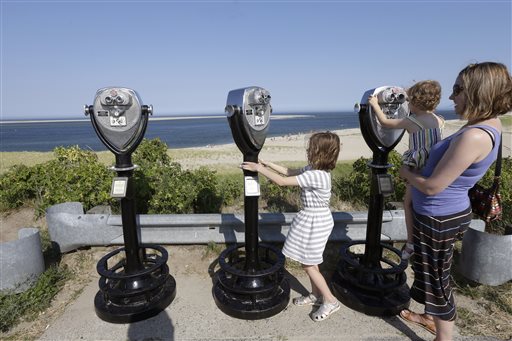
So I was quite surprise to see this headline "Shark sightings off Cape Cod a boon for tourism"

The East Valley Tribune writes " In "Jaws," the fictional mayor tried to protect the summer tourism season by keeping a lid on reports of the man-eater lurking offshore. As sightings of great white sharks mount off Cape Cod in real life, however, businesses in the Massachusetts town of Chatham are embracing the frenzy."

Maybe the Western Australia government should visit Chatham Mass. and talk to their businesses. They would hear that instead of the great white sharks scaring tourists away, they actually attract them.

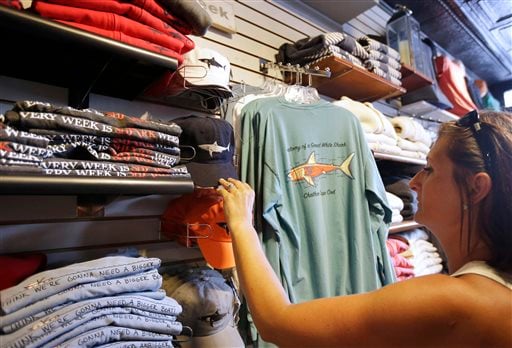
Shark T-shirts are everywhere, "Jaws" has been playing in local theaters and boat tours are taking more tourists out to see the huge seal population that keeps the sharks coming. Harbormasters have issued warnings but — unlike the sharks in the movies — the great whites generally are not seen as a threat to human swimmers. 

No sensational headlines, no mass hysteria, no loss of business. Why don't we see more of this kind of reporting in the media?

A local business man is quoted as saying: "I mean, truthfully, we've probably grown about 500 percent in terms of the sale of our shark apparel," he said. The T-shirts, hoodies, hats, belts, dog collars and other accessories bear the iconic, torpedo-shaped image of great whites and sell for between $10 and $45.
 
Read the entire article here

It's nice to see that an entire community has been embracing the great white sharks and found a way to use them to their benefit. This is an example, how humans and nature can benefit from each other. The people have a booming economy and the sharks don't get culled. Are you listening, Western Australia?

Cheers,
Martin Graf
CEO Shark Diver

About Shark Diver. As a global leader in commercial shark diving and conservation initiatives Shark Diver has spent the past decade engaged for sharks around the world. Our blog highlights all aspects of both of these dynamic and shifting worlds. You can reach us directly at staff@sharkdiver.com.

Tuesday, February 18, 2014

Baby Bull Sharks in Fiji!

Mike Neumann of Beqa Adventure Divers just reported the arrival of this years first baby Bull Sharks!

A little while ago, we talked about Project abroad and their involvement with the sharks in Fiji. It is this same organization that is tagging these sharks as well as taking DNA samples for research. Kudos to both Project Abroad and Bequa Adventure Divers for all you do to help understand and protect our sharks.


We at Shark Diver can't wait to come visit you guys in May. Anyone that wants to join us, we have 2 trips available. From May 2-11 and May 9-18
Call us at 855.987.4275 or 619.887.4275 to reserve your space.

This is a unique opportunity to dive with as many as 70 Bull sharks at once and discover first hand, what over 10 years of conservation efforts have accomplished in Fiji.

Cheers,
Martin Graf
CEO
Shark Diver

About Shark Diver. As a global leader in commercial shark diving and conservation initiatives Shark Diver has spent the past decade engaged for sharks around the world. Our blog highlights all aspects of both of these dynamic and shifting worlds. You can reach us directly at staff@sharkdiver.com

Tuesday, February 4, 2014

Richard Branson, voice of reason?

Most of you are aware of the recent "shark cull" policy enacted in Western Australia. Since they actually started to use baited drum-lines, there has been a public outcry to stop the killing of the sharks. Many argue the the drum lines indiscriminately kill, not only large Great White - and Tiger-Sharks, but smaller sharks and different species of sharks as well. Some even suggest that the sharks and other animals that are caught in the lines are attracting other predators, essentially acting as chum.

In 13 years of diving with Great White Sharks at Isla Guadalupe, I have observed that the smaller sharks are actually more inquisitive than the larger individuals and are likely more apt to bite something in order to investigate what it is. So even if the drum-lines would only catch the large sharks it intends to, we have to ask ourselves, are we even trying to catch the sharks that are most likely to bite a human?

Here is the problem with the approach with us shark experts and conservationists. We look at the problem from a shark related perspective. There is nothing wrong with that, but we have to address the real reason the shark cull was started.

Sir Richard Branson, foto wildaid.org
Since Western Australian premier, Colin Barnett, has indicated that his goal is to protect a way of life and the tourism industry, I think that Richard Branson, head of the Virgin Group, has a better approach. In this article he is quoted as saying, "I'm sure one of the reasons he [Western Australia Premier Colin Barnett] did it was because he was thinking it would encourage tourism. It's going to do quite the reverse, I think. You're advertising a problem that doesn't exist in a major way and you're deterring people from wanting to come to Perth and your beautiful countryside around it. All you're going to achieve, I think, is to worry people unnecessarily."

I believe that Richard Branson knows a thing or two about tourism and promotion. Hopefully premier Colin Barnett will listen to his voice of reason, if not for the sake of the sharks, then for purely economic reasons, to protect the way of life and the tourist industry of Western Australia.

 
Cheers,
Martin Graf
CEO
Shark Diver


About Shark Diver. As a global leader in commercial shark diving and conservation initiatives Shark Diver has spent the past decade engaged for sharks around the world. Our blog highlights all aspects of both of these dynamic and shifting worlds. You can reach us directly at staff@sharkdiver.com.

Sunday, September 16, 2012

Guadalupe White Shark Diving Trip Report August 16-21, 2012

“Are you scared?” 

These three words were almost universally spoken to me when I told people that I was about to undertake on a White Shark diving trip. It was all part of my forty by forty, a bastardized version of the bucket list that an ex girlfriend had introduced me to. It is a list of forty things I would like to do by the time I am forty, White Shark diving was number one on that list. 

I remember researching the different shark diving operators and my head quickly began swimming from the different types of boats and services offered. When I stumbled upon SharkDiver I really liked what I read, especially the part about leaving from San Diego and not having to travel through Mexico by bus. Speaking to Patric just proved that I was making the right decision. His enthusiasm and eagerness to answer any and all of my questions put me right at ease. Not a slick talking salesmen like some of those other operations, Patric really seemed to exude a passion through the phone of a love for sharks and the people just crazy enough to want to dive with them. I remember booking the trip in February and hearing Patric exclaim over the phone, “Congratulations, you are going shark diving.” The months flew by and before I knew it my trip was upon me; packing up and heading to San Diego the excitement had yet to hit me. 

 Sharks became my obsession early on in life. The Scholastic book clubs during my formative years always offered those books on sharks that I would readily snatch up. As the years passed by, my shark collection grew to figurines, statues and a small library of shark related books. Now, here I was on the precipice of coming face to face with this Apex predator and fulfilling a lifelong dream.  When I landed in San Diego, the day before I was to set out on the boat, I could feel the excitement slowly building.


The worst part about this whole ordeal was the waiting. I befriended a group of fellow shark divers who were staying in my hotel and we agonized together over our nine pm call time to the boat. The minutes slowly ticked by and we kept wondering if we could head over to the landing a little bit earlier. Finally, we grabbed out luggage and headed over to the Horizon. There we were greeted by an assortment of other people who were just as excited as we were to get this trip underway.

Stepping onto the Horizon for the first time, one but can’t help but notice the two shark cages perched upon the aft deck. This was it, this was where we would spend the next few days observing one of the most formidable creatures in the ocean. Most people would be scared, or filled with some kind of trepidation, not I. The feelings of excitement that had yet to wash over me began to take root. I wanted the engines to start that very moment and get me to Isla Guadalupe, but once again I had to wait.
The crew were affable and ready to answer any question we may have about our upcoming trip. In a matter of moments all of the passengers on board had met one another and were sharing stories of how we got to where we were currently. After Martin and Captain Spencer briefed us on safety precautions and the itinerary, we were off to bed with visions of Whites dancing in our heads.

The next day was a lot more waiting, yet there were a few wonderful experiences that awaited us. We happened upon several pods of dolphins that seemed to enjoy playing chicken with the oncoming bow of the Horizon. The dolphins jumped and squawked as they kept us company for several miles. The photo opportunities were plentiful and it seemed as if they wanted to make sure that we got their good side, lounging and playfully following our wake. Once the dolphins left, we went back to our lounging about on deck.

That evening the display of stars was unrivaled. Coming from New Jersey, the light pollution is something akin to being able to land a small air force on any parcel of acreage. Out here in the open ocean the stars shone over the water in all of their brilliance. Satellites and shooting stars were the order of the evening with the armchair astronomers among us looking to identify the constellations. I literally laid on the top deck for an hour watching the display above in the heavens. After a hot shower below it was time to turn in for the night in preparation for the next day and my first shark dive.

Waking up every few hours like a child awaiting the booty Santa left from Christmas Eve, the time couldn’t go fast enough. Eventually, I drifted off into a restful sleep and woke to the sound of the crew readying our cages for the morning dives. Most everyone was up and about at a time usually reserved for milkmen and farmers, these adults were ready to dive with the sharks. After another wonderful breakfast provided by Mark and Caitlin, it was time to head into the cages.

As luck would have it, I was in the first group to head into the cages, and I also was the first in my team to head down the steps. Stepping down the rungs, it was as if I was unwrapping my present in the form of a twelve foot one and a half ton puppy. I situated myself quickly on the cage bottom and scanned the darkened horizon for sharks.

They say that everyone remembers their first time, and this was no exception. What appeared to be a small car was driving in from the darkness and heading at a leisurely pace towards the cage. As the sunlight began to illuminate some of the shadows it was clear that this was no small car, this was our first White of the day. To try and put into words what this feeling is like is to do an injustice to the experience. If you are here, diving aboard the Horizon, there is a reason; you love sharks. For me, someone who has been a self professed shark nerd for all of my thirty-eight years, I was in absolute heaven. The smile that spread across my face almost caused me to lose my regulator. Needless to say, this was one of the best experiences in my life. 

We spotted a total of twelve sharks on our dive today, with one being a new kid on the block. There were stretches where you would see nothing for minutes only to be snapped back to attention by a flurry of underwater activity when the sharks decided to come in and play. The visibility and proximity of the sharks afforded even the most amateur of photographers (namely myself) the opportunity for several incredible photo opportunities. At the end of the day, the staff helped us out of the cages and back aboard to sit down for another wonderful meal. The best part of all this, we get to do it all again tomorrow. After a great meal and four dives, this writer is ready for bed.

Day 2
I am not by any stretch of the imagination a morning person, yet I have found myself up before sunrise both days. Today I was awarded with a magnificent Isla Guadalupe sunrise which filled up a bunch of space on my camera’s memory card. Breakfast soon followed which was a delicious mix of eggs, bacon and Chef Mark’s banana pancakes which were out of this world. The way this day of diving worked out was that my diving group had a later dive time, and the seven o’clock dive time was an open rotation. I decided that I would get in and see what was going on this early in the morning. This dive was rather peaceful, with The Russian and a new shark that were patrolling quietly. It seemed as if these sharks were like the divers, tired and still filled with a bit of morning malaise. After a few languid passes they both disappeared, the Russian’s lone appearance for the day. Our dives for the rest of the day had great visibility and a few sharks who were curious as to what was going on near the cages. I was able to get in five dives on day two and each one was unique in its own way. 

            Topside, we shared stories of the day as we waited for dinner. I must tell you that most of us were just as excited for dinner as we were for our cage diving by the end of the trip. Mark and Caitlin kept the small kitchen humming and we were never at a want for good food or drink. Our dinner for the evening was a pork tenderloin with corn, rice and spinach salad. A few of us ventured outside and dined al fresco as we stared at the sea lions along the beach.

Day 3

            There was no sunrise on day three. The morning was overcast and a gloom hung over the divers and the weather. We were saddened that today was our last at Isla Guadalupe and the weather was not doing anything to lighten our spirits. My dive group had the first rotation this morning so it meant that if I hopped in for the open  dive I would be in for two hours. Marks’ breakfast was enough to keep me topside as some brave souls ventured down into the dark and what I could only assume was cold water. I passed on my rotation since the weather had now started to mist. My group had a few shark sightings and I readied myself for my turn in the rotation. 

            Suiting up, I was a bit disappointed that it was a little darker and cooler than it had been yesterday. Perhaps the sharks had already tired of us and called upon their weather Gods to make us go away. This intrepid group of divers may have been deterred, yet we were damned determined to get our last dive of the day in. I settled in on the outside of the cage and waited for what I thought would be a few dark pictures of a shark or two as I called an end to my trip.

            One of the new sharks that we had spotted was definitely a ham of the bunch. Martin speculated that this new shark was inquisitive as to what the cages were and what was going on in his space.  We spotted him about fifteen minutes into the dive,; diving low and deep underneath the bottom of the boat. As you get further along in your dives, you will notice there are particular habits which each diver picks up in the cages. For example there are a few unique ways that we will observe the sharks from inside the cage. One is the whirling dervish. This move is when you are focused on the shark as he cruises silently along under the boat. You are so certain that he will loop around and come back that you follow what you assume to be his plotted shark course. This friends, is a bad idea. Shark are one thing and one thing only; unpredictable. As you are watching him he will somehow appear right before you in the front of the cage, causing you to spin around like a whirling dervish. There is the crab walk, the cage hang and a few that I am sure you will have fun naming on your own. 

            The water was beginning to lighten a bit and the New Guy was patrolling lazily along under the cages. In the next few minutes, several bait bags and shark attractant (Ground mackerel guts and blood) were added to try and bring our friend to the surface. The shark got the hint and began swimming closer to the surface for some face time with us. 

            I cannot pinpoint exactly which point our shark decided that since it was our last day, he was going to put on a show of all shows for us to remember him by. I just remember him inching closer and closer to the cage, swimming by and staring in as if to say, “Are you ready?” The bait bag was the first thing he decided to investigate. The day before, several bait bags had met there demise at the jaws of these White Sharks. The crew assured us that if the sharks decided to do so, they could have a bait bag treat each time it was thrown out.  The New Guy came up and played with the bite bag, going for it but not really putting his whole heart into it. The cameras fired up and we got some great shots. Happy, I though at least the last day proved to not be as bad I had feared.

            New Guy was not done yet. He decided that after he had grown tiresome of the bait bag, he would come and investigate the boat. The night before I had seen some red splotches on the top of the shark and I asked Captain Spencer what they were. He informed me that many sharks have these marking, whether they are blue, black or red. They are bits of paint that have rubbed off on the sharks boat when he scratches his back along the bottom of the hull. Apparently New Guy had scraped his back against the boat prior and now wanted to see what the rest of this contraption was about. He changed course quickly and headed for the boat.

            I have seen Jaws countless times and consider it sacrilege if I miss an episode of Shark Week, but nothing prepared me for what I was witnessing with my own eyes. The shark was headed for the boat and trying to bite the underside of the hull. I kept the camera focused on him as he did so, hoping that it was only gently tapping the hull and not going to ramming speed. With the maneuverability of a jet fighter he shot back and came in for a second attack which was now aimed at the prop. 

            Getting closer to the prop, he gently nibbled on the prop as well as drive shaft. What the hell was this shark doing? My morning dive had turned into a full on Discovery channel special on shark habits in the wild. The taste of the prop disagreed with his discerning palette and he turned and looked at the cage. Nahh, he wouldn’t.

            At no time in my trip did I feel unsafe in any way, let me stress that the crew was top notch in their focus on passenger safety. Knowing that I had Martin and the rest of the group above gave me a quiet confidence that no matter what this shark decided to do, we would all be sharing stories of the dive, safely later in the day. However, seeing him decided to set straight for the cage gave me a minute’s pause where I thought, this is going to make for one great fish tale.

            The shark rammed into the cage near the bottom base trying to gauge just what exactly was sitting in front of him. Inside the cage we looked at one another, wondering if this shark had just came in and gave us an exploratory bump. Before we could refocus he came in for a second swipe at the cage, only this time he misjudged his girth and got himself in a tight spot.

            When they tell you at Shark Diver that you will get up close and personal with a shark they are not lying. This is as close you can get to a sharks mouth without becoming his lunch or being his dentist. As he came back for another bump he decided that he’d stick his snout into the cage. Being in the corner, I was able to see the underside of his chin and his lovely row of teeth. He shook his head loose from the cage and I am sure they heard the pounding of our hearts all the way back in San Diego. He wasn’t done and he came back in for another swoop at the cage.

            Unfortunately for this shark his special reasoning was a bit off kilter. He thought that he’d be able to fit between the boat’s stern and cage with ease, never thinking for a moment that this area was more than likely a tad bit too small for his enormous girth. It didn’t stop him from performing his acrobatic act with grace and aplomb; ok, actually he did so in a series of frenetic jerks and tail lashings that caused my whole dive group to exhale in unison and think that we might be going for a ride courtesy of this thrashing shark.

            After what seemed like an eternity (most likely a reality of 4 seconds) the shark squeezed through the opening and we were clear once again. A quick trip to the surface to check in with Martin and we were ready to continue our dive. He continued to pose for pictures, the events of the last few minutes calming him a bit. When it was time to head out, I looked around underwater and thanked him for an unbelievable experience that he had provided us. 

            When I got back to land, and rid myself of the sea legs that had served me nicely, I couldn’t believe the experience that I had just had.  As all good raconteurs do, I wanted to share my tales with anyone who was within a five mile radius and I did so with vigor. More than half of the folks that I had met on the trip were staying in the same hotel, so we all decided to meet up later that evening and head to a bar to decompress form the excitement. We laughed and chatted about the amazing trip that SharkDiver had provided us with and also realized that we had formed friendships along the way. Out of sixteen passengers, nine of us gathered that night in the bar feasting on fish tacos and drinking beer.  I’d say that is a very good percentage of happy customers.

            When I arrived home and began reliving the trip through pictures and stories, one friend asked me a question that really made me think. She asked me, “Was the trip everything you had hoped it would be?” Without hesitation I replied that it exceeded my wildest dreams, and that’s not hyperbole. Many times we tend to elevate things in life, whether they be the fish that got away story or the girl or guy. Even if I wanted to try and make this trip better, there would be nothing in my imagination to top it. 
            I would like to thank the whole M/V Horizon crew for their tireless dedication in making our trip the most pleasurable it could be. Everyone was a consummate professional and their knowledge and helpfulness made for an experience of a lifetime. Someday in the future I will head back to Isla Guadalupe and a new cadre of friends both above, and below the water will great me.

Just an FYI, new guy wasn’t entirely new. He was Bullseye, a shark who hadn’t been seen in Isla Guadalupe for three years. Just proving once again that if anything, these sharks are unpredictable.


Shark Diver,

Jason Ordini 2012
Isla Guadalupe, Mexico

About Shark Diver. As a global leader in commercial shark diving and conservation initiatives Shark Diver has spent the past decade engaged for sharks around the world. Our blog highlights all aspects of both of these dynamic and shifting worlds. You can reach us directly at sharkcrew@gmail.com.

Saturday, June 2, 2012

A poor 3rd world country fighting shark finning? You betcha!

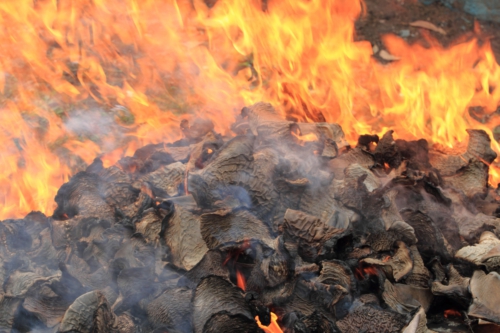
Burning the poachers loot!
Honduras has taken the fight against illegal shark finning to a new level.

According to an article on Science 2.0:

Hondurans Burn Shark Fins To Stick It To Poachers

So when the fins, mostly from nurse sharks, were seized in April by the Honduran navy, it was a safe assumption the fins were obtained illegally. Still, with 14% inflation and 22% of the country below poverty levels surely something could have been done with the hundreds of shark fins, worth that $300 per pound as mentioned. The poachers were already penalized but actual law-abiding poor people could have been helped with the money for a product perfectly legal in plenty of other countries.

Instead, President Porfirio Lobo joined the country's top law enforcement officials yesterday in a bit of political theater, to watch the burning of the illegal shark fins.


I personally applaud president Porfirio Lobo for this action and wouldn't characterize it as "political theater" I think this action sends a clear message to the poachers that Honduras is serious about shark conservation and will not allow anyone to profit from the sale of shark fins. Suggesting that the Honduran Government should have sold the fins to help the poor, is a little like saying our DEA should sell the pot they confiscate to help fund programs for the poor here.

Well my friends, that's my take on it. Feel free to let me know if you have a different take on this.

Cheers,

Martin Graf
Dive Operations Manager
Shark Diver/Horizon
Isla Guadalupe, Mexico


About Shark Diver. As a global leader in commercial shark diving and conservation initiatives Shark Diver has spent the past decade engaged for sharks around the world. Our blog highlights all aspects of both of these dynamic and shifting worlds. You can reach us directly at sharkcrew@gmail.com.

Friday, May 18, 2012

121 Great White Sharks at Isla Guadalupe?

Don't forget to count us!
 Note: Apologies to George Probst who runs the fine blog Dorsal Fin Blog for the original image mistake on this post.

The pictures donated by our shark divers from the past ten seasons have been evaluated.

Last Monday Nicole Nasby-Lucas, the scientist I'm working with on the

We now count 121 individual Great White Sharks at Isla Guadalupe.

By evaluating those pictures, we  not only keep track of the numbers of sharks, but can also track how many years they have been at the Island. Some, like our buddies Shredder, Bruce, Jacques, etc. have been there every year since 2001.

Another interesting fact that has been discovered, is regarding adult females.

While males come to the Island every year, the females come every other year. In the "off" year, they give birth along the Baja coast and in the Sea of Cortez.

This research is only possible with the assistance of our shark divers.

Thanks.

Cheers,

Martin Graf
Dive Operations Manager
Shark Diver/Horizon
Isla Guadalupe, Mexico

About Shark Diver. As a global leader in commercial shark diving and conservation initiatives Shark Diver has spent the past decade engaged for sharks around the world. Our blog highlights all aspects of both of these dynamic and shifting worlds. You can reach us directly at sharkcrew@gmail.com.

Sunday, May 13, 2012

Best of 2011 at Isla Guadalupe - Martin Graf

A couple of days ago I talked about how I got started at Isla Guadalupe.

Today I'm going to share a couple of things I do during those trips. I'm always collecting pictures and videos from our Shark divers, both for our photo database and a trip video. Our database identifies the sharks, by looking at the transition from the grey to the white, which is like a fingerprint and different for each shark. So far we have identified over 120 different individuals, some of which we have seen every single year for the past 10 years. If we have a new shark that hasn't been identified, the photographer whose picture we use to identify it, gets to name the Shark. How cool is that?

I compile pictures and videos for a slide show/video and burn it onto a DVD for each Shark Diver to take home. The following is an example from last season!

Cheers,

Martin Graf
Dive Operations Manager
Shark Diver/Horizon
Isla Guadalupe, Mexico


About Shark Diver. As a global leader in commercial shark diving and conservation initiatives Shark Diver has spent the past decade engaged for sharks around the world. Our blog highlights all aspects of both of these dynamic and shifting worlds. You can reach us directly at sharkcrew@gmail.com.

Thursday, March 17, 2011

Guadalupe White Shark Cage Diving Dates 2012

Shark Diver is proud to announce our 2012 shark diving dates for Isla Guadalupe, Mexico with the M/V Horizon.

Yes, we're booking for 2012 in 2011!

We're 80% sold out on all our 2011 expedition dates, thanks to the many divers and groups who will be joining us again this year.

If you cannot make it this season join us in 2012. Same great dive operations, same pricing as 2009, 2010, 2011 and yes, we will be departing directly from San Diego again next year with no buses into Mexico.

Peak shark season dates are August-September when weather and numbers of sharks are at their absolute peak. Divers seeking the really big females should join us in October. We are accepting $500 fully refundable deposits to secure your next shark diving adventure.

Let's go shark diving!

Friday, February 4, 2011

Tiger Beach Bahamas 2011 - Shark Diver

In just a few short weeks we'll be back at our second home, the Bahamas, to dive with our favorite locals - the Tiger sharks.

We're also back with Scotty Grey and the MV Kate one of the best vessels operating at the beach right now with one of the most accomplished and flexible shark crews out there.

We use Scotty and crew exclusively for all our Bahamas operations, from film crews to commercial diving they deliver safety, value, and comfort.

This season we're only running six divers per trip and this is the key for us. Small families and dive groups enjoy a private charter set up on the 65' MV Kate, and this allows us the ultimate flexibility on site and at other sites as well.

We cannot wait to get wet this March-May, and frankly, like you, we're tired of the winter.

Here's to 80 degree days, sunshine, Tigers, lemons, reef sharks, and oh yeah, we'll even throw in a day swimming with the spotted dolphins, or not, it's your expedition after all.

Image Frazier Nivens

Saturday, September 11, 2010

Bahamas National Trust - Shark Sanctuary?

If the folks from Pew and the Bahamas National Trust have their way the Bahamas might be declared a shark sanctuary sometime soon.

That would be a good thing.

What is the current value of shark tourism to the Bahamas?

An industry study done in 2008 revealed the value of shark tourism to the Bahamas was roughly $78 million per year with over 44 thousand safe human/shark interactions per year by dive industry members.

That's where this recent article by the Tribune and associated quotes that went with it had us concerned. Not one shark diving industry member was mentioned in it, and no statistics concerning our industry either regionally or internationally were mentioned.

The shark diving industry has a lot to do with the perception of sharks and to tourism in the Bahamas. In short, regional industry players must be front and center with this push to protect sharks.

Perhaps it is time for Bahamas operators to get quoted and get out in front of this issue?

Wednesday, July 15, 2009

Hawaii Shark Diving - Meyer Study

Back in May we posted an update on the Carl Meyer study that looked into Hawaii shark tourism and habituation of sharks to chum.

The study concluded that existing commercial shark diving operations pose little risk to public safety.

This landmark study has come at a time when a virulent anti-shark diving effort has been pushing to have commercial shark diving banned in Hawaii's waters.

The relentless anti-shark diving campaign has culminated on the island of Maui, which has no commercial shark diving in its waters, proposing a bill to ban it.

There's still time to save two very good shark diving operations in Hawaii. Follow the media trail and make a few of your own. The major news media has grabbed on to the Meyer study (which makes for great reading) and have positively reported the conclusion.

The news of this study should be posted to every chat room, scubaboard, and social network site for divers as soon as possible. The anti-shark diving lobby plays one card and one card only - fear.

Without the fear of sharks commercial shark diving wins on the argument of sharks=tourism=economy.

Help Hawaii make the right decisions about the future of off shore (3 mile) shark diving.


Kohn2


Miami Herald

Honolulu Star

KITV ABC

Wednesday, June 10, 2009

Maldives Whale Sharks - Conservation

Found on the Maldives blog this morning, more good industry news:

In another step towards becoming environment-friendly, the Maldivian government unveiled plans yesterday to designate three whale shark habitats in the Maldives as protected areas.

Protected areas are allocated Baa atoll Hanifaru, Baa atoll An'gafaru and Alif Dhaal atoll Maamigili as protected areas to commemorate World Environment Day and World Ocean Day on the 5 and 8 June respectively.

"We welcome the whale shark sanctuaries," said Ali Rilwan, executive director of environment NGO Bluepeace today. "We don't need paper parks, we need monitoring and more research in these areas." In March, the ministry of fisheries and agricultures extended the moratorium on reef shark fishing to cover the whole of the Maldives as part of a move towards a total ban on both reef and oceanic shark hunting.The main objective of the project was to protect the areas mega fauna, namely whale sharks, Manta rays.

Divided into various zones, in which different activities will be permitted. While diving and snorkeling would still be allowed, a set of guidelines would be provided to instruct on how to deal with encounters with whale sharks.

Further, boats including Liveaboards and dive boats will be subject to speed limits in certain areas, he said.

The reaction of local residents was "very positive". "They actively wanted this to happen and this won't impact any of their activities so they have nothing to lose from this," "That's the findings of the consultation."

The decision would have a "global significance" and the areas were among the few in the world where whale sharks could be spotted.

The polka-dotted whale shark is the largest fish on the planet, but very little is known about their existence, according to the Maldives Whale Shark Research Programme's website.

While it is known they swim potentially vast distances across the ocean, eating only plankton, tiny fish and squid, how long they live or where they reproduce remains a mystery.

It was crucial to establish a set of guidelines to counter the impact that the growth of tourism would have on whale sharks in future years.
At present, it is estimated that whale shark excursions generate US$10 million annually.

According to researchers Maldives have spotted 115 whale sharks, although the real number was probably higher.

"Some of these areas are important feeding grounds," "And out of all of them, there are only two females, so the animals are only spending part of their lives here."

The designated areas would also protect other animal species such as manta rays in Hanifaru and Gray reef sharks and White tips reef sharks in Baa Atoll An'gafaru.

Thursday, May 14, 2009

Hawaii Shark Diving - Rep Gene Ward

Like a tuna's ability to attract sharks in waters seemingly devoid of them, a politician will also be attracted to "an issue" just as quickly. Rep Gene Ward of Hawaii has chosen his next big platform to be commercial shark diving and has opened his candidacy as the lead spokesman against the entire industry with an Op-Ed this week. His folksy approach to the industry is peppered with themes and sentiments taken from 1976.

Posing a series of innocent questions couched in a framework of "raw meat and fear" Mr.Ward has masterfully pushed the agenda forward and set the table for existing shark diving closures in Hawaii.

Rep Gene Ward is not the problem but a symptom of how our industry fails itself. Mr.Wards newly discovered public anti-shark diving persona was spawned at the sight of 300 angry residents, protesting a simply ludicrous commercial shark diving roll out in Hawaii Kai. The arrogance and outright stupidity of that single effort is the reason Mr.Ward has chosen to make the banning of all shark diving operations his "new cause".

As we have said before and to whoever will listen - commercial shark diving is under siege. As an industry in the western hemisphere there is not one well known commercial site that is currently not under new rules or under review by politicians and agencies.

This is the face of the anti-shark diving lobby - they are well spoken, well networked, and agenda driven. When will our industry get it's collective head out of it's ass and start working on solutions?

Wednesday, February 25, 2009

Ecotourism and Sharks - Malaysia

Over the past three months tourism officials in Mayalsia have been wrestling with the issue of shark finning and a proposed boycott of the region by international divers seeking stronger protections for sharks.

Malaysia seems to be rising to the occasion organically with the following announcement by the Saba Anglers Association (SAA):

The Sabah Anglers' Association (SAA) will use the Sabah International Fishing Tournament 2009 as a platform for its Anti-Shark Finning Campaign. The campaign's committee chairman, Nilakrisna James, said SAA was concerned at the depletion of unique fish in Sabah waters, including protected species like sharks.

"In the past, we have voiced our concern on suspicious marine activities taking place in Sabah waters which received lukewarm response from the authorities.

"We do not need a global boycott from the increasingly green-conscious international travellers to take matters seriously," she said at a press conference on the tournament here today.

Nilakrisna said SAA was campaigning not only to ban shark finning activities in the state, but also at the universal level.

"The ban should be universal and not just for the reason of protecting the tourism integrity or the diving business in the state," she said.

Editors Note: Any efforts by regional players in Malaysia towards anti shark finning efforts should be encouraged. The gov response to the proposed dive boycott has been admirable thus far. The dive community should continue to encourage the tourism minister in tandem with the fisheries minister to enact local laws with a mix of tourism incentives to ban shark finning entirely.

Monday, February 16, 2009

The Power of Shark Tourism

What began as a few online posts exposing shark fishing in Pulau Mabul by concerned divers has grown into a bit of a movement.

A movement that Tourism Minister, Datuk Masidi Manjun is taking seriously.

"Nature lovers and the global conservation community are fast becoming an influential lobbying group who could hurt the state tourism industry if they decide to boycott Sabah in protest against such activities."

Malaysia needs tourism, but tourism alone does not provide enough money to stop shark finning in the region. So, what is the solution?

Monetization.

As we have long pointed out where local fishermen see the financial incentive to keep sharks alive they do. Maylasia has discovered the power of shark tourism to increase tourism dollars to the region and the eco centric divers shark tourism attracts. Our industry needs to provide Tourism Minister, Datuk Masidi Manjun with the tools he will need to effect change in his region for continued and better tourism with sharks.

Some suggestions:

Park Fees and Outreach - Worldwide pilot programs providing local populations with money not to kill sharks are showing promise. Western tourists will gladly pay more money into regional parks if they know these monies will help preserve the environment.

Education and Redevelopment - Tourism in undeveloped regions is always a first step. Providing incentives to local resorts with tax beaks to help develop "off site" dive sites in regions where shark finning is happening is a viable solution. Add to that a partnership with an NGO or better yet direct engagement by local resorts in the region to educate local fishermen to the lasting value of sharks.

The growing calls from the dive community for a ban on dive tourism in the region is a "one trick pony" and serves only to provide a laser focus to the shark finning issue. Viable tourism solutions need to be forthcoming to move this regional issue into the next phase, direct and lasting action.

Complete Story

RTSea Blog Similar

Tuesday, February 10, 2009

Florida Tourism - Dying For Imagination

With the news of a 16 foot Great Hammerhead caught and killed off the Miami coast yesterday we thought this would be a good opportunity to look into the state of Florida's tourism.

Florida Tourism by the Numbers

57 Billion - The economic impact of tourism in Florida

6.9% - Current decline in hotel revenue for Miami-Dade region, Florida's largest

10% - Overall decline in tourism since 2007 and falling

Florida needs tourism dollars. The state is in free fall with sharply declining tax revenue, the housing debacle, and in some regions of Florida a shocking10% unemployment rate. It is time for Florida to reevaluate every tourism option they have and that includes shark tourism.

We have been harping on this for a while now. Since the ill fated decision in 2001 to ban shark diving in Florida's waters millions of tourism dollars have gone to places like Bahamas where divers enjoy safe encounters with sharks. Shark tourism, done right, could be plugged into Florida's existing scuba community to begin major tourism revenue generation in one year or less.

Those numbers include hotels, airlines, taxi's, restaurants, time shares, the economy. Since 2001 the state of commercial shark diving worldwide has "matured". With the proper protocols in place, oversight, and even stiff fines for operations that fail to follow shark protocol Florida could become a world leader in safe shark encounters drawing tourists from all over the planet.

One final number to consider - 200 million. The estimated value of commercial shark diving worldwide and growing. In countries like the Maldives, shark tourism already accounts for 2.1 million dollars in tourism revenue, an estimated 100 times more than the export value of shark meat from the region.

Looking at the Great Hammerhead caught yesterday by one tourist from Illinois it becomes elemental to estimate the ongoing value of that animal just as easily. Unfortunately for the struggling hotels, restaurants, and unemployed in the Miami region the only value they will ever see from that shark is on the Channel 6 news archives.

Let's begin to rethink shark diving in Florida.