Wednesday, August 19, 2009

Richard Theiss - Talking Shark Policy With Politicians

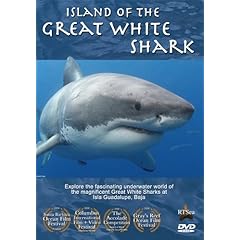
Richard Theiss, filmmaker, producer, and blue blogger, has been a tireless champion for the global shark diving industry. Using his latest pro-shark, pro-industry film, Island of the Great White Shark as an educational tool Richards work continues to benefit the industry:

CALIFORNIA ASSEMBLY MEMBERS SPONSOR SCREENING


Sacramento, California, August 18, 2009 – California Assembly members Nathan Fletcher (R, 75th Assembly District) and Jared Huffman (D, 6th Assembly District) will be sponsoring a special screening/discussion of RTSea Productions’ Island of the Great White Shark for invited members of the State Assembly and Senate on Wednesday August 19, 2009 at the State Capitol.


The award-winning documentary film is a comprehensive look at the great white sharks of Isla Guadalupe, Baja, exploring the true nature of these critically important animals and the ongoing scientific research intended to secure their survival. Following the screening, RTSea filmmaker Richard Theiss, world-renown shark expert Dr. Peter Klimley from UC Davis, and eco-tourism operator Greg Grivetto from Horizon Charters, will discuss and field questions about the film, the important conservation and eco-tourism issues facing these ocean predators, and what the future of these animals means to California.


“These are absolutely magnificent creatures living on a razor’s edge of possible extinction. And there are some very dedicated people working tirelessly to prevent that. This is a story that needed to be told because their fate can have an impact on California, ranging from tourism and fishery economies to fragile marine ecosystems,” says Richard Theiss, RTSea Productions, executive producer and cinematographer.


Theiss has filmed the great white sharks that migrate in the fall to Isla Guadalupe for over five years. During that time, he not only completed the documentary, Island of the Great White Shark, but also became aware of the plight of these ocean predators and how their future is tied to environmental, conservation, and tourism issues between both California and Mexico. Relying on assistance from Dominique Cano-Stoco, Associate Director of Government Relations, UC San Diego, initial contact with several California legislators proved there was positive interest regarding the issues, which has led to Assemblymembers Fletcher and Huffman taking an active role in arranging this screening/discussion in addition to proposing other measures.


“Of all the animals in our planet, sharks are among the most recognizable, yet they remain remarkably misunderstood. Island of the Great White Sharks packages a message of science education and ocean conservation inside quality entertainment and cinematography. As an outdoorsman and as a surfer in particular, I appreciate that this film shows the truth—that sharks are critical players in maintaining balance in our marine ecosystems. The cause of conservation is important, and I am happy to use this event to encourage continued learning about these iconic creatures and smart steps to protect their place in our world,” said Assemblymember Nathan Fletcher.


"This film illustrates the importance of international cooperation in wildlife conservation, including the need for better understanding and appreciation of the vital role this unique species plays in the ocean ecosystem. Wildlife conservation and eco-tourism are also major contributors to California's economy, and for that and many other reasons deserve our support and encouragement, said Assemblymember Jared Huffman."


Following on the hype and hysteria of Discovery Channel’s annual Shark Week television programming, this event plans to present the facts regarding a critically important and highly misunderstood shark. The film highlights the value of shark eco-tourism and the importance of conservation, while the discussion will bring out the need for cooperation between California and Mexico’s regulatory agencies involved with eco-tourism, research, wildlife conservation and protection of threatened species.


The screening and follow up discussion will take place in Room 126 of the State Capitol from 5:30 p.m. to 7:30 p.m. Those wishing to attend or to arrange interviews with the participants should contact Heather Koszka in Assemblyman Fletcher’s office at 916-319-2075.


About RTSea Productions


RTSea Productions, based in Irvine, California, (www.rtsea.com) is dedicated to capturing nature and underwater images that will impress and move viewers to preserve and protect our precious natural resources – above and below the waves. RTSea has provided footage for National Geographic, Discovery, Animal Planet, Google Earth, Aquarium of the Pacific, and others.

# # #

Monday, August 17, 2009

Africa - White shark cage diving permits

The Department of Environmental Affairs in Africa will commence with the application process for boat-based whale watching and shark cage diving operating permits on Thursday 27 August 2009 as stipulated in the Government Gazette published on Friday 14 August 2009.

The policies on Boat-Based Whale and Dolphin Watching and White Shark Cage Diving gazetted last year in 2008 are aimed at providing and improving regulatory and compliance frameworks in both sectors, growing both sectors through the allocation of a greater number of permits and transforming the industries.

Permits will be allocated under section 13 of the Marine Living Resources Act (MLRA) for a maximum period of one year. Successful permit holders will be re-allocated their permits each year for five years from the date of the first allocations, provided that they fully complied with permit conditions.

Complete Story

Sunday, August 16, 2009

Rep Gene Ward - Political Tourism Killer

When Rep Gene Ward started sending one sided, anti-tourism flyers (click image) to the general public in Oahu for "staged town hall meetings" he forgot to add these statistics.

Oahu, Hawaii is currently suffering through it's worst tourism declines since the Great Depression.

Rep Gene Ward wants to hurt the economy further by halting 40,000 annual tourists from seeing sharks from cages.

Is this the face of a politician who is in touch with the realities on the ground?

VISITOR ARRIVAL DECLINES

The number of visitors arriving in Hawaii by air in October with the percentage change from the same month last year:


VISITORS PCT.
Domestic 190,215 -15.9%
International 122,923 -8.9%
Total 493,506 -13.5%
Overall total * 511,518 -13.5%
by island
Oahu 313,138 -13.3%
Kauai 75,119 -25.9%
Lanai 6,404 -29.7%
Maui 147,977 -20.5%
Molokai 4,672 -35.9%
Big Island 96,366 -19.7%

* Includes passengers arriving by ship
Source: Department of Business, Economic Development and Tourism

District 9 - It's got da critters!

As you are aware this blogs love of cephalopods knows few boundaries. When were not talking about sharks these critters are high on the coverage list.

Naturally when a new film arrives featuring "crabby alien cephalopods", we had to take a gander. We were not disappointed at what we saw. For all the right reasons go see District 9:


Saturday, August 15, 2009

Shark Conservation - As easy as "starting something"

A note to all those in the shark diving industry. Sharks are under assault, and we will lose them unless we push back on every front and in every region.

While many industry folks support global efforts to protect and save sharks, funneling money into front line NGO's - we should be looking to our own dive sites. To the animals we know intimately, to the places where we make our living from. There are no better places to begin outreach and education, in fact, this is where we begin.

Here's a great example.

This blog has harped on this message since it's inception. Regional shark conservation is our obligation, not our burden. We start saving sharks by "starting something" in our own backyards.

It can be a website, a research effort, a photo id program. There are many of you who have lead this effort, and to those few Kudos. There are also many more who publicly decry the taking of sharks and yet, do nothing coherent.

It all starts with "One".

Tomorrow, be that "One".

Isla Guadalupe Research and Fund

Friday, August 14, 2009

Fiji - Evolving Shark Tourism

Shark tourism is a $300 million dollar worldwide industry. Done right, shark tourism has long lasting positive effects on local economies, shark conservation, and regional fisheries.

Fiji has been at the forefront of the evolution of commercial shark diving thanks to the tireless efforts of a few industry visionaries who pushed for change.

Worldwide, shark tourism efforts run the complete spectrum from "business only models" where the sharks are the subject of for profit enterprise, to a newer breed of operation that includes shark research, conservation and outreach.

Change to any industry comes slowly and is lead by risk takers and industry movers.

As a template for sites like Tiger Beach, Bahamas the set aside Shark Reef Marine Reserve Fiji model is in need a few regional champions.

Welcome to industry change.

Welcome to Fiji (click image)

Thursday, August 13, 2009

Rep Gene Ward - When Politicians Kill Tourism

This is the actual promotional flyer put out by Rep Gene Wards office in Hawaii this week.

It is one sided, anti-tourism, anti-shark diving and designed for one purpose only - to inflame an already angry populace (click image).

"Should Shark Tours be banned? If so How so?"

This is not the face of balanced tourism discussions. This is political theater, stoking an already angry mob to further anger and distrust of two operations in Hawaii that have been on the forefront of shark tourism in the region for the past 10 years.

Rep Ward is a savvy politician, like recent health care town hall debates across the country he knows what buttons to push and how to work the crowd. The people he has brought to these town hall meetings he is calling "his constituents," hoping to use their anger as justification and a shield for killing shark tourism in Hawaii.

Unfortunately the anti-shark diving sentiment being raised by Rep Wards efforts and staff has gone past coherent discussion and is now a full fledged witch hunt of epic proportions. In the long multi-million dollar history of tourism in Hawaii no single politician has gone after small business owners with this kind of directed public anger and mistrust. Using the fear of sharks three nautical miles off the mainland as his "wedge issue".

All is not lost.

The industry has seen this kind of effort before. A quick look into Rep Gene Wards political career shows a politician who sees tourism vision for Hawaii, as in his support for Spaceports on the islands.

We're pretty sure Rep Ward is not completely anti-tourism, as he is presiding over the worst tourism economy in the past 40 years with Hawaii suffering a 25% loss in revenues since 2008.

What is needed in Hawaii right now is rational discussion not political theatre. Meetings with officials and operators to define shark tourism in Hawaii and abide by hard and fast rules and regulations that keep 10,000 shark diving tourists coming back to Hawaiian waters year after year.

Miss Universe® Contestants Visit Bimini Sands Resort & Marina

Shark Free Marinas supporter and member Bimini Sands hosts Miss Universe® contestants this week:

Bimini, Bahamas (PRWEB) August 13, 2009 -- This past weekend several fortunate contestants of the 2009 Miss Universe Pageant paid a visit to the island of Bimini as part of the events leading up to the competition on August 23rd.

A total of twenty contestants from around the globe were welcomed to Bimini including Egypt, El Salvador, Estonia, Ethiopia, Finland, France, Germany, Georgia, Ghana, Great Britain, Puerto Rico, Romania, Russia, Serbia, Singapore, Slovak Republic, Solvenia, South Africa, Spain and Sweden.

The Miss Universe competitors attended a number of cultural activities on the island and ended the day with an excursion to Bimini Sands Resort & Marina, www.biminisands.com.

There they were picked up by the Bimini Sands Magic Bus, a tourist favorite with its colorful neon paint scheme. After a scenic tour aboard the Magic Bus the contestants arrived at the picturesque Bimini Beach Club. At the Beach Club they danced to live music by the local band Prime Time. The Bimini Sands resort staff even got in on the action and led the contestants in a number of Bahamian dances. The Miss Universe party was also treated to delectable cuisine from the Beach Club Restaurant, with the fresh Sushi Bar being a big hit. Rounding out the event was a visit to the popular Mackey's Sand Bar for a little R&R before leaving the island.

Bimini Sands wishes them the best of luck in the upcoming pageant and hopes to see them in the future. These lovely ladies will always be welcome on Bimini.

About Bimini Sands Resort & Marina

Bimini Sands Resort & Marina is located on the island of Bimini in the Bahamas, just 50 miles from the US. The full service resort features luxury one and two bedroom suites and protected deepwater marina. Nestled on a picturesque Bahamian beach, all suites have direct ocean or marina views. Amenities include the Petite Conch Cafe, Mackey's Sand Bar, the Beach Club Restaurant & Sushi Bar, poolside Tiki Bar, the Bimini Nature Trail, two pools, tennis courts and a lovely white sand beach. The resort maintains a full service Recreation & Activities Center that specializes in guided eco-tours such as snorkeling, sea kayaking, shark encounters, nature walks, boat tours and more. The Recreation & Activities Center was recently nominated for a prestigious Cacique Award for sustainable tourism by the Bahamas Ministry of Tourism.

Bimini Sands Marina is a proud member of the Shark Free Marinas Initiative.

Contact
Frank Cooney Jr.
Bimini Sands Resort & Marina
www.biminisands.com
Bimini, Bahamas
1-242-347-3500

Local sport fishing company's employee figures in shark "beat down" video

The power of new media and You Tube to effect conservation change has been well known. Savvy NGO's and conservationists have been using this format to "spread the message" cheaply, organically, and effectively.

Another, often overlooked aspect of this new media is enforcement. Video's posted to You Tube and picked up by social networking groups that highlight misdeeds with shark at the hands of fishermen, commercial operations, and the general public lead to effective change as well.

No one, it seems, wants to be caught with a viral video highlighting bad things with sharks.

We live in a new and exciting media times.

This week another example of negative/positive shark conservation media from Canada. Fortunately for the company involved they pulled the offending video in time to defuse a much larger outcry, but not quickly enough to make the daily news:

Sarah Douziech, Westerly News

A local sport fishing company has disciplined an employee after an online video depicting him smacking a dogfish on a ship's deck and throwing it overboard surfaced on CTV news this week.

The video, called "Ucluelet July 25. 2009 Mud Shark Beat Down," was posted to the popular video website YouTube. Brian Clarkson, manager of the Canadian Princess Resort in Ucluelet, said he saw the news report and followed up with an investigation at work because the man in the video is on one of the resort's boats and is wearing a sweatshirt with the resort's logo.

Complete Story

Shark Conservation Messaging, Fiji, Imagine

We have been continually impressed with the ongoing commercial shark diving and conservation efforts of Beqa Adventure Divers in Fiji. They have been innovative leaders in the community.

From set aside regional shark reef reserves, to refusing Shark Porn in film and television, they often do what is right, rather than what is easy.

In our industry you lead by example.

This week we want to highlight BAD on a recent shark conservation PSA. Once again setting the bar for conservation messaging by a commercial shark diving operator - this video is short, visually stunning, and meaningful to a broad range of viewers.

Watching this clip you cannot help but imagine the force multiplier effect of 500 similar PSA's featuring worldwide sites and guest speakers from the global shark diving community.

Like we said many months ago in a post “Noblesse Oblige" this video represents the finest example of that ethic. Operators on the front lines of an issue taking a stand for what is right, for the betterment of the entire shark diving community and for the sharks themselves:

Tuesday, August 11, 2009

L.A Times - Tiger Shark

"Can you keep a secret?"

That was the question Steve Blair asked me several months ago. Steve is a good friend and Assistant Curator at the Long Beach Aquarium.

When not fly fishing some of California's finest blue ribbon streams Steve is putting together the unique shark programs at the aquarium.

The "big secret" was a new Tiger shark that was in seclusion for a summer debut, the only Tiger in the continental USA on display.

As you can tell I kept the secret - hard to do with a blog that enjoys 25k reader a month. This month the little female Tiger was introduced to the public and she's a great little shark.

L.A Times

Tiger shark. A voracious predator known for traveling the world's oceans and consuming everything in its way: smaller sharks, boat cushions, license plates, copper wire, shipwrecked sailors.

But on a recent Tuesday, the new 5-foot-long tiger shark at the Aquarium of the Pacific in Long Beach refused to even acknowledge a chunk of restaurant-grade ahi tuna dangled in front of its broad snout.

Complete Story

A Reminder - Sharks Are Predators

By default public Aquariums educate and entertain. Charismatic megafauna, like Tiger sharks and Hammerheads are becoming frequent visitors to aquarium collections.

This week, the children visiting the Georgia Aquarium discovered the complete range of shark behaviors, much to the obvious shock of the parents and one very unlucky stingray. Warning Graphic:

Monday, August 10, 2009

Great White - Oregon - Sad News

DEPOE BAY, Ore. -- KATU News has "quite a fish tale" from the Oregon Coast.

KATU viewer Zak Retherford sent us photos after his unusual day on the water at Depoe Bay. Clearly pictured is a great white shark.

A YouTube video shows the shark being dragged ashore and displayed for onlookers (CAUTION, video is bloody in some sections).

Retherford said he had just finished salmon fishing when another boat came in, dragging this 12-foot-long shark. It had been tangled in a crab pot line and was presumed dead.

However, the shark sprung to life in the parking lot pictured, thrashing around and almost biting someone. It eventually died.


Saturday, August 8, 2009

Cornwall Cage Diving Operators Association

A new association is being set up to monitor operators who run shark cage diving in Cornwall. Since 2005 locals and visitors have been able to go cage diving with blue sharks. It's hoped it'll ensure high standards in this new type eco-tourism.

Blue shark cage diving first started in Cornwall in 2005. It was set up by Richard Peirce, who is an acknowledged expert on sharks.

In 2006 he set up Shark Cornwall to promote shark eco-tourism in Cornwall and the rest of the UK and to increase public awareness of sharks in British waters.

Richard says: "We're very keen that people who are going to do this should learn how to do it from somewhere. There is only two ways to get involved in something new. One is trial and error and the other is by having someone tell you how to do it. Trial and error is a very dangerous thing to do in a game like this."

Complete Story

VIMS Shark Research Program - 1.5 Million

How to get funding for shark research - ask for an earmark. Source Washington Watch please vote for this earmark.

Rep. Rob Wittman (VA-1) requests $1,500,000 for:

National Shark Research Consortium/Virginia Institute of Marine Science Route 1208 Greate Road
Gloucester Point, VA 23062

The Virginia Institute of Marine Science (VIMS) Shark Research Program is the longest continuously running shark assessment program in the US. The VIMS program is part of the National Shark Research Consortium (NSRC) of four research institutions, which conducts research on sharks and related fishes in order to provide information to the National Marine Fisheries Service to better manage and conserve these important species. The NSRC has been funded by Congress as part of the NMFS budget under Highly Migratory Species.


Previous research has chronicled the serious decline worldwide of sharks and their relatives due to overfishing and habitat destruction. Some species have been listed as endangered species under the US Endangered Species Act or by the IUCN. Studies have shown that apex predators are essential to maintaining the diversity and productivity of marine ecosystems. The NSRC Highly Migratory Shark Fishery Research Program provides NOAA/NMFS with multi-regional biological research and the information necessary for effective management and conservation of shark fishery resources.


Consortium projects involve NMFS-related research activities required for assessing the status of shark stocks, managing U.S. shark fisheries, and helping our nation take the leading role in worldwide conservation and management of shark populations.

Thursday, August 6, 2009

Stephen Colbert - Sharks Love You

Think of him as the "Dixie Chicks for Sharks". When Stephen Colbert starts talking about Shark Week you know something has gone horribly wrong in the programming department.

As we pointed out last week "Discovery Networks cannot sell fear and loathing of sharks...and then push for conservation."

The Colbert ReportMon - Thurs 11:30pm / 10:30c
Human Week
www.colbertnation.com
Colbert Report Full EpisodesPolitical HumorTasers


Kudos to Chum Slick for the find.

Chlamydoselachus africana

David Ebert and Leonard Compagno.

"Chlamydoselachus africana, a new species of frilled shark from southern Africa
(Chondrichthyes, Hexanchiformes, Chlamydoselachidae)"

Abstract

Frilled sharks (Chondrichthyes, Hexanchiformes, Chlamydoselachidae), long
believed to be a monotypic family and genus, consisting of a single wide
ranging species, Chlamydoselachus anguineus (Garman, 1884), is now known to
contain at least two species. A new species of frilled shark,
Chlamydoselachus africana, sp. nov., is described from five specimens
collected from southern Africa. The new species, although difficult to
distinguish externally from the well known C. anguineus, differ internally
by the structural differences in the chondrocranium, lower total vertebral
and spiral valve counts, and pectoral-fin radial counts. The new species,
Chlamydoselachus africana, is known from off southern Angola, Namibia, and
South Africa.

Zootaxa 2173: 1–18 (2009).

Tuesday, August 4, 2009

Amusing.


2010 International White Shark Symposium

RESETTING RESEARCH AND CONSERVATION OBJECTIVES

7-10 FEBRUARY 2010, HONOLULU, HAWAII

The Organizing Committee invites participation in the 2010 International White Shark Symposium: Resetting Research and Conservation Objectives.

The symposium will be held 7-10 February at the New Otani Kaimana Beach Hotel, on Waikiki Beach, Hawaii. Our understanding of this magnificent apex predator has been hindered by its large size and uncommon occurrence.

Through technological advances and sheer perseverance, white sharks are suddenly revealing some aspects of their secret lives. What was once an exceptionally difficult animal to study in the field has now been thoroughly tracked moving between coastal and pelagic habitats. What was once an impossible animal to maintain in captivity has now successfully been displayed in public. These major advances define the purpose of this meeting: a gathering of leading white shark researchers from around the world, to share the latest findings and discuss how they should influence modern research and conservation goals.

Time will be dedicated to round table discussions of important issues, including hotspots, cage diving, modern threats, research ethics and conservation policies. All participants are encouraged to submit manuscripts for what will be an important dedicated book of the proceedings.

Monday, August 3, 2009

Guadalupe Island - Shark Conservation Video

Stunning images of great white sharks at Isla Guadalupe, Baja from RTSea Productions.

This video was compiled for Google Earth's new ocean layer. "Glimpses of Beauty" presents the most majestic and misunderstood ocean predator as it truly is: graceful and powerful - and critical to maintaining a healthy marine ecosystem.

To learn more, visit Google Earth's new ocean layer and visit www.rtsea.com.


Reinventing Sea Monsters

Saturday, August 1, 2009

Douglas Kiesling - Whale Shark Video


In a controversial video bound to raise a few eyebrows underwater photographer Douglas Kiesling takes us into the world of unregulated shark encounters:

Here is the video from this past weekend while I was out on location in the
Gulf of Mexico with our Southwest Florida Weather Paparazzi, Brian. We were working on a Coral Reef video project when we encountered a pair of the largest sharks in the world, Whale Sharks. The first Whale Shark was about 25 feet in length and the second Whale Shark was at least 30 feet in length.

The most amazing thing that happened was that when the group of divers we were with in the water got near the larger Whale Shark, it stopped and let everyone rub its back and head. It acted as if the divers were there to clean it and must have thought we were a cleaning station. This gave everyone that was in the water with the larger Whale Shark a once in a lifetime experience since this was out in the wild and is an extremely rare event.

In the video below, I shot the footage in the water while Brian was on the boat and shot the topside footage. That is until put his camera away and jumped into the water with the rest of us to swim with the gentle giants.

Guadalupe Island Mystery - Leachia dislocata

The great Guadalupe Island Squid Mystery seems to be solved with an email we received this morning and it looks like we might be contributing to science.

Aloha Annie et al.,

The squid is Leachia dislocata . It is the third arms that are elongated, not the fourth but this is difficult to tell from the photograph. The squid looks (pigmentation) like it is close to maturity. I hope that it was preserved. It is a valuable specimen and should be sent to the Santa Barbara Museum of Natural History (c/o Dr. Eric Hochberg).

Best wishes,
Dick

Editors Note: The specimen was saved, and then thrown out last night as it was sitting in the chefs freezer on board the MV Horizon. The good news is the crew went "dumpster diving" as soon as we called and our little Leachia dislocata has been brought back for science...in the nick of time.

Science ain't pretty sometimes but the crew of the MV Horizon and Shark Diver will go to almost any lengths to help it along.

The Paxton Brothers - Shark Fishing and Conservation

Shark conservation efforts typically run the extremes, like many complex user and socially emotional animal issues. Within the conservation community stances like The Humane Society "no take" to other "catch and release" groups seem at times at odds with the overall issue of saving sharks.

One duo, the Paxton Brothers, take a middle road. Acknowledging the rights of fishermen to catch sharks, at the same time pushing for strong catch and release methods and tagging protocols.

Change begins when you recognise the validity of your conservation subject to do what they do.

We support the Paxton Brothers for the middle road in shark conservation. Changing habits is a long term investment in time, outreach, and understanding.

Shark Diver

Friday, July 31, 2009

Hawaii Shark Diving - Countering the Mob

Got the following conservation website announcement when we arrived back in port this week from the folks at Hawaii Shark Encounters.

Coming back from months of negative pitch forks and flaming brands anti-shark diving sentiment in Hawaii will be hard...but they are officially on the right track:

Why Sharks Matter


Isla Guadalupe - Name That Cephalopod

We're back from the Island of the Great White Sharks - Isla Guadalupe. As the only shark diving vessel on site for the entire week it was a unique experience having this remote and pristine island all to ourselves.

We'll be writing up a full trip report this week once the crew has had a chance to get settled.

Right now it's this critter we're most interested in.

On day three of our five day expedition this little squid drifted past our cages and was scooped up by an alert diver.

Absolutely translucent with internal organs on display (click image for larger view) this squid came with bioluminescent gel packs on the undersides of it's eyes - one very interesting cephalopod.

We're giving away a DVD copy of the Island of the Great White Shark to the first person to positively ident this critter.

The tail fin arrangement was also very cool.

O.K, we'll also throw in a Shark Diver hat and t-shirt as well. We have a boatload of shark divers who want to know.

Monday, July 27, 2009

Goblin girl on... Malibu shark attack!

The movie "Malibu shark attack" has finally been shown on the Sy fy-channel. The project started out as "Goblin shark attack" but later changed name. The "monster" in this
B-movie is a goblin shark and I'm VERY curious to see it! Has anyone seen it yet?
Read more about it on Fangoria.

Sunday, July 26, 2009

Gone Shark Diving - Isla Guadalupe 2009

We'll be offline for the next 5 days as the crew from Shark Diver, a few old friends, and some new ones sail off into the wide blue Pacific to meet with Great Whites of Isla Guadalupe.

THIS is what the entire year of 2009 means to us. Three glorious months of the worlds most stunnning human and animal interactions. Here's a trip report from 2008 to tide you over until we get back with a full update:

Trip Report:

Thought you might be interested in a few words about my recent return to Guadalupe. I tend to be rather wordy, but with everything that happened I'm not sure how to condense it.

We were haze gray and underway, bound for Isla Guadalupe on Saturday, SEP 27. Despite the cloud cover, our crossing was unusually calm. It set the stage for what was to be an interesting excursion. The cover didn't let up, and so we missed the usually spectacular Guadalupe sunrise that I remember from last year. It did make for a very atmospheric arrival at the island, with clouds clinging to the cliff sides. We geared up and hit the cages. Diving in the second group, my first sight of the sharks this year was from the surface about 15 minutes into the first rotation. I couldn't wait for my time in the cage!

The sharking was fairly quiet that first day. They made a few passes near the cage, but remained below the divers for the most part. But then, all the fishes were acting rather odd (okay, I didn't know that at the time, but the crew of the MV Islander enlightened me at the end of the day). As Luke stated, when the experienced crew of a fishing boat tells you that the fish are behaving strangely, you know that something must be up. Maybe it was the new moon, or maybe it was the cloud cover. Or maybe we just weren't that interesting that day. During one of the afternoon dives, I happened to look up to see a carcass floating just next to the cage. It turns out that someone had noticed the elephant seal carcass floating nearby, and arranged to have it towed to our boat. Needless to say, we were all interested in what this might bring. As it turns out, for that first day, not too much. One shark nosed around the carcass briefly, but seemed to lose interest and swam off. After the day's diving was concluded, we decided that the carcass was worth hanging on to for the night, despite the rather interesting aroma it brought to the deck. We all went to sleep wondering if it would be there in the morning.

Day 2 started early for me. I was out on the deck at about 0600 talking with the other early birds and waiting for breakfast (excellent as was every meal, thanks, Skippy!). I happened to be gazing toward the carcass (which had indeed survived the night), when suddenly a white pointer hit the 'head' of the dead seal. I can't possibly describe the power as the shark breached, and then arced over the seal. With a shout of 'Shark on the carcass!' I ran to grab my camera and wake up anyone still asleep. The shark circled the seal for about 10 or 15 minutes, and devoured everything except the entrails. Definitely one of the most incredible things I've ever seen. This set the stage for another interesting day of diving.

Once again the sharks were quiet, staying relatively deep. When the sharks were out of sight, we were treated to another amazing sight. Several yellow fin tuna took an interest in us, and in the hang baits. They put on a spectacular show, moving around at incredible speeds. I saw as many as four tuna around the cages when the sharks were away. Though I missed it, one diver saw a shortfin mako make a quick circuit beneath the cages before heading away. Divers also witnessed what might have been mating behavior, with a male great white nipping at the fins of a female. Definitely an interesting sight seeing the same, larger female submit to these attentions by rolling on her back under the Islander. The highlight for me, though, had to be the afternoon arrival of one of the largest sharks I've ever seen. She was 15 or 16 feet, and as big around as my Wrangler! It's strange how easily I forget about the girth of these animals. She moved gracefully around the cages, showing a modest interest in the hang baits. Comparing notes at the end of the day, we divers were fairly certain that this was Sarah, one of the known returnees to Guadalupe. Even Luke and Oscar thought this might have been she.

A quick digression. The opportunity for education on these expeditions is incredible! Last year we were treated to a presentation by Mauricio Hoyas, a doctoral student studying the feeding habits of great whites at Guadalupe. This year we were incredibly lucky to be joined by renowned shark researcher Dr.Oscar Sosa. I thought that I would wear out my welcome with Oscar, cornering him at every opportunity to discuss great whites and sharks in general. Mr. Sosa never seemed to grow weary of talking with me, or any my fellow divers, and graciously shared his great knowledge with all who were interested. Definitely another reason to do everything I can to continue diving with your operation.

A rapid change in weather, and the advent of a strong and very hot wind blowing over the island, forced us to change our anchorage during the evening. Day three got off to another quiet start, but Sarah's return and evident interest in the divers quickly cheered everyone. Exiting the cage after the expedition's last dive, I begged 'Daddy' Luke to stay out for just 10 more minutes. Sadly, we prepared for a return to Ensenada. After a brief sea tour of the island, we departed on seas that were, once again, unusually calm. Our journey home included flying fish, a lone blue shark on the surface, and a blue whale off in the distance. It almost made up for having to leave the island.

Though it's the norm for them, I still feel the need to comment on Luke and the crew of the MV Islander. Being lucky enough to return for the second year, I felt a kinship with the crew. And they were kind enough reciprocate. All behaved professionally at all times, and went out of their way to attend to the comfort of the divers. Friendly, knowledgeabe, hardworking... go ahead and throw out any other cliche because it will be true of this crew. From the wonderful meals to spending an evening on the bridge with Captian John (who indulged my need for a Monday Night Football fix by listening to the game with me), every aspect of my time on the ship was, once again, one of the most enjoyable times of my life. I'll continue to dive with sharkdiver.com as long as I can, and will plead with everyone to experience this at least once. See you at Tiger Beach!

Steve

Industry Response

Saturday, July 25, 2009

Messaging the shark diving experience

Slowly but surely, expedition videos and images are changing on You Tube and other media sites. Shark diving messaging is something the industry should encourage as a conservation force multiplier.

Here's one example:

"Human and shark, who is the real predator of the sea? Almost 100 million sharks are killed by human every year because of shark fining."


Ensenada Fish Market, Mexico Y.O.Y

This is a re post from an ongoing impromptu shark conservation effort we're doing in Ensenada, Mexico.

As the 2009 commercial white shark season begins (T-minus 3 days) we'll be spending time in Ensenada and the fish market to see if measures we put in place last season had any effect on the take of juvenile white sharks here.

Post 2008

We have been keeping track of the Ensenada Fish Market for the past three years.

The issue here is the sale of white shark pups as "swordfish". We have been documenting each and every trip we take down to this market with images of the animals we find on site.

Typically we are seeing a minimum of up to 5 animals for sale at any given time. We also enjoy the local Baja Fish Tacos (non white shark) while we're here...if you have not yet had a Baja Fish Taco in Ensenada, go here first.

Over the years we have uncovered one family who are the prime shark fishery here. These are hard working folks who know where to find sharks and how to fish them. For them it's a tough livelihood-they barely make a living.

Where some people see a travesty, we see an opportunity. Very little is known about young of the year in Mexican waters. Monterey Bay Aquarium is leading the charge along with TOPP's and a small group from Mexico working the Sea of Cortez.

One of the primary goals for this fish market should be DNA sampling of these sharks. As a ready made sampling site-this fish market is more than the final destination for white sharks, it could also be useful to research.

Is this a Great White? - Part two

There's a hushed rumor floating around the sport shark fishing community in New Jersey about a recent sport take of the Great White during last months 29th annual South Jersey Shark Tournament.

This image has been attributed to the tournament.

Is it a juvenile white shark?

NOAA Proposes Measures To Rebuild Blacknose Populations

Underwater Times News Service

WASHINGTON, D.C. -- NOAA’s Fisheries Service is proposing several measures to end overfishing and rebuild blacknose sharks and other shark populations. Nine public hearings will be held on the proposal, from New England to the Gulf of Mexico, in August and September. “Our latest stock assessment found that the blacknose shark is depleted and the rate of fishing, both directed and incidental, is unsustainable,” said Jim Balsiger, acting NOAA assistant administrator for NOAA’s Fisheries Service. “Blacknose sharks are vulnerable because they bear few young.

The proposed measures will help rebuild the species, an important part of the ecosystem in the south Atlantic, Gulf of Mexico and the Caribbean Sea.

Complete Story

Declassified - Russian Navy UFO Records

We KNEW something was going on in our oceans but it took a recently declassified report from Russia to confirm it.

Attention people of earth, your oceans are filled with UFO's:

The records dating back to soviet times were compiled by a special navy group collecting reports of unexplained incidents delivered by submarines and military ships. The group was headed by deputy Navy commander Admiral Nikolay Smirnov, and the documents reveal numerous cases of possible UFO encounters, the website says.


Vladimir Azhazha, former navy officer and a famous Russian UFO researcher, says the materials are of great value.


“Fifty percent of UFO encounters are connected with oceans. Fifteen more – with lakes. So UFOs tend to stick to the water,” he said.


On one occasion a nuclear submarine, which was on a combat mission in the Pacific Ocean, detected six unknown objects. After the crew failed to leave behind their pursuers by maneuvering, the captain ordered to surface. The objects followed suit, took to the air, and flew away.


Complete Story

Friday, July 24, 2009

Hawaii shark diving - Strange twist

Strange news coming from Hawaii and the battle over commercial shark diving. The announcement of a new shark show featuring Hawaii Shark Diving.

Is this new shark series the right time to feature out-of-cage encounters with sharks given the shear amount of negative press being levied against operators here?

"Hell's Kitchen" producer A. Smith and Co. is swimming with sharks for its next series.

The company is developing the project "Shark Boat," which revolves around the only company in America that allows people to free dive with sharks.

Docu-series is set inside Hawaii Shark Encounters, run by world-class free diver Stefanie Brendl. Show will focus on the struggles that Brendl and her staff face as they attempt to stay in business following the death of her boyfriend and business partner.

Brendl and Jimmy Hall launched Hawaii Shark Encounters in 2002; Hall, a Discovery Channel personality, died in May 2007 after a base jumping accident.

Show would follow Brendl as she takes divers outside of the cage to swim with sharks, as well as the interaction among her staff.

Hawaii Shark Encounters (which operates at least three miles off Hawaii shores) and another company have received scrutiny from some Hawaii lawmakers, who have expressed concern that the companies feed the sharks in order to attract them -- something the companies have denied.

According to the Honolulu Advertiser, a recent study by Hawaii Institute of Marine Biology researchers also said the shark-cage dive tours pose little risk to public safety.

A. Smith founder Arthur Smith will exec produce with Kent Weed; Frank Sinton is also an EP. A. Smith's other credits include "Kitchen Nightmares" and "I Survived a Japanese Game Show," as well as next month's "Crash Course."

Complete Post

Is this a Great White?

From FOX News what appears to be a Great White off the coast of Malibu, California this week.

Some are not so sure - some have never seen a white either.

We ask you - is this a Great White or not?

Sharks as Biofuels - Arctic Technology Centre

In the race to end dependence on big oil researchers and conservation policy wonks have suggested replacements from algae bio tanks, to solar.

This week sharks made the cut.

Greenland sharks, and an idea that we say "tell us more" right out of the gate.

Some suggest using sharks like cordwood is not a solution to the current energy crisis, after reading the initial draft proposal we're not so sure:

At the Arctic Technology Centre (Arctic Technology Centre) in Sisimiut in western Greenland, researchers are experimenting with ways of using the animal's oily flesh to produce biogas out of fishing industry waste.


"I think this is an alternative where we can use the thousands of tonnes of leftovers of products from the sea, including those of the numerous sharks," says Marianne Willemoes Joergensen of ARTEK's branch at the Technical University of Denmark.


Joergensen, in charge of the pilot project based in the Uummannaq village in northwestern Greenland, says the shark meat, when mixed with macro-algae and household wastewater, could "serve as biomass for biofuel production."


Complete Story

Thursday, July 23, 2009

Guadalupe Island, T- Minus 5 Days

The most exciting white shark encounters on the planet begin in just 5 days for us here at Shark Diver.

For those of you who will be joining us this season here's a first person trip report from 2008 by Shark Diver Olivier:

Trip Report:

It has been about two weeks now since I got my first fix. The world then rocks for about 2 days which makes every simple task somewhat of a challenge. Then the rocking stops, but the static images flashbacks in my head have not stopped, if anything they increased.

Hi my name is Olivier and I am a great white sharkholic.


I work in an environment where I deal with sharks every day, mean ones too . And I do it without the safety of a cage. The TV business is full of them, one hungrier than the other. The hours are very long, the pace is at best hectic, the tension high and my imagination is always on demand but I love it all.


Every time Shark week hits the discovery channel, I hit that either live or with TiVo. "Cage diving with great whites, I really wanna do that!" My wife of 11 years, the woman who I love more than life itself looks at me with her beautiful blue eyes and in unison we start reciting a couple of line of jaws:" You go in the cage, the cage goes in the water, our shark is in the water too?" Yeah... I really wanna do that.


I asked her a few days ago if she really thought I would go through with it. "of course I did, I know you."


There is now a beautiful great white on my enormous computer monitor. Enormous, I'd say about a 17 footer. Powerful, majestic and I took that shot as it swam toward the cage to check me and the other sharkholics out.


Guadalupe Island is truly magical. It is a place of beauty. The perfect setting for this adventure. You forget why you are there, until the first fin appears, even then what a rush. The journey was pure and fantastic, I found myself for 5 days with people sharing the same interest or fascination. There is nothing like your first time they say. well I had my first time 5 or 6 hours a day every day for 3 days straight and every time I stepped in the cage my heart was pumping like my first dive. Not out of fear though which surprised even me. It is one thing to say you want to step in a cage where at times 3 or 4 great whites are swimming around the cage, it is something else to do it all together. The critters all have different names and personalities. Jacques, Bruce, Pablo, Lucy, Shredder among others, My favorite? "Jacques" of course. He came by quite a few times, seems he was as curious about me as I was about him. Now it is entirely possible he looked at me and saw lunch. Why not? I looked like a seal and he is the predator of all predators. Yet in the cage I was never afraid, always in awe, but never afraid. I can't even tell you how many times the soundtrack of jaws played in my head and I am willing to bet that every single diver who has stepped in a cage with a great white heard that soundtrack at least once if not 12 times. I am so glad I did this.


The Crew of the Horizon was perfect in every way. They know the animals and their behavior, they surely respect them all. They had great humor were very supportive and so helpful. On my trip there was a marine biologist who was nothing short than a shark encyclopedia . Perfect. Every question I had was answered. he was there to film, photographs the great white for a future documentary he is making. I gladly offered my services for any help he may require and I do hope he takes me on my offer.


Quite frankly I can't wait to go back and do it again And I will. I went from a sharkholic to a sharkaddict in one minute and I bet I am far from the only one. My beautiful wife got it and as much as she made sure every single part I was born with was still attached to my body when I got back, she seems to understand why I went even more than I do and for that I am and will be eternally grateful.


Olivier

Caymans Elasmobranch Police

Cayman Island "Stingray City" is a world class destination for interactions with wildlife.

Unfortunately local operators have not managed to self regulate the encounters at this site leading to a remarkable and industry eye opening government intervention this week - The Cayman Elasmobranch Police:

The Department of Environment has hired a full–time enforcement officer to ensure the well being of stingrays at the Sandbar.

Part of his job is to make sure operators and visitors do not lift stingrays out of the water, that boat operators are licensed and that vessels do not anchor on the shallowest part of the sandbar, potentially injuring the stingrays.

Complete Story

Shark Free Marinas - Fiji Initiative

Matava – Fiji’s Premier Eco Adventure Resort and Bite Me Gamefishing Charters take the leading role in the world with a major shark conservation initiative in the gamefishing community.

KADAVU, FIJI ISLANDS – 14 July 2009 – Matava – Fiji’s Premier Eco-Adventure Resort and Bite Me Gamefishing Charters are proud to take a world wide leading role in the the international Shark-Free Marina Initiative.

The international Shark-Free Marina Initiative works with marinas, boaters and fishermen to develop policy designed to protect a vital component of the oceans health, our sharks.

Matava Director Stuart Gow said:

"We have worked hard over the past few months in Fiji at certifying many marinas and charter fishing boats as ‘Shark-Free Marinas’ and so far have more than any other country worldwide".

Matava and Bite Me Gamefishing Charters was the first in Fiji to sign up and is actively promoting, coordinating and distributing information about the Initiative. We are working towards when Fiji can be the first country to be proud to announce itself as a ‘Shark-Free Marinas’ Country!” he continued.

The majority of shark species caught by recreational and sport anglers are currently listed by the IUCN as ‘Threatened’ (or worse) and each year an average of a ½ Million of these sharks are killed in the United States alone. It is estimated that 70-100 million sharks are killed yearly world wide!

Bite Me Gamefishing Charters actively avoids fishing for any species of shark and encourages this practice to be followed by all. By encouraging non-lethal ‘catch-and-release’ shark fishing fishermen and those sharks inevitably caught accidentally can enjoy their sport while ensuring that shark populations are not further diminished. By promoting sustainable practices of ocean management we hope that sharks will be around to keep our oceans healthy for generations to come.

Many Fiji marinas and charter operations are already listed on the Shark-Free Marina website as well as having the right to use the SFMI logo and signs for their own publicity. We are now in the process of distributing the stickers, posters and metal dock signs to registered businesses, charter boats and marinas.

The SFMI website also has an education centre that we hope everyone will find useful, it includes tips on how to catch and release shark, a list of Endangered and Threatened species plus information on how they can help protect the ocean.

“At Matava, and Bite Me Gamefishing Charters we are of course both happy and proud to be spearheading this initiative in the South Pacific and indeed the World” said Matava Director and Bite Me Gamefishing Charter Captain, Captain Adrian Watt.

“We also see this as a great step forward and opportunity for all gamefishing and sportfishing charter boats, both on Kadavu and in the Fiji Islands, to move forward in their standards to achieve truly world class levels of service and capabilities demonstrated by the ‘catch and release’ programs.”

Captain Watt finished by saying “We would like to thank all friends and clients of Matava and Bite Me Gamefishing Charters past and present who have contributed to the success of our ecotouirsm principles and the resort and we look forward to exciting times ahead.”
The Shark-Free Marina Initiative has a singular purpose, to reduce worldwide shark mortality. We encourage shark conservation at sport fishing and resort marinas by prohibiting the landing of any shark at the participating marina. The SFMI works with marinas, fishermen and like minded non-profit groups to form community conscious policy and increase awareness of the need to protect our sharks, our ocean and our legacy.

Matava – Fiji’s Premier Eco Adventure Resort, is an eco adventure getaway offering you a fun and unique blend of cultural experiences and adventure activities in the environmentally pristine and remote island of Kadavu in the Fiji Islands. Matava – Fiji Premier Eco Adventure Resort is a PADI Dive Resort as well as a Project AWARE GoEco Operator. With more than 12 years experience in the Fiji Islands, Matava is recognized as a leading educational dive centre. Matava offers accommodation for up to 22 guests in lush tropical surroundings in traditional thatched Fijian ‘bures’ with hardwood polished floors, louvre windows and private decks offering privacy, comfort and superb ocean views.

Bite-Me Gamefishing Charters is our on-site IGFA game fishing specialists offering the best of superb record breaking blue water game fishing for tuna, wahoo, sailfish and marlin. As an active member of IGFA and The Billfish Association we advocate tag and release of all billfish and Trevally not deemed to be a National or World Record.

www.Matava.com www.GamefishingFiji.com

Blue Water White Death - Recap

The film that inspired JAWS, a fascinating historical film and the granddaddy of all white shark documentaries. If you're curious about today's perception of sharks on film, it probably started here:

Tuesday, July 21, 2009

When science get's "Wicked Cool" - DSN

From personal experience we can attest that deep water baiting either by submersible, or by remote camera is probably one of the most surreal experiences a human can have.

There are "things" in the deep ocean that boggle the imagination and raise the normal oceanic cool factor to 11.

So pay heed divers, ocean lovers, and those that like the things that go "bump in the night" because as the guys over at the Deep Sea News blog tell it - your world is going to get rocked August 14th:

The Eye-in-the-Sea camera will be freshly baited with a frozen sea lion carcass in a camera deployment set for August 14th, in the deep Monterey Canyon. Mark your calendars and tune in to the Ocean Research Conservation Organization (ORCA) website for updates on the event. The ever fascinating Dr. Edie Widder, the ORCA President, will be your host.

Complete Post

After a hell of a set up...a huge surprise!

Score one for the fly fishing "catch and release ethic" this week and a 6 foot surprise on the other end of the line from the L.A Times:

A great white shark about 6 feet long and 150 pounds was caught by a fly fisherman off La Jolla last week.

It's believed to be the first great white taken off the California coast using a fly rod and reel.

Jeff Patterson, director of sales for reel manufacturer Abel Automatics, was testing company products about five miles offshore when the white shark hit.

"The grab was instantaneous, and the shark cooperated with a quick left turn to allow the proper hook set," said Patterson.

The fight lasted about 25 minutes. Patterson thought it was a mako shark until he got it close enough to the boat and skipper Conway Bowman identified it as a great white.

Complete Story

Marina on Wychmere Harbor is first to register on Cape Cod

From Cape Cod Today this week:

The Shark Free Marina Initiative has a singular purpose, to reduce worldwide shark mortality. The not-for-profit company recently launched its strategy intended to prevent the deaths of millions of vulnerable and endangered species of shark. The initiative aims to win over the fishing community by working with game fishing societies, tackle manufacturers, competition sponsors and marinas to form community conscious policy.

In the last five years over a half million sharks on average were harvested annually by the recreational and sportfishing community in the United States alone. Many of these were breeding age animals and belong to vulnerable or endangered species. Research has shown that removal of adult sharks from the population is occurring at such an extreme rate that many species stand no chance of survival, severely damaging the delicate ecological balance of the ocean's ecosystem.

"There’s a lot of talk about the atrocity of shark fining and fishing worldwide," says the SFMI’s Board Director, Marine Biologist Luke Tipple, "but not a lot of measurable action towards reversing the damage. The time has come to stop simply 'raising awareness' and start implementing sensible management techniques to protect vulnerable species of sharks from inevitable destruction."

The Shark Free Marina Initiative works by prohibiting the landing of any caught shark at a participating marina. By promoting catch-and-release fishing the sport of shark fishing can actively participate in ongoing research studies and collect valuable data. The initiative is based on the Atlantic billfish model which banned the mortal take of billfish in response to population crashes in the 80s.

Harwich Port Boat Yard on Wychmere Harbor (see aerial below) in Harwich Port is the first Cape Cod marina to support the initiative. Shark Free Marinas acknowledges the support and perseverance of Kate Metzler who encouraged the marina to join the initiative. Metzler also donated the signs that will be displayed at the boat yard.

"Although the number of sharks killed by recreational fishermen each year is dwarfed by commercial catches, the current crisis facing shark stocks requires action wherever possible," says marine scientist and SFMI Advisor Edd Brooks. "We are not asking fishermen to stop fishing, only asking them to start releasing their catch."

Collaborating with the Cape Eleuthera Institute in the Bahamas and the Fisheries Conservation Foundation in the USA the SFMI has had an early impact with interest from marinas and non-profits nation-wide. Currently Shark Free Marinas is able to subsidize the cost of signs and literature but hope that future investment will help make a nationwide impact.

"Shark Free Marinas is a necessary response to the culture of mature shark harvest," says Tipple. "Our effect will be immediate, measurable and, together with saving millions of sharks, will establish a new global standard for responsible ocean management."

Visit the Shark Free Marina website at www.sharkfreemarinas.com or contact the director at staff@sharkfreemarinas.com.