Once the word got out this morning about a ban on "chumming" at Isla Guadalupe, Mexico we dug into the issue a little deeper.
What you are about to read are the official minutes from the Mexican government in April of 2008 as they decide actions (if any) and the reasons for these actions to be taken at Isla Guadalupe.
On a side note, many of the observations about the shark diving activities at the island are inflammatory and incorrect.
For example: Not one vessel has ever used marine mammal fat to attract sharks at this pristine dive site.
Here's what we found, the original in Spanish (link) and the Google translation below.
Part 1. Legislative proposal of April 3, 2008
Part 2. Minutes from April 3, 2008
Previous issues of the Gazette parliamentarians - 3 APRIL 2008
Of the Committee on Environment and Natural Resources, with points of agreement regarding the use excerpts from white shark NOT IN ISLAND Guadeloupe
Honourable Assembly:
The Commission on Environment and Natural Resources of the LX Legislature of the Chamber of Deputies of Congress was Turner, for study and preparation of relevant opinion, the record number 2522, which contains the proposition point to agree on the use non-extractive white shark in Guadeloupe Island.
Under the analysis and study of the point of agreement that dictates, the ordinary members of this committee, based on the powers conferred on us Articles 39, paragraphs 1 and 2, section XXIV, and 45, paragraphs 6, and subsections) f) and 7 of the Organic Law of the General Congress of the United Mexican States, as well as 60, 65, 87, 88, 93 and 94 of the Rules for the Government of Interior General Congress of the United Mexican States, we would submit for consideration by members of this honourable assembly this opinion, in accordance with the following:
Background
1. In meeting held on October 11, 2007 by the Chamber of Deputies of the honorable Congress, Congressman Diego Cobo Terrazas, a member of the Parliamentary Group of the Ecologist Green Party of Mexico, presented with the proposition point of agreement on the non-extractive (fishing) use white shark in Guadeloupe Island.
2. At that meeting, the proposition point to agree Turner was said to the Committee on Environment and Natural Resources, with the record number 2522, for study, analysis and elaboration of opinion, in accordance with the following:
Considerations
The proposition point to agree study concerns the use of white shark that several tourism service providers engaged in protected natural area, with the rank of biosphere reserve, Guadeloupe Island, which lies in the Pacific Ocean opposite the coast of Baja California.
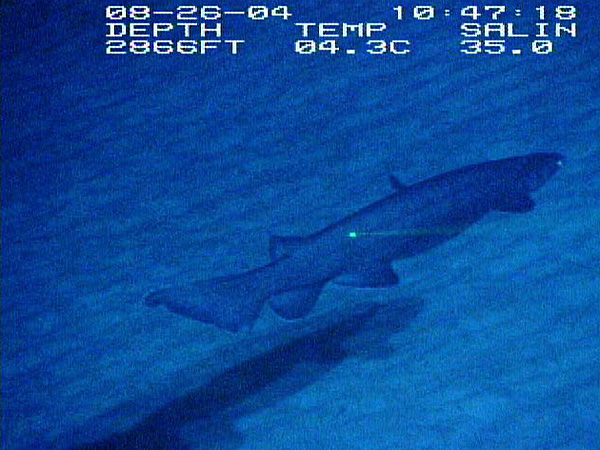
In this regard, the developer said that the great white shark (Carcharodon carcharias) is the only surviving species of the genus Carcharodon. These sharks are characterized by their fusiform body and great strength, is the nose cone, short and thick, at its tip is concentrated a large amount of nerve endings, their mouths are too big and round, is shaped like a bow or parable with two rows Tooth major, and two or three more continuous growth.
His nostrils (narinas) are very close, while the eyes are small, circular and completely black. In its five sides are fissures gill, two pectoral fins well developed and triangular shaped and two others near the tail fin, much smaller. The flow is well developed, like the large dorsal fin of his spine, so unmistakable to anyone. Two other small fins (second dorsal and anal) near the tail complete the aspect of this animal.
Despite their physical characteristics by the white shark is considered a large predator that is distributed in almost all the world's oceans, their low reproductive potential makes it a species vulnerable. Just mention that the International Union for Conservation of Nature and Natural Resources has detailed in the abundance of white shark populations, as well as the stature of this species has declined in recent years, estimating that this trend to continue their viability could be at serious risk.
Nonetheless, the environmental characteristics of some regions of the world that have allowed large populations of white sharks, which tend to be above average. So, these places have easily been called "white shark sanctuaries." As you mentioned the deputy developer, in the territorial waters of our country is located one of these regions, particularly in coastal island of Guadeloupe.
This is one of the largest islands of Mexico, which has an approximate area of 253.8 square kilometers, is located 241 kilometers from the coast of the Baja California peninsula, in the Pacific Ocean.
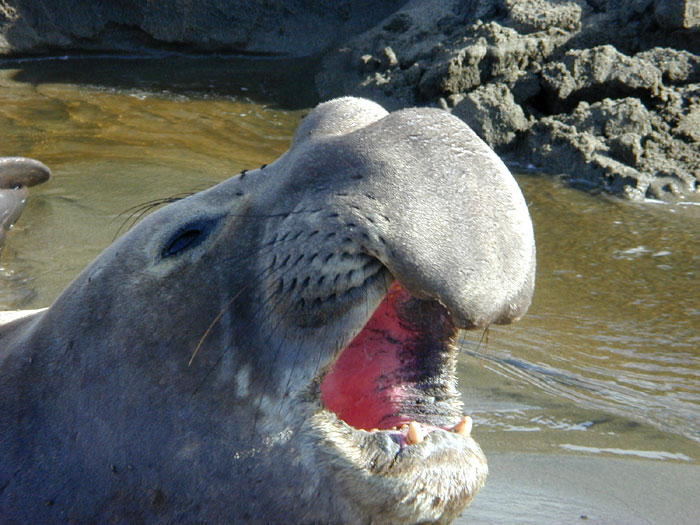
The fauna of Guadeloupe Island is not restricted only to the great white shark populations, but also in this region is the largest colony of elephant seals (Mirounga angustirostris) in the Pacific and one of the few people in the world of fine wolf of Guadeloupe (Arctocephalus townsendi). It also serves as an important site for breeding, sheltering and feeding large variety of species of marine mammals, waterfowl and fish.
The important biodiversity of the island and the importance of its conservation were a major cause that led to the April 21, 2005, was published in the Diario Oficial de la Federación the declaration of protected natural area of the island, the category of biosphere reserve.
With regard to human activities on the island, located only a small research station, a detachment of the Mexican Navy and a temporary community of fishermen, called "Cooperative Society Participation State Abuloneros and lobster boats, SCL" who are dedicated primarily to the collection of abalone, which is collected manually by divers of that community.
However, the particular characteristics of the island have enabled to position itself as a place to carry out tourism activities based on the observation white shark which, as noted by the developer in the explanatory memorandum, are carried out by tourism businesses operating either from americas United States or Mexico, from the ports of Cabo San Lucas, in Baja California Sur, or Ensenada, Baja California. These companies come to charge for their trips between 2 and 2 thousand 350 thousand $ 900 per person, 1 in ensuring that their packages "clients" will be able to observe white sharks hunting in their natural state, giving "jumps together to tourists" . These trips are advertised on the Internet pages:
• http://www.clubcantamar.com/spanish/index.html
• http://www.sharkdiver.com
• http://www.greatwhiteadventures.com/pasttrips.html
Thus, also mentions that the techniques used by these providers of tourist services to attract white sharks put at risk the ecological balance in the area, the habitat and populations of this species, and their boats in transporting containers sanguaza ( blood of different origins, mixed with water) and bait that once near the island discharged directly into the sea, with the aim of attracting sharks to see them rise to the surface or jumping. It should be noted that the sanguaza consists of blood from different backgrounds and may be fish, birds or mammals, and in some cases come to contain traces of viscera mixed with water.
These boats sanguaza the shed at night so that the essence remains at sea and the next day to assure tourists the presence of white sharks around them. Another of its methods, but used to a lesser extent, is the use of decoys shaped pinnípedos (lion, elephant seals or sea), combined with grease marine mammal, a situation that obviously is in violation of federal law.
So, it is necessary to establish that these tourist activities based on sightings of white sharks are legally regulated in the General Wildlife Act, covered in article 3. as non-extractive uses, as these activities are directly related to wildlife in their natural habitat, and thus its completion is subject to the issuance of authorization by the Ministry of Environment and Natural Resources. This document must at all times ensure the welfare of copies, the continuity of their populations and conservation of their habitat.
As set out in Rule 134 of the General Law on Wildlife, authorizations for use of non-extractive giving the secretariat will include information on:
I. Species and areas of use;
II. Zoning and conditioning;
III. Specifications for sustainability in the implementation of activities;
IV. Duration of the season by area of non-extractive use;
V. Load for the activity;
VI. Times for the implementation of activities;
VII. Means authorised to carry out activities;
VIII. Distinctive for use by area;
IX. The other necessary to avoid adverse effects on wildlife.
Unfortunately, despite legal restrictions stemming from the law and that the secretariat imposed on non-extractive uses to observe white sharks in Guadeloupe Island, which is evident by other companies providing tourist services violate each and every one of these provisions and restrictions.
As mentioned, the practices used to attract these species are so inadequate, that have changed the behavior of white sharks in the region as well as its local distribution. This change its behavior will generate a potential risk to populations of marine elephant (Mirounga angustirostris) and wolf fine of Guadeloupe (Arctocephalus townsendi), as well as abalone fishermen.
Regarding sanguaza, it should be considered hazardous waste and even potentially infectious, and therefore its use as attractive could lead to the spread of viruses or pathogens that are potentially infective and cause harm to the marine and terrestrial faunas of the region.
These actions are in violation of various legal provisions in this field, such as Articles 414 and 416 of the Federal Penal Code, the Convention on International Trade in Endangered Species of Wild Fauna and Flora, Articles 1, 44, 48, 51, 79, 83, 86, 117, paragraph II, 131, 132, 150, 151 and 161 bis of the General Law of Ecological Balance and Environmental Protection; Articles 3, 47, 99, 100, 101, 102 and 103 of the Act General Wildlife, Articles 132, 133 and 134 of the Rules of the General Law on Wildlife; Norma Oficial Mexicana NOM-059-SEMARNAT-2001, "Environmental Protection in Mexico-native species of flora and fauna-categories risk and specifications for inclusion, exclusion or change-list of species at risk "and even the decree of protected natural area, with the rank of biosphere reserve, Guadeloupe Island. These precepts are violated as a reason argue that those who carried out the non-extractive use of shark dumped hazardous waste into the ocean within and outside the protected area, without respecting the decree and conditions of licences granted by the secretariat, should specify that such actions could even be considered criminal offences federal law enforcement.
Because of the negative effects that these uses to generate atmosphere and the white shark populations and species that are distributed in this manner natural habitat, the Commission will decide considers relevant to urge the Secretariat to continue to refrain from issuing permits extractive use of white shark at the expense of the biosphere reserve of Guadeloupe Island, while not specifying the negative impact caused to the ecosystem and its components.
As regards information that has been referred to this economic way of ordinary commission, can be determined that there is a link between officials of the National Commission of Protected Natural Areas responsible for the management of the biosphere reserve and Guadeloupe Island tourism service providers to facilitate obtaining approvals from the Ministry of Environment and Natural Resources to observe white sharks, as well as encourage those who are observing white sharks and therefore consenting practices attraction to different types of tallow for these big sharks, and in some cases, by interceding providers to members of the fishing cooperative in order to avoid carrying out its activities during the days that the vessels sanguaza spilling of the waste in the ocean.
For members of the Committee on Environment and Natural Resources, it is worrying that white sharks are changing their natural behavior in the protected area, resulting from poor harvesting practices and non-extractive zero or nearly zero inspection of the competent authorities . Also, we recognize that fishing for abalone and lobster on the island is one of the most sustainable fisheries in the country, with good yields for fishermen, so there's no pressing need to develop alternative economic activities such as these and also generate serious damage to the ecological balance of the area and violate the spirit of the decree of the reserve.
It is necessary that the Mexican government established inspection operations to regulate the development of activities related to the use of non-extractive white shark in Guadeloupe Island, checking at all times to respect the decree of protected natural area and all applicable provisions.
Accordingly, the members of the Committee on Environment and Natural Resources of the honorable Congress put before the honorable assembly the following:
Agreement
First. The LX Legislature of the Chamber of Deputies of the honorable Congress of the Union respectfully urges the owner of the Secretariat of Environment and Natural Resources to not allow non-extractive uses for the white shark sighting in the biosphere reserve Guadeloupe Island, while not whether these practices modify the behavior of this species, creating a risk to its population, the marine fauna of the region and local fishermen.
Second. The LX Legislature of the Chamber of Deputies of the honorable Congress of the Union respectfully urges the owner of the Secretariat of Environment and Natural Resources to by the Federal Attorney General for Environmental Protection perform operations on the high seas, in coordination with the Secretariat Navy to monitor that vessels come to the biosphere reserve Guadeloupe Island meet environmental standards in this field, as well as abide by the restrictions set forth in the decree that declares natural protected area, with the category biosphere reserve, the area that includes marine and terrestrial island Guadeloupe, under federal jurisdiction, as well as other areas emerged that are there, located in the Pacific Ocean off the coast of the Baja California peninsula.
Note
1 Club Cantamar Liveabord Trips.
As in the Legislative Palace of San Lazaro of the Chamber of Deputies, March 11, 2008.
The Committee on Environment and Natural Resources
Deputies: Diego Cobo Terrazas (heading), chairman; Jesus de Leon Tello (heading), Jose Luis Espino Pineapple (heading), Lucia Morales Susana Mendoza (heading), Benjamin Silva Hernandez (heading), Maria Mercedes Colín Guadarrama, secretaries; Edmundo Bolaños Javier Aguilar (heading), Adriana Davila Fernandez (heading), Jose Antonio Garcia Diaz (heading), Ramiro Flores Ramon Emilio Dominguez (heading), Jose Guillermo Ortiz Fuentes, Jorge Nordhausen Ruben Gonzalez (heading), Christian Martin Lujan Nicholas (heading ), Martha Romo Angel Jimenez, Victor Manuel Torres Herrera (heading), Aleida Alavéz Ruiz (heading), Maria Soledad Torres Lopez, Rafael Garcia Villicaña (heading), Juan de la Rosa Hugo Garcia (heading), Roberto Carlos Martinez Martinez (heading ), Armando Barreiro Perez (heading), Roberto Mendoza Flores (heading), Martha Hilda Gonzalez Calderon (heading), Fernando Quetzalcoatl Moctezuma Pereda (heading), Carlos Ernesto Gonzalez Zatarain (heading), Victor Manuel Mendez Lanz, Jose Ascencion Bárcenas Orihuela, Sergio Augusto Lopez Ramirez (heading), Humberto Lopez Lena Cruz.
• • •
Chamber of Deputies of the Congress of the Union, LX Legislature
________________________________________
Stenographic version of the regular session on Thursday, April 3, 2008
The deputy Secretary Santiago Gustavo Pedro Cortes: From the Committee on Environment and Natural Resources concerning the use of non-extractive white shark in Guadeloupe Island.
It regards, President.
The President deputy Cristian Contreras Brown: They discussed the points of agreement. Under that there has been a speaker is considered… Do you want to speak for or against the opinion? To favour of opinion? Have the floor Mrs Martha Hilda Gonzalez Calderon, up to five minutes. In favour of opinion.
She Martha Hilda Gonzalez Calderon: I have asked, on behalf of my parliamentary group, to speak on the importance that we believe has the opinion that is under consideration.
The white shark is not just one of the species that are endangered, but also the sustainable development of tourism. The lack of a policy of sustainable tourism development has led to endanger not only this species, but the elephant marine and wolf fine of Guadeloupe.
The manner in which tourism takes visitors to our country to see these species has led to a hazardous waste are discarding the water, threatening the sustainability and ecological balance in this area.
We know that many activists in environmental protection have raised the voice not only in Mexico but in several countries, pushing for measures to conserve this species, which is caught as a sporting activity and also marketed exploiting their jaws and their fins, among other parts of the animal.
This is the reason that this species has been provided in institutional activities that deploys the International Convention on Endangered Species, which has promoted trade control of this marine animal.
Similar pronouncement has been expressed by the International Union for Conservation of Nature and Natural Resources has reported that fewer individuals of the species, as stressed by the proponent, deputy Cobo Terrazas.
Therefore, there is information from the declining trend in the number of white sharks, a phenomenon that is not immune to Mexico, where, in addition, there have been various activities that nonetheless be non-extractive are linked to tourism promotions that have incurred in activities dangerous to the species, while tending to alter the natural environment of white shark.
For the above reasons and taking into account the country's biological heritage is an inescapable subject of public attention and in this case the federal legislature, is that we support staff in the parliamentary group and as the positive opinion on the proposal in accordance with point to submit in due course Congressman Diego Cobo Terrazas. Thank you very much.
The President deputy Cristian Contreras Brown: Thank you, Mrs Martha Hilda Gonzalez Calderon. Exhausted the list of speakers, is considered sufficiently discussed. He reserved his vote for economic package.
Of the Committee on Environment and Natural Resources, with points of agreement regarding the use excerpts from white shark NOT IN ISLAND Guadeloupe
Honourable Assembly:
The Commission on Environment and Natural Resources of the LX Legislature of the Chamber of Deputies of Congress was Turner, for study and preparation of relevant opinion, the record number 2522, which contains the proposition point to agree on the use non-extractive white shark in Guadeloupe Island.
Under the analysis and study of the point of agreement that dictates, the ordinary members of this committee, based on the powers conferred on us Articles 39, paragraphs 1 and 2, section XXIV, and 45, paragraphs 6, and subsections) f) and 7 of the Organic Law of the General Congress of the United Mexican States, as well as 60, 65, 87, 88, 93 and 94 of the Rules for the Government of Interior General Congress of the United Mexican States, we would submit for consideration by members of this honourable assembly this opinion, in accordance with the following:
Background
1. In meeting held on October 11, 2007 by the Chamber of Deputies of the honorable Congress, Congressman Diego Cobo Terrazas, a member of the Parliamentary Group of the Ecologist Green Party of Mexico, presented with the proposition point of agreement on the non-extractive (fishing) use white shark in Guadeloupe Island.
2. At that meeting, the proposition point to agree Turner was said to the Committee on Environment and Natural Resources, with the record number 2522, for study, analysis and elaboration of opinion, in accordance with the following:
Considerations
The proposition point to agree study concerns the use of white shark that several tourism service providers engaged in protected natural area, with the rank of biosphere reserve, Guadeloupe Island, which lies in the Pacific Ocean opposite the coast of Baja California.
In this regard, the developer said that the great white shark (Carcharodon carcharias) is the only surviving species of the genus Carcharodon. These sharks are characterized by their fusiform body and great strength, is the nose cone, short and thick, at its tip is concentrated a large amount of nerve endings, their mouths are too big and round, is shaped like a bow or parable with two rows Tooth major, and two or three more continuous growth.
His nostrils (narinas) are very close, while the eyes are small, circular and completely black. In its five sides are fissures gill, two pectoral fins well developed and triangular shaped and two others near the tail fin, much smaller. The flow is well developed, like the large dorsal fin of his spine, so unmistakable to anyone. Two other small fins (second dorsal and anal) near the tail complete the aspect of this animal.
Despite their physical characteristics by the white shark is considered a large predator that is distributed in almost all the world's oceans, their low reproductive potential makes it a species vulnerable. Just mention that the International Union for Conservation of Nature and Natural Resources has detailed in the abundance of white shark populations, as well as the stature of this species has declined in recent years, estimating that this trend to continue their viability could be at serious risk.
Nonetheless, the environmental characteristics of some regions of the world that have allowed large populations of white sharks, which tend to be above average. So, these places have easily been called "white shark sanctuaries." As you mentioned the deputy developer, in the territorial waters of our country is located one of these regions, particularly in coastal island of Guadeloupe.
This is one of the largest islands of Mexico, which has an approximate area of 253.8 square kilometers, is located 241 kilometers from the coast of the Baja California peninsula, in the Pacific Ocean.
The fauna of Guadeloupe Island is not restricted only to the great white shark populations, but also in this region is the largest colony of elephant seals (Mirounga angustirostris) in the Pacific and one of the few people in the world of fine wolf of Guadeloupe (Arctocephalus townsendi). It also serves as an important site for breeding, sheltering and feeding large variety of species of marine mammals, waterfowl and fish.
The important biodiversity of the island and the importance of its conservation were a major cause that led to the April 21, 2005, was published in the Diario Oficial de la Federación the declaration of protected natural area of the island, the category of biosphere reserve.
With regard to human activities on the island, located only a small research station, a detachment of the Mexican Navy and a temporary community of fishermen, called "Cooperative Society Participation State Abuloneros and lobster boats, SCL" who are dedicated primarily to the collection of abalone, which is collected manually by divers of that community.
However, the particular characteristics of the island have enabled to position itself as a place to carry out tourism activities based on the observation white shark which, as noted by the developer in the explanatory memorandum, are carried out by tourism businesses operating either from americas United States or Mexico, from the ports of Cabo San Lucas, in Baja California Sur, or Ensenada, Baja California. These companies come to charge for their trips between 2 and 2 thousand 350 thousand $ 900 per person, 1 in ensuring that their packages "clients" will be able to observe white sharks hunting in their natural state, giving "jumps together to tourists" . These trips are advertised on the Internet pages:
• http://www.clubcantamar.com/spanish/index.html
• http://www.sharkdiver.com
• http://www.greatwhiteadventures.com/pasttrips.html
Thus, also mentions that the techniques used by these providers of tourist services to attract white sharks put at risk the ecological balance in the area, the habitat and populations of this species, and their boats in transporting containers sanguaza ( blood of different origins, mixed with water) and bait that once near the island discharged directly into the sea, with the aim of attracting sharks to see them rise to the surface or jumping. It should be noted that the sanguaza consists of blood from different backgrounds and may be fish, birds or mammals, and in some cases come to contain traces of viscera mixed with water.
These boats sanguaza the shed at night so that the essence remains at sea and the next day to assure tourists the presence of white sharks around them. Another of its methods, but used to a lesser extent, is the use of decoys shaped pinnípedos (lion, elephant seals or sea), combined with grease marine mammal, a situation that obviously is in violation of federal law.
So, it is necessary to establish that these tourist activities based on sightings of white sharks are legally regulated in the General Wildlife Act, covered in article 3. as non-extractive uses, as these activities are directly related to wildlife in their natural habitat, and thus its completion is subject to the issuance of authorization by the Ministry of Environment and Natural Resources. This document must at all times ensure the welfare of copies, the continuity of their populations and conservation of their habitat.
As set out in Rule 134 of the General Law on Wildlife, authorizations for use of non-extractive giving the secretariat will include information on:
I. Species and areas of use;
II. Zoning and conditioning;
III. Specifications for sustainability in the implementation of activities;
IV. Duration of the season by area of non-extractive use;
V. Load for the activity;
VI. Times for the implementation of activities;
VII. Means authorised to carry out activities;
VIII. Distinctive for use by area;
IX. The other necessary to avoid adverse effects on wildlife.
Unfortunately, despite legal restrictions stemming from the law and that the secretariat imposed on non-extractive uses to observe white sharks in Guadeloupe Island, which is evident by other companies providing tourist services violate each and every one of these provisions and restrictions.
As mentioned, the practices used to attract these species are so inadequate, that have changed the behavior of white sharks in the region as well as its local distribution. This change its behavior will generate a potential risk to populations of marine elephant (Mirounga angustirostris) and wolf fine of Guadeloupe (Arctocephalus townsendi), as well as abalone fishermen.
Regarding sanguaza, it should be considered hazardous waste and even potentially infectious, and therefore its use as attractive could lead to the spread of viruses or pathogens that are potentially infective and cause harm to the marine and terrestrial faunas of the region.
These actions are in violation of various legal provisions in this field, such as Articles 414 and 416 of the Federal Penal Code, the Convention on International Trade in Endangered Species of Wild Fauna and Flora, Articles 1, 44, 48, 51, 79, 83, 86, 117, paragraph II, 131, 132, 150, 151 and 161 bis of the General Law of Ecological Balance and Environmental Protection; Articles 3, 47, 99, 100, 101, 102 and 103 of the Act General Wildlife, Articles 132, 133 and 134 of the Rules of the General Law on Wildlife; Norma Oficial Mexicana NOM-059-SEMARNAT-2001, "Environmental Protection in Mexico-native species of flora and fauna-categories risk and specifications for inclusion, exclusion or change-list of species at risk "and even the decree of protected natural area, with the rank of biosphere reserve, Guadeloupe Island. These precepts are violated as a reason argue that those who carried out the non-extractive use of shark dumped hazardous waste into the ocean within and outside the protected area, without respecting the decree and conditions of licences granted by the secretariat, should specify that such actions could even be considered criminal offences federal law enforcement.
Because of the negative effects that these uses to generate atmosphere and the white shark populations and species that are distributed in this manner natural habitat, the Commission will decide considers relevant to urge the Secretariat to continue to refrain from issuing permits extractive use of white shark at the expense of the biosphere reserve of Guadeloupe Island, while not specifying the negative impact caused to the ecosystem and its components.
As regards information that has been referred to this economic way of ordinary commission, can be determined that there is a link between officials of the National Commission of Protected Natural Areas responsible for the management of the biosphere reserve and Guadeloupe Island tourism service providers to facilitate obtaining approvals from the Ministry of Environment and Natural Resources to observe white sharks, as well as encourage those who are observing white sharks and therefore consenting practices attraction to different types of tallow for these big sharks, and in some cases, by interceding providers to members of the fishing cooperative in order to avoid carrying out its activities during the days that the vessels sanguaza spilling of the waste in the ocean.
For members of the Committee on Environment and Natural Resources, it is worrying that white sharks are changing their natural behavior in the protected area, resulting from poor harvesting practices and non-extractive zero or nearly zero inspection of the competent authorities . Also, we recognize that fishing for abalone and lobster on the island is one of the most sustainable fisheries in the country, with good yields for fishermen, so there's no pressing need to develop alternative economic activities such as these and also generate serious damage to the ecological balance of the area and violate the spirit of the decree of the reserve.
It is necessary that the Mexican government established inspection operations to regulate the development of activities related to the use of non-extractive white shark in Guadeloupe Island, checking at all times to respect the decree of protected natural area and all applicable provisions.
Accordingly, the members of the Committee on Environment and Natural Resources of the honorable Congress put before the honorable assembly the following:
Agreement
First. The LX Legislature of the Chamber of Deputies of the honorable Congress of the Union respectfully urges the owner of the Secretariat of Environment and Natural Resources to not allow non-extractive uses for the white shark sighting in the biosphere reserve Guadeloupe Island, while not whether these practices modify the behavior of this species, creating a risk to its population, the marine fauna of the region and local fishermen.
Second. The LX Legislature of the Chamber of Deputies of the honorable Congress of the Union respectfully urges the owner of the Secretariat of Environment and Natural Resources to by the Federal Attorney General for Environmental Protection perform operations on the high seas, in coordination with the Secretariat Navy to monitor that vessels come to the biosphere reserve Guadeloupe Island meet environmental standards in this field, as well as abide by the restrictions set forth in the decree that declares natural protected area, with the category biosphere reserve, the area that includes marine and terrestrial island Guadeloupe, under federal jurisdiction, as well as other areas emerged that are there, located in the Pacific Ocean off the coast of the Baja California peninsula.
Note
1 Club Cantamar Liveabord Trips.
As in the Legislative Palace of San Lazaro of the Chamber of Deputies, March 11, 2008.
The Committee on Environment and Natural Resources
Deputies: Diego Cobo Terrazas (heading), chairman; Jesus de Leon Tello (heading), Jose Luis Espino Pineapple (heading), Lucia Morales Susana Mendoza (heading), Benjamin Silva Hernandez (heading), Maria Mercedes Colín Guadarrama, secretaries; Edmundo Bolaños Javier Aguilar (heading), Adriana Davila Fernandez (heading), Jose Antonio Garcia Diaz (heading), Ramiro Flores Ramon Emilio Dominguez (heading), Jose Guillermo Ortiz Fuentes, Jorge Nordhausen Ruben Gonzalez (heading), Christian Martin Lujan Nicholas (heading ), Martha Romo Angel Jimenez, Victor Manuel Torres Herrera (heading), Aleida Alavéz Ruiz (heading), Maria Soledad Torres Lopez, Rafael Garcia Villicaña (heading), Juan de la Rosa Hugo Garcia (heading), Roberto Carlos Martinez Martinez (heading ), Armando Barreiro Perez (heading), Roberto Mendoza Flores (heading), Martha Hilda Gonzalez Calderon (heading), Fernando Quetzalcoatl Moctezuma Pereda (heading), Carlos Ernesto Gonzalez Zatarain (heading), Victor Manuel Mendez Lanz, Jose Ascencion Bárcenas Orihuela, Sergio Augusto Lopez Ramirez (heading), Humberto Lopez Lena Cruz.
• • •
Chamber of Deputies of the Congress of the Union, LX Legislature
________________________________________
Stenographic version of the regular session on Thursday, April 3, 2008
The deputy Secretary Santiago Gustavo Pedro Cortes: From the Committee on Environment and Natural Resources concerning the use of non-extractive white shark in Guadeloupe Island.
It regards, President.
The President deputy Cristian Contreras Brown: They discussed the points of agreement. Under that there has been a speaker is considered… Do you want to speak for or against the opinion? To favour of opinion? Have the floor Mrs Martha Hilda Gonzalez Calderon, up to five minutes. In favour of opinion.
She Martha Hilda Gonzalez Calderon: I have asked, on behalf of my parliamentary group, to speak on the importance that we believe has the opinion that is under consideration.
The white shark is not just one of the species that are endangered, but also the sustainable development of tourism. The lack of a policy of sustainable tourism development has led to endanger not only this species, but the elephant marine and wolf fine of Guadeloupe.
The manner in which tourism takes visitors to our country to see these species has led to a hazardous waste are discarding the water, threatening the sustainability and ecological balance in this area.
We know that many activists in environmental protection have raised the voice not only in Mexico but in several countries, pushing for measures to conserve this species, which is caught as a sporting activity and also marketed exploiting their jaws and their fins, among other parts of the animal.
This is the reason that this species has been provided in institutional activities that deploys the International Convention on Endangered Species, which has promoted trade control of this marine animal.
Similar pronouncement has been expressed by the International Union for Conservation of Nature and Natural Resources has reported that fewer individuals of the species, as stressed by the proponent, deputy Cobo Terrazas.
Therefore, there is information from the declining trend in the number of white sharks, a phenomenon that is not immune to Mexico, where, in addition, there have been various activities that nonetheless be non-extractive are linked to tourism promotions that have incurred in activities dangerous to the species, while tending to alter the natural environment of white shark.
For the above reasons and taking into account the country's biological heritage is an inescapable subject of public attention and in this case the federal legislature, is that we support staff in the parliamentary group and as the positive opinion on the proposal in accordance with point to submit in due course Congressman Diego Cobo Terrazas. Thank you very much.
The President deputy Cristian Contreras Brown: Thank you, Mrs Martha Hilda Gonzalez Calderon. Exhausted the list of speakers, is considered sufficiently discussed. He reserved his vote for economic package.