Looking back on 2009, one of the highlights for Shark Diver and Shark Divers in a year that was filled with conservation excitement was attending the Green Oceans Forum as a guest speaker in Miami.
Attended by a who's who in ocean conservation from Sylvia Earl to National Geographic and Monterey Bay, I met and dined with some of the brightest minds in ocean conservation over three days. Our presentation was about sharks, reefs, and monetized eco solutions that are "out of the box."
By "out of the box" I mean ready to go today. Real and lasting solutions that radically change regional shark conservation efforts and are born from 20 years experience in global eco tourism.
The Green Ocean Forum also included several outstanding media PSA's that caught the entire conference attention with simple yet powerful and compelling statistics:
"At the Americas Business Council, we believe that bringing brilliant minds and change-makers together plays a vital role in disseminating messages to audiences worldwide. Yet, we do not stop there. Our Forums serve as the first step in bringing about change. At ABC, we believe that solutions created during forums must be implemented in the short- and long-term; and every year we innovate our strategies in order to make sure that our Forums translate into sustainable solutions and results."

The shark diving industry blog covering sharks, shark cage diving, shark conservation and things we find "amusing" since 2008 www.sharkdiver.com, www.sharkdivers.com, www.divingwithsharks.com
Thursday, December 17, 2009


Wednesday, December 16, 2009
Amazing Gift Ideas - Your Very Own “Shark Week”
 Dec 16, 2009 – This upcoming holiday season put some excitement under the tree.
Americans will be gifting novelty ties and slippers again this year in unprecedented numbers, more often than not these traditional gift items end up in the closet.
Instead, consider giving a gift that will be remembered forever, your own “Shark Week” dive adventure. Since 2002 Shark Diver has been thrilling shark fans from all over the planet with “Safe and Sane” shark encounters with the world’s top shark species.
Divers and non divers seeking out the grand daddy of shark diving, the Great White, can join the Shark Diver crew in San Diego, California from August through October aboard some of the top shark diving vessels in the industry.
“It’s all about providing a once in a lifetime personal experience for our clients”, says Martin Graf
 , on board dive operations manager. “About 20% of our divers are booked as the ultimate gift by spouses and family members, these family members end up having the time of their lives.”
Gifting adventure travel has increased dramatically since 2003. According to The Adventure Travel Report “one-half of U.S. adults, or 98 million people, have taken an adventure trip in the past five years. This includes 31 million adults who engaged in hard adventure activities like whitewater rafting, scuba diving and mountain biking.”
For more information:
Shark Diver: 415.235.9410
staff@sharkdiver.com
www.sharkdiver.com
Image Credit: Juanmi Almay
Tuesday, December 15, 2009
CITES Appendix II - Shark Update
 Rome, 14 December 2009 - An advisory panel of independent experts has issued recommendations regarding six proposals to limit international trade in a number of commercially exploited aquatic animals under the Convention on International Trade in Endangered Species of Wild Fauna and Flora (CITES).
The CITES Convention was established to protect wild species whose status is being directly affected by international trade. It is not designed to protect species that are endangered for other reasons. Once a species is listed by CITES, its international trade is subject to varying degrees of control depending on its status, ranging from controlled trading (if listed on CITES Appendix II) to outright bans (Appendix I).
The proposals, submitted by various CITES parties, request the Convention to control international trade in certain shark and coral species and to ban international trade in Atlantic bluefin tuna. They will be considered for listing at the 15th Conference of CITES parties (Doha, Qatar, 13-25 March 2010).
The advisory panel consisted of 22 international fishery experts from 15 different countries. It was convened to evaluate the proposals according to criteria established by CITES and to give independent and impartial recommendations based on the experts' knowledge and on the scientific evidence presented in each proposal. This follows a formal process through which FAO channels advice from external fishery scientists to CITES. The CITES Conference of Parties will take the final decision regarding listing of proposed species.
Panel Outcomes
Following a thorough six-day review and using the CITES criteria, the panel determined that sufficient evidence exists to warrant placing the following species on CITES Appendix II: Oceanic whitetip shark (Carcharhinus longimanus), Porbeagle (Lamna nasus), and Scalloped hammerhead shark (Sphyrna lewini). In addition, the proposed listing of "look-alike" shark species to help enforcement for Scalloped hammerhead shark was found to be justified in two of the four cases, Great hammerhead shark (Sphyrna mokarran) and Smooth hammerhead shark (Sphyrna zygaena).
The panel did not reach consensus regarding the proposed listing under CITES Appendix I of Atlantic bluefin tuna (Thunnus thynnus), however a majority of the panel agreed that the available evidence supports the proposal. There was consensus that the evidence available supports the inclusion of Atlantic bluefin tuna on Appendix II.
For the remaining species under consideration, Spiny dogfish (Squalus acanthias) and all species of the coral family Coralliidae, the panel assessed that they did not meet the criteria required by CITES for listing on Appendix II. However, the panel did note that inadequate management in many areas of distribution of these species represents a cause for "serious concern". It urged that these shortcomings be remedied by relevant fishing nations and regional organizations in order to prevent rates of exploitation for these animals from exceeding acceptable levels.
Monday, December 14, 2009
Changes to Fisheries Laws - Florida
 An extraordinary and diverse group of conservationists, divers, and shark people banded together to effect a change in shark fisheries along the coasts of Florida this year. Kudos to the effort.
We got the final synopsis from Guy Harvey this week:
On December 10th, the Florida Wildlife Commission approved new measures aimed at protecting several distressed shark populations in Florida state waters. Beginning in mid-January 2010, the harvesting of sandbar, silky and Caribbean sharpnose sharks is prohibited within state waters. These species are either currently being overfished or are in danger of being overfished.
In addition, the FWC implemented several other protective measures, including 1) the prohibition against the removal of shark heads and tails at sea, 2) a rule allowing for only hook-and-line gear to harvest sharks and 3) the establishment of a minimum fork length on several shark species.
Another encouraging development at the Dec. 10th meeting was the proposal of a rule that would prohibit both recreational and commercial harvest of lemon sharks from state waters. Lemon sharks are especially vulnerable to overfishing, so conservationists – including representatives of the Guy Harvey Ocean Foundation – have been lobbying the FWC for some time to adopt more aggressive protective measures for lemons. The FWC will hold one more public meeting on this proposal before putting it to a final vote.
All in all, the Dec 10th meeting of the FWC was a great day for shark conservation efforts in the state of Florida. Many thanks to the FWC for taking a leadership role in the protection of our marine ecosystems!
For more information about the new rules, and to view the presentations on shark management and lemon sharks that were used at the meeting, see the official FWC press release published on the FWC web site.
Cheers!
Saturday, December 12, 2009
NEPTUNE Canada - Deep Water Geek Cool
If you want to know how we spend our time online look no further than NEPTUNE Canada and a series of deep water observatories that the public (that's us) can drop into any time of day or night. We have spent the last few days completely "geeking out" on this project.
The NEPTUNE project also has a sister program VENUS.
"This week, scientists in Canada's British Columbia began collecting data from hundreds of scientific instruments on the seafloor of the Pacific Ocean using the largest and most advanced cabled ocean observatory in the world."
The observatory links are here, good hunting!
The NEPTUNE project also has a sister program VENUS.
"This week, scientists in Canada's British Columbia began collecting data from hundreds of scientific instruments on the seafloor of the Pacific Ocean using the largest and most advanced cabled ocean observatory in the world."
The observatory links are here, good hunting!
Wednesday, December 9, 2009
Shark Conservation Wake Up Call - 14.9oz
 Question: What costs $36.89 for 14.9 ounces of canned product?
As I came to discover this week it's a can of Shark Fin Soup made in Taiwan and sold in a corner market in San Francisco.
San Francisco is a major hub for shark fin activity and thousands of pounds of sharks fin pass though this city each and every month.
It was a personal shock for me to discover these cans on shelf at the extraordinary price of $36.89 a can (click image).
Fortunately there are others who have noticed this issue and they are planning strategies using DNA to curb the sale of shark fin in San Francisco.
Stay tuned.
Tuesday, December 8, 2009
Sea Stewards - Pro Conservation Shark Media
Sea Stewards asks you to join them and help build a shark sanctuary in the San Francisco Bay Area and have produced a new PSA to go along with this unique campaign.
Sign the petition.
Ask our San Francisco leadership to speak out for sharks and stop the sale of shark fins and fin products until fins are obtained through a sustainable and certified source that does not kill sharks for fins alone. Help us educate the consumers and let the community know that sharks are important for a healthy San Francisco Bay and World Ocean.
More from RTSea Productions blog about the need to personalize shark conservation.
Sign the petition.
Ask our San Francisco leadership to speak out for sharks and stop the sale of shark fins and fin products until fins are obtained through a sustainable and certified source that does not kill sharks for fins alone. Help us educate the consumers and let the community know that sharks are important for a healthy San Francisco Bay and World Ocean.
More from RTSea Productions blog about the need to personalize shark conservation.
SharkDiver.com - Rangefinder Magazine
 Last month Rangefinder Magazine featured Shark Diver at Isla Guadalupe in a conservation themed article by Jim Cornfield.
Article here.
About Rangefinder
Rangefinder is the premier monthly magazine for the professional photographer. Each month Rangefinder typically includes:
- product and new equipment reviews
- lighting and technical pieces
- how-to's
- promotion and marketing stories
- portraiture tips
- accessories and system round-ups
- computer technology
- black-and-white shooting
- lens reviews
- processing techniques
Rangefindermag.com provides online multimedia resources for the photographic professional. In addition to archives of Rangefinder's print articles, Rangefindermag.com provides original online content, news, and events.
About Jim Cornfield
Jim Cornfield is a commercial photographer and travel writer based in Malibu Canyon, CA. He’s a veteran certified scuba diver and a passionate campaigner for great white shark conservation and coral reef preservation.
Monday, December 7, 2009
Salmon Sharks National Geographic
Back in 2005 I was fortunate enough to fly to Cordova, Alaska and spend a week cage diving with Salmon Sharks, distaff relatives of the Great white. Shark Diver was the first commercial shark diving company to ever drop a cage in these waters and the first to ever work with them on a commercial level.
We were not disappointed.
Fast forward to 2009 and a simply stunning look at these animals in HD by National Geographic:
We were not disappointed.
Fast forward to 2009 and a simply stunning look at these animals in HD by National Geographic:
Shark Conservation Coverage - Al Jazeera
Surprising and in depth front line coverage of the shark situation in Palau, recently declared a shark sanctuary. As we have said many times in the past shark tourism is a viable bridge solution to sustianable fisheries. When local and regional fishermen have the financial incentive to save sharks they are more than likely to push back against outside fisheries.
Sunday, December 6, 2009
Shark Conservation or Stuntwork?
Leon Deschamps a “Western Australia conservationist,” would like you to believe the only way you can prove Tiger sharks are not dangerous is by riding on top of a dead whale while Tigers feed on it. Seriously.
Additionally Leon and his crew have video proof that petting these feeding animals is actually some form of shark conservation.
It is not.
The Department of Environment and Conservation in Australia have seen through this charade calling this stunt “highly irresponsible and dangerous behaviour.”
We have to agree. This video serves as a wake up call to all would be "shark conservationists," who promote the notion that sharks are anything but top ocean predators. Those few who ride sharks and put themselves into questionable situations with sharks under the guise of "shark conservation."
2009 was a strange year for this off brand of "shark conservationist." Featuring stuntmen playing guitars while surrounded by white sharks, and others who presented their flesh to sharks to prove some sort of conservation point.
Shark conservation is and should always be solid measures for conservation success not stunt work and this disturbing slide towards stunt work in the name of shark conservation continues to malign the entire effort.
More commentary from the Dorsal Fin Blog.
Additionally Leon and his crew have video proof that petting these feeding animals is actually some form of shark conservation.
It is not.
The Department of Environment and Conservation in Australia have seen through this charade calling this stunt “highly irresponsible and dangerous behaviour.”
We have to agree. This video serves as a wake up call to all would be "shark conservationists," who promote the notion that sharks are anything but top ocean predators. Those few who ride sharks and put themselves into questionable situations with sharks under the guise of "shark conservation."
2009 was a strange year for this off brand of "shark conservationist." Featuring stuntmen playing guitars while surrounded by white sharks, and others who presented their flesh to sharks to prove some sort of conservation point.
Shark conservation is and should always be solid measures for conservation success not stunt work and this disturbing slide towards stunt work in the name of shark conservation continues to malign the entire effort.
More commentary from the Dorsal Fin Blog.
Saturday, December 5, 2009
Vero Beach Municipal Marina now a Shark Free Marina
 Vero Beach Municipal Marina in Florida is now registered as a Shark Free Marina.
 The mission of the Vero Beach Municipal Marina is to provide efficient first class service at reasonable cost to resident and visiting boaters in a manner that reflects well on the character of the City of Vero Beach. In order to fulfill our mission Marina personnel are trained to:
- Exercise time and material cost consciousness, while implementing business practices that meet Marina Industry and City Standards. These practices are carried out in a labor-intensive activity requiring acute safety awareness on the part of each employee.
- Act as goodwill ambassadors for the city by promoting tourism and local business patronage.
- Insure that Marina and Mooring operations maintain a favorable relationship with neighboring residents, clubs and businesses.
- To promote Clean Marina practices and assist in developing programs and procedures to keep the Indian River clean and environmentally safe.
Located on the East side of the Indian River Lagoon, just north of the Merrill Barber (Hwy 60) Bridge, the City of Vero Beach prides itself on being a center for maritime information and hospitality for over 3,000 visiting boats each year. These visiting boaters spend a phenomenal 20,000 overnights with us. Rental moorings and slips are available on a daily or monthly basis (call for monthly details). Gasoline, diesel, and pump out services are available on our 70 ft. fuel dock. Approaches to the fuel dock are 8-10 ft. Facilities and services include free bus service to town, Laundromat, TV lounge, WiFi, mail drop and pick-up, bicycle and vehicle parking, restrooms, showers, trash disposal, waste oil disposal, and a park with picnic shelters and barbecues.
Support their business by dropping by their facility at:
City Marina at Marker 139 on the Intracoastal Waterway
3611 Rio Vista Boulevard, Vero Beach, FL 32963
Phone: 772-231-2819
Radio: Monitoring VHF CH 16 working CH 66A
Business Hours: 0700 to 1900
E-Mail: marina@covb.org
Are you a marina owner/manager? Follow their example and register your facility with Shark-Free Marinas today.
Want to get involved with SFMI? Visit our Regional Ambassadors page for more info.
Friday, December 4, 2009
Scamming The Blog - Useless Film Promotion
A few weeks ago we got a series of emails from blog reader "Ethan" directing us to a seemingly "leaked clip" from a new film questioning the fundamental numbers of shark conservation. Ethan also contacted other Blue Bloggers with the same clip.
"100 million animals are killed each year."
As it turns out the leaked clip was not so leaked and is part of a half assed production now titled "The Shark Con." The premise being if you absolutely enrage dedicated members of the shark conservation movement by highlighting a few zero credibility, lowbrow naysayers, people will buy your film.
As we did not buy Tiburon Productions last half assed shark film we'll be giving this next effort a wide berth and are a little disappointed they did not approach us directly so we could have told them officially to go "crawl back under a rock."
In the interests of watching folks lose their minds to outrage here is the You Tube clip they are peddling around to anyone who will watch so you can post nasty controversial messages like this one:
"You're full of shit and I think you know you are full of shit. This is an attempt to make money and protect your interests by deliberately deceiving people. Find something useful to do with your time instead of destroying species that have every right to exist and which are vital for the health of our oceans."
On a personal note, with as much shark footage as Tiburon Productions have in the can and obvious desire to be part of the shark conservation movement, why bother with this effort?
Manufacturing controversy is as easy as following Sea Shepherds Whale Wars and a media world where facts mean little. Providing real and tangible solutions to shark declines is where the grunt work begins.
That is what we call shark conservation.
What, you afraid of some heavy lifting boys?
"100 million animals are killed each year."
As it turns out the leaked clip was not so leaked and is part of a half assed production now titled "The Shark Con." The premise being if you absolutely enrage dedicated members of the shark conservation movement by highlighting a few zero credibility, lowbrow naysayers, people will buy your film.
As we did not buy Tiburon Productions last half assed shark film we'll be giving this next effort a wide berth and are a little disappointed they did not approach us directly so we could have told them officially to go "crawl back under a rock."
In the interests of watching folks lose their minds to outrage here is the You Tube clip they are peddling around to anyone who will watch so you can post nasty controversial messages like this one:
"You're full of shit and I think you know you are full of shit. This is an attempt to make money and protect your interests by deliberately deceiving people. Find something useful to do with your time instead of destroying species that have every right to exist and which are vital for the health of our oceans."
On a personal note, with as much shark footage as Tiburon Productions have in the can and obvious desire to be part of the shark conservation movement, why bother with this effort?
Manufacturing controversy is as easy as following Sea Shepherds Whale Wars and a media world where facts mean little. Providing real and tangible solutions to shark declines is where the grunt work begins.
That is what we call shark conservation.
What, you afraid of some heavy lifting boys?
Ocean Encounters - New Website
 Ocean Encounters founders Fred Buyle and William Winram will take you places you never dreamed of diving. Both avid world-class breath-hold divers, they have taken it upon themselves to share their passion for the underwater world with the rest of us.
They will bring breath-hold diving courses to your door, take you on live-aboard freediving cruises and organize expeditions for the chance to breath-hold dive in the company of large marine animals.
In their many upcoming activities, you will find one that is tailored to suit your needs whether you are a complete beginner wanting to improve your comfort underwater, or a dedicated breath-hold athlete looking to fine-tune your technique for your next competition.
The more adventurous amongst you will participate to shark encounters for an opportunity to discover the natural behaviour of these amazing creatures in their own territory.
Ocean Encounters is no ordinary endeavour. In addition to organizing courses and expeditions for the public, Fred Buyle and William Winram regularly join expeditions for the purpose of scientific research on large marine animals. From tagging sharks in the wild on a silent breath-hold to documenting unique animal features through photography and video, they contribute to the advancement of ocean preservation.
Buyle and Winram are scheduled to arrive in
Thursday, December 3, 2009
Shark Conservation - Making Long Bets
 FORT MYERS, Florida -- Jack Donlon, original founder of The Ultimate Shark Challenge Tournament Series, and his co-directors, Sean Paxton and Brooks Paxton II, have teamed up with renowned marine wildlife artist, scientist and conservationist Dr. Guy Harvey to present an innovative competitive event with $100,000 in cash and prizes that will serve as a model for sport fishing enthusiasts and marine conservationists.
The newly branded Guy Harvey Ultimate Shark Challenge Tournament Series will be a catch and release competition off the Southwest Florida coast – and much more. “For the first time, what we call a ‘love ‘em and leave ‘em’ shark tournament will be transformed into a true spectator sport,” said Sean Paxton. He and his brother, Brooks, known as the Shark Brothers, continued, “Our shared goal with Dr. Guy Harvey and Jack Donlon, is to give participants and viewers the most interactive, entertaining and educational shark-infested, multimedia spectacle found anywhere on the planet. This is not your grandfather’s fishing contest, but something completely new for a shark fishing tournament.”
Harvey, a long-time marine conservationist and founder of the Guy Harvey Ocean Foundation, said the tournament will increase global awareness of the important role that sharks play in the world’s oceans and our ecosystem. “The Guy Harvey Ultimate Shark Challenge Tournament Series will be a uniquely exciting event for participants, spectators and everyone who cares about the future of our oceans,” Guy Harvey said.
A total of 60 fishing teams will compete in the 2010 tournament, which will begin with three separate qualifying rounds next April and May. The series kicks off in Fort Myers Beach, Florida, on April 9 – 11, with additional stops in Marco Island and Sarasota. Twenty teams will compete in each round and the top four will qualify to compete in the two-day Grand Championship Finale on May 22-24. The finale and its sister event, Shark Fest –a family-friendly, educational and entertaining event for all ages – are sponsored by Mote Marine Laboratory and Aquarium and the Center for Shark Research in Sarasota.
Tournament organizers hope that this event will become the “next generation” model for shark fishing competitions. Joining Donlon, the Paxton brothers and Guy Harvey in this ambitious effort are strategic partners Robert E. Hueter, Ph.D, director of Mote Marine Laboratory’s Center for Shark Research; Lee County Commissioner Ray Judah; Luke Tipple, director of Shark-Free Marinas; and other advocates of environmental stewardship.
"With the increasing demands facing our marine resources, we saw an opportunity to implement an alternative to traditional harvest formats that is not only environmentally sound, but also a viable tournament business model,” said Jack Donlon. “Through strategic alliances and with the support of like-minded corporations, such as Guy Harvey Inc., our vision will become a reality.”
Hueter noted that the staff from the Mote Center for Shark Research will oversee all scientific aspects of the tournament, including tagging operations. Selected sharks will be outfitted with satellite tags to track their movements after release. “This project will provide a breakthrough in collaborative research involving the marine scientific and recreational fishing communities,” he added. “By working together to develop a 21st century, conservation-oriented alternative, the Mote Center for Shark Research and tournament organizers will provide a national model, while changing public attitudes about responsible use of marine resources.”
Tournament organizers are planning a major television broadcast, which promises to deliver an adrenaline-fueled mix of extreme angling, cutting-edge research and wildlife management efforts. The show will be co-anchored by the Shark Brothers and Tipple, a marine biologist.
“In these days of technological connectivity, we will be able to put spectators right into the action, above and below the water,” said Tipple. “Our viewers will experience the sheer power and raw beauty of these animals, while seeing scientists and anglers working in concert to protect and understand their world.”
Limited sponsorship opportunities are still available and team entries are currently being accepted for review. For more details and additional contact information, visit: UltimateSharkChallenge.com and www.guyharveyoceanfoundation.org.
About Dr. Guy Harvey:
Born in Lippspringe, Germany in 1955, Harvey is a 10th generation Jamaican of English heritage. Growing up in Jamaica, Harvey spent many hours fishing and diving with his father. He was obsessed with the creatures of the sea and began drawing pictures of the many different fish he observed. From those early inspirations, Harvey’s gift of recreating marine life propelled him from Professor of Marine Biology to a wildlife artist and photographer. He initially opted for a scientific education, earning high honors in Marine Biology at Aberdeen University in Scotland in 1977. He continued his formal training at the University of West Indies, where he obtained a Doctorate in Fisheries Management. A vocal proponent of catch-and-release, Harvey generously donates artwork, time and funds for numerous institutions and conservation groups, including the Guy Harvey Research Institute established at Nova Southeastern University in 1999. In 2008, Harvey created the Guy Harvey Ocean Foundation, which supports marine conservation, research and education efforts. For additional information on Guy Harvey, visit www.GuyHarveyinc.com.
For complete information on the Guy Harvey Ocean Foundation, visit www.GuyHarveyOceanFoundation.org.
Lithodes galapagensis "all you can eat"
 The place on the Internet for underwater news is Underwater Times.
They have been the leader in "breaking underwater news" from whale strandings to this weeks announcement of a new species of King Crab discovered by Sally Hall, a PhD student at the University of Southampton's School of Ocean and Earth Science (SOES).
As huge fans of crustaceans in all forms this is an exciting announcement. Unfortunately Lithodes galapagensis is found in deep water off the Galapagos and is much bigger than it's Alaskan cousins.
Looks like a tasty discovery to us.
Can anyone say Deadliest Catch Galapagos?
Southern White Sharks - Video
Over at the Dive Around website John Natoli and Andy Green put together a great trip report about white shark diving in Neptune Islands, Australia.
The dive site "that started it all," still going strong decades later:
The dive site "that started it all," still going strong decades later:
Wednesday, December 2, 2009
Shark Diver Santa - We Like It!
 Whoever the marketing person is at Blue Planet Aquarium in Ellesmere Port, Cheshire we suggest someone give them a huge raise.
Double goes for the very cool shark diving website they built.
Yes, it is THAT time of year again when enterprising boys and girls from around the planet capitalize on the "Fat Man in the Red Suit" (not Paul Watson) to sell everything from SUV's to days at the local aquarium.
The shark diving industry approves of this recent effort.
You just have to look at the face of the little girl in the tube to see the next generation of shark divers in action. Kudos!
Shredder - Shark Update 2009
 Earlier this year we had reported that one of the most well known and charismatic sharks of Isla Guadalupe, "Shredder" had gone MIA.
Typically Shredder is one of the first big males to show up to the island by early August of each season. His arrival is a much sought celebrated event by our crews.
This year Shredder was no where in sight for the first three weeks of August speculating that he had met with "foul play" during his long migration from Hawaii.
Shredder did eventually appear in late September to "wild cheers" from our crews at the back deck and continued to stay with the shark diving fleet for the rest of the 2009 shark season.
He was even bigger this year and looked as healthy as any of the big males on site. Late to the party but exciting as always.
We said good by to Shredder in mid November of 2009 on our last expedition to the island. After close to a decade with these animal you get attached to them and they remain for us, more than just white sharks.
We look forward to 2010 with Shredder at Isla Guadalupe.
Tuesday, December 1, 2009
Shark Diver:The Watch
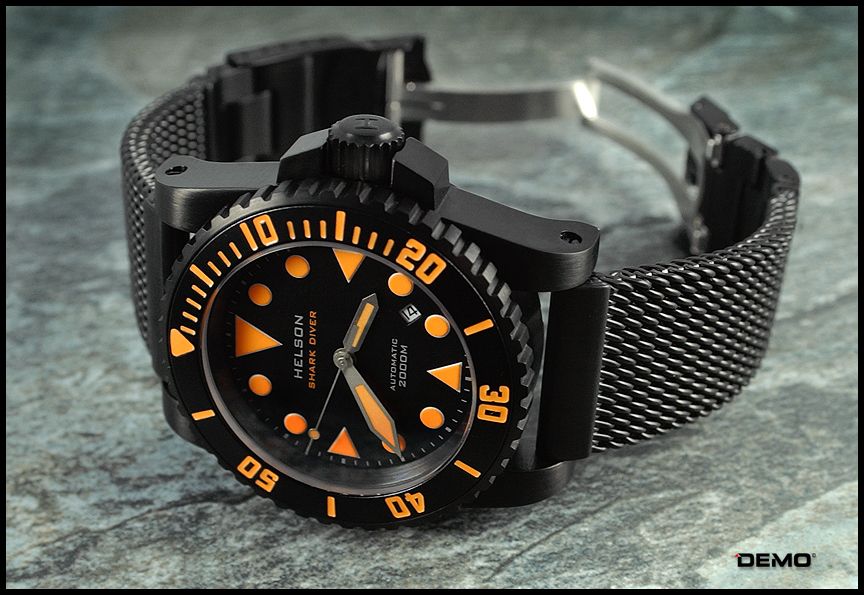 The holidays came early for our little shark diving company - SharkDiver.com.
It came not in the form of a trip to a distant dive site, or a new discovery, or even a conservation success.
The holidays this year came in the form of our own branded dive watch by Helson Watches.
Welcome to the Shark Diver perhaps the coolest piece of shark diving tech you can own this year or next.
Whale Sharks - The Nigaloo Papers
 In depth industry papers on shark tourism are a must read.The Ningaloo Coast region of Western Australia has been a mainstay for sustainable whale shark tourism for the past decade. A new paper is now out.
Tourism Abstract
Whale shark tourism is an icon industry in Western Australia and a prominent example of successful ecotourism. In 2006, whale shark tour participants spent $6.0 million in the Ningaloo Coast region of Western Australia and added between $2.4 million and $4.6 million to the regional economy in direct expenditure. However, to date no research has been conducted on the predictors of whale shark tour participants' expenditure. In this article, we assess the importance of visitor expenditure for ecotourism, assess the predictors of the expenditure of whale shark tour participants and discuss how this information can contribute towards ecotourism goals. The data analysed here were collected through a survey distributed to participants between April and June 2006.
We assess a range of variables for their relationship to individual expenditure per trip and determine that the duration of stay, household income, age, staying in a hotel, trip motivation and being from North America or Southeast Asia positively correlate with individual expenditure per trip. Group size and originating from Germany or the United Kingdom and Ireland negatively correlate with expenditure. In addition to identifying future steps, we also discuss the relevance of our finding that more motivated participants have a higher expenditure for ecotourism.
Link to report.
Shark Fin -Tracing the Crime Scene
 When sharks are caught and finned the resulting dried product becomes an instant cash crop.
Fins are sold for $200-500 per pound USD.
Over the past decade this "harvest of disaster" has decimated shark stocks worldwide, bypassing even the Convention on International Trade in Endangered Species (CITES) Appendix II demands for monitoring and enforcement of endangered shark species.
Once dried sharks fin hit the open marketplace even endangered species fin cannot be traced back to the original "crime scene."
All that has changed with the stunning announcement of new DNA tests that geographically tag fins and identify species back to their home waters.
For shark conservation this single tool could lead to a serious curtail of shark fin sales globally until certification measures could be put in place to all but guaranteed bundles of dried sharks fin contained no endangered species.
A great tool. Now for the hard part, cross border political will to actually enforce CITES Appendix II.
Complete press release.
Amanda Cotton Priority Reminder
Amanda Cotton shot what we consider the Iconic Shark Image of 2009. Today her blog reminds us sharky folks that while shark conservation efforts are a 365 day a year push, let's not forget there are others who could use some help too.
Thanks Amanda for the post.
Thanks Amanda for the post.
Beth's Story from TakePart on Vimeo.
Bull Shark Diving in Cuba - Report
 From the always interesting Team Sharkbait Blog, comes a quick report from Cuba and bull shark diving adventures in Santa Lucia.
Blog readers here at UT will recognise the name and this site from several of our posts involving the cardinal rule of bull shark encounters...never wear a Speedo.
In fact Speedos are just not considered official shark diving gear at all -anywhere.
Fortunately since 2004 the Santa Lucia bull shark site has matured and Team Sharkbite had a great time:
"One of the most breath taking moments we had in the holiday was the opportunity to go scuba diving with bull-sharks. As we were down 25 meters below the surface at a location called La Boca, it was a marvel to look at the bull sharks being hand fed by the diving master. Of course it’s even better to have seen them in their natural environment, without the help of a human touch… But I think wikipedia also describes the bull sharks as dangerous to humans, so for me this was more than a good chance to see them really close. When I write really close I’m talking about within arm’s reach, but I think ‘don’t touch’ had the upper hand in my mind."
Complete Post.
Monday, November 30, 2009
Indian Whale Shark Tourism?
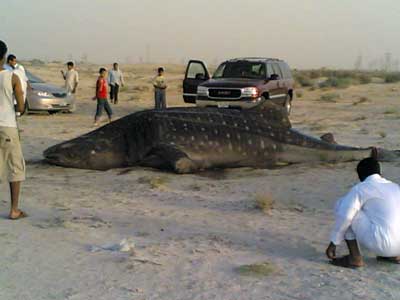 Kudos to Tata Chemicals and Wildlife Trust of India for their tourism initiative.
Sustainable shark tourism is a viable bridge solution to lasting shark conservation:
If everything falls in place, Gujarat coast may emerge as tourist spot for watching whale sharks. Foreign experts have taken up a research project to study feasibility of developing whale shark eco-tourism in the state. The research programme is being undertaken under "Whale Shark Conservation Campaign" jointly carried out by Tata Chemicals Ltd, Wildlife Trust of India (WTI) and the forrest department of Gujarat.
Complete Story
Sunday, November 29, 2009
Alex "Sharkman" Buttigieg - Happy Birthday!
 Long before the world of shark conservation had a million faces, and long before people even cared about sharks, there was Alex.
With his quirky and unique website and unbridled passion for sharks, Alex has been a mainstay of the shark conservation world.
Today was his birthday and we wanted to wish him a very best of days!
Your passion for sharks has inspired more people then you will ever know.
Australia's Tourism "Shark Holocaust"
 Australia's Minister for Primary Industries and Fisheries, Tim Mulherin, believes in anti shark programs for tourism.
This week it was announced Australia's long standing drum line program had successfully killed 500 breeding aged animals from 14 foot Great whites to 12 foot Tigers.
All in the name of tourism and "incident free beaches."
"Any size shark can cause serious injury or death if they attack. However, sharks more than 2m long are particularly dangerous and are more likely to cause fatal injuries, he said."
Drum lines and shark nets are a surprising 1960's answer to shark attacks worldwide and indiscriminately destroy regional populations of sharks and assorted by catch from dolphins to turtles.
Sadly there are viable options for regional governments that would work to preserve shark populations.
This blog proposed viable "human netting options"
many months ago along with a first alert tagging program.
In the end it is up to regional efforts lead by local stakeholders to effect conservation change.
Until the public is made aware of the abject waste of top predators in their waters the killing will continue and future shark generation will continue to decline.
It would seem that sharks in Australia just cannot seem to get a break. An ecological disaster in the making since 1963.
Saturday, November 28, 2009
Shark Cowboy - Liar or Looney?
 November was a not a good month for shark researchers and extreme media gaffs.
From the Farallones to Australia and now Richard Fitzpatrick the perception of qualified shark research is being modified by a few within the community who have chosen to seek the media limelight.
"Riding a tiger shark is awesome, said Mr Fitzpatrick, who left Cairns this week on a diving expedition tagging sharks in the Coral Sea."
Richard Fitzpatrick represents a new and startling brand of shark researcher, those that do extreme things with animals and use research data to justify their actions, leading many to question the work being done.
"He admits most people think he is either "a liar or a loony" when he tells them he lassoes sharks for a living."
Like commercial shark diving, invasive shark research practices are under scrutiny. There are some who might argue that "the ends justify the means" with invasive shark research.
We maintain reality television shows and basic stunt work with sharks have no place within shark research community and media gaffs like this week with Richard Fitzpatrick only lower the bar for others who perceive shark research as a hybrid entertainment entity.
Shark Cowboy, Liar or Loony?
To Mr. Fitzpatrick and those who would emulate him, we would suggest the answer to that question might be both.
Invasive shark researchers seek media at their own peril, this weeks offering once again delivers a black eye to the entire effort.
Thursday, November 26, 2009
Kiwis Prepare for 1000 Years of Mojito Ice
 A titanic iceberg some 500 meters wide, 50 meters tall, and 350 meters thick, containing enough fresh ice to power 11.9 billion Mojitos is barreling down on the New Zealand coast this week.
Loose from the Ross ice shelf in 2001 the unprecedented iceberg has members of the New Zealand cabinet rushing to emergency meetings with Cuban trade ministers to complete an ice deal with the tiny Caribbean nation, home of the tasty and iconic alcoholic beverage "The Mojito."
Said one staffer from Hon Tim Grosers office, "The Minister of Trade and Associate Minister of Foreign Affairs and Associate Minister of Climate Change Issues are working round the clock to sell this iceberg to Cuba who, since 1997, have been under a US ice embargo."
The deal gets softer each day as the iceberg comes in contact with warmer waters.
The following Underwater Onion is brought to you by Shark Diver. Always drink Mojitos as responsibly as you can.
Happy Thanksgiving. Go Lions!
Sunday, November 22, 2009
Shark Diving Outside the Boundries
Recently I was at dinner in San Francisco with a group of friends and the topic of "the most exciting moment" came up. Being the owner of a shark diving company I have a few of these stories on tap, but none compare to Karly Stanley's submarine.
In 2005 I met Karl in Roatan, Honduras and enjoyed an evening with him at close to 2000' in the company of titanic sized six gill sharks. We had roped pigs heads to the side of the vessel and were being dragged down slope and into the abyss by a particularly large female.
That was in the early days, when the very idea of attracting huge sharks from the crushing deep seemed like an impossible endeavour.
The additional bonus is that Karls submarine was hand built by him, making the complete experience one that I have treasured my whole life.
Karls adventures would, eventually, grab the attention of filmmakers and television folks. This clip is from a unique documentary about Karl and his operation now available on Amazon.
Real animal adventures are harder to come by these days and I go to bed at night knowing that guys like Karl keep the flame alive and well, offering for the rest of us, by sheer force of genius and personality, the chance to enjoy an encounter with deepwater giants:
In 2005 I met Karl in Roatan, Honduras and enjoyed an evening with him at close to 2000' in the company of titanic sized six gill sharks. We had roped pigs heads to the side of the vessel and were being dragged down slope and into the abyss by a particularly large female.
That was in the early days, when the very idea of attracting huge sharks from the crushing deep seemed like an impossible endeavour.
The additional bonus is that Karls submarine was hand built by him, making the complete experience one that I have treasured my whole life.
Karls adventures would, eventually, grab the attention of filmmakers and television folks. This clip is from a unique documentary about Karl and his operation now available on Amazon.
Real animal adventures are harder to come by these days and I go to bed at night knowing that guys like Karl keep the flame alive and well, offering for the rest of us, by sheer force of genius and personality, the chance to enjoy an encounter with deepwater giants:
Saturday, November 21, 2009
Whale Sharks - The Holbox Papers
 In depth industry papers on shark tourism are a must read. Isla Holbox in Mexico has rapidly become a test bed for sustainable tourism with sharks. A new paper is now out.
Tourism Abstract
The whale shark, Rhincodon typus, is the world's largest fish and forms predictable seasonal aggregations at several locations worldwide, which has led to an explosion in whale shark tourism since the early 1990’s. Since 2002, Holbox has established itself as a gateway to the largest known predictable aggregations of whale sharks in the world. It has also experienced the largest growth in terms of visitation and number of licensed tour operators creating an industry worth approximately US$2.72 million in 2008. This rapid growth, along with the whale shark’s listing on the IUCN’s Red List of Endangered Species has led to concerns of the industry’s sustainability in the long-term.
This study was initiated to understand the sustainability of Holbox’s whale shark tourism industry from a social and economic perspective. Tour participants were surveyed regarding their overall satisfaction with their experience, as well as their knowledge of, and compliance with, the interaction regulations. Eighty-five percent of participants were day tourists from mass tourism destinations like Cancun and Playa del Carmen. Approximately thirty percent of the economic gain from the activity is derived off the Island, while on-Island income goes dominantly to two large vertically-integrated operators who are able to bring in visitors directly from the mainland.
Overall, participants experienced high levels of satisfaction but found crowding to be a problem with thirty-three percent dissatisfied with the number of boats. Furthermore, the language barrier between the guides and the tourists resulted in a misunderstanding of the interaction regulations in place to protect the whale sharks and tourists and resulted in a high level of contact with the sharks. The outputs of this study will help inform the future sustainability of the industry, as this relies not only on a returning, healthy population of whale sharks, but also on a satisfied customer base.
Link to report.
“Almost 90 % of sharks have been wiped out“
 Science fact or fiction?
This morning over at the Conservation Bytes blog the discussion about Greenwashing and Blackwashing and an in depth look at both.
What happens when conservation groups make wild claims about the state of the world s natural resources?
“Almost 90 % of sharks have been wiped out. I immediately distanced myself from them. This is a blatant lie and terrible over-exaggeration. Ninety per cent of sharks HAVE NOT been wiped out. Some localised depletions have occurred, and not one single sharks species has been recorded going extinct since records began. While I agree the world has a serious shark problem, saying outrageous things like this will only serve to weaken your cause. My advice to any green group is to get your facts straight and avoid the sensationlist game – you won’t win it, and you probably won’t be successful in doing anything beneficial for the species you purport to save."
Friday, November 20, 2009
Sea Shepherd - Whale Defense Meat Grinder?
 We're not sure if anyone stopped for a minute during the "1 Million dollar big check moment" with Sea Shepherd last month to really think about the acquisition of their high speed Earthrace vessel.
Renamed the Ady Gil and painted a nice black, the self styled eco warriors from Sea Shepherd have been touting this ship as their new weapon against Japanese whaling.
All we noticed were the two giant propellers at the back of the vessel that to us looked like big trouble for whales.
With a top speed of 45 knots the renamed Ady Gil credits at least one very serious collision with "submerged debris" during her life at sea.
"Shortly after leaving Palau on day 34, Earthrace struck submerged debris which sheared two blades off the port propeller and bent the drive shaft. This necessitated a return to Palau in order to assess the damage and remove the prop."
The propellers are German-designed, carbon propellers that are 36 inches in diameter.
To date Sea Shepherd have not provided "propeller shrouding" for these whirling Ginsu Knives of the Antarctic and intend on putting this vessel in between Japans harpoon vessels and the whales. Propeller shrouding would protect whales from these extreme blades while still allowing this vessel to "close intercept" with the animals and Japanese whalers.
Did Sea Shepherd or anyone in the eco media stop to think about this?
Clearly, in the rush to congratulate yet another futile season of reality television, no one did.
100 Million Sharks - The Question
Editors Note: Unfortunately this blog post was the result of an online scam by a group of questionable filmmakers pushing a new film called "The Shark Con." Blog reader "Ethan" also contacted other Blue Bloggers with this film clip. He is not an actual blog reader but part of the effort to get free promotion for the film.
The premise of the film is to feature a few marginal and discredited anti shark people in a documentary to enrage the shark conservation movement so people will buy your film. In essence "manufacturing dissent" to sell a film.
This blog does not buy into callous attempts to promote and sell manufactured shark conservation films. We're in the business of real and lasting conservation change. If you want manufactured eco dissent there's always Whale Wars on Animal Planet, and if we say so, they do a much better job.
Original Post
Thanks to blog reader Ethan for sending this in. The conservation question of 100 million sharks killed each year is a lingering one. The number 100 million appeared at least five years ago and is taken for granted as the defacto number of dead shark each and every year.
This number is the backbone to the entire shark conservation movement - 100 million.
But what if science does not back up the numbers?
What if only 25 million sharks are killed each year?
Some have questioned the actual number, others are now making videos:
The premise of the film is to feature a few marginal and discredited anti shark people in a documentary to enrage the shark conservation movement so people will buy your film. In essence "manufacturing dissent" to sell a film.
This blog does not buy into callous attempts to promote and sell manufactured shark conservation films. We're in the business of real and lasting conservation change. If you want manufactured eco dissent there's always Whale Wars on Animal Planet, and if we say so, they do a much better job.
Original Post
Thanks to blog reader Ethan for sending this in. The conservation question of 100 million sharks killed each year is a lingering one. The number 100 million appeared at least five years ago and is taken for granted as the defacto number of dead shark each and every year.
This number is the backbone to the entire shark conservation movement - 100 million.
But what if science does not back up the numbers?
What if only 25 million sharks are killed each year?
Some have questioned the actual number, others are now making videos:
Free Gaffing Makos - Mumbling Excuses - Shepherd Smith
Shepherd Smith. Looking like a warmed over corpse and wearing too much pancake makeup proceeds to "interview" one of the crew members who allegedly free gaffed a Mako shark this summer in Florida.
Allegedly? Almost certainly? You decide.
Listen carefully to the tale this guy spins up about how they caught the shark, released the shark, "got a hook in it," and then dragged it home. If this was a court of law this guy would be behind bars for "inconsistent story telling."
Unfortunately, he is happily doing FOX News interviews with good old Shepard, who seems more than happy to promote the untimely and most certainly unsportsmanlike catch of a breeding aged Mako shark.
We hear tell Shepherd also hunts ducks with Patriot Missile batteries on loan from the Defense Department.
Allegedly? Almost certainly? You decide.
Listen carefully to the tale this guy spins up about how they caught the shark, released the shark, "got a hook in it," and then dragged it home. If this was a court of law this guy would be behind bars for "inconsistent story telling."
Unfortunately, he is happily doing FOX News interviews with good old Shepard, who seems more than happy to promote the untimely and most certainly unsportsmanlike catch of a breeding aged Mako shark.
We hear tell Shepherd also hunts ducks with Patriot Missile batteries on loan from the Defense Department.
Thursday, November 19, 2009
That's one small step for sharks...
 Senate Committee Passes Bill to End Shark Finning in U.S.
WASHINGTON, November 19, 2009 - Oceana commends the Senate Commerce, Science and Transportation Committee today for passing the Shark Conservation Act of 2009.
"Shark management in the U.S. has suffered for long enough," said Beth Lowell, federal policy director at Oceana. "It's time to enact this shark finning bill into law."
The Act would require all sharks caught in U.S. waters to be landed whole with their fins still attached. This would put an end to shark finning, the wasteful process of cutting off the fins and discarding the carcass at sea.
Landing sharks with their fins still attached allows for better enforcement and data collection for stock assessments and quota monitoring. The Act would also close a loophole that allows the transfer of fins at sea as a way to get around current law. Additionally, the bill would allow the United States to take action against countries whose shark finning restrictions are not as strenuous.
"Finning is threatening shark populations worldwide," said Elizabeth Griffin, marine scientist at Oceana. "The U.S. should be a leader in helping to solve the problem of shark finning."
The Act was introduced by Senator John Kerry (D-MA) in April. Similar legislation (H.R. 81), introduced by Congresswoman Madeleine Bordallo (D-Guam), passed the House of Representatives in March.
ABOUT SHARKS:
Sharks have been swimming the world's oceans since before the age of the dinosaur, but today some species face extinction. Each year, commercial fishing kills more than 100 million sharks worldwide - including tens of millions for just their fins. Sharks are especially vulnerable to pressure from human activities because of their slow growth and low reproductive potential.
Sharks can be found in almost every ocean and play a vital role in maintaining the health of the oceans. Many shark populations have declined to levels where they are unable to perform their roles as top predators in the ecosystem, causing drastic and possibly irreversible damage to the oceans. According to the U.N. Food and Agriculture Organization, more than half of the highly migratory shark species are now considered overexploited or depleted.
For more information about Oceana's campaign to safeguard sharks, please visit www.oceana.org/sharks.
Oceana campaigns to protect and restore the world's oceans. Our teams of marine scientists, economists, lawyers and advocates win specific and concrete policy changes to reduce pollution and to prevent the irreversible collapse of fish populations, marine mammals and other sea life. Global in scope and dedicated to conservation, Oceana has campaigners based in North America, Europe and South America. For more information, please visit www.Oceana.org.
Guadalupe Island PSA - RTSea Productions
The commercial shark diving industry knows that exposing the public to sharks leads to conservation. It is a fact, and to those that would dispute this fact, to those few who only see sharks through the myopic lens of fear, we present to following PSA by RTSea Productions.
Now seen on Google Oceans:
Now seen on Google Oceans:
Maldives Whale Shark Research Q and A
 Frontline research with Whale Sharks is critical and none more so than at remote sites like the Maldives.
Enter the Maldives Whale Shark Research Program.
We featured these guys and their terrific outreach website earlier this year as a template for other research sites interested in well networked and well defined public access sites.
This week we stumbled across a Q and A with team members about their work and the need for shark research in the Maldives.
A very good read.
Shark Skin Tech and Fluid Dynamics
 It is well known that sharks, after millions of years of evolution, have developed a remarkable skin that all but allows them to "slip" though the oceans.
For the folks who study fluid dynamics natures millions year old testing lab is a case for reverse engineering.
Armed with $200,000 in grants from the National Science Foundation, the NASA Alabama Experimental Program to Stimulate Competitive Research and the Lindbergh Foundation, researcher Amy Lang continues research on what designers of aircraft and underwater vehicles could learn by imitating nature's design of shark skins.
Lang is collaborating with Dr. Phil Motta, professor of integrative biology from the University of South Florida, and Dr. Robert Hueter, director of shark research for Mote Marine Laboratory in Sarasota, Fla.
Complete Story
Monday, November 16, 2009
Farallones - ABC News Investigates Tagging Disaster
ABC News I Team investigated the ethics of invasive tagging techniques and the controversy surrounding an extreme white shark tagging mishap at the Farallones. The event was documented by a reality television crew who also fund the research and provide the logistical support for the capture of white sharks.
As far as we know this is the first time in white shark research history that reality television film crews also act as quasi research team members and research funding sources.
We covered our thoughts on this matter in a previous post.
ABC I Team blog coverage post/read comments.
As far as we know this is the first time in white shark research history that reality television film crews also act as quasi research team members and research funding sources.
We covered our thoughts on this matter in a previous post.
ABC I Team blog coverage post/read comments.
Pacific Islands Regional Plan of Action (PI-RPOA)
 The announcement of the Pacific Islands Regional Plan of Action on Sharks sounds like a good idea, but as they say "the devil is in the details."
While this plan of action "tips a hat" towards shark fining as a regional issue along management of shark stocks, it fails to look at sustainable shark tourism options that generate per shark, thousands of dollars to local and regional economies.
Shark tourism is a viable bridge solution to successful shark conservation and management.
Where local inhabitants adopt "safe and sane" shark tourism, sharks, reefs and surrounding areas flourish:
The Pacific Islands Forum Fisheries Agency (FFA), the Secretariat of the Pacific Community (SPC) and the Secretariat of the Pacific Regional Environment Programme (SPREP) today launched the Pacific Islands Regional Plan of Action (PI-RPOA) on Sharks.
At least 80 species of sharks and rays occur within the Pacific Islands region. Around half of these species are considered to be highly migratory, therefore fishing impacts upon them must be internationally managed. Due to their low productivity and long life span, these species are particularly vulnerable to overexploitation. Sharks and rays are also of cultural significance to many Pacific Island communities.
Friday, November 13, 2009
Evaluating Online "Teasers"
 Earlier this year this blog and a few others within the industry commented as a seemingly anti-industry "professional hit piece" aired on You Tube.
Called "Shark Divers" the piece had all the elements of ugly shark media at a time where two of the industries top shark encounters sites Isla Guadalupe and Hawaii are under siege by government agencies and a pervasive anti-shark diving lobby. This was not what the industry needed or asked for.
This week over at the Paxton Brothers blog an in depth second look at this piece. As it turns out what aired this spring was an "online teaser." The full film now called "Shark Business" is 50 minutes of pretty good story telling. The risks vs rewards are a fine balancing act this piece manages to convey - all wrapped up in a tense assortment of clips and scripting that unfortunately are what sell to networks.
You can read the Paxton's take on it here.
You can watch "Shark Business" here.
Tuesday, November 10, 2009
Farallones Tagging Mishap - RTSea Productions
 However you want to characterise last weeks tagging incident at the Farallone Islands many within the shark community have unanswered questions.
RTSea Productions added their voice and overall assessment yesterday:
Controversy is now dogging the white shark tagging efforts of Dr. Michael Domeier of the Marine Conservation Science Institute. The SPOT (smart positioning or temperature) tagging began in Isla Guadalupe under the eyes of a film crew for a National Geographic Channel program to air on the 19th. It involves a technique whereby the shark is hooked and reeled on board, aerated with a water hose, while the crew literally drills and bolts a satellite transmitting tag to the shark's dorsal fin.
This is a rather elaborate tagging technique that has generated much concern within the shark conservation community (click here for prior posting about the Isla Guadalupe taggings, and here are two from other sites: click here and here).
Now, Dr. Domeier has moved northward to the Farallon Islands and, with the approval of Maria Brown, superintendent for the Gulf of the Farallones National Marine Sanctuary, has been tagging sharks there but with less than optimal success. Apparently, one shark swallowed the hook deep into its throat causing the bait's float to become lodged in the shark's jaws, thereby blocking access for the aerating water hose and requiring the cutting of the hook by working straight through the shark's gills. All in all a disaster in humane animal treatment as far as I'm concerned.
While there are concerns about the stresses this type of tagging places on the shark, there is also the question as to the need for more data acquired in the Northern California area. Dr. Barbara Block of Stanford, Dr. Pete Klimley of UC Davis, and others have amassed a considerable body of data that tracks the migratory patterns of these animals. They and their colleagues just recently issued a detailed report that can be viewed in the Proceedings of the Royal Society, published online on 11/04/09 in the Biological Sciences section ("Philopatry and migration of Pacific white sharks").
I always felt that this particular tagging technique was a more elaborate mousetrap than necessary. Now its efficacy has become controversial, the California data may ultimately be redundant, and the National Marine Sanctuary must defend a decision to allow catching a protected species in a manner that would most likely not be allowed for, say, a protected marine mammal.
Too many questions, too much controversy. . .
Read article in Bay area bohemian.com.
Subscribe to:
Posts (Atom)